Key Moments
OpenAI o1 isn’t a chat model (and that’s the point)
 Latent Space Podcast
Key Moments
OpenAI's O1 model requires a shift in prompting strategy beyond chat; focus on goals and results.
Key Insights
O1 is not a chat model but a goal and reward-based system, requiring a different prompting approach.
Effective O1 prompting involves clearly defining goals, return formats, and providing ample context, rather than instructing on how to think.
Users often struggle with O1 due to ingrained chat-based interaction models; a shift to providing well-structured prompts is key.
O1 excels in complex coding tasks by understanding codebase intricacies and delivering complete solutions in one go.
Prompt templates and prompt engineering tools (like Cursor or Windsurf) are essential for managing O1's detailed prompting requirements.
While O1 is highly capable, its latency and cost necessitate careful consideration of use cases compared to faster, cheaper models.
SHIFTING THE MENTAL MODEL FOR O1
The O1 model represents a departure from traditional chat-based AI. Unlike models like ChatGPT that are optimized for conversational flow and immediate responses, O1 operates on a goal and reward-based system. This fundamental difference means users must adjust their expectations and interaction methods. Initial skepticism, as experienced by Ben Hylak, often stems from applying chat-centric prompting techniques. Overcoming this requires a conscious effort to reframe the AI as a tool for achieving specific outcomes rather than engaging in a dialogue.
EFFECTIVE PROMPTING STRATEGIES FOR O1
Successful interaction with O1 hinges on a structured prompting approach. Key components include clearly defining the 'goal,' specifying the desired 'return format,' and providing relevant 'context.' Crucially, the advice is to describe *what* is wanted, not *how* the AI should think. This means avoiding instructions like 'think slowly' and instead focusing on objective descriptions and potential pitfalls to watch out for, much like you would brief a human colleague. The return format itself can guide the AI, for instance, by asking for a specific output structure that naturally leads to better results.
O1'S STRENGTH IN COMPLEX CODING TASKS
One of O1's standout capabilities lies in its application to complex coding scenarios. While previous models might deliver 95% of a solution, O1 is demonstrating the ability to provide complete, 100% functional implementations. This is attributed to its deeper understanding of codebase intricacies, such as specific SQL dialects like ClickHouse. By providing the full context of a project, users can prompt O1 to implement features or resolve issues in a single, effective pass, significantly reducing the need for iterative refinement common with other models.
MANAGING PROMPTS WITH TEMPLATES AND TOOLS
The detailed nature of O1 prompts, while powerful, can be demanding. To manage this complexity, users are leveraging prompt templates and specialized tools. Keeping a directory of reusable prompt templates within a project repository is a common practice. Tools like Cursor or Windsurf can further streamline this by generating fleshed-out prompts based on high-level ideas and predefined structures, effectively automating the creation of sophisticated O1 instructions and ensuring consistency across tasks by following recommended formats.
NAVIGATING USE CASES AND MODEL CHOICES
The decision to use O1 versus other models like GPT-4o or Claude depends significantly on the task's requirements, particularly latency and cost. For simple, one-off tasks that don't require extensive context, faster and cheaper models are often more appropriate. O1 shines in scenarios demanding deep understanding, context integration, and complex problem-solving, such as refactoring large codebases or generating comprehensive documents. There remains an ongoing challenge in user interface design for models like O1, especially when direct user input is involved and long processing times are a factor.
THE FUTURE OF AI ASSISTANCE AND MODEL ROUTING
The evolution of AI models points towards increased sophistication in how they are utilized. The concept of 'model routing,' where different AI models are selected based on task requirements, cost, and speed, is gaining traction. Initially, humans may act as routers, but automated systems are expected to emerge. Furthermore, O1's ability to uncover novel connections across diverse datasets, such as scientific research papers, highlights its potential beyond traditional applications, pointing towards superhuman capabilities in complex analysis and synthesis, albeit with significant computational costs currently hindering extensive independent operation.
Mentioned in This Episode
●Software & Apps
●Companies
Common Questions
O1 is designed to be more goal and reward-based, rather than solely focused on chat completion. This difference influences how users interact with it, making it more impressive with prolonged use, especially for complex, context-heavy tasks like coding.
Topics
Mentioned in this video
A code editor that integrates with AI models, including O1. It allows users to connect to their IDE and provide codebase context for AI assistance. One speaker recently switched to Cursor.
An AI model that is noted for performing well with context placed before the prompt. One speaker found it sometimes gets stuck in loops when used with Cursor compared to direct use of Claude.
A database system where O1 seems to confuse its SQL syntax less than other models, suggesting a specific advantage in understanding this particular technology.
A model mentioned alongside GPT-3.5 as commonly used LLMs for coding use cases, but O1 is presented as superior for complex, multi-file implementations.
A new AI model from OpenAI that is more goal and reward-based, differing from previous chat completion models. It's noted for its increasing impressiveness with more usage, especially in complex coding tasks.
An early influential AI model that initially seemed amazing for text generation but, upon closer inspection, revealed more error cases and limitations compared to O1. It's described as having a chat-centric UX.
A popular code editor where AI tools and plugins can be integrated, enhancing developer workflows. Cursor is mentioned as an alternative editor with AI integrations.
A company with a model routing project, indicating a trend towards systems that manage AI model traffic and tradeoffs.
The company that developed Claude, known for recommending placing context before the prompt in their documentation.
A startup mentioned as developing model routing capabilities, allowing for prioritization of cost, speed, and intelligence in AI model usage.
The company behind O1 and other AI models like ChatGPT and GPT-4o. They are noted for not providing explicit instruction manuals for their models and for potentially having internal knowledge about model behavior that is not public.
More from Latent Space
View all 203 summaries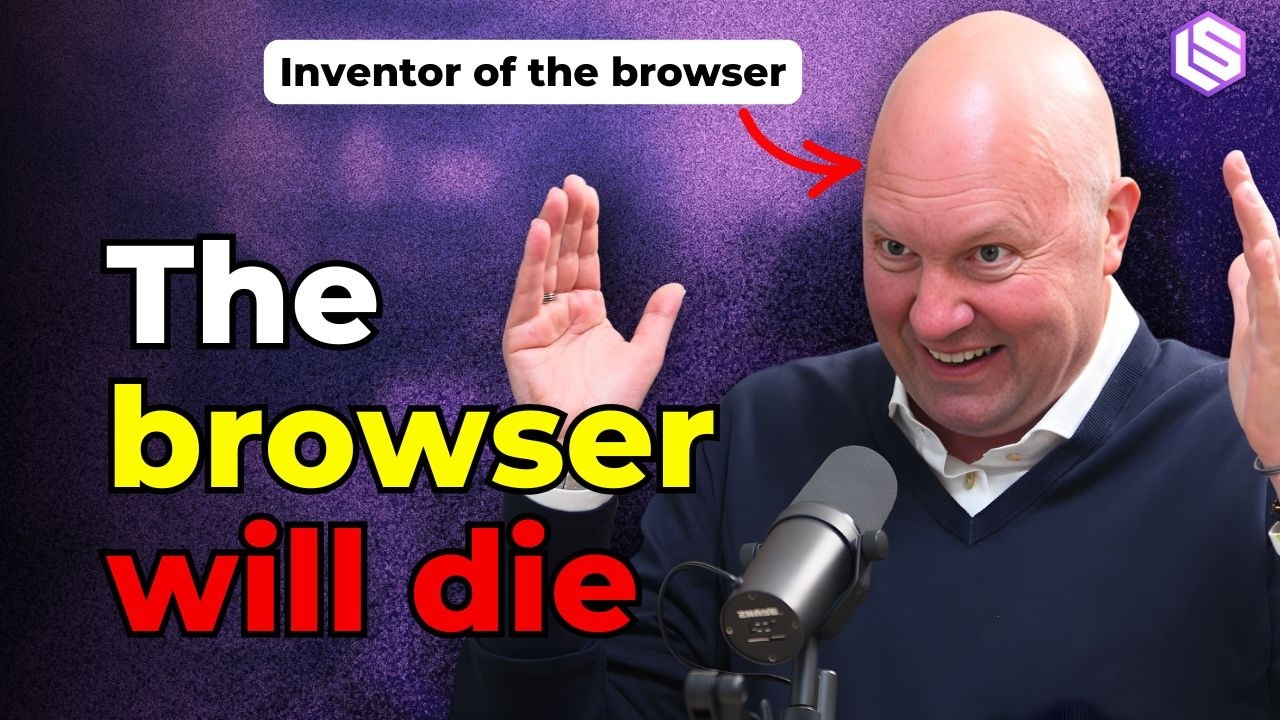 77 min
Marc Andreessen introspects on Death of the Browser, Pi + OpenClaw, and Why "This Time Is Different"
 67 min
Moonlake: Multimodal, Interactive, and Efficient World Models — with Fan-yun Sun and Chris Manning
 38 min
The Stove Guy: Sam D'Amico Shows New AI Cooking Features on America's Most Powerful Stove at Impulse
 55 min
Mistral: Voxtral TTS, Forge, Leanstral, & Mistral 4 — w/ Pavan Kumar Reddy & Guillaume Lample
Found this useful? Build your knowledge library
Get AI-powered summaries of any YouTube video, podcast, or article in seconds. Save them to your personal pods and access them anytime.
Get Started Free