Key Moments
Niall Ferguson: History of Money, Power, War, and Truth | Lex Fridman Podcast #239
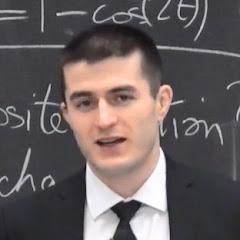 Lex Fridman
Key Moments
Historian Niall Ferguson discusses the University of Austin, the history of money, and the importance of historical perspective.
Key Insights
The University of Austin aims to foster open inquiry and a free exchange of ideas, addressing a perceived chilling effect on speech in current academic institutions.
The history of money is an evolutionary story, moving from early debt recording to coins, bills of exchange, and modern digital currencies, all rooted in trust.
Cryptocurrencies represent a potential financial revolution, offering a decentralized, internet-native system of payments and a new form of digital asset.
Historical analysis, particularly counterfactual history, is crucial for understanding pivotal moments and making better decisions, as seen in World War I's outbreak.
Effective leadership in crises, like pandemics or wars, requires not just strong speeches but a functional public health bureaucracy and historical perspective.
Civilization is a fragile construct, and preserving it requires constant effort, education, and the application of historical lessons to contemporary challenges.
THE UNIVERSITY OF AUSTIN: A NEW INSTITUTION FOR OPEN INQUIRY
Niall Ferguson discusses the founding of the University of Austin (UATX), an institution designed to counter what he perceives as a "chilling atmosphere" in higher education that constrains free speech and thought. Ferguson argues that existing universities have become too restrictive, particularly with the rise of ideologies like critical race theory. UATX aims to revive the ideal of the university as a place for intellectual risk-taking, open debate, and the transfer of knowledge between generations, embracing both classical learning and 21st-century technological innovation.
THE EVOLUTIONARY JOURNEY OF MONEY
Tracing the history of money, Ferguson highlights its evolution from simple clay tablets inscribing debt relations in ancient Mesopotamia to the development of coins, bills of exchange, and eventually digital currencies. He emphasizes that money, in its essence, is a crystallization of trust between creditors and debtors. Despite the defects of coinage and the historical instances of hyperinflation, Ferguson notes humanity's general predisposition to trust money, especially within a framework of the rule of law.
CRYPTO AS A FINANCIAL REVOLUTION AND DIGITAL GOLD
Ferguson views Bitcoin and cryptocurrencies not primarily as a hedge against fiat currency breakdown, but as an essential innovation for the internet age, offering a natively digital, peer-to-peer payment system that challenges traditional banking. He likens Bitcoin to 'digital gold' and an 'option on digital gold,' citing its potential as a non-correlated asset and a store of wealth. However, he cautions against over-reliance, particularly in the context of potential geopolitical conflicts and cyber warfare.
HISTORY'S LESSONS AND COUNTERFACTUAL THINKING
A significant portion of the discussion focuses on the importance of historical perspective and counterfactual analysis. Ferguson argues that critical junctures, like Britain's decision to enter World War I, significantly shaped the 20th century, potentially leading to outcomes like the rise of Nazism and Bolshevism. He stresses that history is not deterministic but a "garden of forking paths," and that applying historical lessons, especially to avoid calamities like appeasement in 1938, is crucial for effective leadership.
LEADERSHIP AND THE FRAGILITY OF CIVILIZATION
Ferguson distinguishes between the perceived importance of individual leaders and the critical role of robust public institutions, particularly in crises like pandemics. He suggests that while leaders can provide direction, the failure often lies with the public health bureaucracy. He draws parallels between historical disasters and contemporary challenges, emphasizing that civilization is a "thin film" easily destroyed. Preserving civilization and transferring wisdom across generations is presented as life's primary meaning.
THE ROLE OF LITERATURE AND HUMAN CONNECTION
Ferguson underscores the profound significance of literature, art, and music, particularly Western traditions, in understanding the human condition and guiding individuals. He views literature as a "simulation" through which one can explore complex experiences and develop empathy. He also discusses love as a powerful, often unruly force that requires societal structures like marriage and family to channel it productively, contrasting romanticism with pure rationalism and advocating for work as a constructive outlet for human anxieties.
Mentioned in This Episode
●Software & Apps
●Companies
●Organizations
●Books
●Concepts
●People Referenced
Common Questions
UATX aims to address the chilling of free speech, exchange, and thought in higher education by creating a new institution focused on open inquiry, debate, dissent, and self-examination. It seeks to combine classical education with 21st-century technological innovation.
Topics
Mentioned in this video
Philosopher and UATX advisor and founding fellow who was run off Sussex University campus for her views on transgender issues and women's rights.
Social scientist whose work on social networks and contagions is referenced to explain the spread of 'wokism' in universities.
One of the co-founders of the University of Austin, also recognized for her impactful writing.
Former president of St. John's College and the current president of the University of Austin.
Former president of Harvard University, asked to join the UATX board of advisors.
Mentioned for his humorous tweet about a 'Texas Institute of Technology and Science' and as a potential wealthy benefactor for new educational institutions.
Former Vice President, suggested by Ferguson as the ideal 'pandemic tsar' for the Trump administration to lead the COVID-19 response while the president maintained distance.
Historian, author of 16 books on money, power, war, pandemics, and empire. Currently at Stanford and involved in launching the University of Austin.
Mentioned as someone with whom Ferguson discussed the idea of a new university, initially skeptical but now potentially supportive.
Intellectual admired for his free thinking and willingness to engage in controversial topics, considered a natural fit for UATX's ideals.
British Prime Minister, criticized for his 'appeasement' policy at Munich in 1938, miscalculating Hitler's readiness for war and failing to deter him.
CEO of Facebook, whose vision of the metaverse is seen by Ferguson as a 'ghastly hell' that contrasts with the rich experience of Western civilization.
Russian novelist whose works, particularly 'The Brothers Karamazov' and Raskolnikov's nightmare in 'Crime and Punishment,' are essential for a complete human being and provide prophetic insights.
Former US President, criticized for his public handling of the COVID-19 pandemic but credited for launching Operation Warp Speed for vaccine development.
Yale Law School professor who faced investigation and media storm for inviting students to her home, highlighting the chilling effect on academic social life.
Leader of Nazi Germany, whose rise to power and radicalization is linked to the protraction and defeat of Germany in World War I, and whose bluff in 1938 was a missed opportunity for his opponents.
Leader of Communist China, whose Great Chinese Famine is mentioned as a historical atrocity potentially avoidable through different historical paths.
Author of 'Die Deutsche Katastrophe', who argued that German intellectuals becoming technocrats alienated them from humanism, contributing to the country's dark path.
French novelist known for his meticulous observation of human relationships, whose work Ferguson is currently reading and finds to be a 'simulation' for understanding life.
Involved with UATX, described as having been harassed out of Portland State University for exposing charlatanry in academic journals through 'grievance studies hoaxes'.
Author of 'Life and Fate,' whose work depicts the hellscape of World War II's Eastern Front.
Philosopher quoted for his concept of the social contract between generations (dead, living, unborn), which Ferguson sees as providing meaning to life.
Chairman of the SEC, mentioned as a key regulator whose decisions on defining cryptocurrencies as securities will impact the crypto space.
An advisory board member for the University of Austin.
German sociologist who argued that politics should stop at the threshold of the classroom, a principle UATX aims to adopt.
An academic and former head of the American Enterprise Institute, involved with the University of Austin.
Russian playwright and short-story writer, mentioned as part of significant Russian literature.
A conservative philosopher in whose honor Ferguson gave a lecture, discussing the decline of academic freedom in the Anglo-sphere.
Viennese satirist on whom Ferguson wrote an essay as an undergraduate, an experience that shaped his intellectual development.
British leader, admired for his distinct courage and ability to apply history to problems, correctly predicting the consequences of appeasement in 1938.
Co-founder of the University of Austin and a successful venture capitalist, who will be involved in teaching practical entrepreneurship and leadership.
Former president of the University of Chicago, whose Chicago Principles on freedom of expression are being enshrined in the University of Austin's founding charter.
Co-founder of the University of Austin, committed to academic freedom and a contrasting political viewpoint to Ferguson.
Known for his concept of the 'two cultures' (science and arts), a chasm Ferguson believes must be bridged in modern universities.
Former US Secretary of State and National Security Advisor, on whom Ferguson is writing a biography. Admired for his intellect, durability, and ability to apply history to contemporary problems.
Current US President, mentioned hypothetically to suggest that even with different leadership, the US would not have performed significantly better in the early COVID-19 response due to bureaucratic failures.
Historian and senior member of the Cannon Club, a discussion group where Ferguson presented an influential essay.
Leader of the Soviet Union, whose totalitarian regime and atrocities (Holodomor) are mentioned in the context of counterfactual history.
Polish intellectual and author of 'The Captive Mind,' cited for his insights into the complete destruction of civilization and its impact on human behavior.
Former US President, whose playbook during the opioid epidemic is mentioned as a model of how a president should handle a public health crisis by deferring to experts.
Russian novelist with whom Ferguson temperamentally identifies.
American novelist whose works, like 'On the Road,' provided early literary 'simulations' for Ferguson's life experiences.
Russian novelist, whose 'War and Peace' had a major impact on Ferguson, specifically through its essay on historical determinism.
Philosopher of history, whose definition of history's purpose (reconstituting past thought to understand the present) is favored by Ferguson over modern academic approaches.
A book by Niall Ferguson (edited) containing an essay by him about the counterfactual history of British intervention in WWI.
Niall Ferguson's book that chronicles the history of the world through the lens of money, from ancient debt transactions to modern financial systems.
Niall Ferguson's book where the argument about Britain's intervention in WWI and its consequences for 20th-century history is central.
Adolf Hitler's autobiographical manifesto, cited as evidence that Hitler's radicalization stemmed from Germany's defeat in WWI.
Niall Ferguson's book that explores wars, pandemics, and other disasters in human history, suggesting they are often man-made.
Niall Ferguson's book arguing that big tech companies dominating the public sphere would lead to adverse effects, as seen in COVID-19 polarization.
Ferguson's alma mater and a place where academic freedom flourished in the 1980s. Also where he had strong relationships with students and formed his intellectual approach.
One of the elite institutions where Ferguson previously taught and observed the chilling of academic freedom.
A newspaper mentioned for Martin Wolf's article supporting the Bank for International Settlements' recommendation to shut down crypto and replace it with Central Bank Digital Currency.
The US Internal Revenue Service, which Ferguson believes is unlikely to accept Bitcoin for tax payments within the next decade, suggesting crypto will be tolerated as long as taxes are paid.
Mentioned alongside Oxford as a model for small group teaching (tutorial system).
A new institution in Austin, Texas, aiming to foster open inquiry, discourse, and debate, encouraging free speech and thought in academia.
Lex Fridman's current research institution, which he loves and sees as a benchmark for academic excellence.
Ferguson's current base at the Hoover Institution, also affected by the self-censorship prevailing in academia.
Criticized for its 'utter failure' to provide testing in the early stages of the COVID-19 pandemic in the US.
Mentioned in the context of a potential 'Fed coin' as an alternative to existing algorithmic stable coins or currency invented by Facebook.
The U.S. Securities and Exchange Commission, whose regulatory actions and definitions, particularly by Chairman Gary Gensler, are a major uncertainty for the crypto industry.
Automated, self-executing contracts stored on a blockchain, which Ferguson believes can greatly simplify complex financial transactions like mortgages and insurance by eliminating intermediaries and reducing costs.
Referred to sarcastically as 'metaversity' by Ferguson, contrasting with the real-space, in-person educational experience UATX aims to provide.
A successful master's program in China, mentioned as a model for UATX's proposed entrepreneurship and leadership master's program.
The German republic that Ferguson believes destroyed itself through two disastrous economic calamities: inflation and deflation, paving the way for Hitler's rise.
Guiding principles for academic freedom that the University of Austin plans to enshrine in its founding charter.
A traditional remittance service provider whose high transaction costs are criticized, with fintech poised to solve this problem by making transfers negligible.
Mentioned as a company whose business model inherently promotes polarization and fake news due to its focus on maximizing user engagement for ad sales.
Mentioned in the context of social networks and their business models' tension with the public good.
A game platform where tokens and skins for avatars are examples of digital assets becoming fungible, illustrating the evolving economics of the internet and game-driven entertainment.
Proposed digital currency issued by central banks, which Ferguson views as a 'terrible idea' due to its potential for centralized surveillance, similar to a Chinese model.
A more elaborate blockchain platform, seen as an even more important innovation than Bitcoin due to its ability to build a whole system of payments and smart contracts on top of it.
The first cryptocurrency, seen by Ferguson as the 'option on digital gold.' It represents an alternative, decentralized mode of payment native to the internet, potentially rendering traditional banks obsolete.
More from Lex Fridman
View all 547 summaries 146 min
Jensen Huang: NVIDIA - The $4 Trillion Company & the AI Revolution | Lex Fridman Podcast #494
 311 min
Jeff Kaplan: World of Warcraft, Overwatch, Blizzard, and Future of Gaming | Lex Fridman Podcast #493
 154 min
Rick Beato: Greatest Guitarists of All Time, History & Future of Music | Lex Fridman Podcast #492
 23 min
Khabib vs Lex: Training with Khabib | FULL EXCLUSIVE FOOTAGE
Found this useful? Build your knowledge library
Get AI-powered summaries of any YouTube video, podcast, or article in seconds. Save them to your personal pods and access them anytime.
Get Started Free