Key Moments
Neil Adams: Judo, Olympics, Winning, Losing, and the Champion Mindset | Lex Fridman Podcast #427
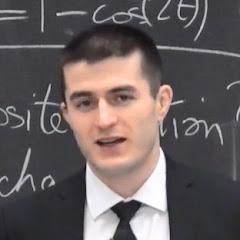 Lex Fridman
Key Moments
Judo legend Neil Adams discusses his career, the mindset of champions, and the evolution of judo.
Key Insights
The psychological drive to win is deeply ingrained and can be both a motivator and a source of struggle.
Nutrition, while crucial, can be overcome by immense talent and dedication, though it's not ideal.
The evolution of judo has seen shifts from traditional techniques to incorporating wrestling styles, leading to rule changes.
Handling defeat with grace is a hallmark of a true champion, often more revealing than victory.
The essence of judo extends beyond technique, encompassing respect, discipline, and a sense of reverence for the dojo.
Mental preparation and the ability to adapt to different opponents and styles are key to success in judo.
THE UNRELENTING DRIVE TO WIN AND THE PAIN OF LOSS
Neil Adams reflects on his lifelong, intrinsic desire to win, describing it as a fundamental part of his being. This drive propelled him to numerous championships but also meant that losses, particularly in Olympic finals, were deeply painful and haunted him for years. He uses the analogy of competitive instinct being as natural as limbs, highlighting the internal battle between the public persona and the inner competitor. The experience of losing, especially at the highest level, became a critical teacher, shaping his perspective on resilience and true sportsmanship.
NUTRITIONAL CHOICES AND THE ADAPTIVE ATHLETE
Adams candidly discusses the impact of suboptimal nutrition during his 1980 Olympic preparation, attributing it partly to financial constraints and a lack of readily available advice. Despite this, his exceptional talent and rigorous training allowed him to achieve success. He contrasts this with modern athletes who often have sophisticated nutritional support. The conversation also touches upon how some athletes, like Travis Stevens, can seemingly thrive despite poor diets, suggesting that exceptional talent and a different mindset can sometimes compensate for less-than-ideal preparation, though it's not a recommended strategy.
THE EVOLUTION OF JUDO AND RULE CHANGES
The discussion delves into how judo's style has evolved, particularly with the integration of Eastern Bloc wrestling techniques in the 1990s. This shift led to a more 'bent over' style and prompted rule changes from the IJF to differentiate judo from wrestling and emphasize dynamic throws over leg grabs. Adams explains how these rule adjustments aim to preserve the sport's traditional fluidity and spectacular throws, encouraging a return to upright, dynamic judo that emphasizes balance and momentum, as opposed to purely defensive or stalling tactics.
THE ESSENCE OF JUDO: RESPECT, REVERENCE, AND THE CHAMPION'S METTLE
Adams beautifully illustrates the core values of judo, emphasizing respect, reverence, and discipline. He shares how his young grandsons immediately gravitate towards the 'dojo' concept, highlighting its profound impact. A true champion, in his view, is defined not just by victories, but by how they handle defeat with grace and integrity. He cites examples of athletes who demonstrate this stoicism, showing that true greatness lies in maintaining composure and a forward-looking perspective even in the face of setbacks.
MASTERING THE TRANSITIONS: NEWaza AND THE GROUND GAME
The interview highlights the critical importance of 'newaza' (groundwork) in judo, especially the transition from standing to ground fighting. Adams explains that in judo, quick and decisive transitions are essential due to time constraints, unlike in jiu-jitsu where there's more room for methodical progression. He recounts how a specific loss to a triangle choke in 1978 fueled his dedication to mastering ground techniques, ensuring he was never defeated on the ground again in his competitive career, showcasing the power of learning from mistakes.
THE STRUGGLE WITH MENTAL DEMONS AND THE PATH TO RECOVERY
Adams openly discusses periods of depression and a struggle with excessive drinking following intense career pressures and personal difficulties, including divorce. He describes the 'fuzzy haze' and the effort to overcome it, emphasizing that acknowledging the problem and deciding to stop drinking were crucial turning points. His advice focuses on the immediate positive physical and mental effects of sobriety and the importance of identifying and addressing the root causes of one's struggles, highlighting that external circumstances are often less influential than internal perspective and mindset.
THE ART OF TRAINING: DEDICATION, SCIENTIFIC APPROACH, AND PARTNERSHIP
Adams stresses the paramount importance of hard training and scientific methodology in judo. He advocates for consistent, high-quality randori, emphasizing that volume alone isn't sufficient; the quality of repetition and dedicated practice are key. His training philosophy centered on building champions through rigorous physical conditioning, skill development, and the creation of a strong dojo atmosphere where athletes pushed each other. He also highlights the crucial role of good training partners and coaches in refining technique and developing resilience, noting that correct repetition is more vital than mere repetition.
COMMENTARY AS A CRAFT AND THE LEGACY OF GREATNESS
As a respected 'Voice of Judo,' Adams discusses his transition into commentary, initially doing voiceovers and evolving into a skilled commentator. He emphasizes the importance of understanding the sport's technical and tactical nuances, going beyond just what's visible. his commentary is characterized by passion, precision, and empathy for the athletes. He reflects on memorable events, the electric atmosphere of judo tournaments like those in Paris, and the profound impact of iconic athletes like Teddy Riner and Yamashita, celebrating their greatness while acknowledging the continuous evolution of the sport.
Mentioned in This Episode
●Software & Apps
●Organizations
●Books
●Concepts
●People Referenced
Common Questions
Neil Adams considers his decision to cut weight to the 71 kg division for the 1980 Olympics his biggest mistake. His nutrition was 'appalling', and he believes it negatively impacted his performance in the final, contributing to his loss.
Topics
Mentioned in this video
An American judoka who trained with Neil Adams's club.
A judo genius admired by Neil Adams for his phenomenal transitions and groundwork techniques, especially his sacrifice throws.
Instructor at Budokwai from whom Roger Gracie learned judo.
A friend and former mentee of Neil Adams, who learned techniques and training methodologies from him. Known for his hard training.
A four-time World Champion from Japan who never participated in the Olympics due to fierce national competition.
An American judoka who trained with Neil Adams's club.
French judoka, ten-time World Champion and two-time Olympic gold medalist, considered the 'greatest judo winner' by Neil Adams.
Judoka who has also given Teddy Riner trouble and is a potential Olympic contender.
Italian judoka who defeated Neil Adams in the 1980 Olympic final.
A formidable judoka whom Neil Adams trained with and views as a 'monster' due to his power and success at a young age.
German judoka who defeated Neil Adams in the 1984 Olympic final with a surprising drop seoi nage.
Three-time Olympic gold medalist, unique for never losing an Olympic fight and qualifying through tough Japanese trials.
An American judoka who trained with Neil Adams's club.
Japanese judoka, seven-time World Champion and two-time Olympic Champion, known for her long-term dominance.
An American judo and jiu-jitsu practitioner known for his approach to nutrition.
A five-time World Champion and Olympic champion judoka, highlighted for her grace in losing and determination.
A physically strong French judoka whom Neil Adams struggled against in the 1984 Olympics quarterfinals.
A judoka who can appear ordinary but performs exceptionally well in big tournaments.
Three-time World Champion and two-time Olympic gold medalist, noted for his versatility in judo.
Brazilian Jiu-Jitsu legend who recognized the importance of judo throws for transitions and trained judo at Budokwai.
A historic judo dojo where Abe and Maruyama had a legendary 26-minute trial match.
The organization that pressured the IJF to modify judo rules in 1995 to distinguish it from wrestling.
The governing body for judo that was pressured by the IOC to change rules regarding leg grabs to differentiate judo from wrestling.
A judo training center, likely associated with Jimmy Pedro, noted for its high level of judo in the United States.
The organization Neil Adams was working for when a significant incident related to his drinking occurred.
More from Lex Fridman
View all 547 summaries 146 min
Jensen Huang: NVIDIA - The $4 Trillion Company & the AI Revolution | Lex Fridman Podcast #494
 311 min
Jeff Kaplan: World of Warcraft, Overwatch, Blizzard, and Future of Gaming | Lex Fridman Podcast #493
 154 min
Rick Beato: Greatest Guitarists of All Time, History & Future of Music | Lex Fridman Podcast #492
 23 min
Khabib vs Lex: Training with Khabib | FULL EXCLUSIVE FOOTAGE
Found this useful? Build your knowledge library
Get AI-powered summaries of any YouTube video, podcast, or article in seconds. Save them to your personal pods and access them anytime.
Get Started Free