Key Moments
My Regrets about Quitting Medicine
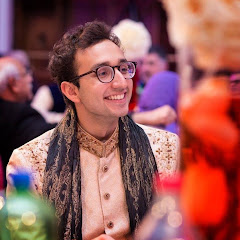 Ali Abdaal
Key Moments
One year after leaving medicine, Ali Abdaal reflects on the upsides of autonomy and income, but also the anxieties of uncertainty and the 'usefulness' debate.
Key Insights
The decision to leave medicine was prompted by the success of Ali's YouTube channel, making financial necessity a non-factor.
Key benefits of leaving medicine include significantly higher income, genuine enjoyment and excitement for work, and unprecedented autonomy over time and activities.
Despite financial security, significant anxieties arise from the lack of a clear career path, the fear of the online career's longevity, and the comparison to the impactful nature of medicine.
The concept of 'usefulness' is re-evaluated, arguing that education and philanthropy, through avenues like effective altruism, can have a quantifiable and potentially greater societal impact than traditional medical practice.
For those considering medicine, it is advised to apply only if genuinely passionate, as the arbitrage opportunity of using a medical degree for other careers is diminishing.
For current medical students or doctors unhappy with their path, it's crucial to either find a fulfilling specialty or develop transferable skills for an 'exit strategy' rather than being bound by sunk costs or societal prestige.
THE BACKSTORY: FROM CAMBRIDGE TO CREATOR
Ali Abdaal recounts his eight-year journey in medicine, starting with his medical studies at Cambridge in 2012. By 2013, he'd already launched his first business, Six Med, an early sign of his entrepreneurial drive. He began his YouTube channel in his fifth year of medical school, initially focusing on BMAT and interview preparation before expanding to vlogging. Graduating in 2018, he worked as a junior doctor for two years while simultaneously growing his YouTube presence. A planned break in 2020 for travel was derailed by the pandemic, leading him to focus entirely on content creation, which surged in popularity. By mid-2021, he decided to take the leap and likely leave medicine permanently to pursue a career in content creation, entrepreneurship, and writing.
THE FIVE PILLARS OF WORK AND WHY THEY SHIFTED
Abdaal breaks down the traditional reasons for working: money, enjoyment, helping people, purpose/meaning, and status/prestige. He explains that when his YouTube business began generating substantial income, money became irrelevant as a reason to stay in medicine. While he enjoyed aspects of being a doctor, he wouldn't choose it if he could design his ideal life, finding greater enjoyment in creative work. The 'helping people' aspect was a significant consideration, questioning his net societal impact. Purpose and meaning were found in creating helpful content, and he consciously chose not to let the prestige of being a doctor dictate his career decisions.
THE UPSIDES: FINANCIAL FREEDOM, FUN, AND AUTONOMY
One year post-medicine, the benefits are clear. Financially, the YouTube career offers an 'asymmetrical upside,' generating approximately £2 million in profit annually, vastly exceeding a doctor's salary. Even hypothetically, if earnings were equivalent, the decision would still favor his current path due to elements like asymmetrical upside and regret minimization. 'Fun' is redefined: instead of merely tolerating work, he genuinely looks forward to his daily tasks, a feeling he hadn't experienced in medicine. Most importantly, 'autonomy' grants him control over his time and activities, allowing flexibility like working from Bali, a stark contrast to the rigid scheduling and on-call demands of medical practice.
THE DOWNSIDES: CAREER ANXIETY AND THE USEFULNESS DEBATE
Leaving the predictable path of medicine has introduced significant 'career anxiety.' Unlike the clear progression in medicine, his current path is 'pathless,' requiring constant self-creation and comfort with uncertainty. The fear of his online career's longevity, viewing it as potentially short-lived like an athlete's prime, is a persistent concern, though he actively tries to ignore analytics. Another major anxiety is the existential question of 'usefulness.' He grapples with the perceived impact of making YouTube videos compared to saving lives, though he finds justification in educating and inspiring others. He also acknowledges the potential for greater tangible impact through effective altruism by donating a portion of his earnings to charities that save children's lives.
MONEY AS A DECISION FACTOR: HYPOTHETICAL SCENARIOS
Abdaal explores the decision-making process, even if money were not a factor. He posits that the risk of leaving a stable job is often overestimated, with a 'capped downside' because one can usually return to a similar role or find another. The concept of 'regret minimization' is crucial; he believes he would regret not trying his entrepreneurial venture more than trying and failing. He also analyzes the 'asymmetrical upside' of riskier ventures, where success can far exceed the capped potential of a traditional career like medicine. This perspective suggests that even without the massive income differential, the allure of potential gains and the avoidance of future regret would still favor the entrepreneurial path.
ADVICE FOR ASPIRING AND CURRENT MEDICAL PROFESSIONALS
For those considering medicine, Abdaal strongly advises against it unless genuinely passionate, citing that degrees in Computer Science or Engineering offer potentially higher earnings and more autonomy. For current medical students or doctors disillusioned with the profession, he emphasizes it's okay to change paths, warning against the sunk cost fallacy. He advocates developing transferable skills outside of medicine as an 'exit strategy,' creating optionality. He questions the current trend of doctors leaving medicine for consulting or YouTube, noting that the arbitrage advantage is gone. His core advice is to build valuable, in-demand skills, especially through side hustles or personal projects, to secure financial independence and the freedom to build a desired life, rather than being trapped in a career one dislikes.
Mentioned in This Episode
●Companies
●Organizations
●Books
●People Referenced
Quitting Medicine: Pros, Cons, and Advice
Practical takeaways from this episode
Do This
Avoid This
Common Questions
Dr. Ali Abdal quit medicine primarily because his YouTube channel and related businesses became significantly more lucrative and fulfilling. He prioritized autonomy, enjoyment, and a broader impact through his online content over the structured but less personally satisfying career of a doctor.
Topics
More from Ali Abdaal
View all 185 summaries 22 min
The psychology of making money
 34 min
If I Started YouTube from Scratch in 2026, I’d do THIS
 18 min
Brutally Honest Truth On How To Get Rich
 25 min
If I Started A Business in 2026, I'd Do This
Found this useful? Build your knowledge library
Get AI-powered summaries of any YouTube video, podcast, or article in seconds. Save them to your personal pods and access them anytime.
Get Started Free