Key Moments
Mr Money Mustache Interview
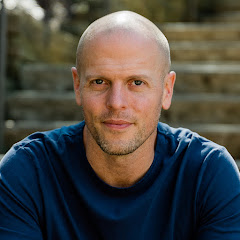 Tim Ferriss
Key Moments
Mr. Money Mustache advocates for optimizing life for happiness and minimal expense, leading to early retirement.
Key Insights
Early retirement is achievable by saving aggressively and optimizing spending for maximum happiness, not just minimal cost.
The '25 times annual spending' rule is a core financial principle for achieving early retirement.
Transportation, particularly car ownership, is a major area for optimization, with cycling and walking offering significant benefits.
Purchases should be evaluated based on their ability to remove negatives and increase happiness, not just add positives.
Voluntary hardship and simple activities like walking can be gateways to a more fulfilling and less consumptive lifestyle.
A balanced life, incorporating work, family, hobbies, and well-being, is crucial for sustainable happiness and success.
THE PHILOSOPHY OF MUSTACHIANISM
Pete Adeney, known as Mr. Money Mustache, espouses a lifestyle philosophy termed 'Mustachianism.' At its core, it challenges the consumerist culture prevalent in the US, which he believes leads people to work longer than necessary and sabotage their own happiness. The philosophy encourages thoughtful efficiency in spending, prioritizing activities that genuinely increase happiness, ultimately enabling early retirement from mandatory work and offering decades of freedom.
ACHIEVING FINANCIAL INDEPENDENCE EARLY
Adeney and his wife retired at age 30 in 2005, having saved enough to live off investment returns indefinitely. This was achieved by optimizing lifestyle for maximum fun at minimal expense, utilizing basic index fund investing. Their annual expenses are around $25,000-$27,000, with no mortgage or debt. The core mathematical principle for early retirement is accumulating 25 times one's annual spending in conservative investments, a concept largely unknown but highly effective.
OPTIMIZING SPENDING FOR HAPPINESS
The key to Mustachianism is not extreme frugality but optimizing spending for maximum happiness. Adeney analyzes life decisions, from cars and food to housing and transportation, to find the most efficient ways to derive joy. Often, these optimized choices, like cycling instead of driving, are not only less expensive but also contribute to health and well-being, creating a win-win scenario that contrasts with conventional financial advice that views saving as a negative obligation.
THE POWER OF TRANSPORTATION CHOICES
A significant area for optimization is transportation, with Adeney advocating for reduced car dependency. He highlights that the average American spends a substantial amount on car ownership and usage. By embracing bicycles and walking, individuals can significantly cut expenses, improve fitness, and gain valuable time. This shift moves away from the 'cage of the car' towards a more active and engaged way of life, where mobility enhances overall well-being.
DECISION-MAKING AND PURCHASING STRATEGIES
When considering a purchase, Adeney's internal dialogue focuses on avoiding the trivial and maximizing happiness. He questions whether an item will truly enhance his life or merely fill a void. Purchases that remove persistent negatives, like a broken appliance or a lack of personal space, are prioritized. Building his own studio, for instance, was a significant happiness-boosting expenditure that directly solved ongoing frustrations and provided a dedicated creative space.
BALANCING LIFE AND PURSUING PASSIONS
Adeney emphasizes that true success lies in a balanced life, not just financial wealth. He contrasts his approach with those who might solely focus on maximizing income. His own 'failures,' such as a stressful venture into home building that coincided with the housing crisis, taught him valuable lessons about resilience and the true meaning of retirement. He advocates for continuous experimentation with life outside of mandatory work, finding joy in creation, relationships, and embracing challenges like voluntary hardship.
INVESTING AND FINANCIAL EDUCATION
For investment, Adeney recommends a simple approach, often suggesting index funds like those from Vanguard, citing the founder John Bogle and author Jim Collins. He emphasizes that becoming a top investor is less critical than avoiding common financial pitfalls like leaving money in low-yield accounts or purchasing unsuitable insurance. Books like 'Your Money or Your Life' are highlighted for their philosophical approach to spending and financial independence, reinforcing that a substantial surplus of money is the true solution to financial challenges.
RECOMMENDED READING AND PHILOSOPHICAL INFLUENCES
Adeney frequently recommends books to his readers, including 'Happy City' by Charles Montgomery for urban planning insights, 'Elon Musk' by Ashlee Vance for understanding driven individuals, and 'The Magic of Thinking Big' by David J. Schwartz for mindset shifts. He personally values books that are direct and actionable, finding inspiration in authors who avoid flowery language. His own writing style is influenced by Schwartz's clear, anecdotal approach.
THE JOY OF BUILDING AND MANUAL LABOR
Both Adeney and Ferriss share a deep appreciation for manual labor and building. Adeney recounts building his own studio and renovating his home, finding immense satisfaction and happiness in the physical and problem-solving aspects. This aligns with Kevin Kelly's notion that building a home is a life-altering experience. This hands-on engagement is seen as a fundamental human activity that fosters well-being and a sense of accomplishment, often more so than purely digital or intellectual pursuits.
PARENTING AND CONSUMPTION
Adeney acknowledges that children represent a significant increase in consumption, especially in affluent societies. However, he emphasizes that the impact can be managed through conscious upbringing. Teaching children the value of money, resourcefulness, and a balanced lifestyle, rather than unchecked consumption, is key. He shares how he incentivizes his son to bike by paying per mile, teaching him about capital, interest, and the trade-offs involved in spending.
REDEFINING SUCCESS AND COMMUNITY
Adeney's definition of success extends beyond financial metrics, focusing on a balanced life that includes strong family relationships, personal health, and engaging adventures. He admires friends who have scaled their businesses to become lifestyle businesses, allowing them to work fewer hours and enjoy more freedom. The Mr. Money Mustache blog has fostered a strong community, where readers discuss personal finance and life optimization, creating a self-organizing movement around these principles.
THE CHALLENGE OF OVER-SATISFACTION
A primary challenge for Adeney is navigating the 'over-satisfied rat in a cage' syndrome – finding the balance between comfortable contentment and the drive for meaningful accomplishment. He strives to avoid both complacency and burnout, recognizing that happiness often comes from oscillation between periods of intense activity and relaxed decadence. This mental balancing act is an ongoing experiment, crucial for a fulfilling early retirement.
ENERGY, CLIMATE, AND FUTURE DIRECTIONS
Beyond personal finance, Adeney is passionate about energy and climate change solutions. He believes humanity is nearing a tipping point where renewable energy sources, particularly solar power, will become economically superior to fossil fuels. He sees potential for impactful change by popularizing these ideas and driving a societal shift towards more sustainable energy consumption, viewing it as a critical area for positive societal transformation.
BEST PURCHASES AND LUXURIES
Adeney's most impactful purchases often involve removing negatives or enhancing core experiences. These include his home studio, high-efficiency wood-burning stove, and quality windows. Vacations to semi-tropical locations, funded by his post-retirement income, represent a significant luxury, providing flexibility and rejuvenation. He values the freedom to travel at any time, a luxury in itself that stems from his optimized financial strategy.
ADVICE FOR READERS AND VOLUNTARY HARDSHIP
For those new to his philosophy, Adeney suggests embracing 'voluntary hardship' – consciously choosing challenging but beneficial activities. This could range from taking the stairs to cycling for errands. He sees this as a gateway to the Mustachian lifestyle, leading to greater happiness and financial freedom. Seneca's 'Moral Letters to Lucilius' is also recommended for its exploration of voluntary hardship as a means to appreciate life more fully and avoid hedonic adaptation.
Mentioned in This Episode
●Products
●Software & Apps
●Companies
●Books
●Concepts
●People Referenced
Common Questions
Mr. Money Mustache, Pete Adeney, reports his average annual family expenditures ranging from $25,000 to $27,000. This is primarily for discretionary spending as they do not have a mortgage or other major debts.
Topics
Mentioned in this video
A prominent investment company known for its low-cost index funds, recommended by Mr. Money Mustache for conservative investments to fund early retirement.
A company that provides height-adjustable standing desk solutions, allowing users to switch between sitting and standing, which is recommended for health.
Warren Buffett's holding company, whose shareholder meeting Tim Ferriss attended.
A large e-commerce company the host mentions as originating from Ottawa, Canada.
A short-term rental platform, given as an example similar to VRBO for vacation rentals.
A financial advice platform that offers high-end financial advice, portfolio monitoring, rebalancing, and tax-loss harvesting for any account size at a lower cost than traditional managers.
A warehouse club known for selling products in large quantities, from which Mr. Money Mustache buys coffee and nuts to save money.
A vacation rental website mentioned as a way Mr. Money Mustache and his wife find nice houses to rent on beaches for their winter vacations.
Author of 'Dune,' mentioned by Tim Ferriss.
Also known as 'Mr. Money Mustache', he is the guest on the podcast, a computer engineer who retired at age 30 and writes a popular blog about his financial philosophy.
An active investor and savant in understanding business, mentioned for his emotional detachment and his advice to non-professional investors to use index funds.
Author of 'Tribe,' mentioned by Tim Ferriss.
Founder of Vanguard, whose books are recommended for understanding index fund investing.
Author of 'Happy City,' a book that explores urban planning inefficiencies and better resource allocation.
Author of 'The Magic of Thinking Big,' praised for his writing style and simple, effective advice.
Author of 'The Smartest Investment Book You'll Ever Read,' mentioned by Tim Ferriss.
Author of 'Stumbling on Happiness,' whose work explores how people often mispredict what will make them happy.
Author of 'Gratitude,' mentioned by Tim Ferriss.
Former U.S. Secretary of the Treasury, whose book 'Stress Test' about the financial crisis Mr. Money Mustache found captivating.
Author of 'The Little Book That Beats the Market' and 'You Can Be a Stock Market Genius,' and a respected value and event-based investor.
Founding editor of Wired Magazine, who Tim Ferriss had on his podcast and who believes everyone should build a home at least once in their lifetime.
Author of the biography 'Elon Musk,' mentioned by Mr. Money Mustache.
A Stoic philosopher whose 'Moral Letters to Lucilius,' specifically letter 13 on festivals and fasting, is recommended by Tim Ferriss for its concept of voluntary hardship.
A product developer and licensor who introduced Tim Ferriss to 'The Magic of Thinking Big,' known for prototyping simple products and licensing them to large companies.
Host of the 'Cosmos' series, admired by Mr. Money Mustache for his scientific and engaging approach.
Author of 'Bird by Bird,' mentioned by Tim Ferriss.
A co-founder of the Effective Altruism movement, mentioned by Tim Ferriss.
A blogger and author of 'The Simple Path to Wealth,' recommended for his accessible explanation of index fund investing.
Vice Chairman of Berkshire Hathaway, known for his concise answers during Q&A sessions.
A book by Jim Collins, recommended as an even simpler, story-based explanation of why to invest in index funds.
A biography of Elon Musk, recommended by Mr. Money Mustache because he related to Musk's childhood feeling that the world was illogical and his desire to change it.
A sophisticated book by Joel Greenblatt, highly regarded by successful hedge fund managers despite being intended for novices, recommended as a cautionary tale.
An 800-page book by Timothy Geithner describing the financial crisis, found captivating by Mr. Money Mustache.
A book mentioned by Tim Ferriss.
A book by Joel Greenblatt, recommended for understanding value investing fundamentals and company analysis, rather than technical fluctuations.
A 1950s classic by David J. Schwartz, highly recommended for its positive mindset and humor, which profoundly influenced both Mr. Money Mustache and Tim Ferriss.
A book by Oliver Sacks, mentioned by Tim Ferriss.
A book by Daniel Solin, focusing on low-cost index funds, enjoyed by Tim Ferriss.
A book by Charles Montgomery, recommended for those interested in urban planning and optimizing resource use, which opened Mr. Money Mustache's mind to inefficient city design.
A book by Anne Lamott, mentioned by Tim Ferriss.
A book by Sebastian Junger, mentioned by Tim Ferriss as one of the books he keeps visible in his living room.
A collection of letters by Seneca the Younger, with Letter 13 on festivals and fasting being particularly relevant to voluntary hardship and recalibrating happiness.
An anthology of writing on minimalism, mentioned by Tim Ferriss.
A book recommended for its philosophy that consumption doesn't lead to happiness and for teaching how to achieve financial independence by modifying spending.
A book by Tim Ferriss that covers various topics, including effective altruism, mentioned by Mr. Money Mustache.
A book recommended by Tim Ferriss as a cautionary tale about who active investors are competing against, detailing the birth of the hedge fund model.
A book by Joel Greenblatt, mentioned by Tim Ferriss as a later work.
The city where Pete Adeney and his family reside, known for its outdoor opportunities and where Pete primarily uses a bicycle for transportation.
The current town where Mr. Money Mustache lives, and where he envisions buying a historic commercial building to create a community space for music, parties, and teaching.
One of Pete Adeney's hometowns, where he held an early blog-related meetup that attracted 200 people, marking a significant moment for his community.
The city where the Berkshire Hathaway shareholder meeting is held, described as a 'gigantic rock concert for investment nerds.'
A city-state referenced by Tim Ferriss as an example of a 'town within a town' concept, similar to Mr. Money Mustache's vision for a mini-town.
A magazine that published a profile of Mr. Money Mustache, which he reviewed with inline responses to correct misconceptions.
A remake of the documentary series, hosted by Neil deGrasse Tyson, which Mr. Money Mustache watched and enjoyed, finding it a great education for his son.
A science fiction novel by Frank Herbert, mentioned by Tim Ferriss as a book he keeps visible in his living room.
A technology magazine co-founded by Kevin Kelly, mentioned by Tim Ferriss.
A philosophical and social movement that applies evidence and reason to determine the most effective ways to improve the world, which Mr. Money Mustache supports through donations.
A lifestyle and philosophy advocated by Mr. Money Mustache, focusing on thoughtful spending, efficiency, and early retirement through optimized living and index fund investing.
A blog that hosted a guest post by Mr. Money Mustache, leading to a significant increase in his readership and the realization of his blog's impact.
A blog started by Pete Adeney in 2011, detailing his philosophy of financial independence and optimization for maximum happiness with minimal expense, which has become a worldwide phenomenon.
A website where Mr. Money Mustache posted inline responses to correct inaccuracies in a New Yorker profile about him.
More from Tim Ferriss
View all 690 summaries 184 min
Daredevil Michelle Khare — How to Become a YouTube Superstar
 81 min
Q&A with Tim — The Upcoming AI Tsunami and Building Offline Advantage
 91 min
The Random Show, Couch Edition! — Supplements, Breathing and Balance Training, and Much More!
 76 min
How to Quiet the Ruminative Mind and Avoid The Traps of Self-Help — Tim Ferriss
Found this useful? Build your knowledge library
Get AI-powered summaries of any YouTube video, podcast, or article in seconds. Save them to your personal pods and access them anytime.
Get Started Free