Key Moments
Morgan Housel — Contrarian Money and Writing Advice, Three Simple Goals to Guide Your Life, and More
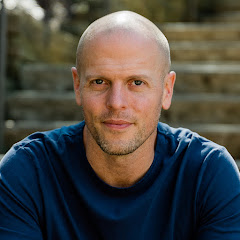 Tim Ferriss
Want to know something specific about what's covered?
We've already dissected every moment. Ask and we will deliver (with timestamps).
Key Moments
Morgan Housel discusses constancy in human behavior, contrasting with predictions of change, and shares insights on money, writing, and life.
Key Insights
Focusing on unchanging aspects of human behavior (like greed and fear) is more effective for understanding the future than predicting change.
Achieving wealth is less valuable if it comes with significant 'social debt' or the pressure to impress others.
True contentment with wealth is possible, but it doesn't necessarily equate to happiness; money amplifies existing dispositions.
Effective writing stems from genuine internal need and clarity of thought, not forcing ideas onto paper.
Life's significant moments often hinge on seemingly small, random decisions, highlighting life's fragility.
Sustainable success involves choosing the right 'game' and playing it for the long term, rather than maximizing short-term gains.
THE POWER OF WHAT STAYS THE SAME
Morgan Housel introduces his new book, 'Same As Ever,' inspired by Warren Buffett's anecdote about Snickers bars remaining bestsellers through decades of economic change. This highlights Housel's core thesis: predicting the future is challenging because people focus on what changes, while true insight comes from understanding enduring aspects of human behavior and societal patterns, which have remained constant for centuries.
WRITING AS INTROSPECTION AND NECESSITY
Housel emphasizes that impactful writing, for him, arises from an internal compulsion rather than external pressure. He likens it to Jason Zweig's advice that one should only write a book if they 'have to.' This process involves wrestling with ideas until they demand to be written, often facilitated by movement and thinking rather than sitting at a desk. This intrinsic motivation is key to avoiding 'garbage' writing and producing meaningful work.
RICH AND ANONYMOUS: BALANCING WEALTH AND SOCIAL DEBT
The concept of 'social debt' is introduced, explaining that with wealth comes an obligation to one's social circle. Housel uses the example of NBA athletes going bankrupt not from personal extravagance, but from supporting extended family. He posits that the ideal state is 'rich and anonymous,' a state achieved by a family he observed who intentionally avoided public attention to maintain normalcy and protect their children from the distorting effects of wealth and recognition.
RAISING CHILDREN AND THE VALUE OF LESS
Housel argues that giving children less money is crucial for their development, reframing it as preserving their opportunity to earn and be self-dependent. He uses his own childhood and lessons from investor Shelby Davis, who refused to 'rob' his grandchildren of the opportunity to earn, as examples. This approach fosters self-reliance and prevents the entitlement that can arise from unearned abundance, likening excessive pampering to hindering a child's ability to learn basic skills.
MONEY, HAPPINESS, AND CONTENTMENT
While money rarely buys happiness, Housel suggests it can buy contentment. Happiness is described as peak joy, while contentment is the absence of anxiety and satisfaction with one's life. He illustrates this with the example of J. Paul Getty, who was rich but deeply unhappy. Money amplifies existing states; it makes happy people happier and depressed people more so, but it doesn't cure fundamental unhappiness. It's better to start with a baseline of happiness for money to enhance it.
THE DELUSION OF CONTROL AND LIFE'S FRAGILITY
A near-fatal avalanche experience serving as a stark reminder of life's fragility and the profound impact of seemingly minor decisions. Housel emphasizes that success is often a result of chance and unforeseen circumstances, not solely calculated choices. This perspective encourages humility and a recognition that our control over life's outcomes is limited, urging a focus on behaviors and mindsets that allow one to navigate inevitable uncertainty.
INCENTIVES, OBSCURITY, AND SHIFTING PERSPECTIVES
Housel explores how incentives shape our views and actions, citing examples like support for Hitler in Germany or El Chapo in Mexico due to dire economic conditions. He also touches on the unappreciated value of not needing to impress others as a key financial asset. His insightful questions prompt listeners to consider what they might be ignoring, how incentives influence their beliefs, and what unsustainable aspects of success they might be trying to avoid.
THE ENDURING POWER OF TEXT AND THE RISE OF AUDIO
Housel observes a significant shift towards audio content, noting that audiobook sales can outpace physical books. He attributes this to reading being a difficult task for many, while listening is more accessible, especially in an attention-scarce economy. While acknowledging the growing dominance of audio, he maintains a personal preference for text, highlighting its ease of rereading and deeper absorption, and reiterates his identity as a writer.
SUSTAINABILITY OVER PEAK PERFORMANCE
Housel advocates for living life at 80-90% of potential to ensure sustainability in careers, relationships, and strategies. He differentiates this from striving for 100%, which often leads to burnout. This philosophy is applied to his personal career choices, noting that he often steps away from fields when they become overly competitive or change in ways that no longer suit his sustainable approach, prioritizing longevity and consistent engagement over short-term, unsustainable gains.
LIVING WITH CONSTANCY AND EMPHASIS ON BEHAVIOR
Housel concludes by reinforcing that true wisdom lies in adopting behaviors that allow one to absorb life's unpredictable events, rather than trying to forecast them. He likens this to viewing life from a '30,000-foot' perspective, focusing on broad, macro-level behaviors. The goal is to achieve equanimity by accepting that some things are unknowable and focusing on understanding the enduring human reactions that guide our world.
Mentioned in This Episode
●Products
●Software & Apps
●Companies
●Organizations
●Books
●Concepts
●People Referenced
Common Questions
Warren Buffett's 'Snickers' lesson highlights the importance of focusing on things that remain constant over time, like human behavior (greed and fear), rather than trying to predict what will change. He used the example of the Snickers bar being a bestseller in both 1962 and the present day to illustrate enduring appeal.
Topics
Mentioned in this video
Cited regarding his biography, where he noted that being rich and depressed removed the hope that money would fix his problems.
Described as the greatest and most thorough biographer, known for his decades-long research, meticulous approach, and motto 'turn every page.'
Wife of FDR, featured in 'No Ordinary Time' and quoted for her wisdom on accepting uncertainty at age 60.
An author whose success is highlighted as proof that text content still works and travels effectively.
Used as an example of a public figure with many biographies, highlighting how difficult it is to find a unique angle.
Biographer of Elon Musk, who interviewed Musk's first wife, Justine.
Mentioned for his quote about how terrifying it would be to realize tiny decisions can completely change one's life.
Interviewer who questioned David McCullough about the criticality of the wind change during the Revolutionary War.
A lawyer who kept a detailed diary during the Great Depression, later published as 'The Great Depression: A Diary'.
Described as a different person in early 1980s interviews, calm and measured, before reaching immense fame and wealth.
Comedian and 'Bonafide genius' noted for his understanding of human behavior.
Eyewitness to the Triangle Fire who dedicated her life to worker rights, becoming FDR's Secretary of Labor and the first female cabinet member.
A renowned investor, known for betting on things that stay the same forever, illustrated by his Snickers candy bar anecdote.
A ruthless drug lord who gained support from local Mexican communities by providing aid and infrastructure, illustrating the power of incentives.
Used as an example of someone who might be an excellent speaker but not necessarily a good writer, highlighting the difference in skills.
Cited for his quote about focusing on what would be true in 999 out of a thousand iterations of one's life.
Mentioned for his decision to stop using email, to get to the 'bottom of things' rather than stay on top.
Commander of the Continental Army, whose survival at the Battle of Long Island was attributed to a chance change in wind direction.
Cited as an example of a celebrity whose fame allows him to wear anything without losing admiration, reinforcing not needing to impress visually.
Documentary filmmaker skilled at storytelling with known information, contrasted with Robert Caro's skill in uncovering new facts.
A billionaire investor from the 1980s who refused to give inheritance to his grandchildren, believing it would rob them of earning their own income.
Comedian noted as a 'genius' for his understanding of human behavior.
US President, whose Secretary of Labor, Francis Perkins, was influenced by the Triangle Fire; also profiled in 'No Ordinary Day' for his stress management during WWII.
Discussed in the context of how economic incentives (promises of jobs, wealth) led a desperate German population to support him.
Berkshire Hathaway Vice Chairman, praised for his wisdom and succinctness, but also noted for his brusque communication style.
Former richest man in the world, depicted as morose despite his wealth, envying those happier than him, illustrating money's limited impact on happiness.
A great friend and mentor from The Wall Street Journal who advised only to write a book if one 'has to do it'.
Comedian mentioned as an example of someone who gains admiration through humor and wisdom, not external displays of wealth or physical appearance.
Author of 'No Ordinary Day,' praised for her remarkable historical writing and thoroughness.
His biography and first wife, Justine, are mentioned, highlighting how money and fame changed his personality, and his tears over sacrificing family time for work.
Former US President and subject of an extensive biography by Robert Caro, whose chauffeur provided rare insights through Caro's persistent interviewing.
Grandson of Shelby Davis, who did not receive an inheritance, aligning with his grandfather's philosophy of self-reliance.
An amateur sailor who faked a solo round-the-world race, ending in fraud, mental instability, and apparent suicide, driven by an obsession with respect and admiration.
Repeat guest on the Tim Ferriss Show, partner at The Collaborative Fund, author of 'The Psychology of Money' and 'Same As Ever.'
Author mentioned for his distinction between 'swoopers' (vomit first draft) and 'plotters' (line-by-line perfectionists) in writing.
Referenced as an example of someone who experienced being 'poor and famous,' a challenging position according to Morgan Housel.
An instrumental figure in building modern New York City, also a subject of a Robert Caro biography.
A world-renowned historian, who stated that without the change in winds at the Battle of Long Island, the United States might not exist.
Elon Musk's first wife, who observed how money and fame altered his personality.
Friend cited for his philosophy on marriage: if both spouses desire to serve each other without expectation, the relationship thrives.
An organization that awarded Morgan Housel the 'Best in Business Award' twice.
An ancient civilization in Mesopotamia, where the birth of cuneiform writing took place.
The competitive ski team Morgan Housel and his friends were part of in Lake Tahoe.
A building funded by Warren Buffett in Omaha, serving as a reminder of his impact and how such visibility can change a person's self-perception.
An archive containing 8,000 boxes of material that Robert Caro meticulously researched for his biography of LBJ.
A financial news channel, mentioned in the context of Charlie Munger's blunt on-air comments.
A company where Morgan Housel serves on the board of directors.
A social media platform mentioned in the context of its competition with TikTok and its reward system, influencing content creation.
A platform where Morgan Housel observes his seven-year-old son interacting, highlighting its influence on children's expectations and desire for social media attention.
A bookstore chain used to illustrate the concept that while many books exist, each individual book still demands focused attention once held.
Named Morgan Housel one of the 50 most influential people in markets in 2022.
A publishing platform mentioned as an example of the enduring relevance of text-based content despite the rise of other media.
A social media platform mentioned as driving changes in content creation, particularly towards short-form video, affecting podcasting.
A venture capital fund where Morgan Housel is a partner.
A concept about the ideal financial state, avoiding the social debt and pressures that come with public wealth.
A series of programs and reforms initiated by FDR, stated to have partly originated from the impetus of the Triangle Fire and worker rights advocacy.
Mentioned in connection with separating what one can control from what one cannot for reducing anxiety.
An award won by Morgan Housel.
An ancient system of writing used in Sumer, discussed in the context of timeless human dynamics found in ancient texts.
An ancient Greek philosophy, mentioned as a source of the idea of separating what one can control from what one cannot, which helps reduce anxiety.
Used as an example of individuals who often accrue significant 'social debt' due to sudden wealth, leading to bankruptcy.
A book mentioned as part of a list of interesting reads.
A book by Benjamin Roth, described as the best economics book ever written, documenting the Great Depression and its timeless human reactions.
A book advocating for giving money to children when they need it most (in their 30s and 40s) rather than as a death inheritance.
A book compiling Charlie Munger's wisdom, recommended for its succinctness and high wisdom, a positive counterpoint to other 'dark' books.
A book interviewing German civilians during Nazi Germany, highlighting how economic incentives led people to support Hitler despite his downsides.
Tim Ferriss's book, noted for its foundational role in his career and its enduring popularity despite outdated tactical advice.
Morgan Housel's new book, focusing on human behaviors and principles that remain constant over time.
One of Tim Ferriss's bestselling books, continuing to be popular.
A book detailing the tragic story of Donald Crowhurst, an amateur sailor who faked a round-the-world voyage, ultimately leading to his demise.
Morgan Housel's bestselling book, which has sold over 3 million copies and been translated into 53 languages.
A historical account of the 1911 Triangle Shirtwaist Factory fire, which catalyzed the worker rights movement in the United States.
A platform mentioned in the context of the overwhelming volume of available podcasts, which can diminish the perceived profundity of any single piece of content.
A note-taking tool mentioned as a way for Morgan Housel to extract insights from books, contrasting with passive podcast listening.
An example of a rapidly evolving technology that quickly makes older tools and advice obsolete, illustrating the futility of constantly updating 'tools' in books.
The ocean where Donald Crowhurst aimlessly drifted for six months while faking his round-the-world voyage.
Setting of the Triangle Shirtwaist Factory fire and subsequent worker rights legislation.
Location where Morgan Housel grew up as a competitive ski racer, and where the tragic avalanche event occurred.
More from Tim Ferriss
View all 700 summaries 88 min
The Legendary Hollywood Power Broker — Guy Oseary on 36 Years of Managing Madonna, 26 IPOs, and More
 77 min
The Many Benefits of Coca — The “Divine Leaf” with 8,000+ Years of Use
 100 min
Inside The AI Race: DeepMind, OpenAI, Anthropic, China, and The Race to Superintelligence
 108 min
The Path from The Soviet Union to Building Multi-Billion Dollar Companies — Max Levchin
Ask anything from this episode.
Save it, chat with it, and connect it to Claude or ChatGPT. Get cited answers from the actual content — and build your own knowledge base of every podcast and video you care about.
Get Started Free