Key Moments
Matt Botvinick: Neuroscience, Psychology, and AI at DeepMind | Lex Fridman Podcast #106
 Lex Fridman
Key Moments
Neuroscience and AI intersect, with potential for understanding the brain and building human-like intelligence.
Key Insights
Neuroscience and psychology are converging into a unified science focused on understanding the brain's role in producing adaptive behavior.
The gap between high-level cognitive functions and low-level neuronal mechanisms remains a significant challenge in neuroscience.
Deep learning and neural networks offer powerful tools for modeling complex cognitive processes, bridging the gap between abstract psychological models and physical mechanisms.
Meta-learning, the ability to learn how to learn, appears to be an emergent property in recurrent neural networks trained on related tasks, with potential parallels in the brain.
Dopamine's role in reinforcement learning might be more complex than previously thought, potentially involving distributional coding of reward prediction errors.
Understanding human-AI interaction, including dimensions of capability and warmth, is crucial for developing beneficial and ethically aligned AI systems.
THE INTERSECTION OF PSYCHOLOGY AND NEUROSCIENCE
The conversation begins by challenging the traditional separation between psychology and neuroscience. Matt emphasizes that neuroscience's ultimate goal is to understand what the brain is for, which he posits is producing adaptive behavior from perceptual inputs to behavioral outputs. This perspective blurs the lines, suggesting that understanding cognitive functions and their underlying neural mechanisms are inseparable aspects of a single scientific endeavor. While acknowledging the progress in mapping high-level functions and observing neuronal activity, a significant "yawning gap" remains in understanding the precise neuronal mechanisms driving these computations.
THE ROLE OF METAPHOR AND MECHANISM IN EXPLANATION
The discussion delves into the use of metaphors in cognitive psychology, such as 'attention' or 'memory retrieval,' that describe functions without immediately grounding them in physical mechanisms. Drawing a parallel to Mendelian genetics preceding the discovery of DNA, it's argued that these functional metaphors are valuable for guiding research. However, the ultimate goal, particularly in Botvinick's view, is to reduce these psychological phenomena to physical mechanisms, primarily the interactions of neurons. This mechanistic understanding is seen as essential for truly explaining how behavior arises, moving beyond descriptive models to causal ones.
CONNECTIONISM, DEEP LEARNING, AND NEURAL NETWORKS
Botvinick's journey into science was sparked by connectionism, the precursor to modern deep learning. He highlights the power of neural networks, particularly the PDP (Parallel Distributed Processing) books, in modeling human cognition. The appeal lies in their ability to capture the richness and complexity of cognitive tasks, such as language processing (e.g., past tense formation), by learning from data. This approach offers a concrete way to bridge the gap between abstract psychological concepts and the physical substrate of the brain, demonstrating how complex behaviors can emerge from interacting simple units.
META-LEARNING AND FLEXIBILITY IN INTELLIGENCE
A key theme explored is meta-learning, or 'learning to learn.' Botvinick's group discovered that recurrent neural networks, when trained on a series of related tasks, spontaneously develop this capability. The network's internal dynamics, shaped by slow learning over time, effectively become a learning algorithm. This emergent property is contrasted with engineered meta-learning algorithms and is seen as crucial for understanding how the brain, particularly the prefrontal cortex with its recurrent connectivity and working memory, might achieve flexibility and adapt quickly to new situations. This emergent, non-engineered meta-learning holds promise for creating more adaptable AI.
NEUROTRANSMITTERS AND REINFORCEMENT LEARNING: THE DOPAMINE CONNECTION
The conversation highlights recent research into dopamine and its potential role in reinforcement learning. A prevailing idea is that dopamine signals resemble 'reward prediction errors' in standard RL algorithms. However, new research suggests that dopamine might employ a 'distributional code,' representing the entire distribution of potential rewards rather than just a single average value. This distributional perspective, inspired by advancements in AI, has been tested and preliminarily confirmed by studying dopamine's activity in the context of reward prediction. This research exemplifies the two-way street between AI and neuroscience, where AI insights can illuminate biological mechanisms.
THE FUTURE OF AI AND HUMAN-AI INTERACTION
Looking ahead, Botvinick expresses excitement about the development of AI systems with human-like flexibility, capable of performing many tasks and adapting quickly. He also emphasizes the critical importance of studying human-AI interaction, moving beyond purely technical capabilities to incorporate aspects like 'warmth'—compassion and genuine connection. This research is seen not just as an engineering problem but as a path towards understanding human preferences, culture, and even fundamental questions about the good life, potentially leading to cultural renewal. The goal is to create AI that not only performs tasks but enhances human existence in a beneficial and ethically sound manner.
Mentioned in This Episode
●Products
●Companies
●Organizations
●Books
●Concepts
●People Referenced
Common Questions
Matt Botvinick believes neuroscience is at a 'weird moment' where there's a high-level, coarse understanding of brain function and behavior, alongside incredible progress in single-unit and dendritic level technologies. However, there's a significant gap in understanding the specific neuronal mechanisms underlying these higher-level computations. He sees psychology and neuroscience as fundamentally intertwined in this pursuit. (Timestamp: 210)
Topics
Mentioned in this video
A computational neuroscientist in Matt Botvinick's group, involved in the research connecting dopamine to distributional temporal difference learning.
A social psychology researcher at Princeton, whose two-dimensional scheme for dissecting human attitudes (ability and warmth) is relevant to developing 'warm' AI systems.
A pioneer in neural network research, whose early studies with Botvinick highlighted the importance of environmental structure in shaping cognition.
A cognitive psychologist, linguist, and popular science author known for his work on human progress. Mentioned in the context of positive trajectories for AI and human progress.
A collaborator of Matt Botvinick and an early contributor to distributional temporal difference learning, who initiated the discussion about dopamine's potential role in distributional coding.
A researcher at Harvard, who collaborated on the paper linking dopamine and temporal difference learning, whose specific experimental tasks were used to make predictions.
A neuroscientist who is quoted at the end of the podcast, speaking poetically about the human brain's ability to ponder itself and the universe.
Former KGB sleeper agent and author of 'Deep Undercover', discussed on the Jordan Harbinger Show.
A test of a machine's ability to exhibit intelligent behavior equivalent to, or indistinguishable from, that of a human. Discussed in the context of assessing the 'magic' of language and the ultimate challenge of AI displaying warmth.
A theoretical model of computation that can simulate any computer algorithm, mentioned by Matt Botvinick as a way to understand humans' capacity to emulate complex behaviors.
A method in reinforcement learning that represents future rewards not as a single expected value, but as a distribution of possible outcomes, leading to richer representation learning and accelerated performance.
More from Lex Fridman
View all 547 summaries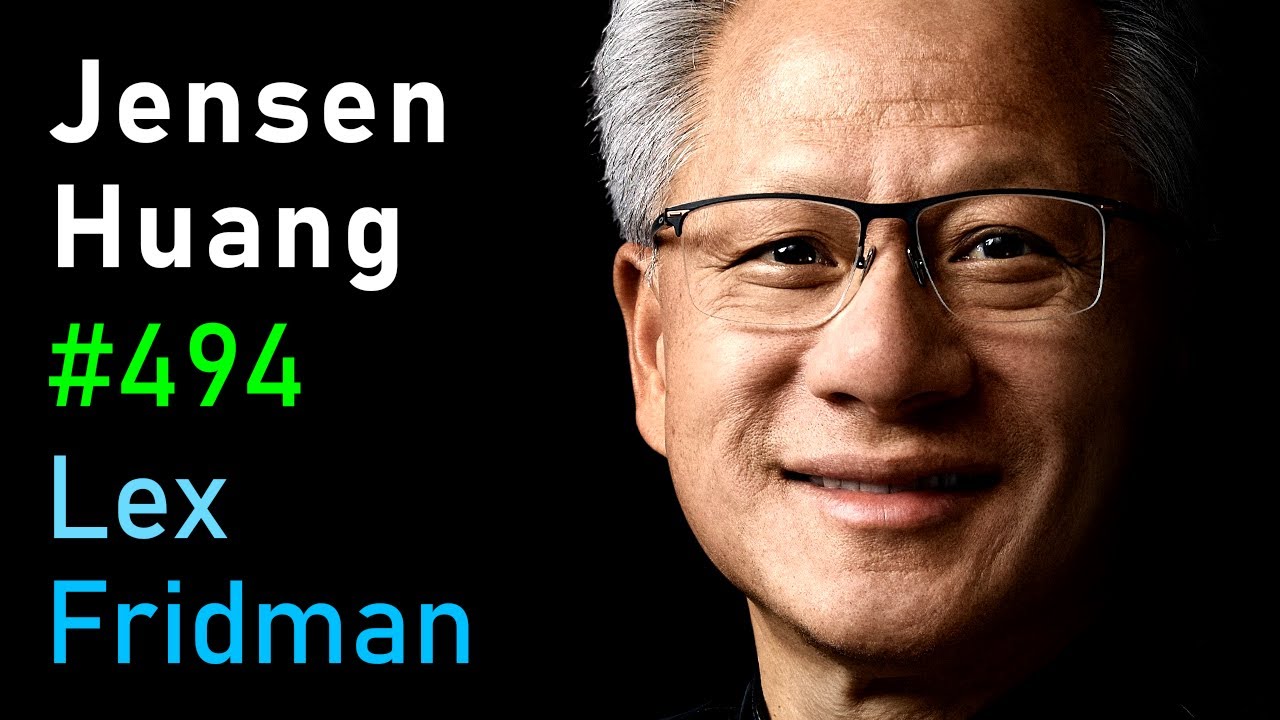 146 min
Jensen Huang: NVIDIA - The $4 Trillion Company & the AI Revolution | Lex Fridman Podcast #494
 311 min
Jeff Kaplan: World of Warcraft, Overwatch, Blizzard, and Future of Gaming | Lex Fridman Podcast #493
 154 min
Rick Beato: Greatest Guitarists of All Time, History & Future of Music | Lex Fridman Podcast #492
 23 min
Khabib vs Lex: Training with Khabib | FULL EXCLUSIVE FOOTAGE
Found this useful? Build your knowledge library
Get AI-powered summaries of any YouTube video, podcast, or article in seconds. Save them to your personal pods and access them anytime.
Get Started Free