Key Moments
Margaret Atwood — A Living Legend on Creative Process, The Handmaid’s Tale, and More
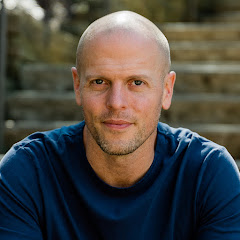 Tim Ferriss
Key Moments
Margaret Atwood discusses creative process, The Handmaid's Tale, speculative fiction, and practical utopias.
Key Insights
Atwood writes poetry in cursive and novels through diligent 'perspiration,' suggesting different cognitive processes for each.
Her creative process is organic, with ideas evolving from poems to plays to novels, demonstrating a fluid and interconnected approach to storytelling.
Atwood attributes her vitality to genetics, insatiable curiosity about how things work, and a unique perspective informed by astrology and mythology.
She resists labels and 'closed boxes,' emphasizing that individuals, like nature, are complex and contain multitudes, defying simplistic categorization.
Atwood differentiates between science fiction (imaginary worlds) and speculative fiction (extrapolations of the present), leaning towards the latter.
Her 'Practical Utopias' project focuses on developing actionable, green, and scalable solutions for global challenges, moving beyond idealistic visions.
THE DUALITY OF CREATIVE EXPRESSION: POETRY AND PROSE
Margaret Atwood delineates a fascinating difference in her approach to poetry and prose. Poetry, often composed in cursive, arises spontaneously and is linked to patterning, music, and mathematics. Conversely, novel writing, described as 10% inspiration and 90% perspiration, demands sustained effort and narrative construction. This distinction suggests that different parts of the brain are engaged, with prose drawing from the more gossip- and story-oriented aspects of human experience, while poetry taps into a more abstract, pattern-recognition capacity.
AN ORGANIC AND EVOLVING CREATIVE PROCESS
Atwood's writing journey is characterized by a fluid, non-linear evolution of ideas. She avoids rigid outlines, preferring to 'jump in.' This organic process is exemplified by the transformation of a poem about Grace Marks into a television play and subsequently into the novel 'Alias Grace,' which was later adapted for television. This iterative development highlights her belief that creative works can transform and deepen over time, with characters and narratives finding new forms and complexities.
THE CURIOUS MIND: SUSTAINING VITALITY AND EXPLORATION
Approaching 82, Atwood attributes her sustained vitality to a blend of genetics, a profound curiosity, and an open-minded understanding of the world. Influenced by her parents' curiosity, she actively explores new technologies and ideas, delving into their pros and cons, and often uncovering unexpected applications. Her interest extends to fields like astrology and palmistry, not as belief systems, but as historical frameworks for understanding human worldviews and as sources of narrative inspiration.
RESISTING LABELS AND EMBRACING COMPLEXITY
Atwood firmly resists categorization, viewing labels as 'closed boxes' thatNature does not employ. She argues that individuals, like the natural world, are complex and contain multitudes, with various interconnected facets. This perspective informs her writing, which focuses on individual characters rather than stereotypes, and her approach to social issues, where she insists on understanding the nuances of terms like 'feminist' rather than accepting broad, potentially divisive labels.
SPECULATIVE FICTION AS A MIRROR TO THE PRESENT
Atwood distinguishes between science fiction's creation of entirely new worlds and speculative fiction's extrapolation of existing or emerging realities. Her own writing leans towards the latter, influenced by teenage readings of dystopian literature like '1984' and authors such as Ray Bradbury. This focus allows her to explore potential futures by examining current societal trends, technological advancements, and human behaviors, making her work a potent commentary on our present condition.
PRACTICAL UTOPIAS: BUILDING A GREENER, FAIRER FUTURE
Her 'Practical Utopias' project represents a shift from idealistic blueprints to actionable solutions for global crises, particularly climate change. Recognizing the failures of past utopian endeavors, this initiative emphasizes collaboration, innovation, and pragmatism. It seeks to bring together diverse perspectives to design sustainable, affordable, and scalable ways of living, addressing everything from food production and housing to resource management and end-of-life practices.
THE HISTORICAL CONTEXT OF REVOLUTION AND SOCIAL CHANGE
Atwood draws parallels between the idealistic beginnings of revolutionary movements and their subsequent descent into totalitarianism or terror, citing examples like the French and Russian Revolutions. She highlights the challenges of maintaining ideals when power structures are overthrown, noting that such transformations often occur within confined spaces and are prone to internal conflicts and purges, emphasizing the difficulty of constructing lasting, just societies.
THE ART OF STORYTELLING AND THE POWER OF CONNECTION
The conversation touches on the historical role of coffee houses as hubs for intellectual exchange and the evolution of literary culture, from small literary magazines to large festivals. Atwood shares her own experiences with this vibrant subculture, including 'poet rug exchanges' and coffee house readings, illustrating the importance of community and shared experience for artists. She also discusses her work with the 'Long Pen' technology, which facilitated remote book signings, further demonstrating her innovative spirit.
THE NUANCES OF CHARACTER DEVELOPMENT: AUNT LYDIA'S EVOLUTION
Addressing a question about 'The Handmaid's Tale,' Atwood reveals that Aunt Lydia's role as a double agent, prominent in 'The Testaments,' was an evolution rather than a pre-planned development. She explains that characters who speak for themselves and are explored more deeply reveal greater complexity. Historical examples of believers within oppressive systems who later changed their minds served as inspiration, underscoring her method of drawing from accumulated knowledge and historical patterns.
NARRATIVE INFLUENCES AND EARLY WRITING HABITS
Atwood's early life, spent in relative isolation in the woods, fostered a strong inclination toward reading and writing due to a lack of other diversions. Her family was also narrative-driven. She recounts writing her first novel at age seven, albeit with structural challenges. This early immersion in storytelling and literature, including her teenage consumption of science fiction and dystopian works, laid the foundation for her future literary career.
THE JOURNALISTIC AND ESSAYISTIC DIMENSIONS OF BURNING QUESTIONS
Her collection 'Burning Questions' is presented as the third in a series, showcasing her prolific output of short essays and speeches spanning 2004-2021. These pieces cover a wide range of topics, including conservation, gender issues, and obituaries of notable figures. The title itself, like many of her titles, emerged organically, reflecting the pressing issues and anxieties of our time, akin to the historical anxieties she experienced during the Cuban Missile Crisis.
EXPLORING INNOVATION IN DIGITAL AND NON-TRADITIONAL PLATFORMS
Atwood's engagement with new technologies, such as the 'Disco' platform for her 'Practical Utopias' course and low-energy Tezos NFTs, showcases her continuous exploration of innovative tools. She sees these platforms as essential for democratizing experiences and reaching wider audiences, moving beyond traditional limitations. Her background in graphic design also informs her artistic contributions to these digital ventures, blending her literary and visual creative impulses.
Mentioned in This Episode
●Products
●Software & Apps
●Companies
●Organizations
●Books
●Concepts
●People Referenced
Common Questions
Margaret Atwood theorizes that poetry comes from a different part of the brain, allied with patterning, music, and mathematics. Prose, particularly novels, is associated with gossip, storytelling, and narrative, requiring more deliberate 'work.' Poetry often strikes spontaneously, while novels require consistent effort.
Topics
Mentioned in this video
A British newspaper, for which Margaret Atwood wrote an obituary for Ray Bradbury.
An early environmental organization, which Margaret Atwood's parents were associated with.
The Ministry for State Security of East Germany, known for its extensive monitoring of citizens, featured in 'The Lives of Others'.
Institution where Noah Feldman is a professor, known for his prodigious writing using dictation software.
Author of 'Tinker Tailor Soldier Spy', which features George Smiley, a mole-catcher in MI6.
Swiss psychiatrist who founded analytical psychology, mentioned in the context of Switzerland.
A Dutch woman who studied Hieronymus Bosch at the University of Alberta in 1969 and taught Margaret Atwood astrology and palmistry.
Author of 'Trickster Makes This World' and 'The Gift', whose work provides insight into the world of commerce versus art.
Author of 'Middlemarch', whose literary work prompted contrasting reactions from different age groups of students.
A character in 'The Handmaid's Tale' who evolves from a secondary to a primary character in 'The Testaments', revealed as a double agent.
A historical person and character in Margaret Atwood's poetry, television play, and novel 'Alias Grace,' whose story evolved over time.
Actress, director, producer, and scriptwriter who adapted 'Alias Grace' into a Netflix miniseries, having first expressed interest at age 17.
A science fiction and fantasy author, who Margaret Atwood followed and whose dragons were described as having great intellect and different powers.
A British science fiction writer, read by Margaret Atwood in the 1950s.
Actor who starred in the TV series adaptation of 'Tinker Tailor Soldier Spy' in the early 1970s.
A poet whose work necessitates knowledge of tarot for understanding 'The Waste Land'.
A play by Shakespeare about a villain who declares his own badness, used as an example of character development and self-awareness.
The Greek god of thieves, jokes, money, communications, and travel, who is also the opener and closer of doors, and a psychopomp, governing Gemini.
A graphic artist who collaborated with Margaret Atwood on the 'Angel Catbird' bird conservation project.
Actress who starred in 'Wait Until Dark', playing a blind woman.
Author of 'The World Turned Upside Down', a book about the Chinese Cultural Revolution.
An American author, cited by Margaret Atwood as truly 'prolific' in contrast to herself, who attributes her large volume of work to being 'old' and accumulating writings over time.
A Harvard Law School professor and prodigious writer who uses dictation software (Dragon NaturallySpeaking) for all his writing due to hand issues.
A biologist and entomologist, specializing in ants, whose work Margaret Atwood followed and whose only novel she reviewed, also a major advocate for the future of life on Earth.
Character from John le Carré's 'Tinker Tailor Soldier Spy', a Cold War MI6 agent trying to catch a mole within the intelligence service.
A Dutch painter from the Renaissance, whose eccentric figures in paintings were interpreted as astrological symbols by Jettje Sisman.
An American science fiction author, whose obit Margaret Atwood wrote for The Guardian, and for whom a memorial service was held at Comic-Con.
A Canadian novelist and short story writer, who made a living selling to glossy magazines in the 1920s and 30s.
A British Romantic poet, mentioned as someone who was prolific despite dying young, contrasting with Atwood's explanation of accumulation over age.
Author of 'In the Valley of the Blind, the One-Eyed Man is King,' a sci-fi story that relates to the theme of sensory perception and power.
A writer, friend of Margaret Atwood, known for his meticulously researched books like 'Of Wolves and Men' and 'Arctic Dreams', exploring polar regions and nature.
A blockchain platform used for low-energy NFTs, consuming the same amount of energy as a tweet, and favored by artists.
A dictation software recommended by Noah Feldman for drafting articles and books, particularly useful for those with hand issues.
An interactive live learning platform, used for 'Practical Utopias' to facilitate collaborative world-building and problem-solving.
A marketplace platform related to Tezos, also used by artists seeking less energy-intensive NFT engagement.
An invention described as a 'flawed adhesive' initially, but re-purposed for its ability to be re-positioned, used by Margaret Atwood for novel writing.
An invention by Margaret Atwood that allowed remote robotic writing for book signings, initially ahead of its time for the publishing industry.
An invention discussed as an example of a human technology created for one purpose but finding many other uses, like fastening shoes.
Sequel to 'The Handmaid's Tale', where Aunt Lydia becomes a primary character and her role as a double agent is revealed.
A dystopian novel by George Orwell, read by Margaret Atwood in her teenage years, influencing her desire to write a dystopian novel with women.
A novel by George Eliot, which 19-year-old students disliked for characters making wrong decisions, while adult students found it a 'great book' because it reflected life.
A book by E. O. Wilson recommended by Margaret Atwood for young adults, focusing on the future of life on Earth.
A poem by T. S. Eliot, where tarot cards turn up, making knowledge of them useful for studying Eliot.
An ancient Greek epic poem attributed to Homer, discussed in relation to its narrative approach, starting 'in the middle of things'.
A literary magazine where Margaret Atwood's review of E. O. Wilson's only novel can be found.
A book by John le Carré, which was also a TV series starring Alec Guinness, set during the Cold War.
A collection of Margaret Atwood's essays from 2004 to 2021, covering topics like conservation, gender issues, and obituaries.
Lewis Hyde's first book, which, while not a personal favorite of the interviewer, is highly recommended for artists as it differentiates Commerce from Art.
A book about the Chinese Cultural Revolution by Yang Jiang, highlighting the high drama and deception involved in toppling the Gang of Four.
An ancient Greek epic poem attributed to Homer, described as having a narrative of tension, similar to a Western where cavalry is riding to the rescue.
A bird conservation project graphic novel created by Margaret Atwood with Johnny Christmas, where they exchanged ideas through drawings.
A novel by Herman Melville, mentioned in the context of a button given to Atwood by adult students that read 'Moby Dick is not a social disease'.
A sci-fi story by H.G. Wells with the premise that 'the one-eyed man is king', where a seeing man enters a valley of blind people.
A book by Barry Lopez, impactful for its beautiful writing and meticulous research, which impressed the interviewer.
A novel by Margaret Atwood, which started as a poem and a television play, based on the historical figure Grace Marks.
A book by Lewis Hyde, enjoyed for its concept of a 'boundary walker', which Margaret Atwood identifies with in her speculative fiction writing.
A dystopian novel by Margaret Atwood, where Aunt Lydia is a secondary character.
A book by Barry Lopez, currently being read by the interviewer, exploring the vastness and permanence of polar regions.
The Roman equivalent of Hermes, also the governing planet of Gemini, linked to curiosity and exploring secrets.
A company in Seattle offering a new method of corpse disposal that quickly turns bodies into compost, an option for sustainable living.
A platform that provides tools for publishing one's own newsletter, compared to Disco for educational experiences.
The current business tool that evolved from LongPen technology, offering biometric digital signing within a video signing room.
A streaming service where 'Alias Grace' was adapted into a miniseries, with Sarah Polley as the director.
A platform for online courses, on which Margaret Atwood did a class, described as more like film production.
A Netflix series about an attractive blind woman solving a murder mystery, described as very funny by Margaret Atwood.
A film starring Audrey Hepburn, about a blind woman who uses her environment to outwit a murderer, serving as an origin story for 'In the Dark'.
A fantasy TV series with dragons that are likened to 'bazookas', contrasting with Ursula K. Le Guin's more intellectual dragons.
A favorite film of the interviewer, about the monitoring of East Berlin residents by the Stasi, tying into themes of totalitarianism.
More from Tim Ferriss
View all 689 summaries 81 min
Q&A with Tim — The Upcoming AI Tsunami and Building Offline Advantage
 91 min
The Random Show, Couch Edition! — Supplements, Breathing and Balance Training, and Much More!
 76 min
How to Quiet the Ruminative Mind and Avoid The Traps of Self-Help — Tim Ferriss
 86 min
NYT Bestselling Author on Writing 200+ Children's Books — Tish Rabe
Found this useful? Build your knowledge library
Get AI-powered summaries of any YouTube video, podcast, or article in seconds. Save them to your personal pods and access them anytime.
Get Started Free