Key Moments
Making Sense of Meditation and Eastern Spirituality
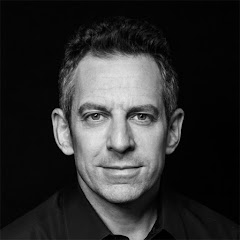 Sam Harris
Key Moments
Sam Harris explores meditation and Eastern spirituality, contrasting techniques and revealing insights into self and consciousness.
Key Insights
Meditation encompasses diverse techniques beyond sitting, from walking to chanting.
Vipassana focuses attention on an object, while Zocchin emphasizes non-conceptual awareness.
The goal of meditation can be the dissolution of the ego or the concept of a singular self.
Joseph Goldstein experienced a profound realization of 'non-occurrence' or 'zero' triggered by the word 'unborn'.
Richard Lang introduces Douglas Harding's 'headless' insight: we never directly see our own heads, only the world we look out from.
The 'headless' perspective suggests an underlying, indivisible awareness that contains all experiences.
INTRODUCTION TO THE MEDITATION SERIES
This compilation explores Sam Harris's decade-long conversations on meditation and Eastern spirituality, aiming to provide a coherent overview of his perspectives and those of his guests. It serves as a concluding part of a series, encouraging deeper exploration of the topics. The series emphasizes the unity of knowledge, showing how meditation intersects with concepts of identity, consciousness, and the self.
THE DIVERSE NATURE OF MEDITATION
Meditation is often narrowly perceived as cross-legged sitting with closed eyes, but this compilation highlights its vast array of techniques. Practices can involve walking with intention, sitting with open eyes, focusing on sensory input, ideas, chanting, dancing, or sustained silent observation. The core aim is to pay closer attention to the experience of experience itself, accessible through various methods.
VIPASSANA AND ZOCCHIN APPROACHES
Two prominent paths discussed are Vipassana and Zocchin. Vipassana employs techniques that focus attention on a specific object, such as the breath or body sensations, gently guiding the mind back when it wanders. Zocchin directs attention toward recognizing the mind's open awareness and the illusory nature of thoughts, aiming for a state of non-conceptual presence.
JOSEPH GOLDSTEIN'S 'UNBORN' REALIZATION
In a conversation with his meditation teacher Joseph Goldstein, the profound impact of a single word, 'unborn,' is recounted. This word triggered a momentary experience of 'non-occurrence' or 'zero,' where ordinary sensory perception ceased, yet awareness persisted. This realization led to a profound understanding of the selflessness of life, where there is no singular 'experiencer'.
DOUGLAS HARDING'S 'HEADLESS' INSIGHT
Richard Lang introduces Douglas Harding's central insight: the 'headless' perspective. Harding's work, inspired by an artistic self-portrait from his own point of view, suggests we never directly see our own heads. This leads to an exploration of recognizing the world from the space we look out from, which is devoid of a visible head.
EXPERIMENTING WITH THE HEADLESS AWARENESS
Lang guides listeners through simple experiments, like pointing an finger and then reversing it to direct attention inward. This process aims to reveal the single, borderless field of awareness from which all experiences—visual, auditory, sensory, and mental—arise and disappear. This perspective highlights an indivisible, underlying space that contains all phenomena.
SKEPTICISM AND THE NATURE OF 'KNOWING'
Sam Harris channels potential skepticism, questioning the significance of not being able to visually perceive one's own head. Lang addresses this by emphasizing that the pursuit is not about persuasion but about experiential recognition. The exercise is less about proving a point and more about inviting a direct, non-verbal investigation into the nature of consciousness and selfhood.
Mentioned in This Episode
●Software & Apps
●Organizations
●Books
●Concepts
●People Referenced
Making Sense of Meditation and Eastern Spirituality: Key Practices
Practical takeaways from this episode
Do This
Avoid This
Common Questions
The episode highlights Vipassana, which focuses on an object (like the breath) and trains attention, and Zazen (or Chan/Zen), which aims to rest in a state of open awareness and recognize the nature of mind and thoughts.
Topics
Mentioned in this video
Host of the Making Sense podcast, creator of the Waking Up app, and author. He is central to this compilation, exploring his perspectives on meditation and Eastern spirituality.
An Austrian physicist and philosopher whose self-portrait sketch from his own first-person point of view inspired Douglas Harding's 'headless' realization.
A longtime friend and meditation teacher of Sam Harris, who has appeared on the podcast multiple times and is featured in this compilation to discuss his experiences with meditation.
The originator of the 'Headless Way' practice, an inquiry into self and awareness based on the first-person perspective, which Richard Lang disseminates.
A student of Douglas Harding and author of a biography on him. He guides listeners through Harding's 'Headless Way' practice.
University where Joseph Goldstein studied philosophy as an undergraduate before his encounter with Buddhism in Thailand.
A strict Christian group Douglas Harding grew up in before leaving at age 21 to find his own understanding of truth.
A US government agency that Joseph Goldstein applied to join, which led him to be stationed in Thailand, where he first encountered Buddhist teachings.
A Tibetan text, a faulty translation of which, deeply impacted Joseph Goldstein and led to a transformative experience related to the 'unborn' nature of mind.
A classic book that Joseph Goldstein read, which laid out the basic methodology of meditation and influenced his early practice.
More from Sam Harris
View all 292 summaries 34 min
Is Effective Altruism Blind to the Biggest Problems? – Sam Harris & Will MacAskill
 21 min
What Is Technology Doing to Us?
 42 min
Is the Iran War Already Failing?
 90 min
FULL EPISODE: The Politics of Pragmatism and the Future of California (Ep. 464)
Found this useful? Build your knowledge library
Get AI-powered summaries of any YouTube video, podcast, or article in seconds. Save them to your personal pods and access them anytime.
Get Started Free