Key Moments
Making Sense of Encounters With Violence
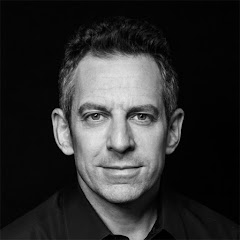 Sam Harris
Key Moments
Making Sense of Violence: Tactical empathy, intuition, and the psychology of fear are crucial for personal safety and navigating complex situations.
Key Insights
Tactical empathy, as taught by Chris Voss, involves understanding and influencing captors by humanizing oneself and establishing rapport, even in extreme situations.
The 'gift of fear' is an evolutionary tool for detecting danger; intuition, rooted in the enteric nervous system, provides vital, often subconscious, guidance for safety.
Distinguishing true fear (based on present perception) from unwarranted fear (based on memory or anxiety) is key to trusting one's intuition.
Societal norms (e.g., avoiding racism) can override intuitive danger signals, potentially leading to dangerous situations.
Profiling, when stripped of political connotations, is a cognitive process of gathering observable information about potential threats to inform interaction.
Understanding the context of a situation (e.g., domestic vs. international kidnapping) significantly alters risk assessment and appropriate responses.
THE PSYCHOLOGY OF HOSTAGE NEGOTIATION
Chris Voss, a former FBI hostage negotiator, emphasizes a psychological approach to surviving captivity. His strategy involves establishing rapport with captors by humanizing oneself, repeating one's name to be recognized as an individual, and avoiding direct resistance that could provoke violence. This method aims to foster a relationship, leverage human nature for better treatment, and increase the probability of a successful resolution, viewing escape attempts only under specific, generally non-violent, conditions.
STRATEGIES FOR ESCAPE AND CONTEXTUAL NUANCES
Voss clarifies that while getting away is always the goal, the method is crucial. Violent resistance is discouraged as it's expected and prepared for, often leading to severe harm. Non-violent escape, like walking away, is more acceptable, with punishments being less severe. The distinction between domestic U.S. kidnappings, where perpetrators fear capture and legal repercussions, and international kidnappings, where focus is on ransom, significantly alters the dynamic and perceived threat to the victim's life.
THE EVOLUTIONARY BASIS OF FEAR
Gavin de Becker introduces 'The Gift of Fear,' reframing fear as a vital evolutionary mechanism for survival. Animals with a finely tuned fear response were more likely to survive to pass on their genes. While hypersensitivity to new stimuli or unfamiliar people can be a byproduct of this evolved system, leading to biases like bigotry, the core function of fear is to alert us to potential dangers in our environment, acting as an internal alarm system.
INTUITION AS A PRIMAL DEFENSE MECHANISM
De Becker posits that intuition is humanity's primary tool for detecting danger and assessing people, honed by evolution. This innate ability, often residing in the gut (enteric nervous system), warns us of potential harm. Western societies often disregard intuition in favor of experts or technology, but listening to this 'gut feeling' is crucial for making sound decisions about who to include in our lives and for immediate safety. The root of 'intuition' itself means to guard and protect.
DISTINGUISHING TRUE FEAR FROM ANXIETY
A critical aspect of trusting intuition is differentiating genuine fear from unwarranted worry or anxiety. True fear is always based on present, perceived information in one's environment, signaled through our senses. Unwarranted fear, conversely, stems from memory, past anxieties, or hypothetical scenarios. By introspecting on the source of a fearful feeling, one can determine its validity and whether it's a genuine warning or a product of cognitive biases or imagination.
OVERCOMING SOCIAL NORMS AND BIASES
Intuition can sometimes conflict with social norms or personal biases, such as the desire to avoid appearing racist. This can lead individuals, like the woman in the elevator example, to override their intuitive danger signals to conform to social expectations or to prove a point. This suppression of intuition, De Becker argues, is counterproductive to self-preservation and is a behavior not observed in the natural world, where animals instinctively react to perceived threats.
UNDERSTANDING THE UTILITY OF PROFILING
When removed from its political charge, profiling is essentially a cognitive process of gathering observable information to assess potential threats. This involves noticing details like a person's apparent sex, build, clothing, demeanor, or actions. These pieces of data, gathered from various senses and contextual cues, help form an intuitive assessment that can inform one's interaction with an individual or situation, acting as a preliminary danger assessment.
THE COMPLEX INTERPLAY OF DATA AND INTUITION
The process of assessing potential threats utilizes a wide array of observable data points, including physical characteristics, clothing, and behavior. Whether someone's attire is appropriate for the weather, their gait suggests intoxication, or their hands are concealed, all contribute to an intuitive assessment. This gathered information, combined with contextual data, helps sharpen our internal alarm system, making our intuitive judgments more accurate and effective in navigating potentially dangerous encounters.
Mentioned in This Episode
●Books
●Concepts
●People Referenced
Common Questions
According to Chris Voss, the key is to engage psychologically to maintain your sanity and ensure better treatment. Avoid overt resistance, but instead, condition your captors to see you as a person by repeating your name and cooperating, which can build a relationship and increase your chances of survival.
Topics
Mentioned in this video
Mentioned as a country where kidnapping is prevalent and where perpetrators are less concerned about getting caught or facing significant jail time.
Mentioned as a country where a hostage escaped by using bathroom breaks to condition captors to a longer absence, demonstrating a non-violent escape strategy.
Author of 'The Gift of Fear' and an expert in violence prediction and management, who discusses intuition and the evolutionary role of fear.
Former FBI hostage negotiator and co-author of 'Never Split the Difference', who discusses strategies for surviving hostage situations.
Host of the Making Sense podcast, the creator of this compilation series focusing on encounters with violence.
Actor who appeared in a movie where giving names to chimpanzees made it harder to treat them as mere experimental subjects, illustrating human nature's tendency to form attachments.
More from Sam Harris
View all 292 summaries 34 min
Is Effective Altruism Blind to the Biggest Problems? – Sam Harris & Will MacAskill
 21 min
What Is Technology Doing to Us?
 42 min
Is the Iran War Already Failing?
 90 min
FULL EPISODE: The Politics of Pragmatism and the Future of California (Ep. 464)
Found this useful? Build your knowledge library
Get AI-powered summaries of any YouTube video, podcast, or article in seconds. Save them to your personal pods and access them anytime.
Get Started Free