Key Moments
Living A Life Without Regret: 3 Big Things You Need To Know Before 30 | Cal Newport
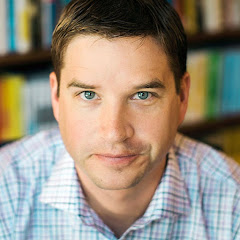 Deep Questions with Cal Newport
Key Moments
Play the long game: use annual planning, embrace slow compounding, and don't fear failure.
Key Insights
Annual planning bridges abstract life visions with concrete actions, guiding major decisions and projects yearly.
Slow compounding of effort over years, similar to financial compounding, leads to significant long-term gains in skills and expertise.
Embracing activities with a real risk of failure is crucial for expending the energy needed to change your life's trajectory.
Regular rituals and dedicated environments can signal the brain to enter a deep work mindset, enhancing productivity.
Social media can create 'collective traps' or 'inefficient equilibria' where users are unhappy but collective action is needed to escape.
The 'Deep Life Stack' methodology suggests re-grounding personal discipline, values, and organization before making major career changes.
THE STRATEGIC IMPORTANCE OF ANNUAL PLANNING
To avoid future regret, Cal Newport emphasizes the necessity of annual planning as a crucial bridge between long-term life visions and short-term actions. Unlike the immediate focus of daily or weekly planning, annual planning provides a necessary scale for making significant decisions and initiating major projects. It involves stepping back once a year to align concrete plans with abstract values and a 'lifestyle-centric vision,' ensuring that years aren't wasted on autopilot.
LEVERAGING SLOW COMPOUNDING FOR GROWTH
Newport likens the accumulation of skills and expertise to financial compounding. Just as investments grow slowly at first before accelerating, consistent, long-term action on chosen pursuits yields substantial rewards over time. He encourages adopting a 'three-year play' mindset, understanding that initial results may be minimal but are building the foundation for future accelerated growth. Examples like practicing a musical instrument or developing reading habits illustrate how sustained effort over years leads to mastery.
THE NECESSITY OF EMBRACING FAILURE
To break free from comfortable, low-energy life grooves, it's essential to embrace activities with a significant risk of failure. These higher-stakes endeavors demand considerable energy and push individuals out of their comfort zones, creating opportunities for significant growth and change. Newport suggests that fearing failure too much prevents the necessary energy expenditure required to alter one's trajectory, and that a few managed failures are a prerequisite for dislodging oneself from complacency.
REINFORCING DEEP WORK THROUGH RITUAL AND ENVIRONMENT
Newport highlights the power of rituals and dedicated environments in fostering deep work. The case study of Mark, who designed custom t-shirts to signal 'creation time,' exemplifies how external cues can prime the brain for demanding cognitive tasks. This approach is akin to Brandon Sanderson's elaborate underground writing bunker; it acknowledges that deep work is unnatural and requires conscious effort to create the right mindset, making unusual or over-the-top rituals valuable tools for focus.
UNDERSTANDING AND ESCAPING COLLECTIVE TRAPS
The concept of 'collective traps' or 'inefficient equilibria,' particularly exemplified by social media, suggests that individuals may remain in suboptimal situations because unilateral escape is difficult or disadvantageous. The paper discussed explains that the cost of *not* participating (e.g., fear of missing out) can outweigh the negatives of participation, trapping users. Breaking these traps often requires coordinated or institutional action, such as setting age limits for social media access or organizational policies to change communication norms.
THE DEEP LIFE STACK FOR REOrientation
For individuals feeling understimulated and lost, Newport proposes the 'Deep Life Stack' methodology. This approach prioritizes building personal discipline, clarifying values and rituals, and organizing life before attempting major career changes. Only after establishing this foundational personal structure should one reassess their career, leveraging this newfound clarity and efficacy to make informed decisions about work, whether through subtle tweaks or significant shifts, ensuring that the job serves the deeper life vision rather than driving it.
Mentioned in This Episode
●Software & Apps
●Companies
●Books
●Concepts
●People Referenced
Living Without Regret: Key Strategies
Practical takeaways from this episode
Do This
Avoid This
Comparison of Planning Scales
Data extracted from this episode
| Scale | Focus | Frequency |
|---|---|---|
| Quarterly/Seasonal | What I'm working on this season | Quarterly |
| Weekly | What I'm working on this week; calendar adjustments | Weekly |
| Daily | Time block planning | Daily |
| Annual | Bridge for long-term vision and short-term tasks; big decisions & projects | Annually |
| Lifestyle-Centric Visioning | Big picture, abstract vision of ideal life (work, location, daily life, community) | Long-term, abstract |
Common Questions
To avoid future regrets, implement annual planning to connect your abstract life vision with concrete actions. Leverage the power of slow compounding by consistently engaging in activities over longer periods, and don't fear failure when pursuing challenging goals that require significant energy.
Topics
Mentioned in this video
The speaker and author discussing strategies for long-term life planning to avoid regret. He is the author of 'Deep Work' and 'A World Without Email'.
Appears to be a fictional character or persona associated with the show's host, mentioned humorously in the context of merchandise and potential side projects.
A fantasy author whose elaborate writing bunker is mentioned as an example of creating a dedicated, motivating space for deep creative work.
Nobel laureate mathematician known for his work in game theory and 'Nash equilibrium', which is relevant to the concept of collective traps discussed in the paper.
Author of 'The Name of the Wind', a book mentioned in the context of Brandon Sanderson's writing practices.
A book by Cal Newport that discusses the importance of focused, uninterrupted work. The concepts discussed in the video build upon the principles of deep work.
Cal Newport's new book, mentioned in relation to using art from different fields to gain motivation for one's own creative work.
Cal Newport's book discussing the 'hyperactive hive mind' of workplace communication and proposing alternatives.
A biographical film about John Nash, mentioned in relation to his work on game theory and 'Nash equilibrium'.
A global commerce platform mentioned as a sponsor, facilitating e-commerce for businesses of all sizes, from launch to growth.
A company that manufactures precision-milled razors, sponsor of the show. Their expertise comes from producing parts for the aerospace industry.
An online therapy service mentioned as a sponsor, providing convenient and flexible access to licensed therapists.
A virtual private network service, sponsored by the show, used to protect online privacy and security by encrypting internet connections.
More from Cal Newport
View all 287 summaries 21 min
Can AI “Scheme”? (Nope.) | AI Reality Check
 31 min
Are LLMs a Dead-End? (Investors Just Bet $1 Billion on “Yes”) | AI Reality Check | Cal Newport
 68 min
Why Is AI Making My Job *Worse*? | Cal Newport
 24 min
Did AI Just Become Sentient? (Not Quite...) | AI Reality Check
Found this useful? Build your knowledge library
Get AI-powered summaries of any YouTube video, podcast, or article in seconds. Save them to your personal pods and access them anytime.
Get Started Free