Key Moments
Legendary Investor Bill Gurley on Investing Rules, Insights from Jeff Bezos, Must-Read Books, & More
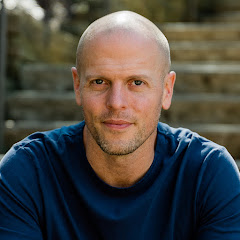 Tim Ferriss
Key Moments
Bill Gurley discusses investing rules, competitive advantages, open source, and the impact of tribalism.
Key Insights
Michael Porter's 'Competitive Strategy' provides a crucial framework for understanding industry dynamics, essential for entrepreneurs.
Missing Google was a significant learning experience, highlighting the importance of asymmetric outcomes and 'what could go right' thinking in venture capital.
Open source can be applied defensively to commoditize hardware and software stacks, thereby reducing supplier leverage and IP dependencies.
Regulatory capture, where incumbents influence legislation to their benefit, is a pervasive issue hindering innovation and competition.
Be intentional about information sources; filter aggressively to build robust mental models, especially in a rapidly changing world.
Tribalism and extreme political bias shut down critical thinking, hindering progress in both business and society.
FRAMEWORKS FOR STRATEGIC THINKING
Bill Gurley emphasizes the enduring value of Michael Porter's 'Competitive Strategy,' particularly its first three chapters, which offer a powerful framework for analyzing industry dynamics. He argues that many entrepreneurs, focused on technological breakthroughs, neglect this crucial step. Understanding industry structure, competitive forces, and potential barriers to entry is fundamental for long-term success. This analytical approach provides a solid foundation for strategic decision-making, helping to avoid costly mistakes by thoroughly assessing the competitive landscape before launching a venture.
LEARNING FROM INVESTMENT MISTAKES
The decision not to invest in Google in 2002 remains a significant lesson for Gurley. He explains that while rules of thumb are necessary, they must be flexible. The external environment at the time, with Yahoo struggling and uncertainty around search, clouded the opportunity. This experience underscored the importance of 'strong opinions, loosely held' and the concept of 'what could go right?' The asymmetric nature of venture capital, where a few massive wins can offset many losses, necessitates a bias towards positive, outlier-seeking opportunities, even if unconventional.
THE POWER AND APPLICATION OF OPEN SOURCE
Gurley highlights open source not just as a development model but as a strategic tool. He discusses its defensive applications, such as Google's use of Kubernetes to counter AWS's cloud dominance and Facebook's Open Compute Project to commoditize hardware designs, thereby reducing supplier leverage. He also touches upon the philosophical underpinnings, referencing 'The Cathedral and the Bazaar,' which explains why open source excels at complex problems through distributed collaboration. Data, like OpenStreetMap, and even processor architecture (RISC-V) are emerging areas benefiting from this collaborative model.
CHALLENGING CONVENTIONAL VALUATION AND MARKET SIZING
Gurley criticizes simplistic valuation methods like price-to-revenue multiples, advocating for deeper analysis, such as discounted cash flow (DCF) and free cash flow (FCF) when applicable. He points to Facebook's historical valuation multiple and growth rate as an example of how Wall Street's perception can be disconnected from fundamental value. He also revisits the OpenTable and Uber examples, illustrating how rigid assumptions about Total Addressable Market (TAM) can lead to significant underestimation of disruptive potential, emphasizing that truly innovative products can expand markets beyond initial projections.
THE SIGNIFICANCE OF COMPETITIVE ADVANTAGE AND NETWORK EFFECTS
Beyond network effects and lock-in, Gurley discusses other competitive advantages such as product performance, uniqueness (n-of-one), and the difficulty for competitors to find viable alternatives. He uses Snowflake as an example of a product offering unique performance capabilities. The OpenTable story exemplifies how building a strong network effect—first with restaurants, then consumers—can overcome initial market skepticism and infrastructure challenges, ultimately creating a dominant market position by expanding the total addressable market.
JEFF BEZOS AND INSTITUTIONALIZED EXPERIMENTATION
Gurley praises Jeff Bezos as a remarkable entrepreneur, particularly for his ability to build an organizational framework that institutionalizes experimentation and risk-seeking behavior at Amazon's immense scale. He shares an anecdote about Amazon running an experiment with same-day delivery using Uber, highlighting a willingness to test ideas that most large companies would avoid due to complexity or fear of failure. This culture, symbolized by the principle 'kill an experiment when the last person with good judgment gives up,' allows for more 'shots on goal' than typically possible in larger, more risk-averse corporations.
THE HAZARDS OF TRIBALISM AND IGNORANCE
Gurley expresses deep concern over increasing tribalism, particularly political polarization, which he believes overrides critical thinking and rational analysis. He argues that both sides exhibit strong biases, turning off brain cells rather than engaging with complex issues. He uses examples like gerrymandering and regulatory capture, where partisan affiliation prevents objective assessment. This cognitive tribalism, he suggests, is a significant impediment to progress in both public discourse and corporate decision-making.
THE RISE OF INTELLECTUAL ANTI-FRAGILITY
Gurley draws parallels between the corporate world and sports, referencing insights from Coach K and Shane Battier. He notes a shift from a 'team first' and 'company first' mentality towards a focus on individual experience, which he believes hinders high performance. He sees echoes of this in university campuses and its infiltration into companies, making it difficult to achieve clear objectives. He commends leaders like Brian Armstrong at Coinbase for prioritizing the company's mission, even amid controversy.
THE FUTURE, REGULATORY CAPTURE, AND LITIGATION
Gurley identifies regulatory capture as a major threat, where established industries use legislation to create moats against startups, citing the EHR system rollout as an example. He views the US legal system's reliance on litigation and contingency fees as a significant drag on innovation and efficiency, contrasting it with a 'loser pays' system. He believes reversing Citizens United and reducing the influence of money in politics are crucial steps to counter this capture and foster a more competitive market. He also touches on the potential for open-source standards in areas like autonomous vehicles and nuclear energy.
THE EVOLVING LANDSCAPE OF E-COMMERCE AND USEFUL TOOLS
Gurley expresses admiration for Shopify's CEO, Toby Lütke, and his ability to create both B2B and B2C products. He highlights Lütke's 'status quo is off the table' meeting structure as a brilliant way to force innovation. He also shares Lütke's wisdom on focusing on solutions rather than dwelling on presenting problems, a mindset he finds invaluable. Gurley also shares three highly gifted books: 'Complexity' by Mitchell Waldrop, 'Mr. China' by Tim Clissold, and 'Range' by David Epstein, emphasizing their value in understanding complex systems, foreign markets, and the power of interdisciplinary thinking.
Mentioned in This Episode
●Products
●Software & Apps
●Companies
●Organizations
●Books
●Concepts
●People Referenced
Common Questions
Bill Gurley highly recommends Michael Porter's 'Competitive Strategy: Techniques for Analyzing Industries and Competitors,' calling it the 'most efficient short-form MBA.' He suggests that 80-90% of entrepreneurs would benefit from reading its first three chapters. (Timestamp: 95)
Topics
Mentioned in this video
General partner at Benchmark, former Wall Street analyst, and author of the Above the Crowd blog. Discusses investing, entrepreneurship, and market dynamics.
Author whose book 'Competitive Strategy' is described by Gurley as the most efficient short-form MBA.
Legendary investor whose letters Bill Gurley recommends reading for building a 'bedrock' understanding of investing.
Good friend of Bill Gurley, known for nuanced books on stock prices and his involvement with the Santa Fe Institute.
Co-founder of Google, who presented early investment opportunities to Benchmark.
Co-founder of Google, who presented early investment opportunities to Benchmark.
A founding partner at Benchmark who emphasized having a 'big tent' approach to networking, which led to the early eBay deal.
Legendary macro investor, known for successful individual macro bets and predicting inflation.
Author and thinker known for his insights on writing as a way to clarify thought.
Economist at the Santa Fe Institute who published a foundational article on network effects, influencing Bill Gurley's investing strategy.
Partner at Benchmark who developed a 'sixth sense' for breakout social networks and had early success with Instagram.
Author of the dystopian novel 'Snow Crash,' which influenced Bill Gurley's understanding of virtual worlds.
Founder of Amazon, described by Gurley as the best entrepreneur he's been around, praised for his organizational framework, experimentation, and curiosity.
One of the top three PC industry analysts whose financial models Bill Gurley received upon starting his Wall Street career.
Analyst associated with the dot-com bubble period and questions about analyst bias.
Author of 'One Up On Wall Street', recommended by Bill Gurley as foundational reading for investors.
Author of 'A Random Walk Down Wall Street', recommended by Bill Gurley for fundamental investment understanding.
Host of the Agenda conference, an influential tech conference that Bill Gurley attended.
CFO of Dell during its significant growth period, with whom Bill Gurley became close friends.
Co-creator of the iPod and iPhone, who discussed General Magic in an interview.
Founder of Nike and author of 'Shoe Dog,' whose tenacity is highlighted as essential for business success.
Tennis player whose autobiography 'Open' was penned by the same writer as 'Shoe Dog.'
Writer who penned 'Shoe Dog' and 'Open: An Autobiography,' also purportedly working on a book about Prince Harry.
Leader responsible for China's economic reforms, credited by Gurley with unlocking immense standard of living increases by bringing capitalism to China.
Founding father of Singapore, whose leadership transformed Singapore from a 'swamp' to a modern nation.
One of the top three PC industry analysts who retired and became an advisor to young analysts, including Bill Gurley.
Co-founder of Oaktree Capital, known for archiving his thought process and successful macro investing; recommended by Bill Gurley for his insights.
Top venture capitalist who, along with Mike Moritz, invested in Google despite initial red flags.
Top venture capitalist who, along with John Doerr, invested in Google despite early concerns.
Author of 'The Rational Optimist' and 'How Innovation Works,' whose books are recommended for their high-level macro insights on wealth creation.
Famous investor with whom Stan Druckenmiller had early success in macro investing.
Founder of OpenTable, whose initial vision required significant conviction from investors like Bill Gurley.
Benchmark partner who became very excited about eBay and led the deal, ultimately becoming a top-ranked VC.
Lead developer of WordPress and founder of Automattic, known for his work in open source.
Executive Director of the Linux Foundation, highly recommended as a podcast guest for his belief in open source and its benefits.
Founder of Second Life, whose immersive virtual world Bill Gurley researched and served on the board for.
NYU professor famous for valuation work, whose conservative valuation of Uber was critiqued by Bill Gurley as 'missing by a mile.'
Social psychologist whose podcast discussion with Tim Ferriss about intellectual anti-fragility resonated with Gurley's observations on company culture.
Founder and CEO of Shopify, admired by Gurley for his leadership, mental models, and a unique problem-solving framework (no status quo).
Author of 'Range,' whose work on generalists and cross-disciplinary insights deeply interests Bill Gurley.
Well-known Wall Street investor who was a major benefactor of the Santa Fe Institute and had a 15-year run of beating the S&P 500.
Famous author who reportedly spends time at the Santa Fe Institute, adding to its unique intellectual environment.
His death is cited as an event that highlights the problematic power of police unions in protecting officers like Derek Chauvin.
Author and speaker who emphasizes that decisions are downstream of information consumed, making careful source selection crucial.
Author who famously profiled Shane Battier as 'the no-stat All-Star.'
Legendary Duke basketball coach, whose team-first, high-performance tenets Gurley contrasts with recent corporate cultural shifts.
Author of 'Complexity,' a beautifully written book about the Santa Fe Institute.
Author of 'Red Notice,' a book about experiences in Russia.
Author associated with the '10,000-hour rule,' which 'Range' by David Epstein counters.
Nobel laureate whose work on cognitive biases like confirmation bias and loss aversion is referenced in the context of political tribalism.
Author of a venture capital Substack newsletter that Bill Gurley follows.
Founder of Techmeme, praised for his curated news ranking system.
Legendary basketball coach, whose biography was studied by Bill Gurley for patterns in achieving dream jobs.
NBA player known for his analytic approach and team-first mentality, whose insights on high-performing teams Gurley related to company culture.
CEO of Coinbase who publicly took a stance on company focus and performance, contrasting with trends of prioritizing individual experience.
Tennis player whose career is discussed in 'Range' regarding the generalist vs. specialist debate.
From Lux Capital, mentioned as another individual who benefits from the Santa Fe Institute's learning environment.
Police officer whose actions leading to George Floyd's death are used to illustrate the power of police unions in preventing accountability.
Iconic musician, whose biography was studied by Bill Gurley for patterns in achieving dream jobs.
Acclaimed restaurateur, whose biography was studied by Bill Gurley for patterns in achieving dream jobs.
Federal Reserve Chair who wants to implement FedNow, but faces political blocking.
Bill Gurley's blog focusing on the evolution and economics of high technology businesses.
Video conferencing software with massive network effects, also mentioned as a superior substitute for virtual board meetings compared to metaverse experiences.
An open-source database that Benchmark invested in, noting that large companies like Google and Yahoo used it without paying for support.
Open-source content management system, whose lead developer Matt Mullenweg founded Automattic.
The most widely used operating system in the world, over 20 years old, highly secure due to open development and constant testing.
Google's open-source mobile operating system, developed defensively to compete with Apple's iPhone and unite other handset manufacturers and telcos.
Kevin Kelly's personal website.
Microsoft's word processing software, used as an example of network effects due to user familiarity and collaboration benefits.
A successful open-source company built around a single software framework.
Amazon's cloud services business, which Google feared would run away with the market, leading to the open-sourcing of Kubernetes.
Shopify's consumer app, praised for its one-click checkout and ability to create a consumer network effect from a B2B company.
A government-run instant transfer system between banks in the UK, existing for 17 years, contrasted with the slow ACH system in the US due to regulatory capture.
Google's orchestration layer for containers, gifted to an open-source consortium to prevent Amazon from dominating cloud services.
A containerization technology that took off around the same time Google released Kubernetes.
An existing open-source data-oriented mapping project, now being built upon by a new consortium including Facebook and Microsoft.
Q&A platform mentioned as being close to, but not fully achieving, the 'interest graph' concept.
[Virtual World] An early immersive virtual world platform, whose limitations informed Bill Gurley's skepticism about Meta's metaverse strategy.
Website that redirects to Amazon.com, an 'Easter egg' related to Jeff Bezos's business philosophy.
The US payment system that still takes three days to clear transfers, criticized by Gurley as being outdated due to bank and Visa's power.
Proposed instant payment system by the Federal Reserve, blocked for 10 years by financial services lobbying.
Website for tracking money in US politics, suggested by Gurley to observe the link between donations and legislative decisions.
Company Bill Gurley worked with during his venture career.
Company Bill Gurley worked with, discussed as a case study for expanding the total addressable market through convenience and product-market fit.
Early internet search company that was going bankrupt, contributing to a negative perception of the search industry's investment potential.
A major success for Benchmark, which emerged from Bruce Dunleavy's networking.
Early portable computing company mentioned in 'Startup' that failed hard despite having an All-Star team, serving as a lesson in failure.
Company founded by Phil Knight, whose story of tenacity is highlighted in 'Shoe Dog.'
Company founded by Matt Mullenweg, which builds services around WordPress, demonstrating the power of open source business models.
Company with the Open Compute Project, defining open standards for data center hardware to commoditize equipment and gain leverage over suppliers.
Non-profit overseer of various open source projects, including the Open Compute Foundation and Kubernetes, analogous to a DAO.
Social media platform mentioned as being close to, but not fully achieving, the 'interest graph' concept.
Social news aggregation website, whose subreddits are seen as getting close to the 'interest graph' concept.
Professional networking platform that Bill Gurley believes has 'stopped' innovating and could benefit from features like 'page rank for people.'
Cloud communications platform whose valuation multiple (price to gross margin) experienced a radical reset during the market correction.
Company Bill Gurley worked with during his venture career.
Company Bill Gurley worked with, which demonstrated strong network effects and significant growth despite early skepticism.
Company Bill Gurley worked with during his venture career.
Social network that Benchmark invested in; Gurley suggests it has untapped potential for 'interest graph' features and leaderboards.
Social network that Benchmark invested in.
Investment firm co-founded by Howard Marks, known for its focus on distressed debt and value investing.
Investment bank where Bill Gurley worked, which tried to keep analyst content internal.
News and media company, mentioned as the source of an interview discussing OpenTable.
Company whose UI and early success exemplified network effects, as discussed by Brian Arthur.
Company whose privacy changes have dramatically altered the e-commerce landscape, impacting businesses like Shopify.
Company Bill Gurley worked with during his venture career.
A major company that Bill Gurley's firm missed early investment opportunity in, which he considers the biggest mistake of his career.
Early internet search company whose declining stock price made the search industry look unexciting to investors in 2002.
A company Bill Gurley analyzed using ROIC, which showed massive competitive advantage despite short-term stumbles, leading to a 100x return.
Social network that Benchmark invested in, identified as a success by Matt Cohler's intuition.
Documentary about a failed portable computing company with an All-Star team, recommended alongside 'Startup' for insights into failure.
An open-source company that Benchmark invested in.
Company that worked with the Linux Foundation and China Mobile to define open standards for wireless and wireline equipment, avoiding IP lock-in.
Company that worked with the Linux Foundation and AT&T to define open standards for wireless and wireline equipment, avoiding IP lock-in.
Storage area networking company, famous back in the day for being a 'black box' that locked customers into its ecosystem.
Company used as a contrast to Facebook, historically trading at higher multiples and having very steady, predictable revenue quality.
Social media app mentioned as a potential disruptor to Facebook's business, contributing to Facebook's lower valuation multiples.
E-commerce giant, whose same-day delivery experiments on top of Uber demonstrate Jeff Bezos's unique approach to risk-taking and experimentation.
E-commerce platform, whose CEO, Tobi Lütke, is highly admired by Gurley for his leadership and innovative problem-solving approaches.
Music and podcast streaming platform, whose podcast queuing and organization features are praised.
Financial services company whose power, along with banks, is seen by Gurley as blocking modern instant transfer systems like FedNow in the US.
Company recruited by Google to support Kubernetes, reinforcing its role as an open standard.
Company recruited by Google to support Kubernetes, reinforcing its role as an open standard.
Company whose low stock multiple (14x earnings) and metaverse investment strategy are discussed, with Gurley suggesting the VR effort is flawed.
Data warehousing company whose product performance is considered a strong competitive advantage.
Consulting firm that famously underestimated the global market for mobile phones, highlighting the danger of TAM conservatism.
Cryptocurrency exchange whose CEO, Brian Armstrong, publicly advocated for a performance-focused, company-first culture.
Investment firm where Bill Miller had a notable 15-year run of beating the S&P 500.
A curated news aggregator for the tech industry, including Twitter comments, that Bill Gurley uses daily for information.
Where Bill Gurley gave a speech on chasing and succeeding at your dream job, which he considers expanding into a book.
Magazine that polls buy-side analysts to rank them, which Bill Gurley used to understand client needs.
Venture capital firm where Bill Gurley has been a general partner for over 20 years, known for early-stage investing and its equal partnership model.
Where Bill Gurley earned his BS in computer science.
A research and education center focused on complex adaptive systems, where Bill Gurley is a board trustee. Its work on network effects influenced his investing.
Publication that featured Brian Arthur's article 'Increasing Returns and the Two Worlds of Business,' explaining network effects.
University where Shane Battier played basketball under Coach K.
University where Professor Hollybrook (unconfirmed spelling, likely Holyoak or similar) researches 'far analogies.'
Government agency that awards billions in research dollars; Gurley suggests this research should be open source to prevent proprietary outcomes.
Publication where Shane Battier was famously profiled by Michael Lewis.
Book by Matt Ridley, which influenced Benchmark's 'what could go right?' mindset.
New book by Tony Fadell, recommended for its frameworks for entrepreneurs and team development.
Autobiography of Andre Agassi, by the same writer as 'Shoe Dog,' praised as spectacular.
Dystopian novel by Neal Stephenson, which introduced Bill Gurley to the concept of immersive virtual worlds.
Dystopian novel about escaping a difficult real world into a virtual one, reinforcing Bill Gurley's view on metaverse motivations.
Book by Michael Porter, recommended by Bill Gurley as an excellent framework for understanding competitive industry dynamics and market entry.
Book by Bill Gurley's friend Michael Mauboussin, part of his extensive work on valuation and investing strategy.
Book by Peter Lynch, recommended by Bill Gurley for building investment knowledge.
Book by Burton Malkiel, recommended by Bill Gurley for foundational investment knowledge.
Phil Knight's autobiography about Nike, recommended for demonstrating the tenacity required for entrepreneurship.
Matt Ridley's second recommended book, offering Spectactular, high-level insights on innovation.
Influential essay by Eric S. Raymond explaining the benefits of open source development models, especially for complex problems.
Business book about an Englishman's challenging experience starting a fund in China, recommended for lessons on venturing into foreign lands.
Book by M. Mitchell Waldrop about the rise of the Santa Fe Institute, which introduced Gurley to network effects and complex adaptive systems.
Book by Bill Browder, mentioned as a more intense equivalent to 'Mr. China' but with death threats.
Book by David Epstein, which Gurley finds fascinating for its argument that big breakthroughs come from changing disciplines.
Another book by David Epstein, recognized by the host.
An open-source processor architecture gaining momentum, backed by China as it cannot be accused of IP theft.
Facebook-led initiative managed by the Linux Foundation, for open standards in data center hardware, aimed at commoditizing equipment and preventing IP claims.
Processor design company, facing competition from the open-source RISC-V architecture.
Country whose economic transformation under Deng Xiaoping implemented capitalism, significantly increasing its citizens' standard of living.
City-state cited as an example of incredible transformation from a 'swamp' to what it is today, due to strong leadership.
Country cited as having less regulatory capture than the US, particularly with its 'losing party pays' legal system.
More from Tim Ferriss
View all 689 summaries 81 min
Q&A with Tim — The Upcoming AI Tsunami and Building Offline Advantage
 91 min
The Random Show, Couch Edition! — Supplements, Breathing and Balance Training, and Much More!
 76 min
How to Quiet the Ruminative Mind and Avoid The Traps of Self-Help — Tim Ferriss
 86 min
NYT Bestselling Author on Writing 200+ Children's Books — Tish Rabe
Found this useful? Build your knowledge library
Get AI-powered summaries of any YouTube video, podcast, or article in seconds. Save them to your personal pods and access them anytime.
Get Started Free