Key Moments
Kyle Vogt: Cruise Automation | Lex Fridman Podcast #14
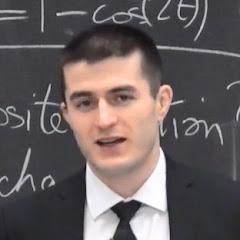 Lex Fridman
Key Moments
Kyle Vogt discusses building Cruise Automation, the evolution of self-driving tech, and integrating it with GM.
Key Insights
Vogt's early passion for building and tinkering led to BattleBots and eventually autonomous vehicles.
The DARPA Grand Challenge was a pivotal moment for autonomous vehicle development.
Founding Cruise Automation was driven by a desire to solve an existential problem with a significant societal impact.
Integrating Silicon Valley's fast-paced innovation with GM's established manufacturing and safety culture is a key challenge and asset.
The transition from retrofitting cars to integrating AV tech directly into OEM vehicle development proved more viable.
Achieving widespread adoption of autonomous vehicles hinges on continuous improvement, robustness, and overcoming edge cases.
EARLY EXPLORATIONS IN BUILDING AND AUTOMATION
Kyle Vogt's fascination with building began with Legos, evolving into a passion for robotics and engineering challenges in his youth. His early involvement in competitive robotics, particularly BattleBots, honed his skills in pushing mechanical components to their limits. This hands-on experience with hardware, coupled with an innate curiosity about how things work and break, laid the foundation for his future endeavors in complex engineering problems, foreshadowing his eventual deep dive into autonomous vehicle technology.
THE SPARK OF AUTONOMOUS VEHICLE AMBITION
A pivotal moment for Vogt occurred during long, monotonous drives, where he recognized the potential for computers to perform such tasks. This realization, combined with early programming experiences and later exposure to the DARPA Grand Challenge, ignited his interest in autonomous vehicles. The challenge demonstrated the possibility of AI-driven transportation and inspired a generation of engineers, including Vogt, to pursue this ambitious goal on a larger scale.
FOUNDING CRUISE: A MISSION FOR EXISTENTIAL IMPACT
After co-founding and experiencing success with Justin.tv, which evolved into Twitch, Vogt sought a venture with a profound societal impact beyond entertainment. He established criteria for his next company: challenging technology, positive societal contribution, and significant business potential. Autonomous driving, with its promise of saving lives and transforming mobility, perfectly fit these requirements, leading him to found Cruise Automation in 2013 with a long-term vision.
NAVIGATING THE SILICON VALLEY-DETROIT CULTURAL DIVIDE
The acquisition of Cruise by General Motors presented a unique challenge: merging Silicon Valley's agile, experimental approach with Detroit's process-driven, safety-focused automotive culture. Vogt emphasizes that while cultural clashes are inevitable due to different reward systems and methodologies, GM's commitment to transformation and its vast industrial expertise are invaluable assets. This integration, though difficult, has become a key strength, enabling the efficient development and deployment of autonomous vehicles.
THE STRATEGY: FROM RETROFIT TO INTEGRATED OEM DEVELOPMENT
Early in Cruise's history, the strategy considered retrofitting existing vehicles with autonomous driving capabilities to achieve rapid scale. However, this approach proved complex due to the vast number of vehicle models and the safety-critical nature of the technology, leading to numerous integration and validation challenges. After a year, Cruise shifted focus entirely to developing integrated autonomous systems within new vehicles, collaborating directly with automakers like GM, which offers greater control and reliability.
THE GRIND TOWARDS PRODUCTION AND SUPERHUMAN PERFORMANCE
Vogt describes the current phase of autonomous vehicle development as an 'unsexy' but crucial engineering effort focused on moving from prototype to production. The primary challenge is not solving a single edge case but achieving a level of consistent performance that surpasses human drivers across countless permutations of driving scenarios. This involves continuous improvement, meticulous data analysis, and incremental enhancements using both machine learning and expert systems to ensure safety and reliability at scale.
PROSPECTS AND THE FUTURE OF AUTONOMOUS MOBILITY
Vogt anticipates hundreds of thousands of fully autonomous vehicles on the roads within the next five years, contingent on overcoming challenges like diverse weather conditions and complex urban environments. The economic viability of autonomous driving hinges on vehicle cost, lifespan, and operational efficiency, with ride-sharing and delivery services identified as key early revenue streams. He foresees autonomous vehicles not only improving transportation but also potentially reducing societal stress and offering new forms of in-car productivity and entertainment.
Mentioned in This Episode
●Products
●Software & Apps
●Companies
●Organizations
●People Referenced
Common Questions
Kyle Vogt's fascination with robotics began with building with Legos, particularly Lego Mindstorms, and watching the TV show BattleBots. He was drawn to the challenge of building complex machines and understanding their limits.
Topics
Mentioned in this video
More from Lex Fridman
View all 548 summaries 124 min
Vikings, Ragnar, Berserkers, Valhalla & the Warriors of the Viking Age | Lex Fridman Podcast #495
 146 min
Jensen Huang: NVIDIA - The $4 Trillion Company & the AI Revolution | Lex Fridman Podcast #494
 311 min
Jeff Kaplan: World of Warcraft, Overwatch, Blizzard, and Future of Gaming | Lex Fridman Podcast #493
 154 min
Rick Beato: Greatest Guitarists of All Time, History & Future of Music | Lex Fridman Podcast #492
Found this useful? Build your knowledge library
Get AI-powered summaries of any YouTube video, podcast, or article in seconds. Save them to your personal pods and access them anytime.
Get Started Free