Key Moments
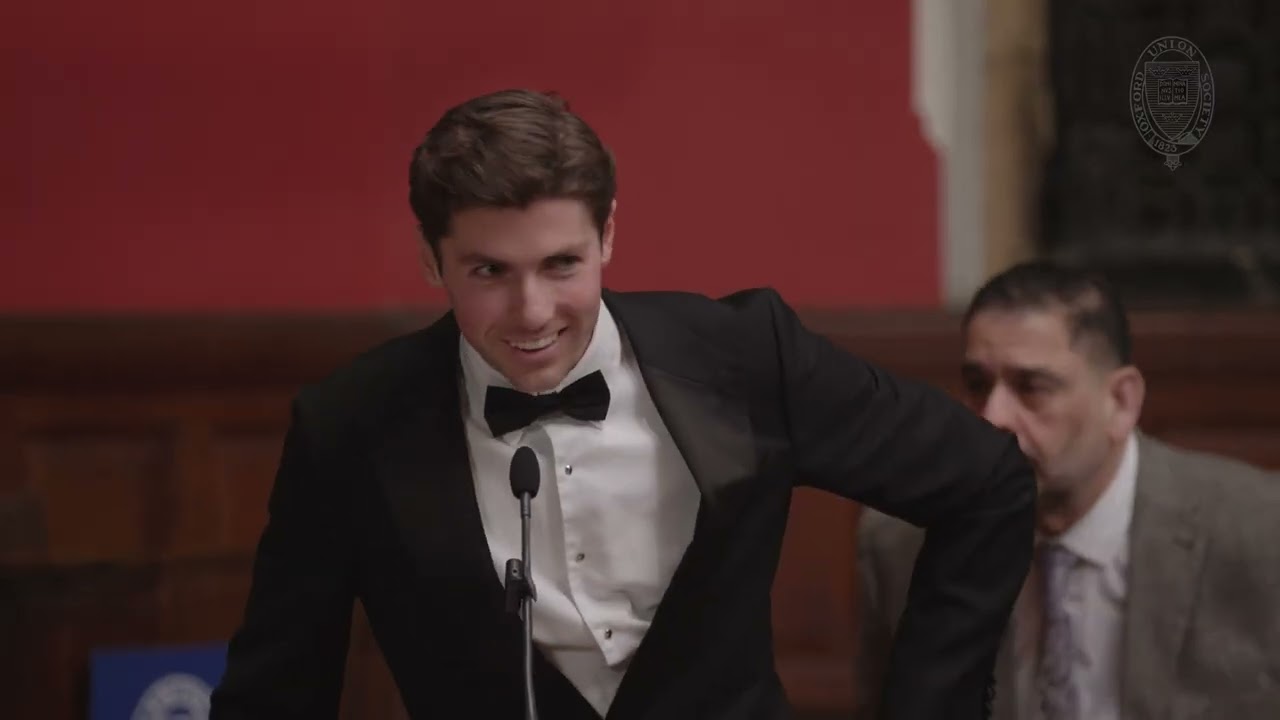
Krišjānis Kariņš - This House Would Create a Unified European Army - Proposition
 Oxford Union
Key Moments
Federalize Europe’s defenses first; a unified army follows built institutions.
Key Insights
The US is shifting focus to the Pacific, signaling Europe must prepare to defend itself more autonomously within or alongside NATO.
Simply adding a European army to the EU framework is insufficient; EU decision-making (notably unanimity) presents a structural obstacle.
Federalization of EU defense governance is proposed as the necessary precondition to a credible, cohesive European defense.
NATO remains relevant; Europe should strengthen its capabilities in partnership with the US rather than seek a replacement for US security guarantees.
A practical path combines political will, legal integration, and interoperable defense structures to deter aggression and avoid being left isolated.
A SHIFT IN THE SECURITY LANDSCAPE
The speaker highlights a transformed geopolitical environment where post–World War II arrangements are no longer guaranteed. The United States has signaled a retreat from underwriting Europe’s security, shifting its strategic focus to the Pacific. In this new reality, Europe must decide its own goals—primarily to preserve peace and stability even if the US is less forthcoming—and acknowledge that NATO remains essential but cannot be relied on as the sole guarantor. This shift requires Europe to reimagine how defense is conceived, funded, and executed, balancing alliance commitments with greater strategic autonomy.
THE LIMITS OF A SIMPLE ARMY ADDITION
The speaker critiques the notion of simply adding a European army to the existing EU framework. He notes that Europe’s current decision-making process—characterized by consensus and lengthy negotiations—is slow and fragile when lives are on the line. The rhetoric of a straightforward military add-on ignores the political and procedural realities within the union. He argues that without reform, a new army would inherit the same deadlock and inefficiency that hampers timely responses, turning a well-intentioned project into a liability rather than a deterrent.
FEDERALIZATION AS THE NECESSARY PRECONDITION
A core argument is that true defense integration cannot be achieved by semantics alone; it requires federal-like governance. The EU already has powerful federal elements in areas like the customs union and competition law, where binding rules trump national preferences. By leveraging and expanding these federated mechanisms—especially in defense—the EU could harmonize procurement, doctrine, and command structures. This would create a credible, unified strategic voice and a coherent force structure, setting the stage for a durable European defense identity while preserving essential national competencies.
CHOOSING A PATH: NATO, COALITION, AND EUROPEAN AUTONOMY
The speaker emphasizes that Europe should not choose between NATO and a European army; instead, it should strengthen EU capabilities while maintaining robust ties to the US within NATO. He warns against a hypothetical ‘coalition of the willing’ led solely by external powers, which could exclude European input and expose gaps if the US wanes. The proposed path envisions interoperable European forces that can operate within NATO's framework, providing a credible European deterrent and ensuring Europe remains influential and capable even in scenarios where US involvement is uncertain.
A PRACTICAL ROADMAP TO A EUROPEAN DEFENSE
To move from concept to reality, the speaker outlines a staged approach: first, deepen federated governance to streamline decisions and align policies; second, standardize defense procurement and interoperability to enable rapid, joint action; third, establish credible command-and-control arrangements that can operate across member states; fourth, build interoperable forces and common doctrine to ensure effective, timely responses; and finally, secure broad political consensus about strategic objectives, timelines, and risk tolerance. This roadmap aims to translate a bold vision into a functional, durable defense architecture.
Mentioned in This Episode
●People Referenced
Common Questions
The speaker says the goal is to ensure peace and stability in Europe even if the US is no longer there. He emphasizes that this should be pursued while maintaining the NATO framework, but with a shift in European thinking and capacity. (Timestamp: 207)
Topics
Mentioned in this video
Kabilius, referred to as the current European Commissioner for military affairs, is cited in the discussion of the European army.
Former U.S. President Barack Obama is cited as saying Europe should pay more for defense.
The speaker mentions his good friend Tony Gardner, describing him as a wonderful voice.
More from OxfordUnion
View all 17 summaries 49 min
German author and novelist Norman Ohler Address at the Oxford Union
 81 min
THB that Modern Philanthropy is a Tool for Reputation Laundering Full Debate
 52 min
Economist and former Prime Minister of Palestine Mohammed Shtayyeh Interview at the Oxford Union
 71 min
This House Would Keep Politics Out of Sport Full Debate
Found this useful? Build your knowledge library
Get AI-powered summaries of any YouTube video, podcast, or article in seconds. Save them to your personal pods and access them anytime.
Get Started Free