Key Moments
John Hopfield: Physics View of the Mind and Neurobiology | Lex Fridman Podcast #76
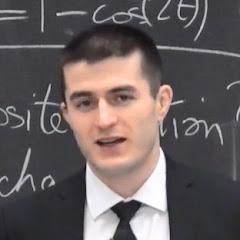 Lex Fridman
Key Moments
Physics meets biology: Hopfield on neural nets, memory, adaptation, and consciousness.
Key Insights
Biological neural networks leverage evolutionary 'glitches' into features, unlike simplified artificial networks.
Adaptation occurs on both evolutionary and individual life timescales, with the latter being more accessible for study.
Associative memory is crucial for cognition, allowing the brain to link disparate facts and form coherent representations.
The structure of computation, especially 3D wiring in biology versus 2D in chips, significantly impacts problem-solving capabilities.
Consciousness might be an emergent property, a narrative construction over subconscious computations, rather than a fundamental driver of intelligence.
Understanding complex biological systems may require finding new 'equations' that capture emergent properties, not just molecular details.
THE LEVERAGING OF COMPLEXITY IN BIOLOGICAL SYSTEMS
John Hopfield highlights a fundamental difference between biological and artificial neural networks: evolution's ability to turn 'glitches' into useful features. Unlike the often-suppressed quirks in AI, biological systems exploit variations. Hopfield uses the example of oscillating neurons, which can synchronize and lock in rhythm, a phenomenon observed in pedestrian bridges. He likens this to how biological systems capture possibilities, suggesting that artificial networks, which often lack action potentials or synchronization, miss out on these evolved computational advantages.
ADAPTATION: EVOLUTIONARY VS. INDIVIDUAL LEARNING
Hopfield distinguishes between adaptation that occurs over evolutionary time and learning within an individual's lifetime. While he's in awe of the evolutionary process, its complexity makes it difficult to study directly. In contrast, individual learning, especially during developmental neurobiology and early life, offers more tangible avenues for research. This period involves significant cell multiplication and programmed cell death, refining neural connections based on genetic programming and environmental interaction.
THE MECHANISM AND BEAUTY OF ASSOCIATIVE MEMORY
Associative memory, a cornerstone of human cognition, allows us to link pieces of information, like a few facts triggering the recall of a person. Hopfield views computational behavior as largely driven by these extensive associative memories. He developed a simplified physical model of associative memory to understand how learning links information and how memories can be stored compactly, not as exact snapshots, but as useful representations. This process involves compressing information into robust chunks that are readily accessible.
THE LIMITATIONS AND POTENTIAL OF ARTIFICIAL INTELLIGENCE
Hopfield notes that while artificial neural networks excel at processing vast amounts of data, they are often limited by their training data. They struggle with queries outside their learned distribution, unlike biological systems that can infer and explore. He suggests that the emphasis on feed-forward networks in AI might be partly due to the ease of implementing this learning mode, whereas biological systems, with their inherent feedback loops, operate differently. The complexity of biological computation, including feedback and 3D structure, remains a significant challenge for AI.
CONSCIOUSNESS AS NARRATIVE CONSTRUCTION
Drawing on Marvin Minsky's ideas, Hopfield posits that consciousness might be overrated and an epiphenomenon. He suggests it's primarily the brain's effort to construct a narrative or explanation for subconscious computations that have already occurred. This concept is illustrated by the example of John Dean's testimony during Watergate, where a vivid narrative was woven around a few factual anchors. This narrative-building process, while making memories richer, can also lead to the reinforcement of potentially inaccurate details.
THE SEARCH FOR FUNDAMENTAL EQUATIONS IN BIOLOGY
From a physicist's perspective, Hopfield seeks fundamental equations that describe biological systems, analogous to those in physics. He believes that while biology is rich in details, there must be overarching principles that can be understood without enumerating every molecular interaction. The challenge lies in finding these higher-level descriptive equations, much like how Navier-Stokes equations describe fluid dynamics without detailing individual molecule collisions. This quest for unifying principles is a major open problem in understanding the link between molecular processes and complex behaviors like thought.
BRAIN-COMPUTER INTERFACES AND COLLECTIVE PROPERTIES
Hopfield expresses optimism for brain-computer interfaces, particularly those capable of recording from a large number of neurons simultaneously. He argues that understanding the brain requires observing collective modes and emergent properties rather than single-cell activities. This approach is crucial for engineering systems that are more forgiving and robust, mirroring biological systems' ability to function despite numerous imperfections. This contrasts with traditional engineering that relies on precise components, suggesting a need to embrace the 'messiness' of biological computation.
THE PHYSICS OF EMERGENT STABILITY AND ATTRACTOR NETWORKS
Attractor networks are a key concept in understanding how complex systems achieve stability. Hopfield explains this using a high-dimensional space where system trajectories converge towards attractor states, much like water flowing downhill into valleys. This concept, rooted in classical statistical mechanics, allows for a metaphorical understanding of how systems can settle into stable configurations without needing to track every individual interaction. This principle is fundamental to creating stable computations and behaviors in both biological and artificial systems.
Mentioned in This Episode
●Companies
●Books
●Studies Cited
●People Referenced
Common Questions
Biological neurons leverage 'glitches' and quirks through evolution into useful features, including phenomena like action potentials and synchronization, aspects largely suppressed in current artificial neural networks which often focus on more rigid computational models.
Topics
Mentioned in this video
Professor at Princeton whose work spans biology, neuroscience, and physics, particularly known for associative neural networks (Hopfield networks).
A pioneer in AI, known for his views on consciousness, which he considered overrated and possibly an epiphenomenon, with the real computation happening subconsciously.
Co-discoverer of DNA, who had ideas on consciousness, which Hopfield discusses in the context of lacking a 'smoking gun' from a physics perspective.
Author of 'The Mind is Flat', which is discussed in relation to consciousness and how neural networks might be structured.
Host of the podcast, an AI researcher, and author. He discusses his background and interests with John Hopfield.
Co-author of a book with Francis Crick on consciousness mentioned by Hopfield, though he finds it unconvincing.
A Nobel laureate in Physics whose work in cosmology is cited as an example of scientific inquiry driven by principles rather than massive data crunching.
A Nobel laureate whose early work in neurophysiology focused on recording from single cells, contrasted with the current need to record from many cells simultaneously.
A key figure in the Watergate scandal, used as an example of how a narrative can be constructed and remembered, illustrating a facet of consciousness.
Mentioned as someone John Hopfield might have discussed associative memory with, highlighting a physicist's approach.
Mentioned in relation to Neuralink and brain-computer interfaces, and the ambition to connect thousands of neurons for two-way communication.
A company developing brain-computer interfaces, aiming for high-density, two-way communication between the brain and computers, mentioned as part of the progress in neurotechnology.
Mentioned in the context of building the first PC and how they adapted their culture to enter a new market, drawing a parallel to biological adaptation.
More from Lex Fridman
View all 547 summaries 146 min
Jensen Huang: NVIDIA - The $4 Trillion Company & the AI Revolution | Lex Fridman Podcast #494
 311 min
Jeff Kaplan: World of Warcraft, Overwatch, Blizzard, and Future of Gaming | Lex Fridman Podcast #493
 154 min
Rick Beato: Greatest Guitarists of All Time, History & Future of Music | Lex Fridman Podcast #492
 23 min
Khabib vs Lex: Training with Khabib | FULL EXCLUSIVE FOOTAGE
Found this useful? Build your knowledge library
Get AI-powered summaries of any YouTube video, podcast, or article in seconds. Save them to your personal pods and access them anytime.
Get Started Free