Key Moments
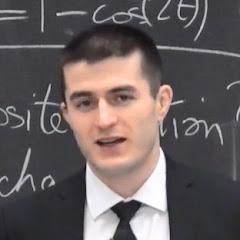
John Clarke: The Art of Fighting and the Pursuit of Excellence | Lex Fridman Podcast #143
 Lex Fridman
Key Moments
John Clarke discusses his life philosophy, the pursuit of excellence, fighting, relationships, and societal issues.
Key Insights
The best way to experience a city is through its locals rather than tourist traps, often by engaging with bartenders.
Gentrificaton, while bringing new development, often erodes the unique culture and character of a neighborhood.
True respect is earned not by merely showing up, but by rigorous preparation and commitment, even in failure.
Martial arts, particularly in a historical context, can foster deep philosophical introspection due to confronting mortality.
Authenticity and integrity are crucial, both in personal life and public service, as systems can corrupt individuals.
Sacrifice is inherent in the pursuit of excellence; triumphs often leave behind a trail of trampled personal relationships and unfulfilled alternative dreams.
THE ROMANCE OF THE AMERICAN ROAD TRIP AND THE SOUL OF CITIES
John Clarke reflects on the allure of road trips, emphasizing the need for flexible itineraries to fully immerse oneself in experiences. He believes the best way to discover a city's true essence is by connecting with locals, often through conversations with bartenders, rather than relying on curated tourist guides. Clarke laments the gentrification of cities like Boston, observing how the influx of new development often comes at the cost of a neighborhood's unique character and the displacement of its long-standing communities. He argues that this erosion of authentic culture diminishes the charm that once defined these urban centers, transforming them into generic spaces.
THE PHILOSOPHY OF COMMITMENT AND THE ILLUSION OF EFFORT
Clarke draws a sharp distinction between superficial engagement and genuine commitment, particularly in the realm of martial arts. He dismisses the notion of respecting anyone who merely shows up for a tournament; instead, he reserves admiration for those who undertake rigorous training, disciplined dieting, and meticulous preparation, regardless of the outcome. For Clarke, true vulnerability and learning come from eliminating excuses and putting everything on the line. He critiques individuals who use activities like martial arts as a tagline for their Instagram bios, viewing it as a disingenuous projection of self-concept rather than an authentic pursuit.
DIALECTICAL TENSIONS: VIOLENCE, KINDNESS, AND PERSONAL EVOLUTION
Lex Fridman notes the intriguing duality in Clarke’s personality: a thoughtful philosopher who also appreciates the violence inherent in fighting. Clarke acknowledges these 'dialectical tensions' within himself, admitting to a younger self that manifested more violence, gradually shifting towards kindness with age. He expresses a concern about losing touch with his earlier, more aggressive self, fearing he might not be able to summon it when needed in competitive contexts. Clarke attributes the historical marriage of martial arts and philosophy to the constant confrontation with mortality faced by ancient warriors, compelling them to deeply reflect on life and their interactions with others.
ASSESSING GREATNESS IN FIGHTING: BEYOND ACCOLADES
When discussing the greatest fighters, Clarke emphasizes metrics beyond mere wins or title defenses, arguing that the strength of an opponent at their prime is paramount. He suggests that while achievements are important, consistency of performance against top-tier competition across generations is a better indicator. He points to figures like Murilo Bustamante as underappreciated greats due to their comprehensive skill sets and willingness to fight anyone. Clarke also delves into the subjective beauty of fighting styles, acknowledging that his own 'outwork and outgrind' approach leads him to appreciate brute force, while also recognizing the elegance of 'effortless execution' seen in fighters like Lyoto Machida.
THE MORAL AMBIGUITY OF HISTORICAL FIGURES AND THE VALUE OF PRINCIPLES
Clarke reflects on historical figures like Genghis Khan, advocating for understanding their actions within the context of their own times rather than solely through a modern lens. He acknowledges Khan's violence but also highlights his innovative leadership, such as paying soldiers' families. The discussion then pivots to the contemporary decline in valuing principles over survival, particularly in a society where social media often incentivizes conformity over conviction. Clarke laments the erosion of community and direct human contact, which he views as essential for individuals to define and adhere to their core principles.
THE PURSUIT OF EXCELLENCE AND THE COST OF SACRIFICE
The conversation explores the Hunter S. Thompson quote, 'For every moment of triumph, for every instance of beauty, many souls must be trampled.' Clarke interprets this as a statement on the sacrifices inherent in the pursuit of greatness, often leading to the dissolution of relationships and other unfulfilled dreams. He references the film 'Whiplash,' where a drummer sacrifices a romantic relationship for his artistic passion. Clarke challenges the conventional view, suggesting that such a relationship might simply be 'the wrong girl'—an impediment rather than a complement to one's ambition, emphasizing that true partnership supports, rather than hinders, individual aspirations for excellence.
THE NUANCES OF MODERN MMA AND ICONIC FIGHTERS
Clarke delves into the intricacies of MMA, debating the merits of legendary fighters. He highlights Khabb Nurmagomedov's dominance, noting that while his striking wasn't flashy, it was effective enough to set up his unparalleled grappling. Clarke controversially suggests that Conor McGregor, despite his detractors, possesses unique innovation in movement and distance management rooted in karate, and that he's a better grappler than many acknowledge. He acknowledges McGregor's mastery of fight promotion and mental warfare, which successfully impacted opponents like Jose Aldo. The discussion also touches upon special fights, like Kyle Bochniak vs. Zabit Magomedsharipov, emphasizing that such moments of raw, underdog grit can be more memorable than championship defenses, showcasing attributes like mental toughness that cannot be taught.
GEOPOLITICS, THE FUTURE OF HUMANITY, AND PERSONAL PHILOSOPHIES
The discussion broadens to geopolitics, with Clarke suggesting that future wars in developed nations will likely be cyber, while tribal conflicts may persist in underdeveloped regions. He expresses a pessimistic outlook on the long-term prospects of human civilization, particularly concerning the decline of meaningful in-person interactions due to pervasive technology. Clarke admits to a 'me first' approach to life, focusing on maximizing his own time on Earth rather than worrying excessively about distant future generations, partially due to a perceived lack of hope for humanity's current trajectory towards disconnectivity.
RELATIONSHIPS, LOVE, AND THE VALUE OF AUTHENTICITY
Clarke offers insights into successful relationships, advocating for authenticity and intentional effort. He believes that true commitment stems from being comfortable with solitude, ensuring that a relationship complements one's life rather than serving as a desperate need. He stresses the importance of openly expressing care and affection, dismissing fears of vulnerability. Clarke views love as something that thrives with sustained effort, contrasting with Bukowski's cynical view of love as a fleeting fog. He equates taking a relationship for granted to failing to put in the work required to maintain any skill or endeavor.
PODCASTING AS A MEDIUM FOR AUTHENTICITY AND SELF-EXPLORATION
Clarke discusses his foray into podcasting with 'Please Allow Me,' driven by a need to expand his online presence and share his thoughts in a fun, authentic way. He sees podcasting as a powerful medium for capturing the 'force of nature' of human personality, allowing for long-form conversations that reveal true selves. He notes the challenges of interviewing friends, who can sometimes be less natural on mic. Clarke also admits to a learning curve in asking deeper, more insightful questions. He emphasizes that the value of podcasting lies in its ability to foster genuine discourse, free from the superficiality often found on social media.
THE PERILS OF SOCIAL MEDIA AND THE PURSUIT OF GENUINE SUCCESS
Clarke views social media as a 'battleground of fragile egos,' where many craft personas of success rather than pursuing genuine achievement. He critiques the superficiality of seeking 'likes' and 'followers,' which he believes often drives individuals to pander rather than express authentic thoughts. Clarke argues that true success requires significant effort, which many are unwilling to commit. He contrasts this with individuals who genuinely strive for excellence, even if awkward at first, believing platforms should encourage growth rather than division.
LITERARY INFLUENCES AND THE POWER OF WORDS
Clarke shares key literary influences, including Ralph Waldo Emerson's 'Self-Reliance,' which deeply impacted him for its emphasis on individualism. He also mentions Richard Bach's 'Jonathan Livingston Seagull' for its theme of breaking conformity. From a writing perspective, he praises Bret Easton Ellis's 'American Psycho.' Finally, he recommends reading religious texts for their profound perspective on different cultures and the enduring power of their words, despite not having personally read the Bible cover to cover.
LIVING AUTHENTICALLY: THE INDEPENDENCE OF SOLITUDE IN THE MIDST OF THE WORLD
Concluding with an Emerson quote—"It is easy in the world to live after the world’s opinion; it is easy in solitude to live after your own; but the great man is he who in the midst of the crowd keeps with perfect sweetness the independence of solitude"—Clarke interprets this as a call to live life authentically, unswayed by external judgment. He emphasizes the strength required to maintain one's unique path, regardless of conventional expectations. Clarke affirms that his current relationship, rather than compromising his individuality, provides a warm and supportive foundation, allowing him to remain true to himself.
Mentioned in This Episode
●Products
●Software & Apps
●Companies
●Organizations
●Books
●People Referenced
Common Questions
John Clarke believes a successful road trip requires ample time for leisure and flexibility, avoiding strict deadlines to allow for spontaneous experiences and full immersion in each location. The best way to experience a new city is by talking to locals, like bartenders, rather than relying on tourist guides.
Topics
Mentioned in this video
American novelist known for his spontaneous prose and Beat Generation works, inspiring Lex Fridman's idea of a road trip.
Podcast host, comedian, and UFC commentator. Mentioned in the context of Mike Tyson's comments on being aroused by violence and later in the context of Bochniak vs. Zabit fight.
MMA fighter who submitted Fedor Emelianenko, mentioned as an example of a 'really good' heavyweight that Fedor eventually faced.
MMA fighter, one of John Clarke's favorites, mentioned for his consistent fighting style and as an opponent McGregor fought.
MMA fighter defeated by Conor McGregor, mentioned as an opponent whose fighting style McGregor solved.
Philosopher, mentioned as the founder of objectivism.
CEO of Tesla and SpaceX, mentioned as an example of a personality with a totally different worldview that Lex Fridman enjoys exploring on his podcast.
American politician, discussed by John Clarke who expresses concern about his perceived pandering to the right, suggesting a potential shift from authentic ideals for political gain.
MMA fighter, known for his memorable fight against Zabit Magomedsharipov, embodying the underdog spirit and brute force, representing an 'American ideal'.
Former US President, mentioned as a public figure who inspires intense emotion and tribalism, similar to Conor McGregor.
MMA fighter known for his karate-style distance management, similar to Conor McGregor and Lyoto Machida.
Former UFC champion, described as a tremendous athlete and martial artist, focused on winning athletic competitions.
Host of 'Hardcore History' podcast, mentioned in the context of Genghis Khan by John Clarke.
American journalist and author, quoted for his observation on the necessary sacrifices for triumph and beauty.
MMA fighter, fought Kyle Bochniak in a celebrated contest. His long and successful career in martial arts since childhood is highlighted, along with his significant weight cutting.
MMA fighter who fought Conor McGregor, mentioned in the context of McGregor's skill in landing left hands while opponents circled away.
President of Russia, mentioned in hypothetically supporting a Khabib vs. McGregor rematch in Moscow, hinting at a national narrative.
Legendary boxer, compared with the potential historic clash of Khabib vs. McGregor.
American ultramarathon runner, ultra-distance cyclist, triathlete, public speaker, and author, mentioned as a comparison for Mark Clem.
Brazilian Jiu-Jitsu black belt, former MMA fighter, UFC cornerman coach, host of the 'Please Allow Me' podcast, and Lex Fridman's jiu-jitsu coach at Broadway Jiu-Jitsu. Discussed as a practicing philosopher with strong opinions.
An author and media personality, mentioned as an example of a personality with a totally different worldview that Lex Fridman enjoys exploring on his podcast.
Legendary boxer admired by John Clarke for his raw violence, honesty, and self-knowledge. His career is used as an example of unparalleled destruction due to lack of a true 'foil'.
Founder of the Mongol Empire, discussed regarding his violence, military competence, and whether his actions ultimately had a progressive or evil effect on human civilization.
American politician, discussed as an example of a politician whose authenticity has been questioned, particularly regarding her change of mind on gay marriage.
Former UFC champion, considered one of the best fighters and arguably the greatest MMA striker of all time, especially for his counter-striking and timing in his prime.
MMA fighter who fought Zabit Magomedsharipov, mentioned in the context of Zabit's preference for shorter fights.
Legendary American wrestler and coach known for his aggressive, dominant style, contrasted with the effortless technique valued in Russian and Japanese martial arts.
MMA fighter known for his aggressive fighting style, contrasted with GSP's athletic approach.
Comedian, mentioned for his humorous observation that the 'loss' phase of a relationship (missing the other person) lasts longer than the initial 'love' and can be equally fulfilling.
King of the ancient Greek kingdom of Macedon, mentioned in the context of a story about Dioccipus at a dinner.
MMA fighter mentioned as an example where beating him in his prime is significantly different from beating him later in his career.
MMA fighter known for his striking, innovation, ability to sell fights, and psychological tactics against opponents. His career is debated in terms of greatness, considering his knockout power, karate base, and the spectacle he creates.
MMA fighter known for his karate-style distance management and beautiful foot sweeps, highlighted as a master manipulator of distance.
Former CEO of WWE, quoted on the difference between fixed wrestling outcomes and real fights in UFC, highlighting how WWE can control a superstar's longevity.
Undefeated former UFC Lightweight Champion, praised for his dominance in grappling and humble approach to his art. Discussed regarding his retirement and lack of a true 'foil'.
American politician, admired by Lex Fridman for his perceived authenticity and struggle with ideas, despite political differences.
Writer, mentioned for his cynical quote defining love as a fog that dissipates with the first light of reality.
MMA fighter highlighted as one of the best, possessing a great physical build for MMA, strong boxing, wrestling, and jiu-jitsu skills.
MMA fighter who fought Khabib Nurmagomedov, mentioned by Lex Fridman as an opponent that was watched with John Clark.
Author, mentioned as a philosopher who follows the objectivist philosophy of Ayn Rand, used as an example of figures who inspire strong emotional reactions.
Former UFC Featherweight Champion, who Conor McGregor defeated quickly. Discussed as an opponent McGregor psychologically defeated before the fight.
Friend of John Clarke and endurance athlete, who will be a guest on John's podcast. Compared to David Goggins.
American essayist, lecturer, and poet, whose essay 'Self-Reliance' profoundly impacted John Clarke.
American author of 'American Psycho', praised by John Clarke for his writing and connection to New England prep school life.
Japanese swordsman, philosopher, strategist, and rōnin. Lex Fridman ends the podcast with his quote: 'Think lightly of yourself and deeply of the world.'
American writer, author of 'Jonathan Livingston Seagull'.
German dictator and leader of the Nazi Party, mentioned in the context of 'Mein Kampf' and the ideas that led to his evil acts.
A cultural institution in Boston mentioned by John Clarke as a cool place, especially on Friday nights with exhibits, beer carts, food tents, and painting classes.
Lex Fridman likens the criticism of MIT's current state to the criticism of Boston's gentrification, asserting that greatness is often carried by a minority of individuals and romantically viewed in retrospect.
A former Japanese MMA organization mentioned in the context of Fedor Emelianenko's career and the lack of top heavyweights during his tenure there.
A professional wrestling promotion, contrasted with UFC regarding predetermined outcomes versus actual fights.
A film that captures the 'mythical Southie' personality of South Boston, which John Clarke believes is largely gone due to gentrification.
A film discussed as an example of the difficult choices involved in the pursuit of excellence, particularly the sacrifice of personal relationships for artistic mastery.
Lex Fridman's podcast, where he hosts conversations with a diverse range of guests.
The name of John Clarke's new podcast, where he explores a wide range of topics.
A mattress that cools itself, providing a good sleep experience, mentioned as a podcast sponsor.
Discussed as a platform where many people present a curated self-concept that may not be congruent with their true identity. John Clarke criticizes those who use it for external validation rather than genuine effort.
A podcast hosted by Dan Carlin, mentioned by John Clarke in the context of historical figures like Genghis Khan.
An application used by Lex Fridman to send money to friends, mentioned as a podcast sponsor.
Lex Fridman admires Joe Rogan's podcast for its ability to host long-form conversations, especially among friends, despite the challenges of getting non-celebrity friends on air.
A novella by Richard Bach, inspiring John Clarke with its theme of breaking conformity and pursuing greatness.
Mentioned by John Clarke as one of the 'big three religious texts' that he recommends reading for perspective, despite not having read it himself.
A novel by Bret Easton Ellis, admired by John Clarke for its writing style and vivid imagery, particularly relating to New England prep school culture.
Mentioned by Lex Fridman as a truly frightening read in a modern context, emphasizing the value of reading original texts.
Mentioned by Lex Fridman as a book he hasn't read directly but acknowledges its importance in understanding the origins of evil, highlighting the value of reading original texts.
More from Lex Fridman
View all 547 summaries 146 min
Jensen Huang: NVIDIA - The $4 Trillion Company & the AI Revolution | Lex Fridman Podcast #494
 311 min
Jeff Kaplan: World of Warcraft, Overwatch, Blizzard, and Future of Gaming | Lex Fridman Podcast #493
 154 min
Rick Beato: Greatest Guitarists of All Time, History & Future of Music | Lex Fridman Podcast #492
 23 min
Khabib vs Lex: Training with Khabib | FULL EXCLUSIVE FOOTAGE
Found this useful? Build your knowledge library
Get AI-powered summaries of any YouTube video, podcast, or article in seconds. Save them to your personal pods and access them anytime.
Get Started Free