Key Moments
Jack Barsky: KGB Spy | Lex Fridman Podcast #301
 Lex Fridman
Want to know something specific about what's covered?
We've already dissected every moment. Ask and we will deliver (with timestamps).
Key Moments
Former KGB spy Jack Barsky discusses his life undercover, the nature of intelligence, and the power of love.
Key Insights
The KGB, despite its notorious reputation, exhibited significant incompetence in preparing agents for deep cover in the U.S.
Compartmentalization was a key operational strategy for the KGB, limiting what even high-ranking agents knew about other operations and internal structures.
Jack Barsky's decision to defect was primarily driven by his love for his daughter, an unexpected emotional anchor that superseded his ideological commitment.
KGB training involved extensive tradecraft (Morse code, encryption, counter-surveillance), but lacked in cultural integration for U.S.-bound agents.
The inherent paranoia within the Soviet system, stemming from Stalin's era, led to distrust within the intelligence apparatus and the suppression of inconvenient truths.
Barsky challenges the idea of large-scale, systematic ideological subversion campaigns by the KGB, attributing claims to sensationalism and internal incompetence.
He believes Putin's K.G.B. experience was mediocre, leading to a focus on political maneuvering and organization rather than traditional espionage excellence.
The conversation highlights the dangers of geopolitical miscalculation, the military-industrial complex, and the potential for a protracted nuclear crisis in Ukraine.
THE ILLUSORY POWER OF THE KGB AND SOVIET PARANOIA
Jack Barsky provides a unique perspective on the KGB, discrediting its mythical invincibility. Despite its fearsome reputation, the organization suffered from internal paranoia, rooted in Stalin's purges where heads of intelligence were frequently executed. This paranoia, trickling down from the top, created an atmosphere of distrust where truth rarely reached decision-makers, fundamentally undermining competence. Barsky notes that the Soviet Union uniquely relied on its intelligence apparatus, rather than its military, as the foundation of its power, an inherently unstable structure that eventually led to its collapse.
COMPARTMENTALIZATION AND OPERATIONAL DISCONNECTS
A core principle of KGB operations, inherited from underground communist movements, was extreme compartmentalization. Agents operated in isolated cells, knowing only a few others, and often not even their direct handlers. Barsky's handler in Moscow, for instance, never met him in person. This approach, while designed to limit damage from capture, contributed to a significant disconnect between the KGB's operational strategists and the realities on the ground in target countries like the U.S. Barsky highlights a substantial incompetence in preparing agents for life as 'illegals' in American society.
IDEOLOGICAL ROOTS AND THE COMMUNIST DREAM
Barsky and his fellow KGB agents genuinely believed in the communist ideology, fueled by the Soviet Union's post-WWII influence in the Third World. The dream was to eventually overtake the United States, not only militarily but also industrially. This belief, however, was a 'stupid pipe dream' that eventually never worked out in practice. He reflects on the inherent flaw of communism: while its surface-level ideals of equality and worker respect sound appealing, the necessity of hierarchy in any large organization inevitably leads to power struggles and corruption, historical patterns seen in regimes like Cuba.
THE FORMATION OF A SPY: RECRUITMENT AND EARLY TRAINING
Barsky's journey into the KGB began unexpectedly during his academic career in East Germany. Identified as a bright, yet emotionally unattached young man with an 'inclination to adventure,' he was initially approached by a Stasi collaborator before being handed over to the KGB. The recruitment process was extensive, spanning a year and a half, involving in-depth personal discussions, writing assignments to assess observation and analytical skills, and covert tasks to test his ability to invent cover stories and extract information. His initial discomfort with lying gradually faded as he rationalized his actions as serving a greater cause.
MASTERY OF TRADE CRAFT: THE TECHNICAL SKILLS
KGB training was highly technical, encompassing essential tradecraft skills. Barsky underwent rigorous instruction in Morse code, shortwave radio operation for receiving encrypted messages, and manual encryption/decryption algorithms. He recounts the painstaking, error-prone process of manual deciphering, contrasting it with the theoretical efficiency of unbreakable one-time pads. Additionally, he was taught practical skills such as making microdots and counter-surveillance techniques, including 'surveillance detection routes' designed to identify whether he was being followed through predetermined urban pathways.
CULTURAL AND LINGUISTIC IMMERSION
Beyond tradecraft, Barsky was mandated to achieve fluency in English and immerse himself in Western culture. His English training in Moscow was intensive, involving daily phonetic exercises, extensive reading, and conversations with tutors, including an American-born woman. He developed a rigorous, albeit sometimes unrefined, vocabulary acquisition method inspired by Lenin's language learning. The goal was to appear 'cultured enough' to mingle in diplomatic circles, demonstrating the KGB's understanding that nuanced cultural integration was crucial, even if their methods for achieving it were often imperfect.
THE SHOCK OF AMERICAN LIFE AND OPERATIONAL ALONENESS
Barsky's initial arrival in the U.S. was marked by profound culture shock and a stark realization of the KGB's inadequate preparation. His first night in a seedy Chicago hotel, unwittingly in a dangerous neighborhood, highlighted the agency's lack of practical knowledge about American life. For his first two years, he was functionally alone, unable to socialize effectively without risking exposure. His early job as a bike messenger provided an invaluable, low-profile opportunity to observe and learn American customs and colloquialisms, a self-taught integration process in stark contrast to his formal training.
LOVE AS THE ULTIMATE DEFECTION TRIGGER
The most pivotal turning point in Barsky's spy career was the birth of his daughter, Chelsea. This unexpected emotional bond reawakened his humanity and allegiance, making him unwilling to abandon her when the KGB ordered his immediate exfiltration due to perceived FBI surveillance. The love for his child, a powerful and unforeseen 'anchor,' led him to defy direct orders and ultimately invent a false illness (HIV/AIDS) to sever ties with the KGB, marking his de facto defection and the beginning of his new, authentically American life.
CHALLENGING THE NOTION OF K.G.B. OMNISCIENCE
Barsky refutes pervasive conspiracy theories that attribute vast, long-term ideological subversion plans to the KGB, such as those articulated by Yuri Bezmenov. He views such claims, particularly Bezmenov's four-step framework of demoralization, destabilization, crisis, and normalization, as sensationalized and contradictory to his firsthand experience of KGB incompetence. Barsky argues that an organization that struggled to adequately train agents or understand American culture would be incapable of executing such a complex and coordinated global manipulation strategy, especially given its compartmentalized structure.
PUTIN'S K.G.B. BACKGROUND AND GEOPOLITICAL INSIGHTS
Barsky believes Vladimir Putin's KGB career was mediocre, attributing his rise to political skill and organizational talent rather than espionage prowess. Putin's deployment to East Germany, rather than more strategically critical Western nations, suggests he wasn't among the top agents. Barsky links Putin's current nationalist ambitions to the perceived humiliation of the Soviet Union's collapse, particularly the K.G.B.'s powerlessness during the fall of the Berlin Wall in Dresden. He analyzes the Ukraine war as a direct manifestation of Putin's stated mission to re-establish a strong Russian empire, criticizing Western 'wishful thinking' and lack of decisive action in response to early warnings.
THE PERILS OF MODERN INTELLIGENCE AND CYBER WARFARE
While dismissing older conspiracy theories, Barsky acknowledges that modern technological advancements—like digital platforms, AI-powered 'enhanced artificial persons,' and increased global fluidity—have significantly lowered the bar for mass surveillance and manipulation. He warns that an army of tech-savvy individuals with cultural expertise can now achieve what was once impossible for intelligence agencies. He also notes the evolving dynamics of intelligence, where regimes like Putin's F.S.B. may tolerate agents being caught to project an image of widespread, intimidating reach, a stark contrast to the K.G.B.'s solicitousness for its operatives.
CAPTURE AND COOPERATION WITH THE F.B.I.
Barsky's 'resignation' from the KGB led to several years of building a new American life. He was eventually discovered through the Mitrokhin Archive, a collection of handwritten notes smuggled out by a disillusioned KGB archivist. The FBI cautiously investigated him for three years, eventually placing a bug in his home. His inadvertent confession to his wife, revealing his past and his reasons for severing ties with the KGB (his daughter and new life), confirmed his inactive status to the FBI. This led to a traffic stop and his full cooperation, initiating a lengthy process of becoming a legitimate American citizen without entering witness protection.
THE LEGACY OF LOVE, REFLECTIONS, AND REGRETS
Reflecting on his extraordinary life, Barsky emphasizes that 'love conquers all,' a lesson he learned from a beautiful storyteller at Microsoft. His daughters profoundly transformed him, leading him to embrace empathy and kindness. While he regrets betraying his first German wife, he views it as a necessary choice to protect his child and build a new life, a classic 'choose your regrets' scenario. He harbors no regrets about lying to his emotionally distant mother. Despite having lived a life of secrets and deception, Barsky's ultimate hope for his legacy is to be defined by a single word: love.
Mentioned in This Episode
●Products
●Companies
●Organizations
●Concepts
●People Referenced
Common Questions
After the Soviet Union fell apart, the KGB was disbanded, and its successor agencies are now the SVR (Foreign Intelligence Service) and the FSB (Federal Security Service). The SVR is considered relatively weak, while the FSB has taken on significant espionage and active measures.
Topics
Mentioned in this video
President of Ukraine, whose courage in the face of conflict is admired by Jack Barsky, who admits he couldn't do the same.
Former leader of the Soviet Union, whose paranoia led to frequent changes and executions of intelligence heads and a major purge of generals, significantly impacting the Soviet Union's stability.
Leader of Nazi Germany, whose 'stupid pipe dream' of empire nearly materialized but was undone by military mistakes like invading the Soviet Union.
French military leader whose invasion of Russia also succumbed to 'General Winter,' a lesson Hitler failed to learn.
Leader of the Cuban Revolution, initially believed by the speaker to be an 'honest revolutionary' but whose leadership resulted in Cuba's hierarchy going 'bad.'
Revolutionary leader who predicted the eventual disappearance of the state under communism, but who also initiated the Red Terror. His mausoleum offered no inspiration to the speaker.
The founder of the Cheka, the first Soviet state security organization, under Lenin's command, to implement the Red Terror.
A German communist journalist who became a Soviet spy in Japan, providing crucial intelligence that Stalin ignored.
Mentioned by Lex Fridman as an example of a powerful person whose associates might include individuals with hidden agendas, prompting reflection on trust.
A 'rank amateur' who used social media to communicate with Moscow, showing that not all spies are formally trained, yet can be reasonably successful.
Former Soviet Union leader, whose policy of 'glasnost' and 'perestroika' was disliked by East German rulers and whose decision not to use force contributed to Putin's humiliation in Dresden.
Former KGB agent, described as mediocre in spycraft but an excellent politician and organizer, whose experience with the collapse of the Soviet Union fueled his vision of a strong Russia.
A high-level KGB archivist who defected with a vast collection of handwritten notes from KGB archives, which contained information that led to Jack Barsky's discovery by the FBI.
A reporter from 60 Minutes who was connected to the Der Spiegel reporter, further bringing Jack Barsky's story to public attention.
The Committee of State Security, a powerful intelligence organization of the Soviet Union, disbanded after the fall of the Soviet Union, with successor agencies being the SVR and FSB.
One of the successor agencies to the KGB, supposedly equivalent to the CIA, but described as relatively weak.
One of the successor agencies to the KGB, supposedly equivalent to the FBI, which has taken on a lot of espionage and active measures, and is much bigger and stronger than the SVR. Often carries the flag of the KGB's infamous reputation.
Russian military intelligence, considered the most capable intelligence agency in Russia, about which little is widely known.
An American intelligence agency that the speaker recently had the pleasure to give a talk at, highlighting its shrouded nature.
A predecessor of the KGB, mentioned as one of the changing names of the Soviet intelligence apparatus during Stalin's era.
The first Soviet state security organization, built by Dzerzhinsky under Lenin's command, which executed the 'Red Terror' at the birth of the Soviet Union.
The Central Intelligence Agency, compared to the KGB, noted for having many leaks compared to Soviet intelligence agencies.
Israel's national intelligence agency, mentioned as having fewer leaks compared to American intelligence.
British Secret Intelligence Service, mentioned in a comparison of intelligence agencies. Also the agency that ultimately helped Vasily Mitrokhin after the U.S. initially rejected his captured KGB archives.
East German secret police, known for keeping records on everyone and admired by the speaker in his youth due to propaganda but later understood to have caused much damage.
Its shortwave radio transmissions (BBC Worldwide) were listened to by Jack Barsky during his English language training in Moscow.
The Federal Bureau of Investigation, which eventually discovered, investigated, and arrested Jack Barsky years after he went inactive.
A Russian state-funded organization accused of online influence operations, mentioned as doing 'quite a bit of damage' with enhanced artificial persons on social media.
A German news magazine whose star reporter first investigated and verified Jack Barsky's story, leading to broader public knowledge.
One of the predecessors of the KGB, following the Cheka.
A prestigious scholarship in East Germany, limited to 100 concurrent recipients, awarded to Jack Barsky, which boosted his ego.
A country music show, whose star gave a concert in Moscow attended by Jack Barsky, with at least half the audience believed to be KGB.
More from Lex Fridman
View all 553 summaries 193 min
Khabib Nurmagomedov: Dagestan, MMA, UFC, Islam, Conor, Fedor & Football | Lex Fridman Podcast #500
 227 min
Gary Gallagher: American Civil War, Slavery, Lincoln, Grant & Lee | Lex Fridman Podcast #499
 232 min
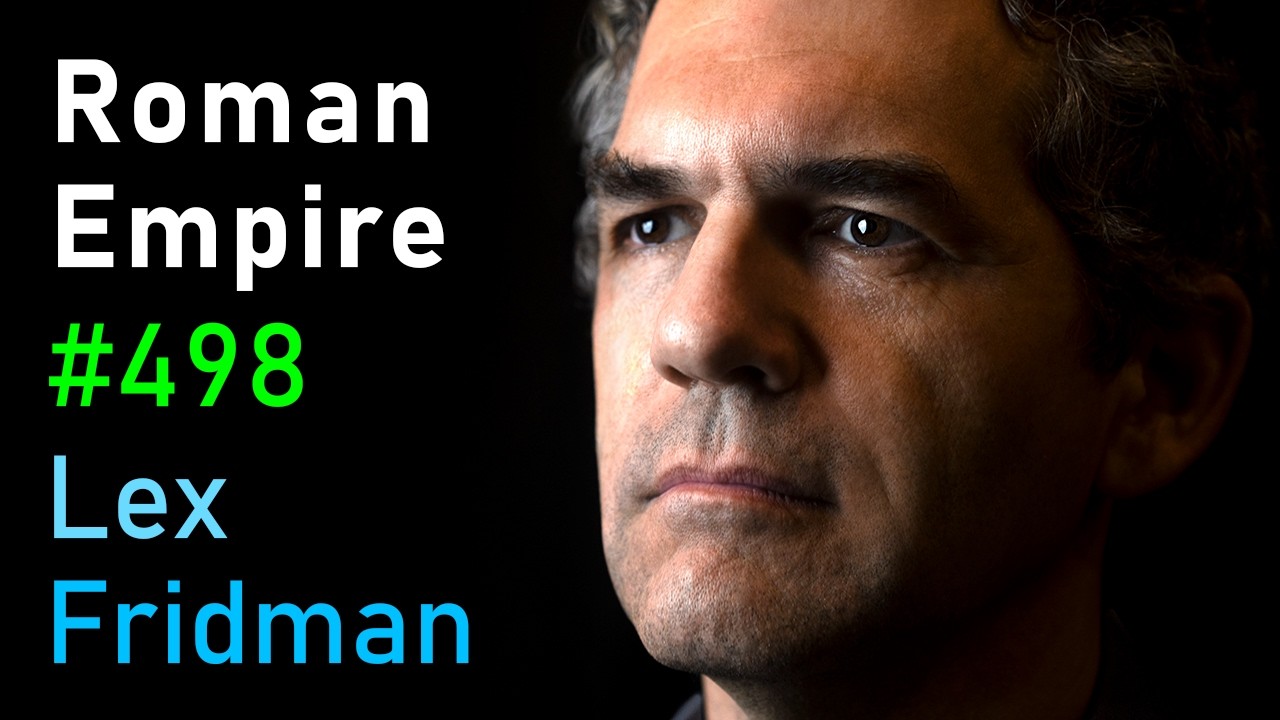
The Rise and Fall of the Roman Empire and the Byzantine Empire | Lex Fridman Podcast #498
 174 min
Biggest Mysteries in Physics: Antimatter, Dark Energy & ToE - Don Lincoln | Lex Fridman Podcast #497
Ask anything from this episode.
Save it, chat with it, and connect it to Claude or ChatGPT. Get cited answers from the actual content — and build your own knowledge base of every podcast and video you care about.
Get Started Free