Key Moments
Israel, Hamas, and the Battle for Civilization | Sam Harris & Douglas Murray
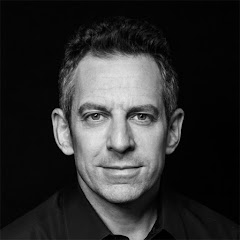 Sam Harris
Key Moments
Sam Harris and Douglas Murray discuss Israel, Hamas, and defending Western civilization against extremism.
Key Insights
The Joe Rogan Experience interview highlighted issues of expertise vs. opinion and the confusion surrounding the Israel-Hamas conflict.
Douglas Murray's book `On Democracies and Death Cults` argues that extremist ideologies, not just victimhood, drive violence.
A key challenge is combating 'death cult' ideologies that glorify death and reject Western values of life and coexistence.
Western societies grapple with internal divisions, with parts of the left and right holding opposing stances on conflicts like Ukraine and Israel-Hamas.
The credibility of institutions like science and media has eroded, making reasoned discourse more difficult.
Hamas's actions, such as taking hostages and using civilians as shields, demonstrate a fundamentally different moral landscape than Western expectations.
The challenge for Israel involves rescuing hostages from an enemy that deliberately maximizes casualties on both sides.
THE ROGAN INTERVIEW: EXPERTISE VERSUS OPINION
Sam Harris and Douglas Murray begin by discussing Murray's recent appearance on The Joe Rogan Experience. Murray aimed to address what he perceived as misinformation and a lack of nuanced discussion on complex issues like the Ukraine war and the Israel-Hamas conflict. The conversation highlighted the difficulty of engaging with popular platforms when entrenched, often uninformed, viewpoints are prevalent. They touched upon the importance of expertise and the challenge of maintaining intellectual integrity in public discourse, especially concerning sensitive geopolitical topics.
DECODING DEATH CULTS AND IDEOLOGICAL CONFLICTS
Murray's book, `On Democracies and Death Cults`, posits that extreme violence, particularly that seen in jihadist movements, stems from 'death cult' ideologies rather than solely from conditions of oppression or suffering. This perspective contrasts with common Western interpretations that emphasize victimhood as the primary driver of such actions. The discussion stresses that these ideologies actively glorify death and rejection of civilized norms, presenting a significant challenge to societies that value life and coexistence.
THE EROSION OF TRUST AND INSTITUTIONAL CREDIBILITY
A significant theme is the decline of public trust in traditional institutions, including science, media, and government. The COVID-19 pandemic is cited as a catalyst that accelerated this distrust, particularly towards scientific consensus. This erosion makes it harder to establish common ground based on facts and expertise, leading to a fragmentation of understanding and an increased susceptibility to conspiracy theories and misinformation.
MORAL PERPLEXITY IN THE ISRAEL-HAMAS CONFLICT
The conversation deeply explores the moral landscape of the Israel-Hamas conflict, emphasizing the stark differences in the behavior of the two sides. Murray highlights Hamas's actions, such as taking hostages, using civilians as human shields, and the celebration of atrocities, as evidence of a profoundly different moral framework. This contrasts sharply with the IDF's stated aim, however imperfectly executed, to minimize civilian casualties, presenting a difficult challenge for Western observers to reconcile with their own moral assumptions.
THE STRATEGIC CHALLENGE OF COMBATTING IDEOLOGIES OF DEATH
The nature of 'death cult' ideologies is examined, including their appeal to individuals who may otherwise be considered normal or even compassionate. These ideologies offer a seemingly clear path to meaning and salvation by valuing death and suffering over life and earthly concerns. The difficulty lies in countering movements that not only embrace their own death but also actively seek the death of their enemies, creating immense strategic and moral quandaries for those who must defend themselves.
WESTERN DIVISION AND THE POLITICS OF COMPROMISE
The discussion touches upon the internal political divisions within Western societies, where stances on critical conflicts like Ukraine and Israel often fall along partisan lines. This ideological polarization can lead to seemingly contradictory positions, such as supporting one nation's right to self-defense while questioning another's. This infighting further complicates the ability of the West to present a united front against external threats and to maintain a clear moral compass.
THE HOSTAGE CRISIS AND IMPOSSIBLE CHOICES
The agonizing dilemma of hostage negotiation is explored, using both the Israel-Hamas conflict and the situation in Ukraine as examples. The immense pressure on governments to secure the return of citizens, even at the cost of releasing dangerous terrorists, is highlighted. This leverage granted to terrorist organizations is a deliberate tactic, exploiting a fundamental commitment to preserving life deeply ingrained in societies like Israel's, leading to agonizing choices that benefit the enemy.
RECOGNIZING AND RESPONDING TO EXTREMISM
The conversation underlines the need for a clear-eyed recognition of the aims and methods of extremist groups. The tendency in the West to project its own values onto these groups, assuming they desire the same things like security and well-being, is seen as a dangerous miscalculation. Acknowledging that some groups genuinely embrace and glorify death is crucial for developing effective responses, moving beyond simple descriptions of 'evil' to grasp the more profound ideological underpinnings of 'death cults'.
Mentioned in This Episode
●Companies
●Organizations
●Books
●Concepts
●People Referenced
Common Questions
Douglas Murray appeared on Joe Rogan's podcast to discuss his views on the Russia-Ukraine and Israel-Hamas conflicts, and to gently correct what he saw as serious misunderstandings being presented on the show.
Topics
Mentioned in this video
One of Douglas Murray's previous books, part of a quartet on Western decline.
One of Douglas Murray's previous books, focusing on Western capitulation to unreason.
Paul Berman's book, cited for the idea that victims of atrocities can be blamed.
A work by Ricard Straz referenced for the feeling of being 'burned between two fires'.
Author of 'Terror and Liberalism', whose arguments about victims being blamed are discussed.
His theory of Orientalism is mentioned in relation to Westerners blaming external factors for actions.
His prisoner exchange deal is discussed as a precedent for hostage negotiations.
Hamas leader whose reaction to the death of his sons is discussed as an example of a death cult.
Quoted on the weakness of 'infidels' being their love of life.
Mentioned implicitly through Grossman's Law and the discussion of projection.
More from Sam Harris
View all 292 summaries 34 min
Is Effective Altruism Blind to the Biggest Problems? – Sam Harris & Will MacAskill
 21 min
What Is Technology Doing to Us?
 42 min
Is the Iran War Already Failing?
 90 min
FULL EPISODE: The Politics of Pragmatism and the Future of California (Ep. 464)
Found this useful? Build your knowledge library
Get AI-powered summaries of any YouTube video, podcast, or article in seconds. Save them to your personal pods and access them anytime.
Get Started Free