Key Moments
I Learned How To Surf In 5 Days
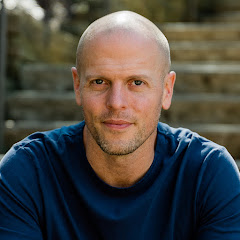 Tim Ferriss
Key Moments
Tim Ferriss learns to surf in 5 days with Laird Hamilton, focusing on progressive training and embracing discomfort.
Key Insights
Learning to surf rapidly requires a progressive training approach, starting with wave dynamics and body surfing to build comfort with the ocean's power.
Embracing discomfort and understanding wave mechanics, rather than fighting the ocean, is crucial for successful surfing.
Balance and body alignment are key to paddleboarding and surfing; looking ahead and maintaining spinal alignment are essential, not reacting to potential obstacles.
Proper paddling technique involves short, efficient strokes close to the board, and continuous paddling until catching the wave is achieved.
Wave selection involves understanding sets and choosing appropriate waves, while positioning on the board is critical for control and successful pop-ups.
The ultimate goal in learning a new skill, like surfing, is to have fun and feel supremely alive, which often leads to better performance.
INTRODUCTION TO THE EXPERIMENT
Tim Ferriss embarks on a 5-day challenge to learn how to surf, a skill he's long avoided due to a fear of drowning. He teams up with surfing legend Laird Hamilton on the island of Kauai. Ferriss aims to deconstruct and master this challenging sport quickly, drawing on Hamilton's expertise as a pioneer in big wave surfing and water sports innovation. The experiment is part of Ferriss's TV show, which focuses on rapid skill acquisition through unconventional teaching methods.
EMBRACING THE OCEAN'S POWER THROUGH BODY SURFING
The initial phase of training involves body surfing in a challenging and potentially dangerous location. This is designed to acclimate Ferriss to the ocean's forces and teach him to relax amidst unpredictable conditions. Hamilton emphasizes that one doesn't conquer a wave but rather allows it to carry them, and understanding the dynamics of how waves move and break is paramount to survival and enjoyment.
DEVELOPING BOARD BALANCE AND CONTROL
Transitioning to a board, Ferriss begins with stand-up paddleboarding to build foundational balance and control. Hamilton provides key insights, such as initiating movement before seeking stability and maintaining an upright posture with proper spinal alignment. Ferriss learns to avoid overthinking and reacting prematurely, focusing instead on feeling the board and the water, and paddling with intent even after sensing a wave's potential.
MASTERING PRONE SURFING TECHNIQUES
With guidance from fourth-generation surfer Kai Alexander, Ferriss progresses to prone surfing. Common novice mistakes like inefficient paddling, incorrect body positioning, and premature pop-ups are addressed. Kai emphasizes a short, controlled paddling motion, proper board alignment perpendicular to the shore, and a deliberate stand-up technique, teaching Ferriss to utilize the board's momentum rather than extraneous movements like leg pumping.
NAVIGATING CHALLENGING CONDITIONS AND NATURE'S SPECTACLE
As Ferriss advances, he encounters frustrating sessions but breaks through by successfully turning for the first time. This milestone is accompanied by extraordinary natural encounters, including a sea turtle and a breaching whale, culminating in a double rainbow. This deepens his appreciation for the profound connection surfers have with the ocean and the 'in the moment' existence it fosters.
STRATEGIES FOR WAVE SELECTION AND ENDURANCE
To prepare for his final challenge, Ferriss focuses on positioning and wave selection with Kai. He learns to use landmarks for orientation and to wait for optimal waves within a set, usually the second or third, to minimize risk. Additionally, techniques to build paddling endurance, such as a leg kick for momentum and extending arms for balance, are introduced. The overarching philosophy is to have fun, as enjoyment often correlates with better performance.
THE FINAL CHALLENGE AND THE PHILOSOPHY OF FUN
Ferriss's ultimate challenge, set by Laird Hamilton, is surprisingly simple: to have fun. This shifts Ferriss's goal-oriented mindset, highlighting that enjoyment is directly linked to mastery. He applies techniques like a butterfly stroke for paddling and exaggerated arm movements for balance. The experiment culminates in Ferriss successfully catching and riding a wave independently, realizing the profound impact of being present and feeling alive.
REFLECTIONS ON THE SURFING LIFESTYLE
Discussions with watermen like Titus Kinimaka reveal the deep commitment and lifestyle associated with surfing. It's described as a 'lifetime program' that can lead individuals to reorganize their lives around the activity. The sensation of surfing is characterized by a timeless state of 'the now,' driving surfers to seek every swell. This profound connection is attributed to both chemical and spiritual aspects of interacting with the ocean.
BEYOND THE CHALLENGE: APPLYING LESSONS LEARNED
Ferriss concludes that even a challenging day of surfing is superior to a day in the office, reinforcing the value of the experiment. He reflects on the intensive filming process and highlights that extended footage and tutorials are available online. The core takeaway is that rapid skill acquisition is possible by embracing discomfort, learning from experts, and fundamentally prioritizing enjoyment over rigid objectives.
Mentioned in This Episode
●Products
●Software & Apps
●People Referenced
Surfing Progressions and Tips
Practical takeaways from this episode
Do This
Avoid This
Common Questions
While Tim Ferris learned basic surfing in 4 days, the video highlights that learning to read waves and water takes years. Some people may take up to a year just to learn how to not go straight.
Topics
More from Tim Ferriss
View all 689 summaries 81 min
Q&A with Tim — The Upcoming AI Tsunami and Building Offline Advantage
 91 min
The Random Show, Couch Edition! — Supplements, Breathing and Balance Training, and Much More!
 76 min
How to Quiet the Ruminative Mind and Avoid The Traps of Self-Help — Tim Ferriss
 86 min
NYT Bestselling Author on Writing 200+ Children's Books — Tish Rabe
Found this useful? Build your knowledge library
Get AI-powered summaries of any YouTube video, podcast, or article in seconds. Save them to your personal pods and access them anytime.
Get Started Free