Key Moments
Hubris & Chaos: A Conversation with Rory Stewart (Episode #352)
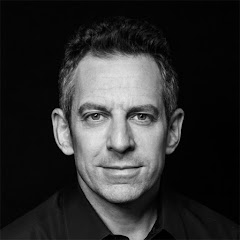 Sam Harris
Want to know something specific about what's covered?
We've already dissected every moment. Ask and we will deliver (with timestamps).
Key Moments
Rory Stewart discusses the failed liberal world order, nation-building failures in Iraq/Afghanistan, corrupt systems, and the rise of populism.
Key Insights
Western nation-building projects in Afghanistan and Iraq failed due to cultural ignorance, unrealistic goals, and underestimating local complexities.
Afghanistan's inherent lack of established state infrastructure and education made it fundamentally different from post-WWII Germany and Japan, rendering direct comparison for nation-building invalid.
The US approach in Iraq and Afghanistan was too idealistic and intrusive, lacking patience and cultural empathy for long-term development, leading to resentment.
While corruption is problematic, completely removing it can be counterproductive; a more pragmatic, albeit morally ambiguous, approach involving local power structures might be necessary for stability.
The catastrophic withdrawal from Afghanistan was a bad decision that damaged US global reputation and handed the country back to the Taliban.
The rise of populism, social media's influence, and a retreat from international commitments signal a fraying of the post-WWII liberal world order.
THE SHIFTING GLOBAL LANDSCAPE AND WESTERN AMBIVALENCE
Rory Stewart and Sam Harris begin by discussing the perceived erosion of the liberal world order, marked by a growing skepticism in the West, particularly in America, towards maintaining global stability and engaging in foreign interventions. Stewart notes his early career optimism in the 1990s, seeing a post-Cold War era of expanding democracies and decreasing conflict, a stark contrast to the current mood of isolationism and questioning the value of past efforts in places like Iraq and Afghanistan. This ideological shift suggests a desire to retreat within national borders, abandoning the commitment to keeping global chaos at bay.
THE ILLUSION OF NATION-BUILDING: AFGHANISTAN AND IRAQ
Stewart, who served as an acting governor in Iraq and walked across Afghanistan, offers a critical perspective on nation-building efforts. He recounts his pragmatic initial views, believing that even imperfect governments would be an improvement over Saddam Hussein or the Taliban. However, his experiences quickly revealed the profound unpopularity and impracticality of Westerners attempting to govern local populations. The core issue, he argues, was Western cultural ignorance and an overestimation of what external powers could achieve in deeply complex societies.
REASSESSING SUCCESS: AFGHANISTAN VS. POST-WAR GERMANY/JAPAN
The conversation challenges the common analogy between the post-WWII rebuilding of Germany and Japan and the interventions in Afghanistan and Iraq. Stewart emphasizes that Germany and Japan possessed highly developed industrial bases, educated populations, and established state structures, unlike Afghanistan. In contrast, many Afghan villages lacked literacy, and state infrastructure was virtually non-existent. This fundamental difference in human capital and societal organization made direct comparisons and the application of similar nation-building strategies inherently flawed and unrealistic.
THE CHALLENGE OF APPRECIATING LOCAL REALITIES
Stewart highlights the deep cultural and practical chasm between Western ideals and Afghan realities. He describes the difficulty of explaining basic concepts to those unfamiliar with electricity or modern governance, contrasting this with the idealistic pronouncements made by Western policymakers. The American approach is characterized as overly idealistic, impatient, and lacking empathy for local customs and timelines, often preferring to impose its own system rather than patiently facilitate local development, leading to frustration and inefficiency.
THE MORAL AMBIGUITY AND TOLERANCE FOR CORRUPTION
Addressing the difficult issue of corruption and the involvement of unsavory local actors, Stewart points out the dilemma the US faced. While intolerant of abuses like child rape by allied warlords, the alternative of replacing them with 'clean' technocrats often meant dismantling existing, albeit corrupt, power structures, leading to a 'break it, own it' scenario. He suggests that modern Western approaches often shy away from the necessary, albeit morally ambiguous, pragmatic compromises and indirect rule that were historically used to manage local affairs.
THE CATASTROPHIC WITHDRAWAL AND THE FRAYING ORDER
Stewart strongly criticizes the withdrawal from Afghanistan as catastrophic, not just in its implementation but as a fundamental error. He argues that maintaining a small troop presence was relatively low-cost and effective in preventing a Taliban takeover, and its removal damaged US global credibility. This event, along with a broader trend of populism, the influence of social media, and a retreat from international commitments, signals a dangerous fraying of the international order, leaving a more chaotic and unpredictable world.
Mentioned in This Episode
●Organizations
●Books
●Concepts
●People Referenced
Common Questions
Rory Stewart is a British former diplomat, governor, politician, and academic. He walked across Asia, served as an acting governor in Iraq, ran for UK Prime Minister, and now leads the charity Give Directly.
Topics
Mentioned in this video
Former president of Afghanistan, whose administration was noted for including problematic figures.
Founder of Al-Qaeda, whose capture was used as a rationale for the Afghanistan surge.
Host of the Making Sense podcast, interviewing Rory Stewart.
Former UN Ambassador mentioned in a meeting with Karzai and Ghani.
Former president of Afghanistan, whose government was associated with idealistic rhetoric.
Former dictator of Iraq, whose removal was seen as an intrinsic good, but whose downfall led to state collapse.
Former senior State Department official who encouraged problem-solving over identifying obstacles.
Former US President whose administration escalated the war in Afghanistan and made decisions questioned by Stewart.
Publication where Rory Stewart has written.
Terrorist organization discussed in relation to Afghanistan and the threat it posed.
Institution where Rory Stewart was a former fellow.
An charity evaluator that rates Give Directly highly.
The ruling force in Afghanistan discussed in relation to their past rule, current control, and the withdrawal.
The Ba'ath Party of Iraq, whose dismantling was demanded by Shia Muslims after Saddam Hussein's rule.
Publication where Rory Stewart has written.
A charity run by Rory Stewart, focused on direct cash transfers.
Institution where Rory Stewart was a former fellow.
Country discussed in relation to war, acting governorship, de-Ba'athification, and nation-building.
Country mentioned in relation to Obama's failure to uphold 'red lines', impacting US reputation.
Country discussed in relation to the Taliban, war, nation-building failures, and withdrawal.
Country used as an example of successful post-war nation-building.
More from Sam Harris
View all 310 summaries 38 min
The Second Plane, 25 Years Later
 27 min
Is the Far Left Hijacking the Democratic Party?
 27 min
How Trump Became Immune to Scandal
 48 min
When Should You Trust Your Intuition?
Ask anything from this episode.
Save it, chat with it, and connect it to Claude or ChatGPT. Get cited answers from the actual content — and build your own knowledge base of every podcast and video you care about.
Get Started Free