Key Moments
How To Speak Like A Top 1% CEO
 Codie Sanchez
Key Moments
Speak with confidence: Use clear headlines, warmth, and competence to command respect.
Key Insights
Effective communication hinges on signaling both warmth and competence.
Speaking in headlines, with clear and direct statements, gets your point across immediately.
Non-verbal cues like the slow triple nod and head tilt convey warmth and engagement.
Confident posture, steepling fingers, and visible hands signal competence and self-assurance.
Using fewer, sharper words backed by data and stories makes your message more impactful.
Mastering pauses and using the 'three-point rule' enhances persuasiveness and memorability.
Naming the 'elephant in the room' and projecting calm certainty builds trust and authority.
Storytelling is more effective than raw statistics for audience engagement.
THE POWER OF SPEAKING IN HEADLINES
To command respect, start conversations with your main point, not a lengthy preamble. Executives get straight to the action, mirroring this approach by presenting a clear 'headline' first. This decisive speech, characterized by direct statements and minimal hedging, signals competence and prevents others from rephrasing your ideas as their own. When requesting time, frame it with the problem and potential solution, e.g., 'I found a problem leading to lost revenue; can we discuss for 5 minutes?' or 'I have a solution needing 30 seconds for approval.' This formula clearly states the issue, its impact on the listener, and the time commitment required, ensuring you are heard.
BALANCING WARMTH AND COMPETENCE CUES
Respect is built on quickly signaling two key traits: trust (warmth) and reliability (competence). Warmth cues include smiling, nodding, and the 'slow triple nod,' which encourages the speaker to elaborate. A head tilt adds warmth to a statement. Competence is conveyed through confident posture, standing tall with shoulders back, occupying space, and keeping hands visible on a table. Gestures like steepling fingers signify thoughtful consideration, but avoid unsettling displays like unnerving hand movements. These non-verbal signals are crucial for building rapport and establishing credibility.
SHARPEN YOUR MESSAGE WITH BREVITY AND STORIES
Impactful communication involves using fewer, sharper words, supported by data and credentials. Instead of vague statements like 'increase revenue significantly,' opt for specific targets such as 'double revenue in 12 months.' Numbers and certifications reinforce expertise, allowing data to speak for itself. Employing a narrative structure, or 'show, don't tell,' makes messages more memorable than mere statistics. For instance, recounting a past crisis due to a bad hire is more compelling than stating a generic turnover increase. Stories resonate with human nature and are more persuasive.
MASTERING THE PAUSE AND THE THREE-POINT RULE
Strategic use of silence, known as 'mastering the pause,' amplifies the weight of your words and demonstrates comfort in owning the conversation. After delivering a key point, pause to let it resonate. If needing to assert your turn to speak, use a non-verbal cue like raising a finger to signal expectation for silence. The 'three-point rule'—framing information in sets of three—leverages the brain's affinity for patterns, making messages complete and memorable. Examples include 'opportunity, risk, next step' or 'first principles, second-order effects, and the ultimate outcome.'
CONTROLLING THE NARRATIVE FRAME AND PROJECTING CERTAINTY
Commanding the frame means defining the context of a conversation rather than letting others set it. Instead of directly disagreeing with a sentiment like 'we shouldn't spend that money,' reframe it as 'this isn't about money, it's about survival.' This shifts the focus to a more critical perspective. Projecting calm certainty, even when facing uncertainty, builds trust. Leaders should appear unshakable, like a duck gliding smoothly while paddling furiously beneath the surface. Avoid emotional outbursts like crying in professional settings, as this signals a lack of control and is detrimental to leadership perception.
NAMING THE OBVIOUS AND ASKING PROVOCATIVE QUESTIONS
Effectively addressing unspoken issues, or 'naming the elephant,' can break tension and build credibility. Voicing uncomfortable truths, perhaps as a question like 'Are we not hitting sales targets because our product is subpar?', can diffuse unspoken concerns. For even greater authority, state the truth directly. Leaders earn respect by articulating what others are hesitant to say, especially if the truth reflects on themselves, like admitting a past misjudgment. Additionally, asking 'dangerous' or thought-provoking questions, such as 'What's the one risk that could kill this deal?', challenges assumptions and signals a commitment to finding real truths.
PREPARATION AND SELF-AWARENESS FOR LEADERSHIP
Becoming a top communicator is not innate; it requires diligent preparation to surpass the efforts of others. Analyze your communication by examining your emails for 'warmth' words (e.g., 'cheers,' 'learn,' emojis) versus 'competence' words (e.g., 'achieve,' 'results,' 'data'). Most individuals lean towards one extreme. Self-awareness of your natural tendency—whether high on competence or warmth—allows for targeted improvement. Top leaders masterfully wield both, using them precisely rather than broadly, to connect effectively and influence outcomes. This strategic application is key to achieving 1% communication skills.
Mentioned in This Episode
●People Referenced
Speaking Like a Top 1% CEO: Dos and Don'ts
Practical takeaways from this episode
Do This
Avoid This
Warmth vs. Competence Indicators
Data extracted from this episode
| Type | Examples |
|---|---|
| Warmth Language | Cheers, collaborate, learn, emojis, thank yous, exclamation points, smiley faces |
| Competence Language | Achieve, mastery, results, outcomes, data, charts, graphs |
Common Questions
Start by speaking in headlines, stating your main point first. Use clear, direct statements with limited hedging and apologies. Project calm certainty, even if you are still working through details.
Topics
More from BigDeal by Codie Sanchez
View all 118 summaries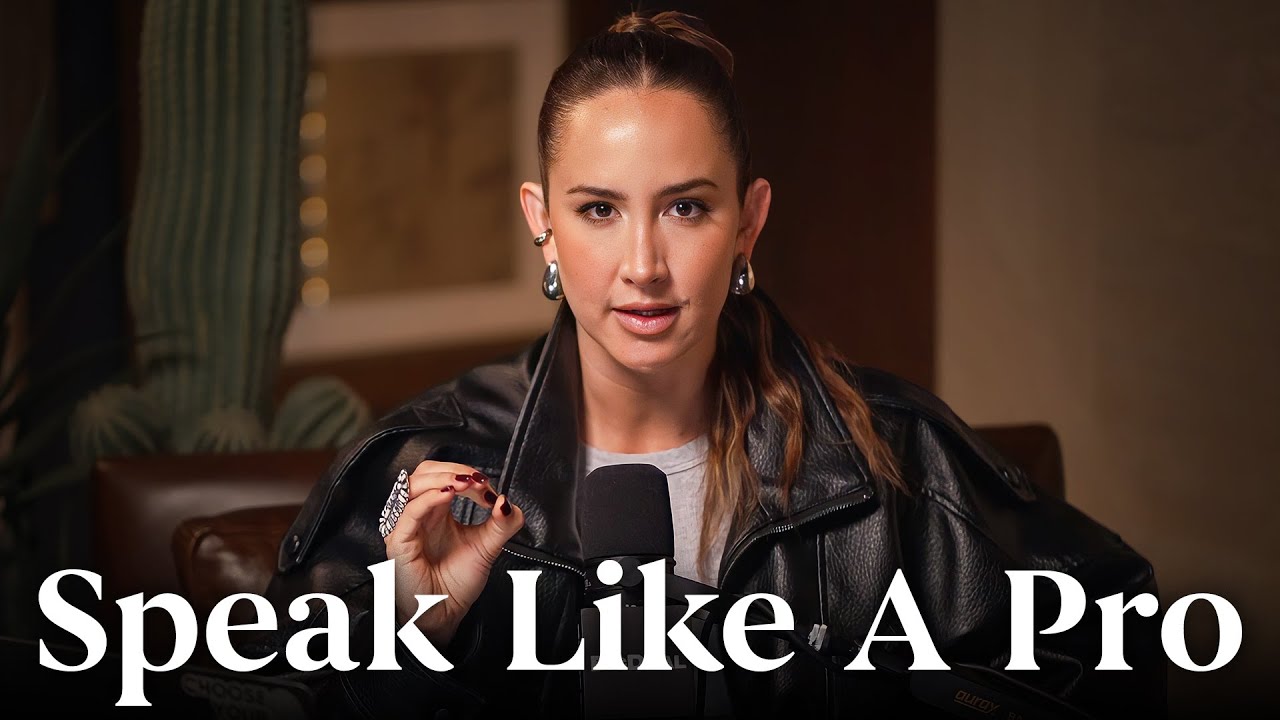 27 min
Be ARTICULATE and Speak SMARTLY: Communicate Like A Pro
 64 min
You Need To Be Bored. Here's Why. | Dr. Arthur Brooks
 29 min
Why Nobody Listens To You (And How to Fix It)
 21 min
If AI Takes Our Jobs… What’s Left for Humanity?
Found this useful? Build your knowledge library
Get AI-powered summaries of any YouTube video, podcast, or article in seconds. Save them to your personal pods and access them anytime.
Get Started Free