Key Moments
How to Not Screw Up Your 30s
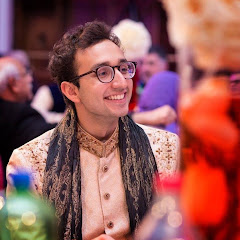 Ali Abdaal
Key Moments
Mentors share life advice for 30s: self-acceptance, time value, deliberate choices, and continuous self-care.
Key Insights
Embrace self-acceptance and compassion for your perceived flaws.
Appreciate the finite nature of time and the weight of decisions.
Transition from exploring opportunities (game access) to selecting and focusing on high-impact ones (game selection).
Prioritize health and fitness as a critical investment with long-term payoffs.
Understand that the best things in life require earned effort, not just money.
Don't wait to pursue significant life goals like family vacations or having children.
SELF-ACCEPTANCE AND AUTHENTICITY
Matthew Hussey advises embracing imperfections, as the qualities we hide often need compassion, not concealment. Ali Abdaal reflects on his desire to be liked, which sometimes leads him to deprioritize his own preferences, a tendency he aims to address through journaling. This insight encourages viewers to identify hidden parts of themselves and explore fears of judgment, promoting a journey towards greater self-acceptance and authenticity.
VALUING TIME AND PRIORITIZING ACTIONS
Mark Manson highlights the stark realization in one's thirties that time is finite, unlike in the twenties where opportunities seem endless. This understanding imbues decisions with greater weight. Ali relates this to his own tendency to defer important personal commitments, like family trips, due to a calendar often filled with work obligations. He proposes a journaling exercise: considering what one would do if they knew they had only two years left to live.
STRATEGIC CHOICES: GAME ACCESS VS. SELECTION
Sahil Bloom introduces the concept of 'game access' in one's twenties, emphasizing exploration and saying yes to opportunities. In the thirties, the focus shifts to 'game selection'—deliberately choosing high-impact activities that align with long-term goals. Ali acknowledges this transition, recognizing the need to be more intentional about where he invests his finite energy, particularly in his work and personal projects, to drive significant outcomes.
THE FOUNDATION OF HEALTH AND WELLNESS
Dan Go stresses that investing in physical health yields the greatest return on investment, impacting not only the body but also mental clarity, energy, and confidence. This resonates with Ali's own recent focus on health. The advice from elders consistently points to regretting not prioritizing health earlier. The call to action involves tripling investment in health, considering increased physical activity, personal training, and potentially longevity testing.
EARNING THE BEST THINGS IN LIFE
Sahil Bloom debunks the myth that the best things in life are free, asserting they are often extraordinarily expensive but must be earned through consistent effort, discipline, and dedication. This perspective applies to relationships, health, career, and mindset. Ali finds this resonates with his own efforts in various aspects of his life, emphasizing the ongoing commitment required to build and maintain these valuable assets.
EMBRACING CHANGE AND LONG-TERM VISION
Daniel Priestley describes turning thirty as a significant chapter change, distinct from the twenties, where relationships evolve and foundations laid now dictate future quality of life. He advises focusing on the 20% of efforts that yield 80% of results. Noah Kagan encourages writing a letter to one's 40-year-old self to provide direction and advises sticking with what's currently working, alongside prioritizing skincare and enjoying the journey.
PURSUING JOYFUL EXPERIENCES AND FAMILY
Marie Forleo emphasizes seizing opportunities for meaningful experiences with loved ones now, such as vacations with parents, before health declines. She also advises maintaining a low-cost lifestyle while increasing earnings and savings. Near emphasizes the joy children bring and urges having them sooner rather than later if one has found a life partner. Ali recognizes fertility testing as a practical step for those considering starting a family.
LETTING GO OF COMPARISON AND THE NEED TO 'FIGURE IT OUT'
Eric Partaker reassures that one doesn't need to have everything figured out at thirty. He shares his diverse career path, highlighting that life unfolds unexpectedly, and focusing on the 20% of efforts yielding 80% of outcomes is key. This contrasts with the pressure to have every step planned, encouraging a more adaptive and leverage-focused approach to growth and opportunities.
THE IMPORTANCE OF REST AND RECIPROCITY
Chris Ducker advises learning to switch off, recharge, and recalibrate mental and physical bandwidth, especially for entrepreneurs. He notes that great leaders prioritize self-care to sustain their ability to lead. Ali identifies scheduling deliberate downtime and vacations as a crucial action point, acknowledging that blank calendar space is often filled by work by default. Planning ahead for rest is essential for long-term well-being.
MAKING 'BAD' DECISIONS FOR FUTURE GRATITUDE
Dr. Andrew Huberman suggests that embracing 'bad' decisions can lead to surprising gratitude later in life, as early decades are often spent meeting others' expectations. He encourages re-evaluating personal desires and taking steps towards them. Ali connects this to potentially making unconventional choices and suggests journaling about what one wants if external opinions were disregarded, and what 'bad' decisions might lead to future appreciation.
Mentioned in This Episode
●Products
●Software & Apps
●Organizations
●Books
●People Referenced
Advice for Your 30s: Dos and Don'ts
Practical takeaways from this episode
Do This
Avoid This
Common Questions
Key advice includes embracing hidden parts of yourself, prioritizing family time, keeping expenses low, and wearing sunscreen. Many also suggest appreciating your limited time, making deliberate decisions, and investing in your health and well-being.
Topics
Mentioned in this video
Author of 'No More Mr Nice Guy', a book mentioned in relation to self-care and prioritizing one's own needs.
Bestselling author of 'Hooked' and 'Indistractable', who advised having children as soon as possible if you've found the right partner.
Entrepreneur and author of 'Everything Is Figureoutable', who offered advice on family vacations, lifestyle costs, and sunscreen.
Psychiatrist, monk, and Harvard Medical School faculty, known as Dr. K, who advised making 'bad' decisions and re-evaluating life beyond expectations.
Mentioned for his advice on scheduling holidays and family trips in advance.
Marie Forleo's book, which conveys a message of problem-solving and possibility.
Mark Manson's bestselling book, mentioned as a reference point for his work.
A book by Nir Eyal that the speaker found helpful for focus.
Mark Manson's earlier book about attracting women.
A book by Robert Glover discussed for its themes on men thinking about their own desires rather than just caretaking.
A book by Nir Eyal, mentioned as one of his bestselling works.
More from Ali Abdaal
View all 185 summaries 22 min
The psychology of making money
 34 min
If I Started YouTube from Scratch in 2026, I’d do THIS
 18 min
Brutally Honest Truth On How To Get Rich
 25 min
If I Started A Business in 2026, I'd Do This
Found this useful? Build your knowledge library
Get AI-powered summaries of any YouTube video, podcast, or article in seconds. Save them to your personal pods and access them anytime.
Get Started Free