Key Moments
How To Master Change: This One Idea Might Change Your Entire Life | Cal Newport
 Deep Questions with Cal Newport
Key Moments
Embrace 'allostasis'—stability through change—over homeostasis for a better relationship with life's constant shifts.
Key Insights
The traditional 'homeostasis' model of stability is an outdated, narrow view; 'allostasis' (stability through change) better describes healthy systems.
Our cultural narrative often promotes a fear of change rooted in the flawed homeostasis model, hindering our ability to adapt.
Rugged flexibility—maintaining core values while adapting to circumstances—is key to navigating disruptions.
Stability is about predictable routine, not rigidity; it allows for adaptation when predictions inevitably fail.
Fear of change can be managed by accepting it as normal and taking small, consistent actions towards values.
Diversifying one's identity across multiple 'hats' or domains provides resilience during life transitions.
CHALLENGING THE NARRATIVE OF STABILITY
The prevailing cultural narrative often emphasizes a return to 'normal' after disruptions, tracing back to the mid-1800s concept of homeostasis. This model suggests that healthy systems, including the human body, should return to a baseline after stress. However, recent research indicates this is a limited view, accurate only for very specific biological functions like core body temperature. Applying this to broader systems, like personal growth or ecosystems, is a misstep that can foster a resistance to necessary changes.
INTRODUCING ALLOSTASIS: STABILITY THROUGH VARIABILITY
A more accurate model for understanding change in dynamic systems is allostasis, derived from Greek roots meaning 'variable stability.' This concept, emerging in the late 20th century, posits that healthy systems achieve stability not by returning to a previous state, but by adapting and shifting to a new, stable configuration. This is evident in the immune system developing antibodies after illness, or muscles growing stronger after exertion and repair, demonstrating that progress often involves change and moving to a 'somewhere new'.
THE CULTURAL ROOTS OF CHANGE AVERSION
Much of our ingrained dislike for change, particularly in Western cultures, can be attributed to the widespread, albeit flawed, homeostasis model influencing our thinking. Cross-cultural studies suggest that societies less influenced by this concept tend to have a more positive relationship with change, embracing it rather than resisting it. This cultural conditioning reinforces the idea that change is an acute, negative event to be avoided, rather than an ongoing, natural process inherent to life itself.
RUGGED FLEXIBILITY AS THE PATH FORWARD
The concept of 'rugged flexibility' offers a framework for navigating change. It marries the seemingly contradictory ideas of being durable (rugged) through the ability to adapt (flexible). Like species in evolution or successful organizations, individuals can thrive by holding onto core values or identity—the ruggedness—while remaining adaptable in their approach and actions—the flexibility. This allows one to bend without breaking when faced with life's inevitable disruptions.
STABILITY AS PREDICTABILITY, NOT RIGIDITY
Human beings are fundamentally prediction machines, and stability is desired because it provides a sense of predictability, reducing cognitive load and stress. However, clinging too rigidly to these predictions, even in the face of overwhelming evidence to the contrary, is detrimental. True stability, in the context of allostasis, means maintaining the capacity to update predictions and adapt to new realities without succumbing to chaos or despair. It's about finding new stable configurations after disruption, rather than fighting to return to an obsolete past.
MANAGING FEAR AND LEANING ON SUPPORT
Facing change often engenders fear, a natural response to uncertainty and potential loss. Repressing this fear or falling into despair is unproductive. Instead, the most effective strategy is to take small, consistent actions aligned with one's values, activating goal-seeking pathways in the brain and counteracting stress responses. Additionally, leaning on community and social support provides a crucial buffer, allowing individuals to 'borrow support' from others while they navigate their own period of instability.
DIVERSIFYING IDENTITY FOR RESILIENCE
A critical component of navigating significant change is cultivating a diverse sense of self. Relying on a single identity, such as 'workaholic' or 'athlete,' makes one vulnerable when that domain is disrupted. Having multiple 'hats' or roles—parent, writer, coach, friend—provides psychological resilience. If one aspect of life faces disorder, other stable domains can be leaned upon, offering support and a sense of cohesion while reorganizing and finding new stability.
APPLYING PRINCIPLES TO PERSONAL AND PROFESSIONAL LIFE
The author's personal experiences, including a career shift, a move, and a serious injury, highlight the practical application of these principles. Rather than attempting to recreate past circumstances, the focus shifted to identifying core values (e.g., health and athleticism) and finding new ways to express them (e.g., powerlifting instead of running). Similarly, adapting to a new geographic location involved embracing its unique offerings rather than trying to replicate the old environment, demonstrating a move towards new stability.
THE FUTURE OF WORK AND DIGITAL DISCOURSE
The conversation extends to current trends in work and meaning, particularly the debate around remote work and the influence of 'hustle culture.' The discourse online often polarizes between extreme work obsession and anti-work sentiments, neglecting the nuanced reality of trade-offs. While AI is recognized as genuinely disruptive, its hype cycle mirrors unhealthy patterns seen with crypto, where the underlying technology's potential is overshadowed by exaggerated claims. Finding genuine meaning requires moving beyond these simplistic narratives.
NAVIGATING THE AI REVOLUTION
The advent of AI presents a significant, albeit confusing, disruption. Unlike crypto, AI's impact is broadly recognized as transformative. However, the related online discourse often falls into extremes, either predicting immediate doomsday or an end to all work. The reality leans towards AI augmenting tasks, particularly those involving pattern recognition, rather than replacing complex human creativity entirely. The true challenge lies in adapting work structures and integrating AI thoughtfully, echoing the broader theme of achieving stability through informed change.
Mentioned in This Episode
●Software & Apps
●Organizations
●Books
●Concepts
●People Referenced
Mastering Change: The Rugged Flexibility Framework
Practical takeaways from this episode
Do This
Avoid This
Common Questions
Homeostasis is the idea that systems return to their original stable state after stress, like a thermostat. Allostasis suggests healthy systems achieve stability by changing and adapting to a new state, not returning to the old one.
Topics
Mentioned in this video
A major publication mentioned as running stories about returning to 'normal' during the pandemic, which prompted Newport's thinking on change.
Mentioned as a publication that, like The New York Times and The Wall Street Journal, ran stories about normalcy during the pandemic.
Mentioned as a publication that, like The New York Times and The Economist, ran stories about normalcy during the pandemic.
An ex-Navy SEAL whose podcast was mentioned as an example of individuals who remained calm and adaptable during the COVID-19 pandemic.
Host of the podcast, author of 'Master of Change'. He discusses his research and experiences related to change and stability.
An ex-Navy SEAL whose podcast was mentioned as an example of individuals who remained calm and adaptable during the COVID-19 pandemic. He is also later cited as an example for adapting to AI.
A common friend mentioned who coined the term 'workism', referring to deriving one's entire identity from work.
Author of 'Range', a book promoting the benefits of broad experience over narrow specialization, which Stolberg relates to diversifying identity.
An entrepreneur who theorized about startups founded during the early pandemic developing new remote work structures with a potential long-term advantage.
Author whose writing style was hypothetically mentioned as a target voice for AI to emulate when rewriting a manuscript.
Author whose writing style was hypothetically mentioned as a target voice for AI to emulate when rewriting a manuscript.
Author of 'Master of Change: How to Excel When Everything Is Changing, Including You.' He shares his framework for navigating change.
A mid-1800s biological concept describing how systems return to a state of stability after a stressor, often misapplied to broader change processes.
A more recent scientific model suggesting that healthy systems achieve stability through change, coining the term 'stability through change'.
Mentioned as a therapeutic approach that can help in dealing with fear during periods of change, by accepting feelings and taking action.
The concept of deriving one's entire identity and sense of self-worth primarily from one's occupation.
The core idea presented in the book, combining durability with adaptability, allowing systems to maintain identity while evolving.
A free app for finding and booking appointments with doctors online, allowing users to filter by insurance, location, and condition.
A Virtual Private Network service that encrypts internet connections to provide privacy and security online.
A service that provides summaries (blinks) of non-fiction books and podcasts, used as a triage tool for reading and listening.
More from Cal Newport
View all 287 summaries 21 min
Can AI “Scheme”? (Nope.) | AI Reality Check
 31 min
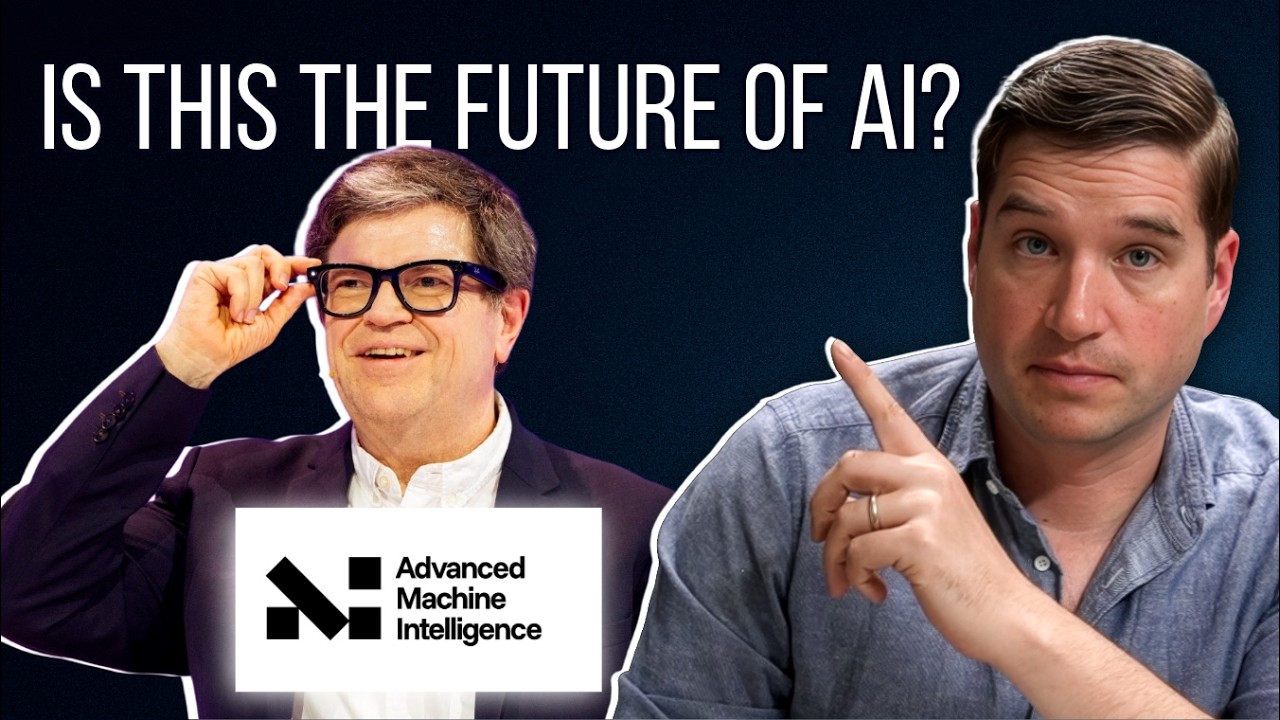
Are LLMs a Dead-End? (Investors Just Bet $1 Billion on “Yes”) | AI Reality Check | Cal Newport
 68 min
Why Is AI Making My Job *Worse*? | Cal Newport
 24 min
Did AI Just Become Sentient? (Not Quite...) | AI Reality Check
Found this useful? Build your knowledge library
Get AI-powered summaries of any YouTube video, podcast, or article in seconds. Save them to your personal pods and access them anytime.
Get Started Free