Key Moments
How To Cure Your Phone & Social Media Addiction (My 3-Step Process) | Cal Newport
 Deep Questions with Cal Newport
Want to know something specific about what's covered?
We've already dissected every moment. Ask and we will deliver (with timestamps).
Key Moments
Cal Newport's 3-step process for overcoming phone/social media addiction.
Key Insights
Extreme tech detoxes (like moving to a remote location) are often counter-productive and impractical for most people.
A staged approach involving a 30-day digital declutter, active re-engagement with offline activities, and zero-based budgeting of technology is more effective.
Zero-based budgeting requires starting from scratch and intentionally selecting technologies that actively support important life values.
Offline activities and true self-reflection are crucial during technology breaks to prevent relapse and to discover what truly matters.
Concerns about children's technology use in schools are often misplaced; the primary influence is parental modeling and household policies.
Niche online communities focused on specific interests are generally positive, unlike large, aggregated social media platforms.
A 'friendship recession' is evident, particularly among men, exacerbated by technology's illusion of connection and the decline of structured social gatherings.
Rebuilding friendships requires self-knowledge, engaging in meaningful offline activities, and proactively initiating social interactions.
THE PROBLEM WITH EXTREME DETOXES
The article begins by discussing an extreme example of someone trading their smartphone for an ax, highlighting the appeal of drastic measures to combat technology addiction. However, Cal Newport argues that such extreme scenarios, like retreating to a remote forest school, are counterproductive. They create an illusion that significant change is only possible through radical, impractical lifestyle overhauls, leading most people to feel stuck and resigned to their current habits. This approach discounts the possibility of making meaningful progress within one's existing life context.
A PRAGMATIC 3-STEP SOLUTION
Newport proposes a more accessible three-step process to regain control over technology use. This process starts with a 30-day 'digital declutter,' a temporary break from optional personal technologies like social media and streaming services. This break is not passive; it requires actively re-engaging with offline activities and undergoing self-reflection to understand underlying needs and avoidances. The goal is to disrupt the automatic reliance on digital tools.
STRATEGIES FOR RE-ENGAGEMENT AND SELF-REFLECTION
During the 30-day declutter, individuals must proactively fill the void left by discarded technologies. This involves experimentation with activities that were once important or activities one suspects might be meaningful. Crucially, this period also demands deep self-reflection. By confronting what one might be avoiding through digital distractions, individuals can begin to form a clearer vision of a more fulfilling life and identify the specific roles technology could play in supporting it, rather than hindering it.
ZERO-BASED BUDGETING FOR TECHNOLOGY
The third and pivotal step is 'zero-based budgeting' for technology. After the 30-day break, individuals rebuild their technology portfolio from scratch, deciding which tools are essential to support their core values and meaningful activities. This contrasts with traditional budgeting, which often involves incremental cuts. This method ensures that each piece of technology must justify its place by how directly it serves an important purpose, naturally eliminating many time-consuming and unfulfilling digital habits.
REBUILDING WITH INTENTION AND RULES
Applying zero-based budgeting means being intentional about technology use. For example, an artist might reintroduce Instagram solely for inspiration from a curated list of artists, accessing it only on a laptop for limited periods. Similarly, a writer might outsource tweeting to a virtual assistant to maintain an audience without constant engagement. This approach allows for the preservation of benefits while drastically reducing negative side effects by establishing clear 'rules' or 'fences' around technology usage.
ADDRESSING OTHER MODERN CHALLENGES
The discussion extends to related modern dilemmas. Newport argues that educational technology in schools is largely orthogonal to children's technology addiction, which is primarily influenced by home environment and parental modeling. He also approves of niche online communities like Goodreads or Letterboxd for connecting people around specific interests, provided they offer genuine value and are used intentionally. The core principle remains: technology should serve values, not dictate them.
TECHNOLOGY AS AN OBSTACLE TO A DEEPER LIFE
For individuals feeling stuck in careers, health, or finances, Newport suggests that problematic technology use is often the first barrier to overcome. Digital tools can 'scratch' core human desires for connection, efficacy, and recognition just enough to prevent people from feeling the necessary dissatisfaction to enact real change. By clearing these technological 'pacifiers' and engaging in self-reflection and disciplined activities, individuals can then approach deeper life goals like building habits, clarifying values, and gaining control over their lives.
COMBATTING THE FRIENDSHIP RECESSION
The conversation shifts to the 'friendship recession,' particularly its impact on men, exacerbated by social media's illusion of connection. Newport and guest Jamie Kilstein emphasize that genuine friendships, crucial for well-being, are built through real-world, meaningful activities. This involves self-reflection to understand oneself, engaging in hobbies like Jiu-Jitsu or joining community groups, and then proactively initiating social interaction within those contexts.
REBUILDING SOCIAL CONNECTIONS
The path to combatting loneliness involves cultivating self-knowledge, finding analog activities that foster genuine connection, and having the courage to initiate social interactions. Newport suggests a six-month timeline: a period of self-reflection, joining meaningful groups based on identified values, and then actively asking to participate in social events. This intentional approach, combined with grace for oneself during the process, can lead to robust friendships that support a deeper, more connected life.
Mentioned in This Episode
●Products
●Software & Apps
●Tools
●Companies
●Organizations
●Books
●Concepts
●People Referenced
3-Step Process for Curing Phone & Social Media Addiction
Practical takeaways from this episode
Do This
Avoid This
Common Questions
Cal Newport's 3-step process involves: 1) A 30-day digital declutter from optional personal technologies. 2) Aggressively experimenting with and reflecting on meaningful analog activities during the declutter. 3) Applying zero-based budgeting to technology, rebuilding usage from scratch based on personal values, and setting strict 'fences.'
Topics
Mentioned in this video
The location of Midland School, a natural setting without digital distractions that helped a teenager overcome technology addiction.
The city where Jamie Kilstein lived post-LA breakup, describing it as a period of isolation and self-discovery, during which he began rebuilding healthy habits.
Apple's instant messaging service, mentioned alongside WhatsApp as an app to manage with limited daily access to reduce constant digital connection.
A cloud-based word processor mentioned for writers to draft content for social media, allowing for outsourcing and minimizing direct screen time.
A social networking service for film enthusiasts to track movies, discussed for its potential pros and cons in media consumption.
A social media platform discussed in a New Yorker piece about the flawed notion of a single global conversation platform.
An online knowledge platform where Richard Reeves discussed the 'friendship recession'.
A social media platform mentioned as an example of optional personal technology that should be avoided during a digital declutter due to its distraction potential.
A mobile operating system that offers notification filtering features, similar to iPhone, for managing digital communication.
A website for tracking books and connecting with other readers, discussed for its potential to blend useful data tracking with social media pitfalls.
A music recommendation and social networking service, analyzed for its utility in tracking music listening habits and discovering new artists while considering potential technology overuse.
Actor mentioned for his role in 'The Conversation' as a surveillance expert, used as an analogy for internet privacy concerns.
Teenage author of 'Why I Traded My Smartphone for an Ax', who describes his personal struggle with technology overuse and his experience at Midland School.
Author credited for coining the term 'friendship recession' in an article for the National Review.
Author and friend of the show who uses Twitter to share Stoicism quotes through an outsourced system, demonstrating a disciplined approach to social media.
A popular online productivity personality mentioned as an example of someone whose success cannot be replicated simply by following a checklist.
Longtime friend of Cal Newport and owner of 'My Body Tutor,' a 100% online coaching program for health and fitness.
Comedian and podcaster, guest on the show, who shares his personal experience and insights on building robust male friendships in his 40s after struggling with loneliness.
American politician mentioned in a hyperbolic example of false online connections, where shared dislike of a public figure is mistaken for genuine friendship.
Jamie Kilstein's sister and author of 'Whole Child, Whole Life: 10 Ways to Help Kids Live, Learn, and Thrive,' a book on parenting and technology.
Journalist and author whose publication 'The Free Press' featured the article 'Why I Traded My Smartphone for an Ax'.
A popular YouTube content creator whose interviews are mentioned as preferred content over traditional TV shows, used as an example for structured YouTube consumption.
Renowned film director, mentioned as the creator of 'The Conversation'.
German philosopher whose concept of 'looking into the abyss' is invoked to describe confronting uncomfortable truths about one's life during self-reflection.
An ultra-marathoner and bowhunter, referenced as an example of someone pursuing remarkable physical and outdoor achievements in the vision stage of Cal Newport's Deep Life Stack.
Author who 'supercharged' the term 'friendship recession' through a Big Think interview, highlighting the health implications of loneliness.
Renowned Jiu-Jitsu coach, whose approach to interacting with students (shaking hands, being approachable) is used as an example for building rapport in new communities.
An online life insurance company offering a 100% digital application process without doctors or paperwork, providing instant approvals for coverage up to three million dollars.
A social media platform mentioned as an optional personal technology to take a break from during a digital declutter.
A major American television network, mentioned in the context of The Tonight Show.
A messaging app cited as an example of an instant messaging tool that can be managed with specific check-in times to maintain friendships without constant distraction.
A VPN service recommended for securing online activity by encrypting internet traffic and hiding user location from ISPs and surveillance.
A conservative news and opinion magazine where Daniel Cox's article on the 'friendship recession' was published.
A social media platform used by visual artists for inspiration, but with recommended strict boundaries (e.g., using a laptop, limited access) to avoid excessive use.
A social media platform discussed for its utility in audience engagement for writers, with a recommendation for outsourced, curated use to minimize negative impacts.
A video-sharing platform used for 'how-to' advice and alternative content to traditional TV, with recommendations for plugins to disable recommendations and using bookmarks.
An app that summarizes non-fiction books and podcasts into 15-minute 'blinks,' used for content triage before full engagement.
A major e-commerce and technology company that owns Goodreads.
A music streaming service recommended for sampling songs and discovering new music without passive consumption.
An online coaching program by Adam Gilbert focusing on consistency in health and fitness through daily accountability plans for nutrition and exercise.
A philosophical school of thought, mentioned in the context of Ryan Holiday using Twitter to share stoic quotes.
A martial art that Jamie Kilstein credits with helping him build strong male friendships by providing a challenging, shared activity and community.
A financial concept adapted for technology use, where one starts from scratch to decide which technologies are essential for personal values rather than trying to cut existing habits.
A book by Stephanie Krauss, focused on helping children navigate technology and live a healthy, thriving life, recommended for parents.
One of Cal Newport's books, cited by a listener (Austin) as inspiring changes in their life.
A music publication mentioned as an alternative source for discovering new music to mitigate technology overuse.
One of Cal Newport's books, cited by a listener (Austin) as inspiring changes in their life.
Cal Newport's 2019 book that introduced the concept of a 30-day digital declutter and explored healthier relationships with technology.
A prominent American magazine where Cal Newport has published articles, including one discussing flaws in global conversation platforms like Twitter.
Barry Weiss's publication that published Caleb Silverberg's article about ditching technology.
An experiential boarding school in the Los Padres National Forest where cell phones and video games are forbidden, which Caleb Silverberg attended to overcome his smartphone addiction.
A non-profit media organization that produces news programs like 'Morning Edition,' suggested as a source for minimalist news consumption.
A research organization that conducted a survey revealing a 'friendship recession' and decline in close friendships among Americans.
Jamie Kilstein's podcast, where he discusses mental health, spirituality, culture, and politics.
A daily news program on NPR, recommended as a way to stay informed about current events without excessive screen time.
A traditional television talk show mentioned as an example of content that viewers might prefer to substitute with YouTube videos.
A Francis Ford Coppola movie about a surveillance expert, used as a reference for internet privacy issues in the context of VPNs.
A popular online role-playing game mentioned as an example of technology that can pacify and distract from pursuing meaningful real-life goals.
More from Cal Newport
View all 314 summaries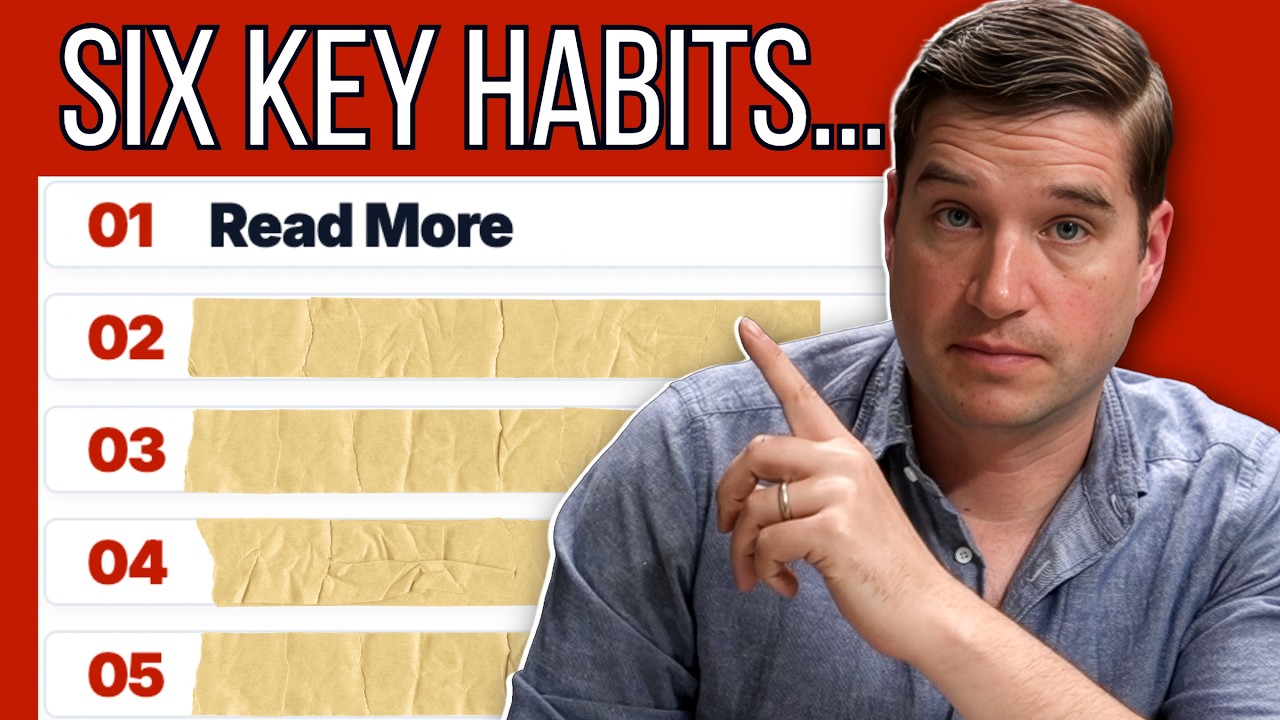 57 min
How to Kick Your Scrolling Habit (Practical Advice)
 65 min
How to Actually Achieve Your Goals (a Proven System)
 34 min
The Real Story Behind OpenAI’s “Rogue” Model
 32 min
Anthropic’s New “Research” Report is Dumb.
Ask anything from this episode.
Save it, chat with it, and connect it to Claude or ChatGPT. Get cited answers from the actual content — and build your own knowledge base of every podcast and video you care about.
Get Started Free