Key Moments
How Democracies Fail: A Conversation with Anne Applebaum (Episode #376)
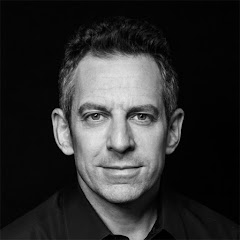 Sam Harris
Key Moments
Authoritarian regimes and democracies face threats from within and without, requiring vigilance and strong institutions.
Key Insights
Modern autocracies form a networked bloc with shared interests in wealth and undermining democracy, not a unified ideology.
The ideas of liberal democracy, such as individual rights and transparency, are inherently contagious and pose a threat to dictatorships.
Western financial systems have inadvertently enabled autocracies by facilitating money laundering and wealth hiding.
Democracies don't fall through sudden coups but through a slow decline, characterized by the hollowing out of institutions and erosion of norms.
Donald Trump's appeal lies partly in his charismatic, often comical, demeanor, which can obscure his more serious threats to democratic institutions.
The rise of political violence, fear of speaking out, and the normalization of pervasive lying are significant symptoms of democratic decay.
THE MODERN AUTOCRATIC NETWORK
Anne Applebaum describes modern autocracies, including Russia, China, and Iran, not as ideologically aligned states but as a network united by common interests. These regimes, despite vastly different political systems, share a strong concern for personal wealth and a desire to protect it using Western financial institutions. Crucially, they recognize the threat posed by the ideas of liberal democracy to their power, leading them to actively seek ways to undermine democratic societies both domestically and abroad through propaganda and other means.
THE CONTAGIOUS POWER OF IDEAS
The conversation highlights the significant power of liberal democratic ideas, such as individual rights, transparency, and the rule of law. These concepts are shown to be spontaneously appealing to people even in non-democratic societies, posing a fundamental threat to autocratic rule. Autocracies, like historical examples from Lenin to Putin, understand this and actively work to discredit liberal democracy in its homelands, fearing its infectious nature will inspire their own populations.
WESTERN ENABLERS OF AUTOCRACY
A significant portion of the discussion focuses on how Western financial systems, experts, and investors have, intentionally or unintentionally, facilitated the rise of autocracies. Through practices like money laundering, shell companies, and tax havens, Western institutions have allowed kleptocratic leaders to accumulate and hide vast wealth. This integration into the global financial system has not only enriched dictators but also created a vested interest in maintaining the status quo, proving that engagement and investment do not automatically lead to democratic reform.
THE SLOW DECLINE OF DEMOCRACIES
Applebaum emphasizes that democracies rarely fail through dramatic coups or revolutions. Instead, their decline is a gradual process of institutional decay. This involves the hollowing out of established norms, the politicization of the judiciary and media, and the erosion of checks and balances. The examples of Hungary, Venezuela, and Russia illustrate how these institutions become weakened to protect corrupt or autocratic leaders, leading to a functional, yet fundamentally compromised, system.
TRUMP'S CHARISMATIC THREAT
Donald Trump's particular brand of charisma is examined as a significant factor in how he is perceived and how he can undermine democratic norms without being taken seriously by opponents. His actions and statements, sometimes framed as jokes or norm violations, obscure a more systematic approach to power that mirrors certain autocratic tendencies. This comedic facade allows him to avoid critical scrutiny when he is, in fact, profoundly self-serving and potentially corrosive to democratic functions.
SYMPTOMS OF AMERICAN DEMOCRATIC DECLINE
The conversation identifies several worrying symptoms of democratic decline in the United States, including the normalization of pervasive lying, the rise of political violence and intimidation, and the fear individuals feel when expressing dissenting opinions. This atmosphere, amplified by social media and the cult-like devotion to figures like Trump, weakens institutions and fosters cynicism, creating conditions ripe for further autocratic encroachment and a loss of faith in democratic processes.
THE DANGERS OF INSTITUTIONAL WEAKNESS
Applebaum expresses concern that individuals around Trump hold more ideological views on how to alter the American state, aiming to replace expertise with loyalty and use government institutions for partisan ends. This includes the potential misuse of agencies like the Department of Justice or regulatory bodies to target political enemies. When institutions that should remain neutral become partisan tools, they cease to function as intended, leading to bad governance and a chilling effect on dissent.
THE ROLE OF EXTERNAL INFLUENCE AND INTERNAL COMPLACENCY
The discussion touches upon external influences, such as Russian disinformation campaigns and the narratives pushed by figures like David Sachs, which aim to undermine support for democratic allies like Ukraine. This external pressure is compounded by internal complacency and a misinterpretation of democratic principles, where a belief in inherent strength leads to an underestimation of the constant maintenance required for democratic health. The failure to recognize the value of alliances and democratic ideals makes societies more vulnerable.
Mentioned in This Episode
●Companies
●Organizations
●Books
●Concepts
●People Referenced
Navigating Autocracy and Democratic Decline
Practical takeaways from this episode
Do This
Avoid This
Common Questions
Anne Applebaum describes modern autocracies not as ideological blocs but as a network of dictatorships (like Russia, China, and Iran) that share common interests. A primary interest is protecting their wealth and using Western financial institutions to do so. They also seek to undermine liberal democracy and discredit it in its home countries.
Topics
Mentioned in this video
Mentioned as a potential vice presidential pick for Trump, known for his stance on not caring about Ukraine.
A judge in Florida whose handling of the Trump documents case is criticized as partisan and a symptom of institutional decline.
Leader of China, admired by Trump, which raises concerns for those advocating for a tougher stance against China.
Republican politician who, along with Mitt Romney, noted that some members of Congress feared for their lives regarding impeachment votes against Trump.
Current US President, mentioned regarding his debate with Trump and the accusations Trump made about Democrats' abortion stances.
Venture capitalist and podcaster whose talking points about the Ukraine war are critiqued.
A guest on Sam Harris's show who was investigated by Jim Jordan's committee regarding censorship claims.
A Maricopa County election official who faced threats and harassment after certifying the 2020 election results.
Head of the Heritage Foundation, associated with talk of a 'revolution' and replacing expertise with loyalists.
Host of the Making Sense podcast. He is interviewing Anne Applebaum about autocracy and its impact on democracy.
Author and journalist, formerly a columnist for the Washington Post and now a staff writer at The Atlantic. Her newest book is 'Autocracy Inc.'
Russian Foreign Minister quoted as saying the conflict in Ukraine is a battle over the future of the world order.
Mentioned in connection with David Sachs and his financial support for the Trump campaign, and his past conversations with Putin. His business interests in Russia are speculated upon.
Philosopher whose ideas on rights are implicitly compared to the instinctive demand for rights by people living under dictatorship.
A prominent Republican congressman whose committee's use of government institutions for political performances is criticized.
Republican politician who, along with Liz Cheney, noted that some members of Congress feared for their lives regarding impeachment votes against Trump.
Mentioned as a figure at a high level of the Trump movement, though the speaker expresses uncertainty about his current influence.
A US regulatory agency that could be used to make life difficult for media outlets disliked by Trump.
A movement in Russia focused on transparency and anti-corruption, representing an ideological opposition that autocracies seek to undermine.
A US government department discussed as a potential tool for political partisan ends, such as being used against Trump's enemies.
A US regulatory agency that could be used for partisan political ends.
A magazine where Anne Applebaum has been a staff writer since 2020.
A US government agency discussed in the context of its potential 'hollowing out' by replacing experts with loyalists.
An organization whose leader is associated with the idea of replacing expertise in government with loyalists.
A country where Anne Applebaum lives part-time and observed the effects of an autocratic populist government replacing experts with loyalists.
A US regulatory agency that could be used for partisan political ends.
One of Anne Applebaum's five critically acclaimed books, focusing on the history of the Soviet Union and Communism in Eastern Europe.
Anne Applebaum's newest book, which discusses the nature of modern autocracies and their threat to democracy.
One of Anne Applebaum's five critically acclaimed books, focusing on the decline of democracy.
One of Anne Applebaum's five critically acclaimed books, focusing on the history of the Soviet Union and Communism in Eastern Europe.
A country identified as part of the modern autocratic network and its leaders' interest in pushing back against liberal democratic ideals.
A country mentioned as part of the modern autocratic network and its dictatorship being supported by Russia and China.
A country invaded by Russia. Its success as a democracy is seen as an ideological threat by Putin.
Used as an analogy for potential democratic decline in the US.
A country mentioned as part of the modern autocratic network, with past and present corruption issues.
A country identified as part of the modern autocratic network, with interests in undermining liberal democracy.
A country mentioned as part of the network of dictatorships that support each other.
A country discussed extensively in the context of its autocratic regime, its actions in Ukraine, and its influence on global politics.
A country identified as part of the modern autocratic network.
More from Sam Harris
View all 292 summaries 34 min
Is Effective Altruism Blind to the Biggest Problems? – Sam Harris & Will MacAskill
 21 min
What Is Technology Doing to Us?
 42 min
Is the Iran War Already Failing?
 90 min
FULL EPISODE: The Politics of Pragmatism and the Future of California (Ep. 464)
Found this useful? Build your knowledge library
Get AI-powered summaries of any YouTube video, podcast, or article in seconds. Save them to your personal pods and access them anytime.
Get Started Free