Key Moments
Hikaru Nakamura: Chess, Magnus, Kasparov, and the Psychology of Greatness | Lex Fridman Podcast #330
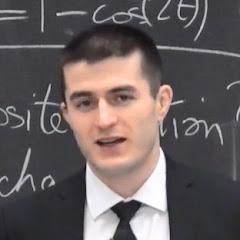 Lex Fridman
Want to know something specific about what's covered?
We've already dissected every moment. Ask and we will deliver (with timestamps).
Key Moments
Hikaru Nakamura discusses his chess journey, rivalry with Magnus, the psychology of competition, and the future of chess.
Key Insights
The 2010 private 40-game blitz match against Magnus Carlsen was a pivotal mistake for Nakamura, allowing Carlsen to exploit his opening weaknesses for years.
Psychological factors, such as confidence and a 'literally don't care' philosophy (post-pandemic), significantly impact competitive chess performance by reducing pressure.
Nakamura attributes his success, despite not being a naturally talented player, to relentless self-improvement and a refusal to accept inadequacy.
The 'human element' in chess, involving intuition and basic logic, is diminishing as newer generations learn with powerful, non-explanatory computers.
The recent cheating scandal involving Hans Niemann is seen as an existential threat to chess due to eroded trust and the difficulty of definitive proof without on-the-spot catches.
Streaming success allowed Nakamura to diversify income, reducing financial pressure from professional chess and fostering a more liberated playing style.
Nakamura greatly values the unifying aspect of chess, bringing together people from diverse backgrounds through mutual respect for the game.
A PIVOTAL RIVALRY: THE 2010 MAGNUS CARLSEN BLITZ MATCH
Hikaru Nakamura recounts a legendary, private 40-game blitz match against Magnus Carlsen in 2010, which he considers one of his biggest competitive mistakes. Although the final score was 24.5 to 15.5 in Carlsen's favor, the true cost was psychological. Nakamura believes this match allowed Carlsen to deeply understand and subsequently exploit his weaknesses, particularly in the opening phase of the game, for many years to come. This encounter shifted Nakamura's perception of Carlsen, who demonstrated a superhuman ability to save technically drawn endgames, profoundly impacting Nakamura's confidence against him.
THE PSYCHOLOGY OF COMPETITION: CONFIDENCE AND THE 'LITERALLY DON'T CARE' APPROACH
Confidence plays a crucial role in top-level chess. Nakamura highlights how Carlsen's miraculous endgame saves psychologically impacted almost every top player, making him seem superhuman. Nakamura found that playing Carlsen more frequently, particularly in online tournaments during the pandemic, helped him overcome this mental block by providing more opportunities to compete and feel he had chances. His post-pandemic 'literally don't care' philosophy—not an absence of competitiveness, but a freedom from financial pressure—allowed him to play more freely and avoid previous mistakes, demonstrating the profound link between mental state and performance.
NURTURING TALENT: THE JOURNEY OF A 'NON-NATURAL' CHESS PLAYER
Nakamura humbly describes himself as not a naturally talented chess player, contrasting with his brother's early aptitude. His breakthrough came from an unwavering commitment to self-improvement: constantly questioning his mistakes and refusing to accept mediocrity. From a young age, he devoured chess books, played extensively online and against his brother, and immersed himself in tactical patterns like forks and discovered attacks. This relentless dedication and analytical approach, rather than innate genius, drove his rapid ascent to the world's elite.
THE EVOLVING GAME: HUMAN INSTITUTION VERSUS COMPUTER PRECISION
The landscape of chess has dramatically shifted with the advent of powerful computers. Nakamura notes that while older generations, like himself and Magnus Carlsen, developed a 'human element' based on intuition and basic logic having learned pre-computer, newer players rely heavily on engine analysis. This leads to computer-suggested moves, like an early pawn push on H4, that defy traditional human logic but are known to be 'fine.' This reliance on computer-proven lines can diminish creative, human-driven analysis and the value of post-game discussions between opponents.
THE CHEATING CONTROVERSY: HANS NIEMANN AND CHESS'S EXISTENTIAL THREAT
Nakamura views the Hans Niemann cheating controversy as an existential threat to chess, primarily due to the erosion of trust among players and spectators. He emphasizes the difficulty of obtaining 'hard evidence' in over-the-board cheating and the mixed interpretations of statistical analyses. Nakamura believes Hans is a strong player, but the long-standing rumors and lack of transparency have created a deeply unsettling environment. He suggests that if Hans continues to play frequently, his results over the next 6-12 months will either validate or discredit the suspicions, highlighting the dilemma faced by FIDE and individual top players.
FINANCIAL INDEPENDENCE AND CAREER PIVOTS: THE RISE OF STREAMING
For much of his career, Nakamura faced immense financial pressure as a professional chess player, where secure income was elusive and dependent on top tournament invitations. His pivot to streaming, initially a 'risk' and a hobby, proved transformative. The success of his Twitch and YouTube channels diversified his income, removing the burden of needing to consistently perform at the highest level solely for financial stability. This newfound independence allowed him to play with greater freedom and enjoyment, illustrating how external factors can profoundly impact competitive performance and career longevity.
THE BEAUTY OF CHESS: COMMUNITY, CREATIVITY, AND CULTURAL EXCHANGE
Beyond its competitive aspects, Nakamura finds immense beauty in chess as a unifying force. He cherishes the opportunities to travel, meet diverse people, and connect with individuals from all backgrounds on a level playing field, regardless of age or socioeconomic status. The game's enduring capacity for creativity and the constant discovery of new possibilities, even after 30 years of play, continue to inspire him. Chess fosters a unique community where old connections endure, transcending time and geographical distance.
ADVICE FOR ASPIRING INDIVIDUALS: PURSUE YOUR PASSION RELENTLESSLY
Nakamura's core advice to young people is to relentlessly pursue their passions. Drawing from his parents' experiences—his mother's unfulfilled musical aspirations and his stepfather's forced legal career—he emphasizes the importance of trying and potentially failing over a life of 'what ifs.' He advocates for daring to deviate from conventional paths, even if financial viability is uncertain. While acknowledging the need for pragmatic decisions at some point, he underscores that time and experience are invaluable, and giving a pursuit 'your all' is crucial for professional success and personal fulfillment.
Mentioned in This Episode
●Products
●Software & Apps
●Companies
●Organizations
●Books
●Concepts
●People Referenced
Common Questions
Hikaru describes their relationship as 'Frenemies.' While highly competitive and driven to win against each other, they share a mutual respect and a sense of 'brotherhood' among the top chess professionals.
Topics
Mentioned in this video
An online chess platform that compiled a 72-page report on Hans Niemann's online cheating. Hikaru suggests Chess.com is partly to blame for the controversy escalating by not handling Niemann's online cheating sooner.
An online poker platform where Hikaru Nakamura spent many nights playing poker during his first semester of college, rather than studying. He still managed to win a chess tournament shortly thereafter.
An IBM chess-playing computer that famously defeated Garry Kasparov in the late 1990s, attracting significant interest to chess.
A mobile game that Hikaru played intensely for a month, spending over 100 hours to improve, illustrating his determination to master things he's not naturally good at, similar to his approach to chess.
A powerful open-source chess engine. Hikaru references its high Elo rating and how it provides humbling insights into chess moves that humans wouldn't typically consider.
An early online chess platform without cameras or audio. Hikaru honed his ability to communicate and interact during games via written comments, which proved beneficial for his later streaming career.
An AI program created by DeepMind that achieved superhuman performance in chess, a project mentioned by DeepMind CEO Demis Hassabis.
A popular chess streamer and International Master. Hikaru played a bullet game against him without a queen, suggesting he could still win 50% of the time, but less in slower formats.
Podcaster and comedian, mentioned by Hikaru Nakamura as an example of a successful creator whose main passions lie outside podcasting, allowing him to approach his show with a freeing perspective.
A Polish chess player against whom Hikaru Nakamura sacrificed his Queen for a pawn in a Catalan opening game in Barcelona in 2007, leading to a forced checkmate.
CEO of Tesla and SpaceX. Hikaru Nakamura would want to be him for a day, specifically to experience the process of overcoming low points like rocket explosions, finding it inspiring.
Author of the science fiction novel 'Rendezvous with Rama', which Hikaru Nakamura read.
A Soviet chess Grandmaster, whose quote ('A game of chess is not an examination of knowledge, it is the battle of nerves') is used to conclude the podcast.
A Russian Grandmaster. Hikaru recounts Svidler's comment about not wanting to discuss the politics of the Russian invasion of Ukraine and his anecdote about Kasparov's diet before games.
A renowned investor, whose hands-off management style, as described in a book by Mary Buffett, inspired Hikaru Nakamura's approach to running his streaming business.
An American poet and novelist whose tombstone reads 'Don't Try,' emphasizing a similar concept of not taking things too seriously, which Hikaru relates to his 'I literally don't care' philosophy.
A young chess player at the center of a cheating controversy. Hikaru discusses the circumstantial evidence, the difficulty of proving cheating, and the psychological impact on opponents.
A chess player from Latvia involved in a past cheating scandal, mentioned by Hikaru as an example of cheating incidents in chess history.
A very strong American chess player who Hikaru mentions 'blew him off the board' in four straight games after preparing specifically for Hikaru's Najdorf opening. He's also mentioned for his blunders in low-time blitz games.
A French chess player involved in a past cheating scandal, mentioned by Hikaru as an example of cheating incidents that didn't reach the same level of notoriety as the Niemann controversy.
A historical chess player considered the best in the world by a significant margin in his era, but a tragic figure who quit chess due to lack of competition. Hikaru places him in the top 10 historical players based on peer dominance.
A strong Canadian Grandmaster and one of the earliest major chess content creators on Twitch. Hikaru describes him as charismatic and authentic to his brand.
Former World Chess Champion, known as 'the Magician from Riga,' for his exciting, risky play and flamboyant lifestyle. Hikaru believes he would have been the best historical chess figure for streaming.
Former World Chess Champion who defeated Garry Kasparov by employing the Berlin Defense, demonstrating its solid, drawing tendencies against Kasparov's aggressive style.
Co-founder of Apple, quoted by Hikaru Nakamura ('you can never connect the dots looking forward; you can only connect them looking backwards') to explain his non-linear path to streaming success.
A Grandmaster who wrote an article in the Boston Globe suggesting a match between Hans Niemann and Magnus Carlsen, with security, to settle the cheating allegations.
A Russian chess player (Nepo) who competed in the Candidates Tournament. Hikaru mentions the financial difficulties Russian players face due to sanctions and that Nepo has to carry cash.
The former leader of Libya during the time Hikaru Nakamura played in the FIDE World Cup in Tripoli in 2003.
Author of a book on Warren Buffett, from whom Hikaru Nakamura learned about hands-off management, applying it to his streaming business.
A rising junior chess player from Iran currently representing France, known for his aggressive style. Hikaru deliberately played a 'boring' variation against him in the Candidates Tournament to upset his rhythm.
CEO of DeepMind and chess fan, who hypothesizes that the creative tension between the bishop and the knight makes chess an interesting game.
A chess player from Bulgaria (potentially Belarus) involved in a past cheating scandal, mentioned by Hikaru as an example of cheating incidents in chess history.
A chess player against whom Hikaru Nakamura won a memorable King's Indian Defense game in 2010 by offering consecutive Queen sacrifices.
A Chinese chess player mentioned by Hikaru Nakamura, who played against him in the Candidates Tournament. Hikaru recounts missing a drawing move in a critical position against Ding Liren.
A chess player who Magnus Carlsen defeated in rapid tie-breaks in a World Championship match. He was disqualified from the Candidates Tournament by FIDE for breaching ethical codes related to his support for the Russian invasion of Ukraine.
World Champion, Grandmaster from Norway, known for his consistent play, lack of blunders, and ability to save drawn positions. Hikaru often compares his own play and mindset to Magnus'.
Former World Chess Champion, who lost his title to Vladimir Kramnik due to the Berlin Defense. Known for his aggressive and tactical play, as well as extensive opening preparation.
Former World Chess Champion, known for popularizing the Sicilian Najdorf and for his superior endgame play, especially with bishops over knights. His reign was short-lived.
A strong Grandmaster who Hikaru states tops the conversation for greatest player to never have played for a World Championship, having been number two in the world for a long time.
An American junior chess player against whom Hikaru Nakamura won a King's Indian game in a tournament in St. Louis.
Country whose oil production policies in 2016 contributed to a crash in oil prices, affecting Hikaru Nakamura's investment.
City where Paul Morphy lived and is buried. Hikaru has visited his grave.
Country of origin for Mikhail Tal, known as 'the Magician from Riga.'
Country whose players Hikaru felt a particular tension to win against when he was younger, possibly the only country he felt such tension towards.
A historical period that Hikaru Nakamura studies extensively, finding wisdom in its history and military generals.
Ancient Roman ruins in Africa, which Hikaru Nakamura regrets not visiting during his trip to Libya in 2003, highlighting its historical significance.
City where Hikaru Nakamura played and won a chess tournament at the end of his first college semester, despite little preparation.
Country of descent for Hikaru Nakamura's stepfather, who comes from a family of lawyers.
City where Hikaru Nakamura and Magnus Carlsen played a private 40-game blitz match in 2010. Also where Mikhail Tal played his last blitz tournament.
City where Hikaru Nakamura played a tournament three weeks prior to the podcast and won a King's Indian game against Jeffrey Xiong. Also where security measures against cheating are implemented.
Country where the FIDE World Cup was held in 2003. Hikaru notes his eye-opening experience regarding the local's friendliness contrasting with Western media. Regrets not seeing Leptis Magna here.
State where Hikaru Nakamura spends a lot of time hiking 14ers (mountains over 14,000 feet), a personal life goal and a way to disconnect from technology.
A coastal city in California where Hikaru Nakamura envisions himself relaxing in a beach house 30 years in the future.
The capital of Libya, where the FIDE World Cup was held in 2003 when Muammar Gaddafi was in power. Hikaru mentions being surprised by the friendliness of the people there compared to media portrayals.
City where Hikaru Nakamura moved in 2008 after dropping out of college, taking a break from chess to enjoy nature before returning to the game and quickly improving his Elo rating.
A financial news outlet that Hikaru Nakamura watches daily for market insights, alongside CNBC, as part of his productive non-chess routine.
A technology company that was significantly involved in chess in the mid-1990s, particularly with Deep Blue, during a period of chess boom and bust.
An automotive and energy company, the stock of which Hikaru Nakamura previously shorted via puts and later sold puts on as it rose, illustrating his adaptive investment strategy.
An educational video series that Hikaru Nakamura watched as a homeschooled teenager, with one professor's oratorical style influencing his own delivery as a streamer.
An e-commerce giant, mentioned by Hikaru Nakamura as a startup that seemed to have a smoother path without extreme public lows, contrasting with his interest in Elon Musk's struggles.
A technology company that was a significant sponsor of chess in the mid-1990s, during a period of chess boom and bust.
A stock trading app that Hikaru Nakamura criticizes for gamifying investing with confetti and pop-ups, making it dangerous for people to access high-risk activities like shorting.
An AI research company that created AlphaZero.
A book by Herodotus, considered the father of history, which Hikaru Nakamura enjoys reading, particularly about ancient battles like Thermopylae and Marathon.
A science fiction book by Arthur C. Clarke, which Hikaru Nakamura read, influencing his thoughts on exploring the world if he were the last person on Earth.
A variation of the Ruy Lopez opening, popularized by Vladimir Kramnik against Garry Kasparov in their 2000 World Championship match. It's known for leading to early endgames and draws.
An aggressive chess opening that Hikaru Nakamura played for a while, but notes it has diminishing returns against better-prepared opponents.
A historical subject that Hikaru Nakamura has studied a lot, alongside ancient Roman history.
A well-known chess opening, also called the Spanish Opening, which includes the Berlin Defense variation. It has a long history, dating back to the 1960s.
An aggressive chess opening strategy that Hikaru Nakamura enjoyed playing when he was younger. It involves storming with pawns on the kingside and is vital for attacking possibilities.
A chess variant where the starting position of the back-rank pieces is randomized. Hikaru mentions that computers in this variant frequently sacrifice Rooks for Bishops or Knights.
A generally slow and positional chess opening, often declined, which Hikaru Nakamura used in a game where he sacrificed his queen for a pawn.
A tie-break game in chess where Black has draw odds (draws if the game is tied) but White has more time on the clock. Magnus Carlsen won a match against Hikaru Nakamura in this format in 2020.
A very aggressive chess opening, popularized by Bobby Fischer and Garry Kasparov. Hikaru discusses how white has many choices in this opening, dictating the game's direction.
University in England where Hikaru Nakamura's stepfather studied law before his parents took away his chessboard and books to prevent him from pursuing chess.
A financial news channel that Hikaru Nakamura watches daily to stay updated on markets, complementing his interest in investing and real estate.
Country where Hikaru Nakamura has occasionally achieved nine hours of sleep during chess tournaments, an unusual occurrence for him.
A prestigious performing arts conservatory. Hikaru mentions his mother's talent as a violinist was not enough to get into schools like Juilliard to pursue a music career.
The governing body of international chess, responsible for investigating cheating scandals and enforcing ethical codes. Hikaru believes the responsibility for addressing cheating ultimately lies with FIDE.
City where Hikaru Nakamura played a memorable game against Michael Krasenkow in 2007, involving a Queen sacrifice.
A professional baseball team whose games Hikaru Nakamura listened to on the radio extensively as a child, influencing his announcing style for streaming.
More from Lex Fridman
View all 553 summaries 193 min
Khabib Nurmagomedov: Dagestan, MMA, UFC, Islam, Conor, Fedor & Football | Lex Fridman Podcast #500
 227 min
Gary Gallagher: American Civil War, Slavery, Lincoln, Grant & Lee | Lex Fridman Podcast #499
 232 min
The Rise and Fall of the Roman Empire and the Byzantine Empire | Lex Fridman Podcast #498
 174 min
Biggest Mysteries in Physics: Antimatter, Dark Energy & ToE - Don Lincoln | Lex Fridman Podcast #497
Ask anything from this episode.
Save it, chat with it, and connect it to Claude or ChatGPT. Get cited answers from the actual content — and build your own knowledge base of every podcast and video you care about.
Get Started Free