Key Moments
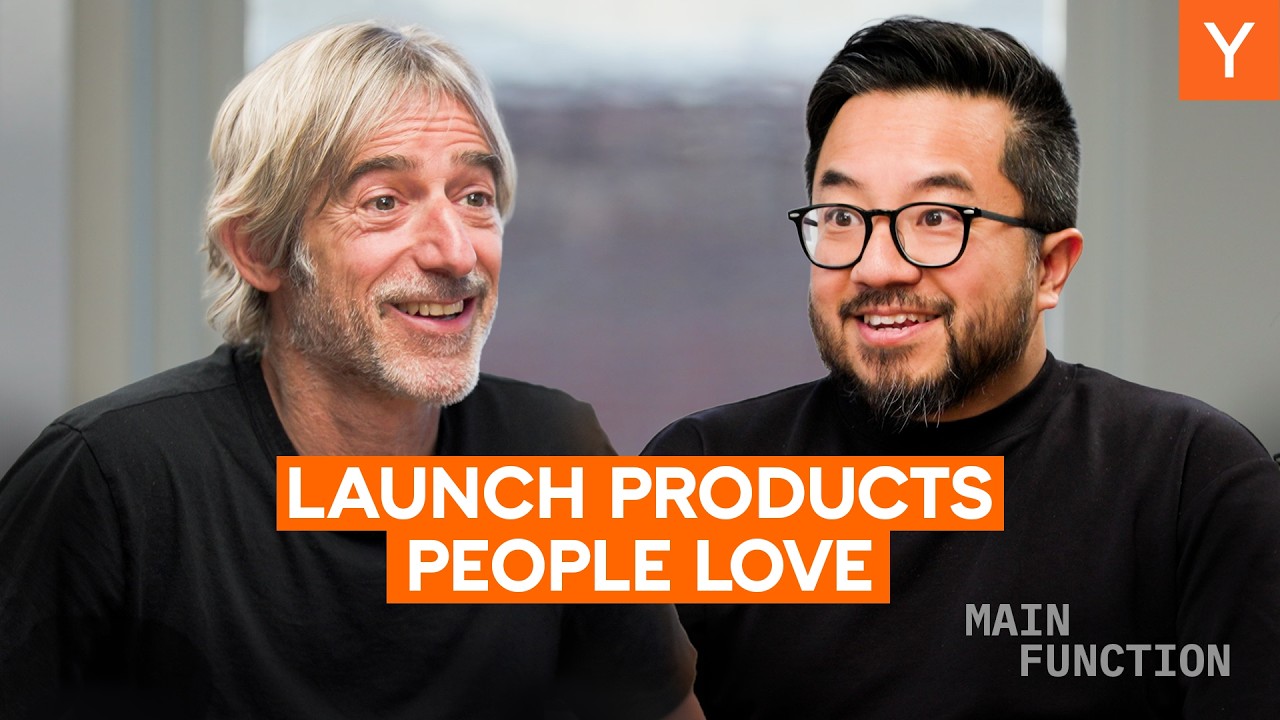
Google Photos Product Lead and Bump Cofounder David Lieb with Gustaf Alströmer
 Y Combinator
Want to know something specific about what's covered?
We've already dissected every moment. Ask and we will deliver (with timestamps).
Key Moments
David Lieb, Google Photos Lead, discusses Bump's rise, Flock's failure, and Google Photos' creation.
Key Insights
Bump's success was driven by its novelty and word-of-mouth distribution, not just its utility.
Understanding cohort retention and user frequency of use is crucial for long-term product success.
Flock failed because it required users to convince friends to adopt it, lacking initial utility.
Google Photos was born from the insight that a product needs to be an inherent part of the user's experience (like a camera roll) to succeed.
AI in products should solve real, relatable human problems or tackle unsolvable complexities, not just be a technological novelty.
User empathy and understanding nuanced human needs, like the power of nostalgia and memory, are key to building impactful products.
THE UNEXPECTED RISE OF BUMP
David Lieb recounts the origin of Bump, an app that facilitated easy contact sharing. Starting as a side project while in business school, its initial success was fueled by its novelty and the unique functionality it offered on early iPhones. The app gained significant traction through media attention and word-of-mouth, eventually becoming the billionth app downloaded on iOS, which significantly boosted its visibility.
LEARNING FROM BUMP'S GROWTH AND LIMITATIONS
Despite its massive download numbers, Bump's business model faced challenges. Lieb emphasizes the importance of measuring cohort retention and the frequency of user engagement, metrics they initially overlooked. While Bump had a large user base, infrequent use meant limited opportunities for monetization, highlighting that sheer popularity doesn't guarantee business viability.
THE FAILURE OF FLOCK AND THE ALEXA'S RULE
Following Bump, the team developed Flock, an app aiming to simplify photo sharing. This product leveraged insights from Bump users who were primarily sharing photos. However, Flock failed because it didn't offer immediate utility to a new user; it required them to convince their friends to download it first. This experience underscored the 'come for the tool, stay for the network' principle, illustrating that initial value must exist independently of a network effect.
THE STRATEGIC SHIFT TO GOOGLE PHOTOS
The insight that a photo product needed to be deeply embedded in a user's workflow led to the concept of Photo Roll, a better photo gallery app. This evolved into Google Photos after realizing the need for cloud storage and leveraging Google's existing infrastructure. The acquisition by Google provided the resources and scale to fulfill this vision, aligning with Google's mission to organize the world's information.
GOOGLE PHOTOS: AI AS A HELPFUL ASSISTANT
Google Photos was designed by imagining a tireless, intelligent human assistant managing photos. This led to features like automatic backup, facial recognition, and the creation of animations and movies. The core idea was to make photos useful and accessible, transforming a passive medium into an actively managed, engaging experience powered by AI and machine learning.
NAVIGATING LARGE-SCALE PRODUCT DEVELOPMENT
Lieb discusses the challenges and strategies of managing a product at Google's scale. This involves balancing product strategy, team development, and direct product work. He highlights the importance of user empathy, testing products rigorously (including using them internally), and gathering feedback, emphasizing that understanding user needs is paramount, even with advanced technology.
THE POWER OF NOSTALGIA AND HUMAN MEMORY
Reflecting on humanity, Lieb identifies the profound power of nostalgia and memory. He sees Google Photos as a tool to enhance people's 'photographic memory,' helping them relive important moments. The challenge lies in discerning truly significant memories from mundane ones, a complex task that AI is still learning to navigate effectively.
ADVICE FOR STARTUPS AND FUTURE TRENDS
Lieb advises aspiring entrepreneurs to focus on solving real problems and to consider whether their AI applications scale solvable human problems or tackle inherently unsolvable ones. He stresses the importance of durable human needs over fleeting trends and advocates for building products that amplify existing human activities, rather than just replicating them. He also touches on the importance of cultural alignment during acquisitions.
Mentioned in This Episode
●Products
●Software & Apps
●Companies
●Organizations
●People Referenced
Common Questions
Bump became popular through a combination of its novelty as an iPhone app, its ability to solve a real sharing problem (phone numbers), and significant media attention, including being the billionth app downloaded and featured in an international TV commercial.
Topics
Mentioned in this video
Google's mobile operating system, for which an improved gallery app was initially envisioned by David Lieb's team.
An early iPhone app co-founded by David Lieb, designed for easy contact sharing by physically bumping phones.
A redesigned Gmail client launched by Google that inspired the Photo Roll team to build a better, user-centric photo product.
The digital distribution platform for Apple mobile apps, crucial for the launch and growth of Bump.
An early Y Combinator company founded by Savage, whom David Lieb consulted before applying.
A product developed by the Bump team aiming to simplify photo sharing, which ultimately struggled with user acquisition due to its network dependency.
The third product developed by David Lieb's team, conceived as an improved photo gallery app, which laid the groundwork for Google Photos.
An earlier Google photo management service that was integrated into Google+ before the development of Google Photos.
The current product David Lieb leads at Google, focused on organizing, storing, and making photos useful with AI assistance.
CEO of OpenAI, quoted for his insight that the meta-problem killing startups is working on the wrong thing.
Co-founder of Y Combinator, involved in the technical assessment during the Bump interview.
Co-founder of Bump alongside David Lieb.
Co-founder of Y Combinator, who showed interest in the founder dynamics during the Bump interview.
Co-founder of Andreessen Horowitz, who invested in Bump.
CEO of Google, mentioned for his focus on user-centricity which has influenced Google's direction.
Co-founder of Y Combinator, known for his insights into startups and visionary thinking.
Co-founder of Y Combinator, involved in the technical assessment during the Bump interview.
Venture capitalist and author who wrote a blog post about the "come for the tool, stay for the network" principle, relevant to Flock's failure.
An early investor in Bump.
A company David Lieb invested in, developing plant-based chicken nuggets.
A social media platform that David Lieb's team initially looked to as a model for growth, but later realized the differences in business models.
The tech giant where David Lieb currently works as Product Director for Google Photos, and which acquired his team's previous startup.
A previous employer of David Lieb and his co-founders, where they gained engineering experience.
A startup accelerator that provided mentorship and network support to Bump, proving invaluable during server meltdowns.
A social media platform that David Lieb's team initially looked to as a model for growth, but later realized the differences in business models.
A photo-sharing app that emerged around the same time as Flock and later became a dominant platform, influencing discussions on photo sharing and network effects.
A company mentioned as an example of raising a large round to mitigate existential risks.
A company David Lieb invested in, focused on building software for hotels.
A social media app mentioned as an example of a consumer product with an unexpected emergent format (stories) that gained popularity.
More from Y Combinator
View all 602 summaries 33 min
India Can Create The Largest AI Companies
 41 min
Zynga Founder: Consumer Is Not Investible Right Now - Thats Why You Should Build It
 43 min
The Age Of The 40-Year-Old Solo Founder Is Here
 31 min
Groww: If Your Customers Don't Love It or Hate It, You've Already Lost
Ask anything from this episode.
Save it, chat with it, and connect it to Claude or ChatGPT. Get cited answers from the actual content — and build your own knowledge base of every podcast and video you care about.
Get Started Free