Key Moments
Full Length Episode | #178 | February 28, 2022 | Deep Questions Podcast with Cal Newport
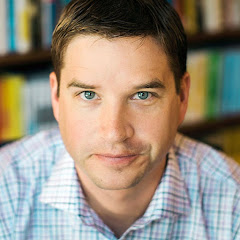 Deep Questions with Cal Newport
Key Moments
Cal Newport discusses doing hard things, planning strategies for students, parental influences, and living a deep life despite anxiety.
Key Insights
Brandon Sanderson's three tips for "doing hard things": setting better goals, learning how you work best, and breaking down large tasks.
Effective planning involves "lead indicators" (controllable actions) over "lag indicators" (ultimate goals), and understanding personal work styles is crucial.
Cal Newport's mother, a computer programmer, instilled values of organization and structure, influencing his approach to productivity and time management.
For students, an "autopilot schedule" for regular tasks combined with pre-planned sessions for major assignments and exams is recommended over strict time-blocking.
Living a "deep life" involves embracing values and pursuing meaningful activities despite the presence of anxiety or discomfort, not eliminating them entirely.
Developing a personal operating system for life can be beneficial, but it's crucial to balance system management with actual life experiences and gratitude.
NAVIGATING CHALLENGING TASKS WITH BRANDON SANDERSON'S ADVICE
Cal Newport introduces Brandon Sanderson's perspectives on "doing hard things," challenging the simplistic "follow your dreams" narrative prevalent in media. Sanderson posits that "doing hard things has intrinsic value and they will make me a better person even if I end up failing." This reframes ambitious goals around the process and personal growth rather than solely on success. This approach emphasizes resilience and the inherent worth of effort, regardless of the ultimate outcome, fostering a more realistic and empowering mindset for tackling significant challenges.
STRATEGIES FOR SETTING AND ACHIEVING AMBITIOUS GOALS
Sanderson's first tip, 'make better goals,' advises moving away from vague, long-term aspirations like 'become a successful author.' Instead, he recommends setting controllable goals, such as producing a specific number of manuscripts, with each being more ambitious than the last. Newport connects this to the 'Four Disciplines of Execution' (4DX) methodology, highlighting the importance of 'lead indicators'—actionable, trackable tasks—over 'lag indicators'—the ultimate desired outcome. Focusing on these controllable steps provides a clearer path for progress and skill development.
UNDERSTANDING AND HONING PERSONAL WORK HABITS
The second tip, 'learn how you work,' debunks the myth that only those with an overwhelming compulsion to write are true writers. Sanderson emphasizes that writing, like many demanding tasks, is hard work and requires effort to discover what methods facilitate productivity for individuals. This can range from daily word count tracking to social pressure from groups or deadlines. Newport elaborates that cognitively demanding efforts are unnatural, as ancient brain parts seek immediate benefits, making it necessary to develop strategies, like scheduling, philosophies, and rituals, to trick the brain into engaging with deep work.
BREAKING DOWN COMPLEX GOALS INTO MANAGEABLE STEPS
Sanderson's third tip, 'break it down,' stresses the necessity of segmenting large, daunting goals into smaller, manageable pieces. For immense projects like writing a novel with hundreds of thousands of words, the goal cannot be simply 'writing the book.' Instead, it should be about completing specific chapters or establishing foundational elements. Newport adds that the real magic lies in identifying these smaller goals, which requires training and specific guidance, often obtained by asking experts not for advice, but for their lived stories and detailed roadmaps of their journey.
THE ROLE OF PARENTAL INFLUENCE ON PRODUCTIVITY AND PLANNING
Recounting his upbringing, Cal Newport highlights his mother, a computer programmer, and her early adoption of remote work, which led to computers being present in their home from a young age. This exposure fostered his interest in computer science. Furthermore, after moving to New Jersey, his mother, faced with managing four children and household chaos, adopted the Franklin Planner system. This instilled a deep appreciation for structure, organization, and deliberate planning, influencing Newport's own productivity systems and philosophies that he discusses today.
EFFECTIVE PLANNING STRATEGIES FOR STUDENTS
Addressing a law student's query about weekend planning, Newport recommends an 'autopilot schedule' for recurring tasks, fixing them in specific days and times, which provides a realistic view of workload. For one-off major tasks like papers and exams, he advises creating a plan at least a month in advance, scheduling preparation time. This approach differs from strict time-blocking and aims to prevent the chronic overload and stress often experienced by students, emphasizing systematic planning rather than constant reactive work, and controlling extracurricular commitments.
CULTIVATING A DEEP LIFE AMIDST ANXIETY AND UNCERTAINTY
In response to a caller's framework for living a deep life, Newport emphasizes that anxiety is a natural part of life and should not be viewed as a precondition for a good life. He introduces Acceptance and Commitment Therapy (ACT) concepts from 'The Happiness Trap,' suggesting that instead of directly confronting or challenging anxious thoughts, one should acknowledge their presence while committing to value-driven actions. The goal is to live deeply and authentically despite discomfort, not to achieve a life devoid of challenges or negative emotions.
BALANCING SYSTEMS WITH REAL-LIFE EXPERIENCES
Newport commends the caller's structured approach to creating a 'personal operating system' but warns against over-optimization. He stresses that life is inherently unpredictable, with inevitable periods of illness or anxiety that disrupt any system. The key is to balance meticulous planning with present-moment awareness, gratitude, and the ability to adapt when systems falter. The ultimate aim of a deep life is to live meaningfully and authentically, embracing both the good and the challenging aspects of existence, rather than becoming solely preoccupied with managing the system itself.
Mentioned in This Episode
●Products
●Software & Apps
●Companies
●Books
●Concepts
●People Referenced
Tips for Doing Hard Things (Brandon Sanderson)
Practical takeaways from this episode
Do This
Avoid This
Common Questions
Brandon Sanderson suggests focusing on goals you can control, like producing a certain number of manuscripts rather than just aiming to be a successful author. He also advises understanding your personal work style and using rituals or schedules to facilitate effort, and breaking large tasks down into smaller, manageable steps.
Topics
Mentioned in this video
Mentioned as an example of a writer who used eccentric locations for their work, leaving his home to work in the back room of a furnace factory.
Fantasy novelist whose 2020 talk on doing hard things is the subject of Cal Newport's essay and this deep dive. Known for best-selling series.
Author of 'The Happiness Trap,' which popularizes Acceptance Commitment Therapy (ACT).
Mentioned for her writing ritual of going to hotel rooms and removing all distractions to focus on work.
Mentioned as someone who looks tan and relaxed, and whose home grounds are in Florida.
The host of the podcast, discussing his personal habits, productivity systems, and advice on focused work.
Mentioned as one of the companies that uses New Relic for software stack monitoring.
A subscription service offering 10-15 minute summaries of non-fiction books, recommended for learning about ideas and deciding which books to read further.
A daily nutritional supplement powder containing vitamins, minerals, probiotics, and adaptogens, recommended for convenience and quality.
A platform that combines monitoring products to provide transparency into debugging across an entire software stack, used by over 14,000 companies.
Mentioned as one of the companies that uses New Relic for software stack monitoring.
A physical supplement store that Cal Newport humorously describes as a chaotic and overwhelming place to find nutrients.
Mentioned as one of the companies that uses New Relic for software stack monitoring.
A book that popularizes Acceptance Commitment Therapy (ACT), recommended by Cal Newport for managing anxiety by making space for thoughts rather than challenging them.
Mentioned as a popular book on Blinkist.
Cal Newport's book, mentioned in relation to the 4DX methodology for individual accomplishment.
Mentioned as a popular book on Blinkist.
Mentioned by a caller as part of their framework for living a deep life.
A canonical public-facing book on second-wave psychotherapy (Cognitive Behavioral Therapy) that Cal Newport used effectively for insomnia.
More from Cal Newport
View all 287 summaries 21 min
Can AI “Scheme”? (Nope.) | AI Reality Check
 31 min
Are LLMs a Dead-End? (Investors Just Bet $1 Billion on “Yes”) | AI Reality Check | Cal Newport
 68 min
Why Is AI Making My Job *Worse*? | Cal Newport
 24 min
Did AI Just Become Sentient? (Not Quite...) | AI Reality Check
Found this useful? Build your knowledge library
Get AI-powered summaries of any YouTube video, podcast, or article in seconds. Save them to your personal pods and access them anytime.
Get Started Free