Key Moments
Full Length Episode | #173 | February 14, 2022
 Deep Questions with Cal Newport
Key Moments
Cal Newport demystifies deep work, its importance, and how to achieve it, prioritizing focus in a distracted world.
Key Insights
Deep work is defined as cognitively demanding tasks performed without distraction.
It's crucial for moving the needle in professional contexts, especially knowledge work, by creating value.
The digital age has increased distractions, making deep work scarcer and thus more valuable.
Implementing deep work requires defining it, measuring it (e.g., deep-shallow work ratio), scheduling it, and training concentration.
Promoting one's work should be secondary to producing high-quality output; focus on being "so good they can't ignore you."
Digital tools like e-ink tablets and email management norms are insufficient; systemic changes are needed for better collaboration.
High schoolers should avoid addictive online games/social media and focus on autonomously chosen, skill-building pursuits.
Creativity and high performance in any field are hindered by constant digital distraction and context switching.
The book '4000 Weeks' emphasizes accepting limitations, choosing meaningful pursuits, and finding resilience in a finite life.
UNDERSTANDING DEEP WORK
Cal Newport introduces 'deep work' as a cognitively demanding activity performed without distraction. This definition distinguishes it from shallow work (not demanding) and pseudo-deep work (demanding but with frequent context shifts). He emphasizes that deep work is not a moral judgment on the value of work but a specific type of activity crucial for high-level cognitive output and productivity.
THE IMPORTANCE OF DEEP WORK
Deep work is essential because it's what ultimately moves the needle in most professional fields, particularly knowledge work. While shallow tasks keep operations running, deep work is responsible for creating unique value, driving innovation, and achieving significant professional growth. In an increasingly shallow and distracted world, the ability to concentrate deeply offers a disproportionate competitive advantage.
STRATEGIES FOR CULTIVATING DEEP WORK
To cultivate deep work, Newport suggests several strategies. First, clearly define it to recognize it. Second, measure its presence, perhaps by setting a deep-to-shallow work ratio and tracking hours. Third, schedule deep work sessions intentionally, treating them like important appointments. Finally, train the ability to concentrate through regular practice, productive meditation, and engaging in challenging hobbies, as concentration is a skill that atrophies without use.
PROMOTING WORK AND DIGITAL TOOLS
Newport warns against the 'trap' of focusing too much on promotion and marketing over producing high-quality work. The principle is to be 'so good they can't ignore you.' He also discusses the limits of digital tools and norms for email management, stating that systemic changes to collaboration workflows are more effective than mere behavioral guidelines for reducing digital distractions and overload.
DEEP WORK AND CREATIVITY
Creativity, exemplified by artists like The Beatles, thrives on sustained focus and the ability to engage in 'cognitive wandering' without constant digital interruption. Newport argues that modern technology, particularly social media and online games, actively hinders this process by promoting context switching and addiction, thereby diminishing the capacity for deep thought and high-level creative output.
GUIDANCE FOR ADOLESCENTS
For teenagers, Newport advises avoiding addictive online video games and social media, suggesting they use technology primarily for communication and essential tasks, not endless scrolling or entertainment. He advocates for fostering autonomously chosen, skill-building pursuits, both physical and social, to develop concentration and character, emphasizing that a deep life is built on focusing on hard but meaningful activities.
MOTIVATING STUDENTS AND ACCEPTING LIMITATIONS
Addressing educators and parents, Newport stresses the importance of demonstrating and discussing concentration as a core skill. He suggests that while direct solutions to student disengagement are challenging, planting the seeds of the 'deep life' can offer an alternative vision. He also discusses how accepting life's limitations, as highlighted in '4000 Weeks,' is key to a fulfilling existence, encouraging chosen pursuits over a quantity-based, unattainable ideal.
Mentioned in This Episode
●Products
●Software & Apps
●Organizations
●Books
●People Referenced
Your Deep Work Cheat Sheet Focus on what truly matters by prioritizing deep, undistracted work.
Practical takeaways from this episode
Do This
Avoid This
Common Questions
Deep work is defined as any activity performed in a state of distraction-free concentration by cognitively demanding tasks. It's about focusing intensely on challenging work without switching contexts, which significantly boosts cognitive effectiveness.
Topics
Mentioned in this video
Host of the Deep Questions podcast, author of books on deep work and digital minimalism.
Comedian who uses a flip phone to avoid distractions and focus on creative work.
Author and motivational speaker whose video about an NBA player not pushing to their full potential illustrates the impact of distraction.
Cal Newport's friend and collaborator on online courses, including 'Top Performer'.
Author who disappears for most of the year to focus on writing, emerging only for book promotion.
Podcast host who recommended and excerpted Oliver Burkeman's '4000 Weeks' based on Cal Newport's suggestion.
Author mentioned for comparison regarding book launch success, contrasting with the quieter launch of 'Deep Work'.
Interviewer who spoke with Steve Martin about his advice on being 'so good they can't ignore you'.
Author mentioned as an example of someone who creates a distraction-free environment (writing house with no wi-fi) for deep creative work.
NBA player mentioned as an example of an athlete with enough elite talent to have some wiggle room, contrasting with others who are highly susceptible to small performance drops.
Author mentioned for comparison regarding book launch success, contrasting with the quieter launch of 'Deep Work'.
Comedian whose autobiography 'Born Standing Up' and advice 'be so good they can't ignore you' influenced Cal Newport's thinking on deep work.
Physicist mentioned as an example of extreme intellectual focus, used to temper expectations for teenagers' concentration abilities.
Author of '4000 Weeks', discussed for his insights on having limited time and the need for a value-based approach to productivity.
Friend of Cal Newport, comedian and podcaster being promoted for a going-away show.
Autobiography of Steve Martin that influenced Cal Newport's ideas on deep work.
Cal Newport's 2016 book on focused, distraction-free work, which has sold over a million copies and been translated into many languages.
Book by Oliver Burkeman that emphasizes the finite nature of time and the need to prioritize based on values.
Cal Newport's book that addresses the problems of continuous digital communication and proposes alternative systems.
Cal Newport's book on how to reduce digital distractions and live a more intentional life, mentioned in the context of teaching strategies for young people.
Messaging app mentioned as a tool for teen socialization that has largely replaced social media platforms.
Online video game mentioned as an example of addictive technology that can be detrimental to teenagers.
Platform mentioned as a source of distracting entertainment contributing to the decline of deep work.
Social media platform that was once critical for teen socialization but has largely been replaced by other tools.
Social media platform criticized for its addictive algorithms and manipulation of adolescent users.
Social media platform used as an example of engaging in shallow activities (posting pictures) while a larger problem (the ship sinking) is ignored.
Online video game criticized for its addictive nature and low return on time investment for teenagers.
Publication mentioned as the place where Cal Newport's 'Deep Work' was a bestseller for a short period.
Online video game mentioned as an example of addictive technology.
Film used as an analogy to describe the addictive nature of TikTok.
University where Cal Newport previously served as Director of Graduate Studies for the computer science department, illustrating the importance of non-deep work tasks like budgeting.
Band whose creative process and use of technology (or lack thereof) are discussed in relation to deep work and creativity.
More from Cal Newport
View all 288 summaries 64 min
Rules For Deep Work — Updated for 2026 | Cal Newport
 21 min
Can AI “Scheme”? (Nope.) | AI Reality Check
 31 min
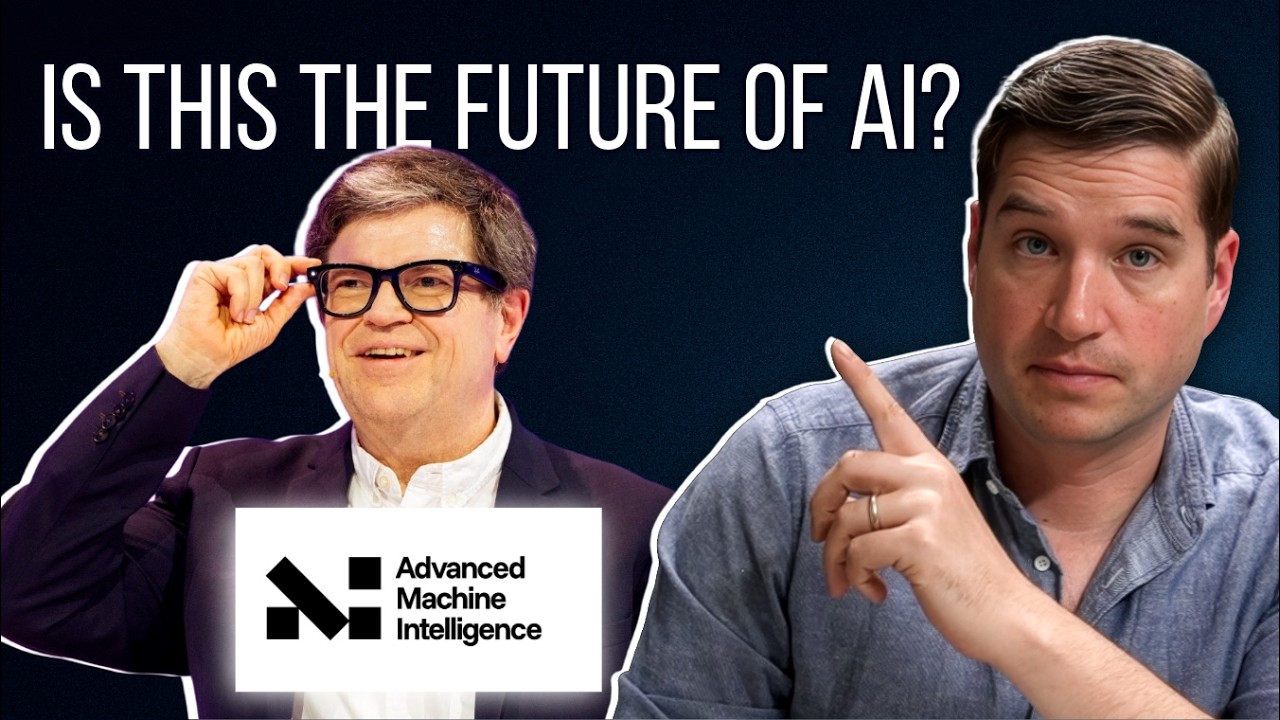
Are LLMs a Dead-End? (Investors Just Bet $1 Billion on “Yes”) | AI Reality Check | Cal Newport
 68 min
Why Is AI Making My Job *Worse*? | Cal Newport
Found this useful? Build your knowledge library
Get AI-powered summaries of any YouTube video, podcast, or article in seconds. Save them to your personal pods and access them anytime.
Get Started Free