Key Moments
Full Length Episode | #162 | January 6, 2022
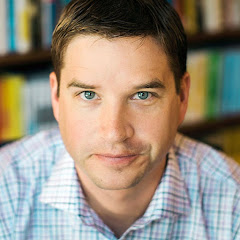 Deep Questions with Cal Newport
Key Moments
Cal Newport discusses ambition, digital minimalism, time blocking, and deep work environments.
Key Insights
Sharpen your skills and demonstrate success rather than focusing heavily on selling when offering a valuable service.
Encourage behavioral change in relationships by modeling desired actions and fostering open communication, rather than direct persuasion.
Intense physical activities like bodybuilding can be considered high-quality leisure and may enhance general concentration.
Time blocking is more effective when schedules are less ambitious and activities are highly ritualized (time, place, action).
Slow productivity emphasizes achieving significant long-term goals by accepting variability and breathing room in shorter timeframes.
Investing in specialized workspaces can significantly enhance intellectual output quality for deep work.
SHARPENING YOUR SWORD OVER HARD SELLING
The first caller, Kobi, seeks advice on whether to focus on improving his stock investing program or on selling it more effectively to attract clients. Newport leans towards Kobi's instinct to 'sharpen his sword'—meaning to focus on improving his skills and demonstrating success. He argues that becoming exceptionally good at leveraged stock investing will naturally make the program more appealing. The irony is that the more successful Kobi is himself, the less pressure there is to sell. This authenticity and demonstrable success also attract clients organically, tying into the 'so good they can't ignore you' principle from Newport's book.
NAVIGATING DIGITAL MINIMALISM IN RELATIONSHIPS
Pablo asks how to persuade his girlfriend to reduce her social media use, a delicate relational challenge. Newport advises against direct persuasion, noting it often backfires in relationships. Instead, he suggests living the desired behavior oneself—demonstrating the benefits of a digital-minimalist lifestyle. This involves using phones mindfully, scheduling social media use, and letting the partner observe the resulting peace and focus. If the topic arises, one can then explain the philosophy behind it, allowing the other person to make their own decision.
BODYBUILDING AS HIGH-QUALITY LEISURE AND DEEP WORK
Pablo's second question concerns whether high-intensity bodybuilding counts as high-quality leisure. Newport agrees emphatically, citing figures like Arnold Schwarzenegger who treated training as a five-hour-a-day deep work session. He posits that such focused physical exertion, especially when coupled with a mind-muscle connection and concentration, can be a form of deep work itself. Furthermore, engaging in such dedicated physical practice might actually enhance one's general ability to concentrate on other tasks, making it a valuable addition to the 'deep work toolkit'.
MASTERING TIME BLOCKING FOR DEEP WORK
Carson is using time blocking to finish his dissertation but struggles with consistently adhering to his schedule. Newport offers two key tips: first, schedule less; aspiring to do too much can lead to resistance. He suggests focusing on one crucial dissertation task per day. Second, Carson needs to ritualize his work. This means establishing consistent times and places for specific tasks. By making these elements highly predictable, the brain's context-switching costs are reduced, making it easier to enter a focused state and less likely to negotiate with oneself about working.
THE PRINCIPLES OF SLOW PRODUCTIVITY
Sam from India asks about balancing personal ambition with life and health. Newport introduces his concept of 'slow productivity,' a counterbalance to both the 'crush it' mentality of the 2000s and the 'do nothing' trend. Slow productivity focuses on achieving significant accomplishments over longer time scales (years rather than days or weeks). This approach provides breathing room for flexibility, variation, and periods of rest, aligning with human rhythms. It requires identifying a small number of important long-term projects and diligently working on them, fostering pride in sustained output rather than immediate results.
OPTIMIZING WORKSPACES FOR DEEP CONCENTRATION
A caller with chronic back issues seeks advice on an ideal desk setup for deep work, finding current standing and sitting arrangements uncomfortable. Newport suggests moving beyond a single, fixed workspace. He advocates for a 'parapathetic' approach, moving between different locations for different types of work (e.g., benches, libraries). He also shares his personal indulgence: a custom-built, university-library-style reading desk designed for focused work with notebooks, separate from permanent computer setups. He emphasizes that investing in high-quality workspaces can yield significant returns in intellectual output quality.
Mentioned in This Episode
●Books
●Concepts
●People Referenced
Deep Work & Productivity Tips
Practical takeaways from this episode
Do This
Avoid This
Common Questions
According to Cal Newport, if you're spending excessive time trying to convince people to join your program, it's often a signal to go back to 'sharpening your sword.' Focusing on becoming demonstrably successful yourself will naturally attract more people and add authenticity to your offerings.
Topics
Mentioned in this video
A book by Cal Newport that discusses the law of financial viability and becoming so good at your craft that you can't be ignored.
A book by Jenny Odell that is part of the anti-productivity movement, advocating for doing less.
A book by Alex Soojung-Kim Pang that discusses embracing finitude and stepping back from the relentless pursuit of productivity.
Cal Newport's philosophy and book on reducing the use of social media and technology for a more focused life.
A book by Cheryl Sandberg that became associated with the push for women to advance in their careers.
A concept Cal Newport is popularizing, emphasizing accomplishment on larger time scales and sustainable work.
Mentioned in relation to Cal Newport's appearance and the branding of time blocking.
The iconic film series created by George Lucas, written in a custom-built tower.
A children's book series written by Ian Colfer, mentioned as an example of successful intellectual output.
Host of the Deep Questions podcast, author of 'So Good They Can't Ignore You'. Discusses concepts like slow productivity and digital minimalism.
A caller seeking advice on building a stock investing program and becoming a hedge fund manager.
Mentioned in relation to the 'Lean In' movement and the emphasis on being activity-oriented in the 2000s.
Author mentioned in the context of the anti-productivity movement and the book 'How to Do Nothing'.
Author of '4000 Weeks', discussed in the context of pushback against productivity culture.
Filmmaker who built a writing tower for concentrated work, mentioned in relation to building over-the-top workspaces.
Entrepreneur quoted for his idea that money's willingness to be given is a neutral indicator of value.
Mentioned in the context of bodybuilding and deep work during his training years.
A bodybuilder whose biography was mentioned in the discussion about intense, high-quality leisure.
More from Cal Newport
View all 288 summaries 64 min
Rules For Deep Work — Updated for 2026 | Cal Newport
 21 min
Can AI “Scheme”? (Nope.) | AI Reality Check
 31 min
Are LLMs a Dead-End? (Investors Just Bet $1 Billion on “Yes”) | AI Reality Check | Cal Newport
 68 min
Why Is AI Making My Job *Worse*? | Cal Newport
Found this useful? Build your knowledge library
Get AI-powered summaries of any YouTube video, podcast, or article in seconds. Save them to your personal pods and access them anytime.
Get Started Free