Key Moments
Foundations and Challenges of Deep Learning (Yoshua Bengio)
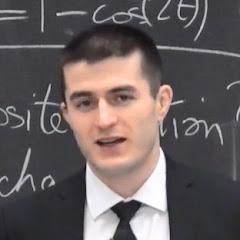 Lex Fridman
Want to know something specific about what's covered?
We've already dissected every moment. Ask and we will deliver (with timestamps).
Key Moments
Deep learning succeeds through compositional models, overcoming dimensionality with depth and distributed representations. Training is helped by saddle points over local minima, and unsupervised learning is key for true AI.
Key Insights
Deep learning overcomes the curse of dimensionality by using compositional, layered models (depth) and distributed representations.
The success of deep learning relies on assumptions about the world being compositional, which makes learning possible with fewer parameters than configurations.
In high-dimensional neural network training, saddle points are more prevalent than local minima, and many local minima offer performance comparable to the global minimum.
Unsupervised learning is crucial for AI, enabling learning from vast unlabeled data, uncovering underlying factors of variation, and developing common sense like humans.
Long-term dependencies and reinforcement learning are significant challenges, with attention mechanisms and memory-based approaches showing promise.
Reconnecting neuroscience with machine learning, particularly in credit assignment mechanisms like backpropagation, is a promising future research direction.
THE CURSE OF DIMENSIONALITY AND DEEP LEARNING'S SOLUTION
Deep learning addresses the curse of dimensionality, where the number of possible data configurations grows exponentially with variables. This challenge is bypassed by using compositional models, specifically deep neural networks. These models break down complex functions into layers of simpler, composed units, enabling them to represent exponentially large numbers of configurations with a manageable number of parameters. This compositional structure, including distributed representations within layers and hierarchical depth across layers, is essential for generalizing to unseen data by learning meaningful intermediate features.
THE POWER OF COMPOSITIONALITY AND DISTRIBUTED REPRESENTATIONS
The effectiveness of deep learning hinges on the assumption that the real world is inherently compositional. This means complex phenomena can be understood by combining simpler elements. Distributed representations, where features are spread across multiple units rather than being localized, allow for more efficient and nuanced feature detection. This approach, combined with the hierarchical processing afforded by network depth, enables models to learn robust representations. For instance, detectors for 'glasses' or 'gender' can be learned independently, and then combined to recognize a vast array of human configurations, even with limited direct examples for each.
TRAINING CHALLENGES: LOCAL MINIMA VS. SADDLE POINTS
Historically, the presence of numerous local minima was a major concern for training neural networks, suggesting optimization might get stuck in suboptimal solutions. However, research indicates that in high-dimensional spaces characteristic of deep networks, saddle points become far more common than local minima. While saddle points can still pose challenges, they are often less problematic than local minima. Furthermore, many local minima found in large networks tend to be of comparable performance, often close to the global minimum, mitigating the severity of the optimization problem compared to earlier beliefs.
THE CRITICAL ROLE OF UNSUPERVISED LEARNING
Unsupervised learning is presented as a fundamental frontier for achieving true artificial intelligence, enabling machines to learn from vast amounts of unlabeled data, mirroring human learning capabilities. Unlike supervised learning, which focuses on specific input-output pairs, unsupervised learning aims to capture the joint distribution of data, allowing for prediction across various aspects. This broader understanding is vital for tasks requiring common sense, generalization to rare events, and tasks with complex, compositional outputs, such as natural language understanding and generation or model-based reinforcement learning.
ADDRESSING LONG-TERM DEPENDENCIES AND REINFORCEMENT LEARNING
Long-term dependencies remain a significant challenge, particularly in recurrent neural networks, often linked to optimization issues like vanishing gradients. Techniques like skip connections, multiple time scales, and attention mechanisms are being explored to mitigate this. Attention, in particular, can be viewed as a way to selectively access and retain information over extended periods, acting as external memory. In reinforcement learning, challenges include generalizing from limited or dangerous experiences, which necessitates learning world models, a task well-suited for unsupervised learning and generative models.
FUTURE DIRECTIONS: DISENTANGLING FACTORS AND NEUROSCIENCE CONNECTIONS
Future advancements in AI require models that truly understand the world, moving beyond pattern recognition to reasoning. This involves disentangling factors of variation (e.g., identity, lighting, background in an image) and creating hierarchical levels of abstraction, from pixels to semantic meaning. This abstraction is key to efficient action and reasoning. Additionally, bridging the gap between machine learning and neuroscience, particularly in how learning and credit assignment occur in brains versus artificial networks (like backpropagation), is identified as a crucial, albeit complex, area for future research.
Mentioned in This Episode
●Software & Apps
●Companies
●Organizations
●Concepts
●People Referenced
Common Questions
The curse of dimensionality refers to the problem where the number of variables and their possible configurations grows exponentially, making it impossible to learn effectively without prior assumptions about the data's structure. Deep learning addresses this by using compositional models.
Topics
Mentioned in this video
Co-author of a book on deep learning with Yoshua Bengio and others.
Mentioned as someone who has discussed the ingredients for deep learning success.
Collaborator on work showing that in high dimensions, saddle points, not local minima, are the main issue in neural network optimization.
An idea proposed by Yoshua Bengio for generalizing backpropagation to propagate targets for each layer, aiming to bridge neuroscience and machine learning.
Mentioned as an example of reasoning tasks that can be very hard to train in neural networks.
A neuroscience phenomenon observed that resembles parameter updates found in gradient estimation for deep recurrent networks.
A theorem stating that deep learning is no better than any other method when considering all possible distributions.
More from Lex Fridman
View all 550 summaries 174 min
Biggest Mysteries in Physics: Antimatter, Dark Energy & ToE - Don Lincoln | Lex Fridman Podcast #497
 259 min
FFmpeg: The Incredible Technology Behind Video on the Internet | Lex Fridman Podcast #496
 124 min
Vikings, Ragnar, Berserkers, Valhalla & the Warriors of the Viking Age | Lex Fridman Podcast #495
 146 min
Jensen Huang: NVIDIA - The $4 Trillion Company & the AI Revolution | Lex Fridman Podcast #494
Ask anything from this episode.
Save it, chat with it, and connect it to Claude or ChatGPT. Get cited answers from the actual content — and build your own knowledge base of every podcast and video you care about.
Get Started Free