Key Moments
Essentials: Science of Stress, Testosterone, Aggression & Motivation | Dr. Robert Sapolsky
 Andrew Huberman
Want to know something specific about what's covered?
We've already dissected every moment. Ask and we will deliver (with timestamps).
Key Moments
Stress, testosterone, and motivation expertly explained by Dr. Robert Sapolsky.
Key Insights
Stress response is physiologically similar to excitement, with context and amygdala activation determining positive or negative valence.
Testosterone amplifies pre-existing behaviors rather than causing aggression; it's a response to challenges and social status.
Estrogen significantly enhances cognition, protects the brain, and safeguards against cardiovascular and neurodegenerative diseases.
Perception of control and predictability are key to mitigating stress; forced stress elicits negative physiological responses.
Effective stress management requires personalized, consistent practice and a sense of genuine well-being priority.
The modern, information-rich world, especially social media, can extend our perceived social hierarchies infinitely, impacting self-esteem and contentment.
THE DUAL NATURE OF STRESS
Stress can be beneficial in short bursts, acting as a stimulant, but becomes detrimental when chronic. The physiological responses to both positive excitement and negative stress are remarkably similar, with the amygdala acting as a key differentiator. Our perception of an event as harmful or beneficial, its 'valence', hinges on contextual interpretation, not just the biological arousal.
TESTOSTERONE: AMPLIFIER, NOT INCITER
Contrary to popular belief, testosterone does not cause aggression. Instead, it amplifies pre-existing tendencies, increasing the volume of behaviors already present. Aggression and sexual behavior can actually raise testosterone levels, suggesting it's often a response rather than a primary cause. Relative testosterone levels can correlate with social status, but its role is to enhance existing status-seeking behaviors across diverse contexts.
THE CHALLENGE HYPOTHESIS AND SOCIAL STATUS
Testosterone is secreted when status is challenged, motivating behaviors to maintain or improve one's position. In humans, this can manifest as aggression in some contexts, but also generosity in social economic games where trustworthiness confers status. This highlights how testosterone boosts whatever behaviors are rewarded within a specific social hierarchy, underscoring the importance of how we assign value and status.
COGNITIVE EFFECTS AND MISUNDERSTANDINGS OF TESTOSTERONE
Testosterone can increase self-confidence, which is not always beneficial if that confidence is misplaced, leading to poorer decision-making and impulsivity. It can reduce cooperation by making individuals feel overly self-reliant. This hormone impacts risk assessment, potentially contributing to miscalculations in high-stakes situations. It's crucial to distinguish its effects from dopamine's role in reward anticipation and motivation.
THE CRITICAL ROLE OF ESTROGEN
Estrogen plays a vital role in brain and body health, significantly enhancing cognition, stimulating neurogenesis, and improving glucose and oxygen delivery. It offers substantial protection against dementia, Alzheimer's disease, and cardiovascular issues by reducing inflammation and oxidative damage. Maintaining physiological levels of estrogen is crucial for long-term brain and body vitality, far exceeding its misunderstood association solely with 'feelings'.
STRESS MITIGATION: CONTROL AND INTERPRETATION
The capacity to manage stress is heavily influenced by our sense of control and predictability. Conversely, being subjected to uncontrollable or unpredictable stressors, even with similar physical exertion, leads to negative health outcomes, as seen in the rat experiment. While outlets for frustration and social support are beneficial, true stress mitigation requires a nuanced approach that considers individual circumstances and avoids simplistic advice.
PERSONALIZED STRATEGIES FOR STRESS MANAGEMENT
Effective stress management techniques, whether physical or cognitive like meditation or breathing exercises, must be personalized and practiced consistently. The key is choosing an activity that resonates with you and making it a non-negotiable priority, not a last-minute fix. The act of dedicating time to prioritize well-being is often more impactful than the specific technique chosen.
THE BRAIN'S EXECUTIVE FUNCTION AND PERCEPTION
The prefrontal cortex plays a critical role in interpreting experiences, influencing how the brain perceives threat or reward. It allows us to toggle between different hierarchical statuses and create situational explanations for our actions, often excusing ourselves while attributing negative behavior in others to their inherent nature. This cognitive flexibility allows us to manage complex social dynamics.
MODERN HIERARCHIES AND SOCIAL MEDIA'S INFLUENCE
In today's world, social media and vast information streams allow our perceived social networks and hierarchies to extend infinitely. This can negatively impact self-esteem and contentment by constantly exposing us to curated, often unattainable lifestyles. We can feel inadequate compared to movie characters, strangers in expensive cars, or even those who have experienced brief space travel, demonstrating a uniquely human capacity for self-generated stress.
BIOLOGICAL BLUEPRINT, NOVEL USES
Humans utilize the same fundamental biological blueprints as other species but apply them in novel ways, especially through abstract thought over space and time. This allows for complex social comparisons and the generation of stress from contexts that do not involve direct physical threat. Social media exemplifies this, enabling us to feel belittled or inadequate through virtual interactions and comparisons of perceived success.
Mentioned in This Episode
●Supplements
●Software & Apps
●Concepts
●People Referenced
Stress Management & Hormonal Insights: Dos and Don'ts
Practical takeaways from this episode
Do This
Avoid This
Common Questions
Short-term stress can be beneficial, acting as stimulation. However, long-term or chronic stress, like daily traffic jams or an abusive boss, is detrimental and leads to a decline in well-being.
Topics
Mentioned in this video
More from Andrew Huberman
View all 405 summaries 33 min
Essentials: How to Access Your Creativity | Rick Rubin
 130 min
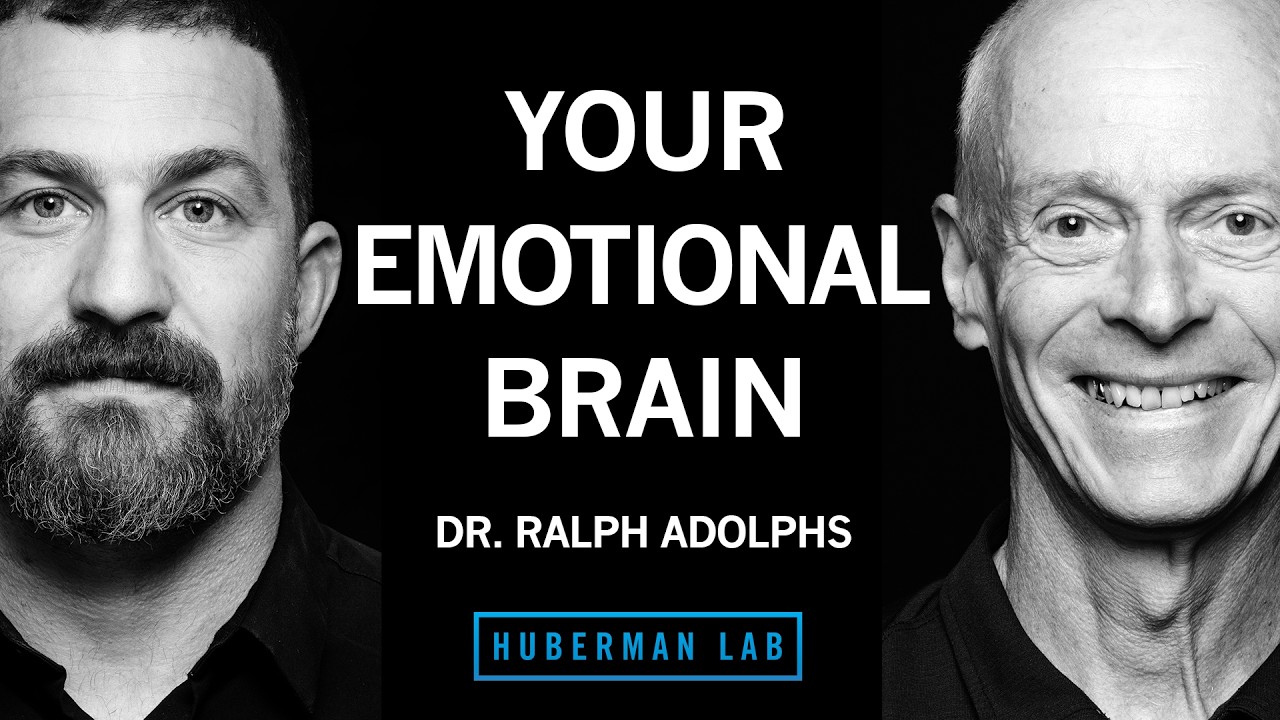
Episode 294 Ralph Adolphs
 35 min
Essentials: How to Optimize Female Hormone Health for Vitality & Longevity | Dr. Sara Gottfried
 129 min
Using AI to Increase Your Intelligence & Enrich Humanity | Dr. Fei-Fei Li
Ask anything from this episode.
Save it, chat with it, and connect it to Claude or ChatGPT. Get cited answers from the actual content — and build your own knowledge base of every podcast and video you care about.
Get Started Free