Key Moments
Ep. 259: The Four-Hour Work Day
 Deep Questions with Cal Newport
Key Moments
Oliver Burkeman explored working only 4 hours daily to combat overwhelm, finding increased focus, agency, and reduced fear of neglect.
Key Insights
Limiting work hours to four per day can paradoxically increase the appreciation and anticipation of work, shifting it from a chore to a desired activity.
Radical hour restriction fosters a sense of agency and control over one's life, transforming a feeling of being overwhelmed by an 'angry god' workload into a deliberate choice.
The fear that neglecting tasks will lead to catastrophe is often unfounded; recognizing finite capacities and accepting that not everything can be done is liberating.
Workload management should be explicit rather than implicit; artificial work limits like a four-hour day create back pressure that naturally prunes less important tasks.
A 'celebration bucket' in life planning refers to non-instrumental activities pursued for pure enjoyment and appreciation, such as developing a craft or experiencing nature.
Major life changes should be undertaken as part of a considered plan to achieve an ideal lifestyle, not merely for the sake of the change itself, with careful consideration of side effects.
THE FOUR-HOUR WORKDAY EXPERIMENT
Writer Oliver Burkeman experimented with a drastic reduction in work hours, limiting himself to just four hours per day to combat a feeling of overwhelming workload. This was not about working intensely for a few hours and stopping, but a deliberate cutback on total work time. He proactively chose to stop working after four hours, dedicating the remaining time to other activities, even if he anticipated it would feel uncomfortable. This experiment, while acknowledging potential limitations due to autonomy, aimed to explore the effects of severe work hour restriction.
REGAINING AGENCY AND ENJOYING WORK
One significant outcome of the four-hour workday was a palpable shift in agency. Instead of feeling controlled by an overwhelming list of tasks, Burkeman experienced a sense of being in charge of his life. This radical restriction flipped the script, allowing him to proactively choose when to work. This renewed sense of control brought a different energy to his tasks, making the chosen work hours vastly more effective than longer, resentful grinding. This suggests that feeling in control can boost motivation and prevent burnout, even when working fewer hours.
THE LIBERATION OF ACCEPTING LIMITS
A crucial lesson learned was that the sky doesn't fall in when things are neglected. The common experience of 'insecure overachievers' is the unconscious belief that if they don't push relentlessly, catastrophe will occur. By setting a hard limit on work hours, Burkeman was forced to confront the reality that not everything can be done. This acceptance of finite capacities is liberating, reducing work time spent averting disaster and allowing for more empowered choices about priorities, ultimately leading to less neglect of what truly matters.
THE ROLE OF WORKLOAD MANAGEMENT
Cal Newport overlays the concept of workload management onto Burkeman's experiment, emphasizing that all work limits, whether eight, ten, or four hours, are artificial. In most knowledge work, there are more tasks than time available. Artificial limits create 'back pressure,' forcing an adjustment of the workload by saying no more often or spreading tasks out. A significant reduction in hours, like to four a day, would naturally adjust the workload over time, likely without a major decrease in professional impact because less important tasks are pruned and efficiency on crucial tasks increases.
MAKING WORKLOAD MANAGEMENT EXPLICIT
Newport argues that workload management is often implicit, driven by time limits and back pressure, rather than being explicitly defined. He advocates for a more transparent approach where the amount of work, its deadlines, and its reasonableness are openly discussed and negotiated. This would allow for a diversity of work loads, potentially tied to salary ranges, enabling individuals to choose a workload that suits their life circumstances, such as a four-hour day for those prioritizing other aspects of life. This explicit management is seen as core to reducing job-related unhappiness.
REDEFINING 'CELEBRATION' AND PLANNING FOR THE REMARKABLE
The podcast also touches on life planning, re-examining the concept of a 'celebration bucket.' This term, originally used for alliteration, actually refers to non-instrumental activities pursued for enjoyment and appreciation, such as high-quality leisure, hobbies, or connoisseurship. These activities are done for their own sake, not for future gain. They are part of the 'vision layer' of the deep life stack, where one plans for remarkable aspects of life. Injecting more of these quality experiences is crucial throughout life, especially during demanding phases or transitions.
STRATEGIC CHANGE VERSUS IMPULSIVE MOVES
Deciding when to make big life changes versus making small optimizations is a critical consideration. Large changes should be part of a considered plan aimed at an ideal lifestyle, not simply for the invigorating feeling of change itself. The plan must acknowledge and account for the side effects of such a move across all areas of life. Impulsive, dramatic changes made without this holistic consideration can wear off, leaving one no better off or even worse, highlighting the importance of aligning radical shifts with deeply held values and thoughtful planning.
BALANCING LIFESTYLE AND FINANCIAL GOALS
For individuals prioritizing a lifestyle-centric life, especially with expensive hobbies, saving for the future can be challenging. The solution involves either reducing expenses to save more of current income (akin to 'fat fire' in the FIRE community) or increasing income without sacrificing autonomy. The latter can be achieved through advanced self-management, developing rare and valuable career capital skills, or finding creative ways to leverage expertise. A combination of both strategies—spending less and strategically earning more—is often the most effective path to financial security while maintaining a desired lifestyle.
THE VALUE OF SLOWING DOWN AND RECHARGING
A case study of an 'exhausted professor' highlighted the transformative power of taking a sabbatical not just to rest, but to deeply reconsider life and career. By operating at a slower pace, embracing interesting activities, and making oneself scarce, the individual gained clarity. This allowed for a thoughtful career planning process, leading to a fulfilling change in position. This illustrates that periods of reduced activity are not impediments to progress but essential for self-evolution, significant life decisions, and overall well-being.
ANALOG METHODS IN THE DIGITAL AGE
The discussion touches on Christopher Nolan's preference for analog methods, including not using email or a smartphone and writing scripts on air-gapped computers. This deliberate choice to limit technological distraction is presented as a model for focused work, especially in creative or demanding professions. It reinforces the idea that while technology is amazing, its level of involvement should be carefully controlled to avoid compromising deep work and significant achievements. This intentionality with technology is seen as crucial for high-impact endeavors.
Mentioned in This Episode
●Software & Apps
●Companies
●Books
●People Referenced
Common Questions
Oliver Burkeman, feeling overwhelmed, experimented with limiting his work to a deliberately insufficient four hours per day, doing the opposite of his natural instinct to work longer. This was a shock tactic to see what would happen.
Topics
Mentioned in this video
A psychologist whose research on productive writers was cited in relation to Oliver Burkeman's experiment.
Host of the Deep Questions podcast, author of books on deep work and productivity.
Mentioned in the context of discussing baseball player performance metrics.
Mentioned in the context of discussing baseball player performance metrics.
A UK-based columnist and writer for The Imperfectionist newsletter, author of '40,000 Weeks'.
Actor in the film 'Oppenheimer'.
Author whose work has themes similar to slow productivity, mentioned in relation to Oliver Burkeman's book.
Physicist known as the 'father of the atomic bomb', the subject of Christopher Nolan's film 'Oppenheimer'.
Mentioned as having included Cozy Earth products in her 'Favorite Things' list five years in a row.
Author of 'Company of One', discussed as a case study for making beneficial life changes.
Acclaimed film director known for analog filmmaking methods, including not using email or smartphones.
A 2023 film directed by Christopher Nolan about J. Robert Oppenheimer and the development of the atomic bomb.
Actor who stars as J. Robert Oppenheimer in the film 'Oppenheimer'.
Actress in the film 'Oppenheimer'.
A generative AI tool by Grammarly that helps with writing tasks like summarizing, drafting replies, and rewriting in different tones.
A company offering writing assistance tools, including their generative AI product, Grammarly Go.
A popular personal finance blog advocating for frugality and early retirement, recommended for financial planning.
A book by Paul Jarvis advocating for keeping businesses small and leveraging skill for flexibility.
A book by Oliver Burkeman that rethinks time management and the finite nature of our time.
A 2017 war film directed by Christopher Nolan, praised as a masterpiece.
More from Cal Newport
View all 287 summaries 21 min
Can AI “Scheme”? (Nope.) | AI Reality Check
 31 min
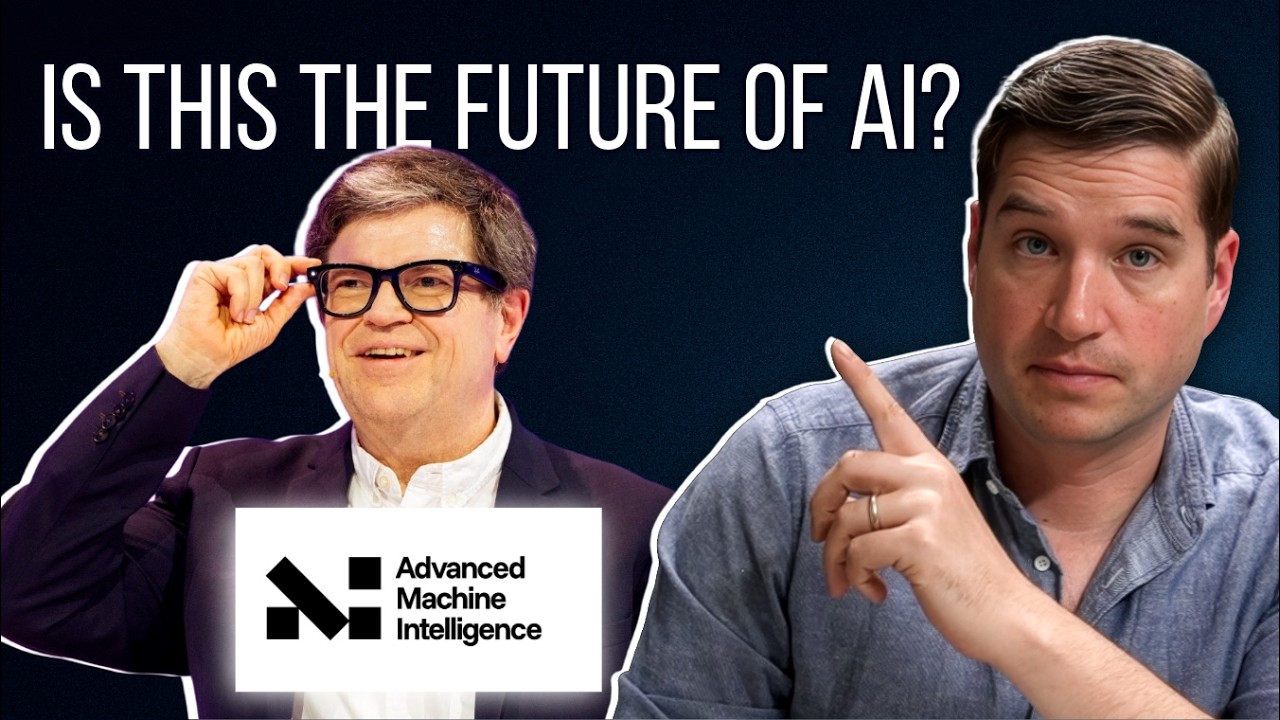
Are LLMs a Dead-End? (Investors Just Bet $1 Billion on “Yes”) | AI Reality Check | Cal Newport
 68 min
Why Is AI Making My Job *Worse*? | Cal Newport
 24 min
Did AI Just Become Sentient? (Not Quite...) | AI Reality Check
Found this useful? Build your knowledge library
Get AI-powered summaries of any YouTube video, podcast, or article in seconds. Save them to your personal pods and access them anytime.
Get Started Free