Key Moments
Ep. 239: On Time And Stress
 Deep Questions with Cal Newport
Key Moments
Modern work culture overloads knowledge workers, breaking our relationship with time. Solutions involve systemic change, not just tech.
Key Insights
Modern knowledge work often leads to an unsustainable overload due to a lack of cultural and organizational standards for workload management.
The "computer processor" metaphor for productivity, emphasizing speed and reduced friction, has detrimentally shaped our approach to knowledge work.
A "slow productivity" approach, focusing on fewer tasks, natural pace, and quality, is essential for achieving world-class performance and a balanced life.
Jenny Odell's work critiques the commodification of time and advocates for grounding our experience in real-world observations and human connection.
The "quiet quitting" phenomenon in academia is a misnomer; it's actually a necessary recalibration of priorities in response to overwhelming unrewarded service obligations.
Solutions to our broken relationship with time are more likely to come from cultural and systemic adjustments than from AI-driven productivity tools.
THE DEEP QUESTIONS PODCAST AND THE COURSE LIFE OF FOCUS
Cal Newport introduces episode 239 of the Deep Questions podcast, focusing on our broken relationship with time. He also briefly promotes the online course 'Life of Focus,' developed with Scott Young. This three-month course, based on Newport's 'Deep Work' and 'Digital Minimalism' and Young's 'Ultra Learning,' aims to provide actionable strategies for improving deep work, managing digital usage, and developing a focused mind through structured monthly challenges.
JENNY ODELL'S CRITIQUE OF TIME CODIFICATION AND COMMODIFICATION
Newport discusses Jenny Odell's new book, 'Saving Time,' which argues that modern society has codified and commodified time, leading to a painful relationship with it. Odell suggests grounding our experience of time in real-world phenomena, natural cycles, and human interactions, as opposed to abstract, digital tasks and scheduling. This approach offers a more human and less 'empty grid of minutes' experience of time.
THE DANGERS OF THE "COMPUTER PROCESSOR" PRODUCTIVITY METAPHOR
A significant portion of the discussion critiques the prevalent "computer processor" metaphor for human productivity, prevalent in Silicon Valley. This metaphor emphasizes speed, constant activity, and reduced friction between tasks, mirroring how computer processors operate. Newport argues this is fundamentally at odds with human cognitive capabilities, leading to exhaustion and an inability to perform deep, quality work.
SYSTEMIC ISSUES AND THE LACK OF KNOWLEDGE WORK STANDARDS
Newport posits that the core problem isn't a lack of AI tools but a systemic issue rooted in the rapid collision of knowledge work with technology without establishing new cultural or organizational norms. Unlike the industrial era, which developed standards for physical labor, knowledge work lacks clear boundaries for reasonable workloads, task specialization, and mental switching costs, leading to overload.
"SLOW PRODUCTIVITY" AS THE PATH TO WORLD-CLASS PERFORMANCE
The concept of "slow productivity" is presented not as a reduction in progress but as the only viable path to achieving world-class performance. This approach, characterized by doing fewer things, working at a natural pace, and obsessing over quality, is already practiced by top performers in fields like mathematics and chess. The goal is to make these principles more broadly applicable beyond specialized domains.
ACADEMIA, OVERLOAD, AND THE MISNOMER OF "QUIET QUITTING"
The discussion touches upon the phenomenon of "quiet quitting" in academia, reframing it not as disengagement but as a necessary recalibration of priorities. Academics often face overwhelming unrewarded service obligations, and dialing back on these is presented as a way to focus on core duties like research and teaching, not as a failure but as an intelligent prioritization of valuable work.
REAL-WORLD APPLICATION AND PERSONAL STRUGGLES WITH TIME MANAGEMENT
Case studies, like that of a composer who balanced creating a major work with caring for his dying father using deep work principles, highlight the humanistic promise of slow productivity. Newport also reflects on his own struggles, particularly the administrative burdens and writing demands that can detract from core deep work, illustrating the ongoing challenge of maintaining focus amidst modern life's complexities.
Mentioned in This Episode
●Products
●Software & Apps
●Companies
●Organizations
●Books
●People Referenced
Common Questions
Jenny Odell argues that our modern relationship with time, which is often codified and commodified, is broken. She suggests grounding our experience of time in actual things, people, and experiences rather than an abstract or empty grid of minutes.
Topics
Mentioned in this video
A reporter from this publication wrote a profile on Cal Newport, which was featured in the episode.
Cal Newport's current academic affiliation, where he is working on promotion materials.
The university where Cal Newport and a former colleague pursued their PhDs.
A non-profit that provides research and support to help individuals find career paths for positive global impact.
A scientific journal that published an article on 'quiet quitting' in academia.
Author of '4000 Weeks', whose work offers solutions for managing personal culture around workload.
Author whose work addresses workload management, particularly concerning balance at home.
Collaborator with Cal Newport on online courses, author of 'Ultra Learning'.
Mentioned as a 'productivity bro' figure within a critique of modern productivity culture.
Host of the Deep Questions podcast, author, and speaker discussing productivity and deep work.
Artist and author of 'How to Do Nothing' and 'Saving Time', featured in a New York Times article discussed in the episode.
Italian philosopher whose work on late 20th-century capitalism heavily influences Jenny Odell's thinking.
Author of 'Essentialism', offering insights on reducing workloads in the workplace.
Co-founder of 80,000 Hours and a key figure in the effective altruism movement.
Guest on the 80,000 Hours podcast, noted for his thoughtful contributions.
A service that allows businesses to print postage and shipping labels from home.
A company that produces precision-engineered shaving razors, using aerospace manufacturing techniques.
A nutritionally complete meal replacement shake promoted as a way to automate healthy eating.
Scott Young's book, from which one month of the 'Life of Focus' course is derived.
Oliver Burkeman's book offering perspectives on managing personal time and workload.
Another of Cal Newport's books, forming part of the 'Life of Focus' course curriculum.
Jenny Odell's previous book that challenged productivity culture and inspired her new book.
Greg McKeown's book providing strategies for reducing workloads within a professional setting.
One of Cal Newport's books, which serves as a foundation for the 'Life of Focus' online course.
Jenny Odell's new book, which explores our relationship with time and how to make it less painful.
More from Cal Newport
View all 287 summaries 21 min
Can AI “Scheme”? (Nope.) | AI Reality Check
 31 min
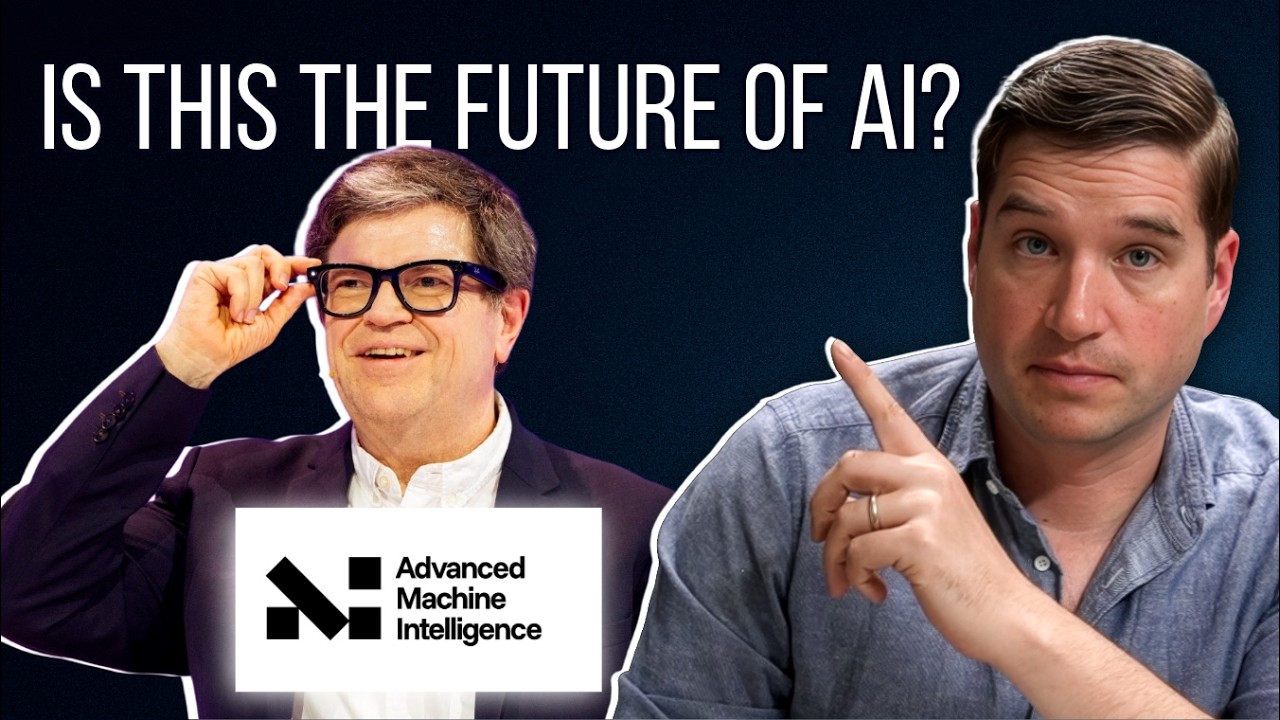
Are LLMs a Dead-End? (Investors Just Bet $1 Billion on “Yes”) | AI Reality Check | Cal Newport
 68 min
Why Is AI Making My Job *Worse*? | Cal Newport
 24 min
Did AI Just Become Sentient? (Not Quite...) | AI Reality Check
Found this useful? Build your knowledge library
Get AI-powered summaries of any YouTube video, podcast, or article in seconds. Save them to your personal pods and access them anytime.
Get Started Free