Key Moments
Ep. 229: Developing Discipline
 Deep Questions with Cal Newport
Key Moments
Cal Newport discusses developing discipline, career planning, and productivity strategies in this Q&A episode.
Key Insights
Focus on investigative journalism for career changes: gather evidence on actual job realities and crucial skills, rather than relying on assumed importance.
Develop discipline by overhauling all life aspects (craft, health, community, contemplation, celebration) with intentional systems, not just one area.
Slow productivity emphasizes intentionality, quality, and patience, leading to impressive long-term results without burnout or constant busyness.
Lifestyle-centered career planning is crucial: define desired life attributes first, then find pragmatic paths and jobs that align, rather than chasing a 'dream job' label.
Use money as a neutral indicator of value for side hustles or business ideas; only quit a stable job when the new venture proves viable through financial support.
Role-based communication, rather than person-based, can depersonalize interactions and create more structured, efficient organizational workflows.
STRATEGIC CAREER TRANSITION THROUGH INVESTIGATION
When seeking a career shift, Cal Newport advises against self-invented storylines about skill importance. Instead, he champions an investigative journalism approach. This involves gathering concrete evidence by speaking with people in desired roles to confirm the reality of their work and identify essential skills. This empirical method not only clarifies the desired path but also fuels motivation by building trust in the plan. It stresses distinguishing between what you *think* should be important and what *actually is* important for career advancement, ensuring study efforts are relevant and evidence-based.
HOLISTIC DISCIPLINE DEVELOPMENT
Addressing procrastination and a lack of discipline, especially when external pressure is low, Newport suggests a comprehensive life overhaul. This process involves intentionally structuring multiple life buckets: craft (work), constitution (health), community (social involvement), contemplation (ethics and philosophy), and celebration (hobbies). He recommends starting with 'keystone habits' in each area and dedicating focused periods (3-5 weeks) to deeply integrating changes before moving to the next, aiming for a six-month transformation to regain control and build a richer life.
THE POWER OF SLOW PRODUCTIVITY
Cal Newport introduces the concept of 'slow productivity,' which emphasizes doing fewer things at a natural pace while obsessing over quality. This approach contrasts with the modern epidemic of overload and busyness, arguing that efficiency and meaningful output don't require frantic, long hours. A case study illustrates how intentionality and organization can lead to significant achievements, improved work-life balance, and a more present family life. This sustainable method allows for impressive long-term accomplishments without burnout.
LIFESTYLE-CENTERED CAREER PLANNING
Newport stresses the importance of lifestyle-centered career planning, urging individuals to first define a clear, detailed vision of their ideal life, including professional attributes, living arrangements, community involvement, and family time. This vision should be tangible and appealing. Only then should one work backward to determine the most pragmatic career path. This approach helps avoid the trap of chasing a 'dream job' label, instead focusing on the specific properties and attributes that contribute to a fulfilling life, allowing for objective comparisons between different life paths.
MANAGING UNPREDICTABLE WORKLOADS
For professionals dealing with unpredictable, medium-sized projects like litigators, Newport advises differentiating between strategic plans and task execution. Strategic plans (3-4 month outlook) should encompass longer-term initiatives, not the day-to-day unpredictable work. The management of these unpredictable projects should occur at the weekly planning level, where time can be allocated flexibly based on current demands. This allows for progress on important, non-urgent tasks while effectively navigating the ebb and flow of immediate project requirements.
ORGANIZING TEAMS WITH ROLE-BASED COMMUNICATION
To enhance organizational efficiency and reduce interpersonal communication friction, Newport advocates for role-based rather than person-based communication. By associating communication channels with specific roles or work types (e.g., 'client queries' instead of individual emails), organizations can depersonalize interactions and set clear expectations. This shifts focus from individual responses to structured processes, enabling teams to manage workloads more effectively, reduce the pressure for immediate replies, and establish more predictable workflows, as seen with tools like notion or dedicated client email addresses.
ADDRESSING CAREER DILEMMAS AND FINANCIAL VIABILITY
When faced with the dilemma of pursuing a freelance business versus the stability of a full-time job, Newport emphasizes systematic lifestyle-centered planning. He advises against simply acting on impulse or fleeing undesirable situations. Instead, individuals should clearly define their desired lifestyle attributes and then work backward to find a career strategy that supports it. If the plan involves entrepreneurship or side hustles, financial viability is key. Money should serve as a neutral indicator of value; a venture should only be pursued full-time once it demonstrates sufficient financial success to provide stability.
Mentioned in This Episode
●Software & Apps
●Books
●People Referenced
Common Questions
Focus on building systems that ensure work is consistently delivered ahead of deadlines and maintains a quality slightly above expectations. Utilize multi-scale planning, autopilot scheduling for recurring tasks, and process engineering to manage workflow efficiently.
Topics
Mentioned in this video
A civil engineer from Zambia who wrote in seeking advice on career transition and self-study for a lifestyle-aligned job.
Actress mentioned as an example of someone embodying the engagement sometimes found in corporate law, contrasting with Valeria's experience.
Host of the Deep Questions podcast, author of 'Deep Work' and 'Digital Minimalism'. Discusses ideas on living and working deeply in a distracted world.
Mentioned as a collaborator with Cal Newport on an online course called 'Top Performer' which discusses differential analysis for skill development.
Author mentioned in the context of 'The Road to Character', a book that can inspire and help extract pieces of character through studying inspiring people.
An AI researcher from New York City seeking advice on planning research projects with a large variance in duration within a strategic planning framework.
A high school art teacher, adjunct professor, and MFA candidate in animation facing a career crossroads between pursuing a long-held animation goal in LA and staying in Florida for family support.
Author whose book 'Turning Pro' was recently summarized by Blinkist, mentioned as an example of a book Cal Newport considered using Blinkist for.
A remote engineer who struggles with procrastination and lack of external pressure, seeking advice on developing discipline and an overhaul of life habits.
A writer from Denver facing the common dilemma of launching freelance business ideas with low capital, leading to a reliance on full-time jobs that reduce bandwidth for their desired deep work.
Cal Newport's book that influenced Danny to adopt better work habits, leading to increased productivity and a better work-life balance during his PhD.
Cal Newport's book that discusses moving away from hyperactive hive mind communication and implementing process engineering, relevant for Lazy Engineer's job issues.
Cal Newport's book that emphasizes using money as a neutral indicator of value for new ventures, advising against quitting a stable job until the side hustle proves viable financially.
Another book by Cal Newport that influenced Danny's approach to managing distractions and prioritizing meaningful activities, contributing to his academic success and personal well-being.
A book by James Clear that helped Danny during the COVID-19 pandemic, serving as a catalyst for his adoption of productivity and deep work principles.
A VPN service recommended for gaining privacy and security online, praised for its bandwidth, global server network, and simple software.
An app providing 15-minute text or audio summaries of non-fiction books and podcasts, recommended as a sidekick for deciding which books to buy or listen to.
More from Cal Newport
View all 287 summaries 21 min
Can AI “Scheme”? (Nope.) | AI Reality Check
 31 min
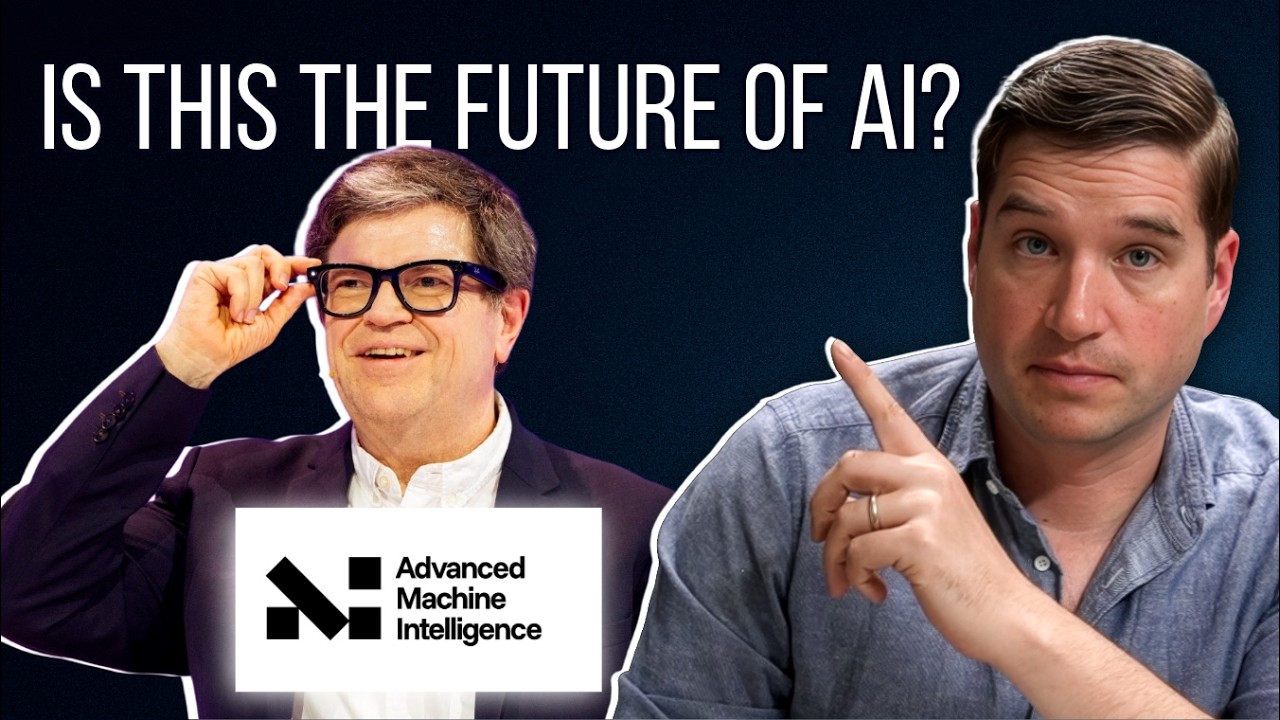
Are LLMs a Dead-End? (Investors Just Bet $1 Billion on “Yes”) | AI Reality Check | Cal Newport
 68 min
Why Is AI Making My Job *Worse*? | Cal Newport
 24 min
Did AI Just Become Sentient? (Not Quite...) | AI Reality Check
Found this useful? Build your knowledge library
Get AI-powered summaries of any YouTube video, podcast, or article in seconds. Save them to your personal pods and access them anytime.
Get Started Free