Key Moments
Ep. 214: Quiet Quitting | Deep Questions With Cal Newport
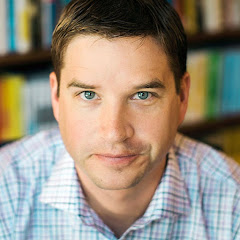 Deep Questions with Cal Newport
Key Moments
Cal Newport discusses "quiet quitting," productivity, and life design, offering insights on work-life balance and personal fulfillment.
Key Insights
Quiet quitting is a generational response to hustle culture, advocating for work that aligns with personal values rather than exceeding expectations.
Effective article writing involves deep ideation, structured outlining, showing rather than telling, avoiding conversational tone, and concise conclusions.
Productivity targets should be adapted to one's work, focusing on slow, steady progress over long timelines rather than daily frantic effort.
Digital note-taking tools like Obsidian offer greater control and data ownership compared to cloud-based proprietary systems.
Facing existential global threats requires focusing on local communities and personal values, rather than succumbing to overwhelming news cycles.
A 'deep life' is built on craft, community, constitution, and contemplation, with hobbies being only one component, not the sole focus.
UNDERSTANDING QUIET QUITTING
The episode begins with a deep dive into "quiet quitting," a trend that gained traction on TikTok in July 2022. Originating from a user's desire to reject hustle culture and the notion that one's worth is defined by labor, quiet quitting emphasizes doing the minimum required to keep one's job without going above and beyond. Mainstream media quickly picked up the topic, framing it as workers simply "doing enough" and disconnecting from work communication after hours. This trend is seen as a symptom of a broader reevaluation of work's role in life, especially post-pandemic.
THE BROADER CONTEXT OF REEVALUATING WORK
Experts suggest that the pandemic prompted a "great rethink," leading people to seek more meaning and alignment with their values in their professional lives. This introspection is not new, echoing themes from historical figures like Thoreau and explored in various self-help and philosophical works across decades. While quiet quitting is a nascent and sometimes crude first step for a new generation discovering "lifestyle design," it reflects a necessary conversation about constructing a meaningful life rather than solely defining oneself through work.
ADVICE FOR EFFECTIVE ARTICLE WRITING
Addressing a listener's struggle with finding their voice and sounding rigid, Cal Newport offers practical advice for article writing. Key strategies include spending more time ideating and forming a thesis, preferably through reflection like walking. He recommends using a standard structure: an illustrative example leading to the "nut graft" (thesis statement), elaboration with supporting details and caveats, and a concluding callback to the introduction. Professionals also demonstrate ideas with specific examples and citations, avoiding a conversational tone and rhetorical questions, and prioritizing conciseness by "pulling the rip cord" when an idea is fully conveyed.
ADAPTING PRODUCTIVITY TARGETS AND NOTE-TAKING
The podcast explores adapting productivity frameworks, like the "500 words a day" method for writers, to non-writing professions. The core principle is "slow and steady progress" evaluated over longer timelines (years, not days), emphasizing quality and sustainability over frantic, exhaustive effort. For note-taking, Cal discusses his switch to Obsidian from Roam Research, valuing Obsidian's use of plain text files for greater control, data ownership, and portability, even if its interface is primarily a reader for these files, with backups managed via services like Dropbox.
NAVIGATING GLOBAL THREATS AND PERSONAL WELL-BEING
When faced with seemingly overwhelming global threats such as climate change and economic disparity, Cal Newport advises reducing social media and online news consumption. He argues that such challenges have always existed and that focusing on immediate, local communities and personal values allows for a more manageable and impactful approach to life. Overexposure to negative news can create a paralyzing sense of immediate existential threat, whereas engaging locally allows individuals to utilize their brains in a way they evolved to handle – focusing on their immediate vicinity and community.
CULTIVATING A DEEP LIFE BEYOND HOBBIES
The concept of a "deep life" is often misinterpreted as solely focusing on enjoyable hobbies outside of work. Cal Newport clarifies that while hobbies (or "celebration") are one component, a deep life is more robustly built on craft (mastery in one's chosen profession), community (serving others), and constitution (maintaining physical and mental well-being). He advises an experimental approach to hobbies rather than fully committing before knowing if they are genuinely fulfilling, and emphasizes that the pursuit of sustainable meaning and groundedness, rather than pure hedonic happiness, is central to a deep life.
Mentioned in This Episode
●Software & Apps
●Companies
●Organizations
●Books
●People Referenced
Article Writing Tips
Practical takeaways from this episode
Do This
Avoid This
Common Questions
Quiet quitting is the trend of doing the bare minimum at work, rejecting the idea of going above and beyond, and not letting work define one's life or worth. It originated on TikTok in July with a user named ZK chilling.
Topics
Mentioned in this video
Host of the podcast, discussing his book 'Slow Productivity' and the concept of a 'Deep Life'.
Photographer and husband of Georgia O'Keeffe, mentioned in relation to her unlocking a prolific period of her career through their shared time at Lake George.
The TikTok user who posted the initial video that popularized the term 'quiet quitting'.
Mentioned in relation to the Franklin Covey system, which his thinking influenced and which was adopted by Cal Newport's mother.
Author and writer whose productivity method of '500 words a day' is discussed as an example of slow productivity.
Writer of a New York Times op-ed who discussed the anxieties surrounding climate change and its impact on decisions like having children.
Author of 'The Four Hour Work Week', whose ideas on lifestyle design were relevant to earlier generations discussing similar work-life balance issues.
Artist discussed in an example of article writing, illustrating how her busy early career and subsequent prolific period related to seasonality.
Author of 'Getting Things Done', whose GTD methodology includes the concept of a 'someday maybe' list to manage future projects without mental clutter.
A short story by Herman Melville referenced in a Guardian article about 'quiet quitting', seen as an early depiction of knowledge work resistance.
A book cited as an example of previous generations grappling with similar existential questions about work and life, akin to the 'quiet quitting' discourse.
A productivity methodology by David Allen that recommends the use of a 'someday maybe' list to offload ideas from one's mind.
Cal Newport's book, which is partly inspired by the discussion on quiet quitting and efficient work practices.
Cal Newport's book that provided the framework for the IT team's successful crisis management system using folders and text files.
A sponsor that offers a sleep technology product (the Pod) to control mattress temperature for improved sleep quality.
A Virtual Private Network service recommended for online security and privacy, offering encrypted connections and a large server network.
A sponsor of the podcast, a family-run business specializing in high-precision parts manufacturing, offering durable razors.
A service that provides summaries of non-fiction books and podcasts, recommended for quickly grasping the main ideas of various topics.
An institution whose analysis of media publications and journalistic philosophy was referenced in the discussion about alarming coverage.
The institution where a professor coined the term 'the great rethink' to describe the post-pandemic shift in work attitudes.
Historical figures who preserved intellectual works during challenging times, used as an analogy for pursuing important work amidst global distress.
A publication where Ezra Klein wrote an op-ed concerning long-term anxieties and global threats.
A media outlet that published an early and well-regarded article on the 'quiet quitting' phenomenon.
A system and planner used by Cal Newport's mother, which significantly improved household organization and reduced stress.
More from Cal Newport
View all 287 summaries 21 min
Can AI “Scheme”? (Nope.) | AI Reality Check
 31 min
Are LLMs a Dead-End? (Investors Just Bet $1 Billion on “Yes”) | AI Reality Check | Cal Newport
 68 min
Why Is AI Making My Job *Worse*? | Cal Newport
 24 min
Did AI Just Become Sentient? (Not Quite...) | AI Reality Check
Found this useful? Build your knowledge library
Get AI-powered summaries of any YouTube video, podcast, or article in seconds. Save them to your personal pods and access them anytime.
Get Started Free