Key Moments
Ep. 213: Saying No! | Deep Questions With Cal Newport
 Deep Questions with Cal Newport
Key Moments
Cal Newport discusses the art of saying no, managing anxiety with time blocking, choosing hobbies, and career decisions using practical insights and case studies.
Key Insights
Systematic tracking of 'yes' and 'no' decisions can make saying no more manageable and reveal patterns in commitments.
Prioritize declining larger, more impactful requests over smaller ones to maintain focus and reduce stress.
Emotional labor associated with saying no is significant, especially due to cultural conditioning, and requires acknowledgment.
Time blocking can induce anxiety due to the brain's natural resistance to structured tasks; recognizing and proceeding despite this is key.
Hobbies should be categorized into 'deep life buckets' (craft, constitution, community, contemplation, celebration) for balanced life planning.
Career decisions should be approached with a lifestyle-centric planning mindset, considering if a job trajectory supports one's ideal life.
THE ART AND NECESSITY OF SAYING NO
Cal Newport introduces an in-depth discussion on the art of saying no, a crucial skill for managing multiple demands. He argues against a false binary where one is either a 'yes-person' or 'disagreeable,' highlighting that everyone implicitly says no to manage workload. Newport emphasizes that haphazardly saying no, often only when stressed, leads to persistent, elevated stress. He advocates for intentionality in filtering requests and managing one's plate to avoid 'productivity purgatory' and burnout.
INSIGHTS FROM A YEAR OF SAYING NO
Newport shares insights from a year-long experiment where four scientists systematically tracked and declined 100 work-related requests. Key takeaways include: tracking helped make 'no' a conscious option and revealed the extent of existing commitments; it's more effective to say no to larger asks rather than accumulating many small ones; saying no involves emotional work, often influenced by cultural conditioning as women academics; and only firm 'nos' truly reduce commitments, with soft 'nos' being a slippery slope.
MANAGING ANXIETY AND PLANNING
The episode addresses anxiety related to structured schedules and time blocking. Newport explains that the brain, evolved for immediate stimuli, struggles with artificial schedules, leading to 'inertial anxiety' or resistance. This mismatch can manifest as anxiety, especially when social elements are involved in scheduled events. The advice is to acknowledge the physical sensations of anxiety as a natural, albeit uncomfortable, byproduct of modern life and its structures, and to proceed with plans, as the alternative is often a deeper existential anxiety.
BALANCING INTERESTS WITH DEEP LIFE BUCKETS
For individuals with numerous interests, Newport suggests structuring hobbies into 'deep life buckets': craft, constitution, community, contemplation, and celebration. This framework helps categorize diverse activities such as writing, volunteering, exercise, and cooking, preventing them from being lumped as a single 'hobby' choice. By defining distinct buckets, individuals can then holistically assess how these activities fit into their overall life vision and current phase, ensuring a more balanced and intentional representation of different life aspects.
CAREER DECISIONS: SKILLS, VALUES, AND LIFESTYLE
Newport revisits a framework for deciding whether to leave a job, focusing on opportunities to develop rare and valuable skills. He encourages an evolution towards a lifestyle-centric career planning approach, where the ideal daily and life experience is defined first, and then one works backward to see if their current career or potential trajectories can support it. This involves researching role models and exploring diverse career paths within one's general skill set, rather than solely looking at internal company promotions.
NAVIGATING CAREER TRANSITIONS AND TECHNICAL ROLES
The discussion addresses challenges in breaking into knowledge work, particularly for those with humanities degrees seeking technical roles. For state government jobs, the advice is to focus on the department or program level, aiming for an entry-level position with a plan to move up internally. Success hinges on delivering high quality, consistently, and reliably. Additionally, it's crucial to align career pursuits with a defined lifestyle vision, considering not just the job title but the desired daily experience and life balance.
DEALING WITH EXAM ANXIETY AND STUDY STRATEGIES
Exam anxiety, particularly when it paralyzes study efforts, is addressed by separating two components: exam preparation and anxiety management. For preparation, the advice is to use evidence-based techniques for 2-3 hours daily and trust the process. For anxiety, it's framed like 'tooth pain' – a signal that needs addressing. Cognitive Behavioral Therapy (CBT) is recommended for distorted rumination, suggesting techniques to confront and correct negative thought patterns. The goal is to manage the anxiety so it doesn't impede necessary actions.
OPTIMIZING WORKFLOWS WITH PROJECT MANAGEMENT TOOLS
Regarding project management tools like Rike and Monday.com, Newport stresses that the tool itself is not the solution. The focus should first be on defining the desired collaborative process—how work should unfold to minimize unscheduled messages and maximize deep work. Once the process is designed, then appropriate tools can be selected. Over-reliance on complex, pre-defined systems can lead to obsessions with details and become a distraction rather than an aid, emphasizing that the intelligence lies in the custom process, not the software.
STRATEGIC PLANNING AND CORE VALUES
Quarterly, semester, and strategic plans are presented as largely interchangeable terms for a 3-5 month focus on goals and approaches. Newport's 'core documents' include a values statement, which serves as a foundation for all planning. The key to creating a values document is understanding that one's perception of values evolves. The emphasis is on having a guiding document that makes sense at the moment and provides intentional direction, rather than striving for a perfect, unchanging articulation of values. Keeping old journals like Moleskines can provide insight into this evolution.
CASE STUDY: THE CLOSET DEEP WORK STUDIO
A compelling case study illustrates the power of location in facilitating deep work. An individual transformed a cramped closet into a dedicated 'deep work studio' by moving things around. Despite only spending 2-3 hours daily in this space, they experienced intense productivity. This highlights that even in small living spaces, creating a designated, isolated environment for focused work can significantly boost output, echoing Newport's past examples of readers creating makeshift workspaces during the pandemic.
Mentioned in This Episode
●Software & Apps
●Books
●Concepts
●People Referenced
Mastering the Art of Saying No
Practical takeaways from this episode
Do This
Avoid This
Common Questions
This is a common reaction often stemming from a mismatch between our evolved motivational systems and modern scheduled events. Your brain is not wired to respond to dates on a calendar as it does to immediate, clear stimuli. Recognize this as a physiological response, acknowledge it, and proceed anyway; the anxiety usually passes, and the experience is often enjoyable.
Topics
Mentioned in this video
Artist discussed by Cal Newport as an example of changing work patterns for increased productivity.
Photographer and gallerist who recognized Georgia O'Keeffe's work and invited her to his family's property.
Founder of Ford Motor Company, credited with inventing the assembly line at the River Rouge plant.
Host of the podcast, who discusses productivity, deep work, and lifestyle planning.
More from Cal Newport
View all 287 summaries 21 min
Can AI “Scheme”? (Nope.) | AI Reality Check
 31 min
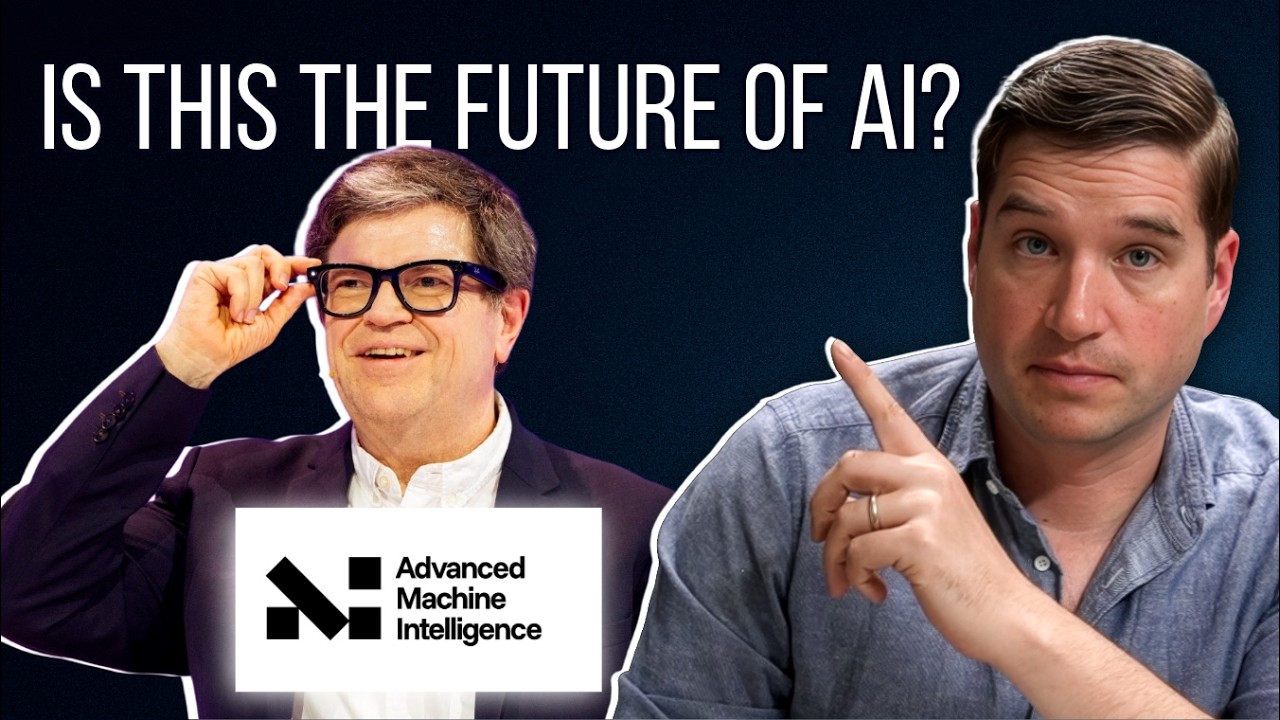
Are LLMs a Dead-End? (Investors Just Bet $1 Billion on “Yes”) | AI Reality Check | Cal Newport
 68 min
Why Is AI Making My Job *Worse*? | Cal Newport
 24 min
Did AI Just Become Sentient? (Not Quite...) | AI Reality Check
Found this useful? Build your knowledge library
Get AI-powered summaries of any YouTube video, podcast, or article in seconds. Save them to your personal pods and access them anytime.
Get Started Free