Key Moments
Ep. 210: Dictate How You Feel With Lifestyle-Centric Planning | Deep Questions With Cal Newport
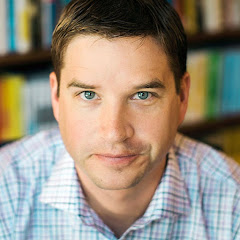 Deep Questions with Cal Newport
Key Moments
Cal Newport discusses internet curation, deep work strategies, and lifestyle-centric career planning.
Key Insights
The internet economy is shaped by evolving models of user-generated content curation: links, networks, and loops.
Link-based curation (early blogs) fostered trusted communities but was hard to monetize and use.
Network-based curation (social media) democratized content creation but led to homogenization and externalities.
Loop-based curation (TikTok) is highly effective but can be addictive and devoid of human connection.
Effective time management requires structuring work around planned email checks rather than frequent, reactive ones.
Building career capital early is key; push back on hyperactivity only after establishing indispensability.
Lifestyle-centric career planning involves defining an ideal lifestyle first, then aligning career choices to achieve it.
EVOLUTION OF ONLINE CONTENT CURATION
Cal Newport details the evolution of user-generated content curation on the internet, moving from link-based models to network and loop-based systems. Initially, the web relied on hyperlinks and existing webs of trust for curation, which was effective in filtering quality content but difficult to monetize and slow for creators. This evolved into network-based models like social media, which leveraged social graphs for curation, making content creation easier but leading to homogenization and unforeseen negative externalities. The latest iteration, loop-based curation exemplified by TikTok, uses machine learning to create highly personalized and potentially addictive content feeds by removing human decision-making from the process.
THE THREE MODELS OF CURATION
The first model, 'links,' describes the early blogosphere where trust was paramount. Users followed links from sources they trusted, gradually expanding their information sources. This method excelled at surfacing quality content but was labor-intensive for users and difficult for new creators to penetrate. The second model, 'networks,' introduced by platforms like Facebook, uses social connections to curate content, making it easier for users to consume and share. Twitter's retweet function further amplified this, leading to viral dynamics but also to outrage culture and platform manipulation. The third model, 'loops,' seen in TikTok, relies on algorithms to select content based on user viewing behavior, creating highly engaging but potentially isolating experiences.
ADDRESSING THE CHALLENGES OF MODERN WORK
Newport addresses practical questions about working deeply in a distracting world. Regarding project management, he emphasizes a multi-scale planning approach: quarterly plans set broad goals, weekly plans translate these into actionable steps, and daily plans execute the work. Task management systems like Trello are useful for projects generating ongoing tasks and requiring information tracking. For email, the focus should be on reducing stressful, unscheduled messages rather than optimizing checking frequency. Overhauling work processes to minimize interruptions and ensuring email is used only for information delivery, not conversations, is crucial.
BUILDING CAREER CAPITAL AND PUSHING BACK
For early-career professionals, particularly in startups, Newport advises against pushing 'deep work' philosophies onto colleagues. Instead, the immediate focus should be on delivering high-quality work reliably and quickly to build career capital. Becoming indispensable is the key to gaining leverage. Once sufficient capital is earned, then one can begin to push back against hyperactivity and advocate for more structured work habits. This capital can then be strategically deployed to achieve greater autonomy and shape one's career path, avoiding common autonomy traps like premature demands or getting stuck on a promotion treadmill.
THE CASE FOR LIFESTYLE-CENTRIC CAREER PLANNING
Newport introduces 'Deep Life Academy' to discuss lifestyle-centric career planning. This approach involves first vividly imagining an ideal lifestyle—including physical environment, social interactions, stress levels, and leisure activities—without specifying a career. This concrete vision then serves as a compass to evaluate career opportunities, choosing those that best move you closer to that desired lifestyle. The daily reality of one's lifestyle directly impacts well-being and happiness, making this backward-planning method more effective than passion-driven or status-seeking career decisions.
IMPLEMENTING LIFESTYLE-CENTRIC PLANNING
To illustrate lifestyle-centric planning, Newport uses a case study of a data engineer named Anand. Two potential lifestyle visions are presented: one focused on a relaxed, autonomous life with creative pursuits, suggesting freelance or location-independent work; the other emphasizing an energetic, high-impact urban career leading teams and pursuing wealth. These contrasting visions would lead to vastly different career decisions regarding skill development, job changes, and networking. The core principle is that understanding and prioritizing the elements that bring joy and meaning to daily life is the most reliable path to long-term fulfillment and well-being.
Mentioned in This Episode
●Products
●Software & Apps
●Companies
●Books
●Concepts
●People Referenced
Deep Work & Lifestyle Planning Cheat Sheet
Practical takeaways from this episode
Do This
Avoid This
Common Questions
The three dominant models are the link model (early blogosphere, based on human trust), the network model (social media like Facebook, using social graphs), and the loop model (platforms like TikTok, driven by machine learning).
Topics
Mentioned in this video
Mentioned as an example of an attempt to monetize the blogosphere.
Mentioned as an example of a large media conglomerate that grew by acquiring local papers.
Mentioned as following Facebook's network model for content curation, focusing on images.
A platform for finding doctors, reading patient reviews, and managing appointments and paperwork.
Mentioned as a platform that uses a similar curation model to TikTok, though less purified.
Highlighted for its retweet model, which amplified content virally.
An online platform for obtaining life insurance quickly and digitally, without doctor visits or paperwork for coverage up to $3 million.
Identified as the innovator of the network model of content curation.
Presented as the prime example of the 'loop' model of content curation, driven by machine learning.
Host of the Deep Questions podcast, author, and speaker on deep work and digital Minimalism.
Mentioned in relation to Gawker and the difficulties of monetizing the blogosphere.
Mentioned as an example of someone with a hard-charging style and entrepreneurial drive, relevant to a city-based lifestyle vision.
Researcher from UC Irvine who studied stress related to email checking, cited in Cal Newport's book 'A World Without Email'.
More from Cal Newport
View all 287 summaries 21 min
Can AI “Scheme”? (Nope.) | AI Reality Check
 31 min
Are LLMs a Dead-End? (Investors Just Bet $1 Billion on “Yes”) | AI Reality Check | Cal Newport
 68 min
Why Is AI Making My Job *Worse*? | Cal Newport
 24 min
Did AI Just Become Sentient? (Not Quite...) | AI Reality Check
Found this useful? Build your knowledge library
Get AI-powered summaries of any YouTube video, podcast, or article in seconds. Save them to your personal pods and access them anytime.
Get Started Free