Key Moments
Ep. 203: Taming Meetings, YouTube’s Potential, Kids and Smartphones | Deep Questions Podcast
 Deep Questions with Cal Newport
Key Moments
Cal Newport discusses tech trends, parenting in the digital age, and meeting management.
Key Insights
Journalists' heavy reliance on Twitter creates a disconnect from the general public's news consumption habits.
YouTube is emerging as a significant news source for younger generations, potentially challenging traditional media.
Unrestricted smartphone access for children under 16-17 poses psychological and developmental risks.
Teaching children to code should involve real programming languages rather than simplified tools.
Managing a busy meeting schedule requires intentional strategies like 'meeting buffers' and 'one-for-you, one-for-me'.
Individuals can train their focus and cognitive abilities, similar to physical fitness, and should embrace boredom.
THE JOURNALIST-TWITTER DIVIDE AND YOUTUBE'S ASCENDANCY
The episode opens by highlighting a significant gap between how journalists use social media, particularly Twitter, and how the general public consumes news. A Pew Research Center survey reveals that while 69% of journalists consider Twitter a top platform for their work, only 13% of US adults regularly use it for news. This creates a filtered reality for journalists, potentially influencing their reporting based on Twitter's echo chamber. Conversely, the survey indicates YouTube is the second most used platform for US adults to get news, suggesting a generational shift where younger audiences view YouTube as a primary source for video content, akin to traditional cable television.
YOUTUBE'S LONG-TERM POTENTIAL AND MEDIA DISRUPTION
Newport posits that YouTube represents a longer-term media play compared to the short-term engagement goals of platforms like TikTok and Instagram. He likens YouTube's impact on video to the website's disruption of text publishing, democratizing content creation. This democratization, he argues, is leading to a rise in medium-level production value content that approximates professional quality but at a fraction of the cost. This trend is poised to significantly disrupt traditional television and cable industries, with creators investing in better equipment and production, making their content competitive with mainstream media.
NAVIGATING CHILDREN'S DIGITAL WORLD
A significant portion of the discussion addresses parental concerns about children and smartphones. Newport advises against granting unrestricted smartphone access to individuals under 16 or 17, citing potential psychological damage from social media in early adolescence, particularly for girls. Dangers include anxiety, self-harm ideation, excessive gaming, and issues with developing sexuality. He recommends providing 'dumber' phones with text messaging capabilities instead, while emphasizing the importance of fostering real-world social communities through activities like sports, theater, or clubs to build social skills and identity.
GUIDING CHILDREN'S TECHNICAL SKILLS AND COMPUTING
Regarding coding, Newport believes children can begin learning as early as age six or seven, provided they are comfortable with computers and can read and write. His 'hot take' is to teach using real programming languages like Python, rather than simplified block-based tools. He suggests platforms like Replit for ease of use and collaboration. For general computer use, he advocates for family computers in common areas, allowing for oversight, rather than in children's bedrooms, until they are older and capable of more independent, responsible 'hacking' or research.
STRATEGIES FOR TACKLING MEETING OVERLOAD
In response to an engineering manager overwhelmed by meetings, Newport offers a multi-tiered approach to regain control. He suggests 'meeting buffers' of 15-20 minutes after scheduled meetings to process information and clear mental clutter. The 'one for you, one for me' approach enforces a one-to-one ratio of meeting time to protected, non-meeting work time. He also advises waging war on 'standing meetings,' replacing them with concrete, project-specific processes for progress. Finally, he introduces 'reverse meetings,' where the meeting organizer visits individuals during their established office hours, reducing the total time commitment for attendees.
ENHANCING VOCABULARY AND CULTIVATING FOCUS
For non-native English speakers aiming to improve scientific writing, Newport recommends reading widely in science journalism and adjacent writing, which often demonstrates better style than scientific papers themselves. The key is to actively deploy learned phrases and techniques in one's own writing. Addressing the challenge of consuming high-quality content and working with limited focus, he pushes back against the idea that some people are fundamentally unsuited for deep work. He argues that focus, like physical fitness, can be trained through embracing boredom, deliberate concentration intervals, and productive meditation, emphasizing that a baseline level of cognitive fitness is achievable for everyone.
Mentioned in This Episode
●Products
●Software & Apps
●Companies
●Organizations
●Books
●Concepts
●People Referenced
Taming Your Meeting Schedule
Practical takeaways from this episode
Do This
Avoid This
Common Questions
Journalists heavily rely on platforms like Twitter for their work, creating a distinct digital ecosystem. The general public, however, uses platforms like YouTube more frequently for news, indicating a potential disconnect in information consumption.
Topics
Mentioned in this video
Identified as the second most used platform for news among US adults, particularly for Gen Z and younger millennials, potentially replacing cable TV.
Mentioned as a platform that allows writers to earn high six figures, but still represents a ceiling for monetizing democratized text.
Mentioned as a platform focused on short-term engagement, attempting to pivot with features like Reels.
Mentioned in the context of TikTok's growth and the backlash against attention mining companies.
Manufacturer of graphing calculators that Cal Newport programmed games on.
A free app to find and book appointments with doctors based on reviews, insurance, and availability.
A mattress cover that allows temperature control for improved sleep quality and recovery.
Used as an analogy for how effective and appealing certain companies are at their core offering (like TikTok with content delivery).
Discussed as the dominant social media platform for journalists but less so for the general public, leading to a potential 'filter effect'.
Discussed as a platform playing a short-term engagement game with user-generated content, contrasting with YouTube's longer-term video democratization strategy.
Mentioned as a platform focused on short-term engagement and user-generated content.
An online therapy service that connects users with licensed therapists via video, phone, or chat, offering a more affordable and accessible option than traditional therapy.
Mentioned for its fries as an example of a highly consistent and appealing product that encourages repeated consumption.
Cited as an example of a content site that replicated newspaper/magazine quality at a lower production cost, similar to YouTube's potential.
A former nurse with a popular YouTube channel analyzing COVID-19 statistics, cited as an example of YouTube's news consumption trend.
Mentioned in discussion about the economics of podcasting and the potential for high earnings.
Host of a television show featuring Bill Burr, discussed in relation to Zocdoc advertising.
Mentioned as the host of a podcast where Marc Andreessen discussed podcasting economics.
An influential figure in information theory and digital electronics, associated with MIT and discussed in relation to Ed Thorpe.
Mentioned as an example of a political commentator on YouTube.
Mentioned as an example of achieving 'Viking shape' in six months, used to illustrate that physical fitness improvements are possible with training.
Mentioned in the context of the backlash against social media companies.
Author and mathematician mentioned in relation to his time at MIT and work with Claude Shannon.
Discussed as a speaker on Tyler Cowen's podcast regarding podcasting economics.
Son of Don Clifton and former CEO of Gallup/SRI.
The host of the podcast, discussing topics from his books and experiences.
A hypothetical doctor name used in a humorous example related to Zocdoc.
Author of 'Mind at Play' (a Claude Shannon biography) and 'The Founders' (about the PayPal Mafia).
Comedian whose endorsement of Zocdoc was humorously discussed.
Innovator in quantitative assessment and employee satisfaction, founder of Survey Research International (SRI) which acquired Gallup.
Mentioned as an example of a political commentator on YouTube.
Cited for a survey on social media usage by US journalists versus the public.
Mentioned as a prominent news company advising reporters to reduce Twitter usage due to its negative impact on reporting quality.
Cal Newport's alma mater where he joined the theory group in computer science.
Market research company acquired by SRI, with Cal Newport's father involved in the Gallup Poll.
Mentioned as a benchmark for radio-style production values in podcasting.
Cited as an example of a content site that replicated newspaper/magazine quality at a lower production cost, similar to YouTube's potential.
Company founded by Don Clifton that later acquired Gallup.
A word puzzle game mentioned as a less harmful use of a smartphone compared to addictive social media apps.
Mentioned in the context of virtual meetings and faculty meetings.
A programming language recommended for teaching children to code, used via an online environment like Replit.
A web-based coding environment that simplifies the process of learning programming languages like Python.
An online writing tool that helps with clarity, conciseness, grammar, and tone, promoted for its premium features.
Mentioned as an example of a YouTube channel providing news content.
Cited as an example of a content site that replicated newspaper/magazine quality at a lower production cost, similar to YouTube's potential.
A graphing calculator game programmed by Cal Newport about a punt returner.
More from Cal Newport
View all 287 summaries 21 min
Can AI “Scheme”? (Nope.) | AI Reality Check
 31 min
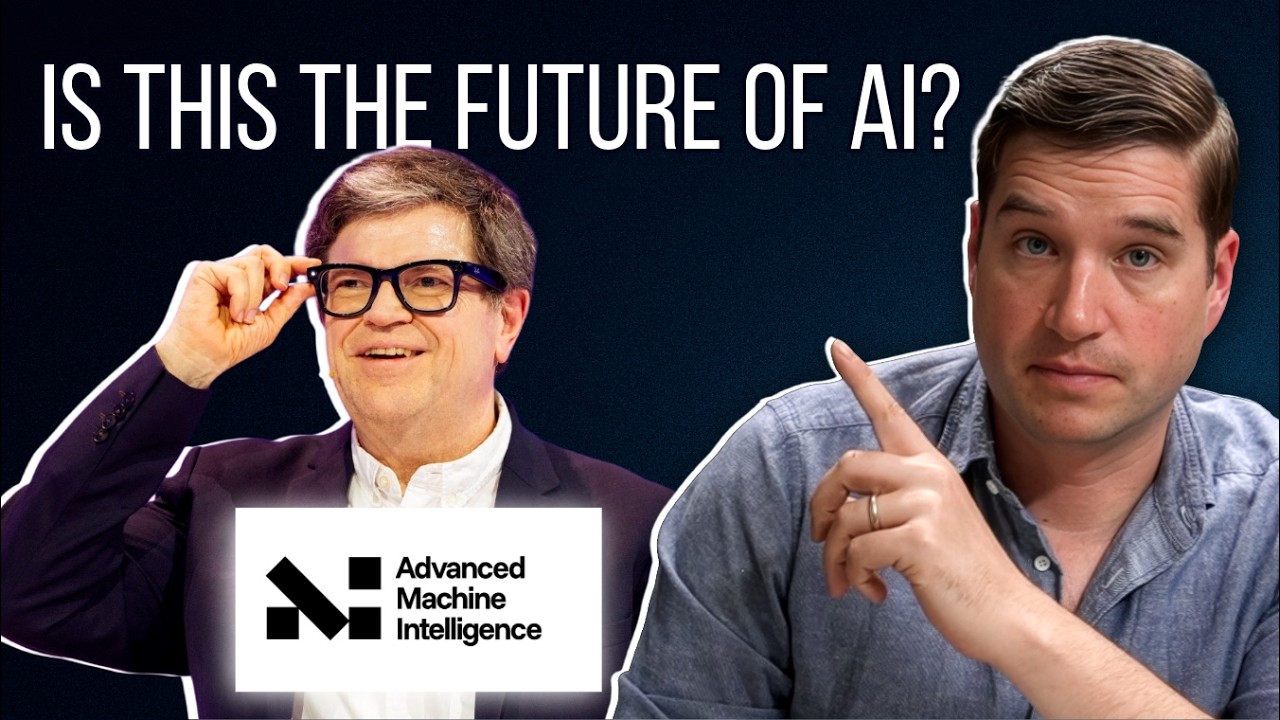
Are LLMs a Dead-End? (Investors Just Bet $1 Billion on “Yes”) | AI Reality Check | Cal Newport
 68 min
Why Is AI Making My Job *Worse*? | Cal Newport
 24 min
Did AI Just Become Sentient? (Not Quite...) | AI Reality Check
Found this useful? Build your knowledge library
Get AI-powered summaries of any YouTube video, podcast, or article in seconds. Save them to your personal pods and access them anytime.
Get Started Free