Key Moments
Ep. 200: Feedback Councils, Decoding the Deep Life, and Becoming a Writer | Deep Questions Podcast
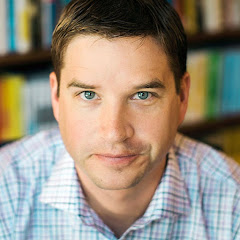 Deep Questions with Cal Newport
Key Moments
Feedback councils are crucial for navigating online noise. Embrace deep leisure and structured writing for a fulfilling life.
Key Insights
The digital age bombards us with biased and bad-faith feedback (e.g., social media), corrupting our natural response systems.
Creating 'feedback councils' of trusted, diverse individuals provides high-quality, reliable feedback for guidance.
Deep leisure should be restful and recharging, especially when cognitively drained, rather than demanding intellectual effort.
Embrace action and meaningful work; life's purpose comes from directing energy towards valued activities, not avoiding tasks.
For aspiring writers, proactive preparation and consistent practice, even if deferred until retirement, are key to success.
The 'deep life' is characterized by radical alignment of one's existence with deeply held values.
THE CORRUPTION OF DIGITAL FEEDBACK
Our brains are hardwired to value feedback from other humans for tribal cohesion and collective intelligence. However, the modern internet, particularly social media, saturates us with biased, unpredictable, and often bad-faith feedback. This corrupted input can hijack our natural response systems, leading to distorted decision-making and actions that aren't aligned with genuine values. Cal Newport uses the example of CNN producers being urged to ignore online backlash to illustrate how external, often unreliable, digital noise can steer individuals and organizations away from optimal paths.
ESTABLISHING TRUSTWORTHY FEEDBACK COUNCILS
To counteract the negative effects of digital noise, Newport proposes the creation of 'feedback councils.' These are curated groups of trusted individuals with diverse backgrounds, expertise, and perspectives. Instead of relying on arbitrary online comments or direct messages, individuals should seek counsel from this carefully assembled group for important life decisions, ideas, or creative work. This high-quality, reliable feedback loop helps maintain perspective, refine thinking, and ensure that actions remain grounded and reasonable.
THE FUNDAMENTAL NATURE OF ACTION AND MEANINGFUL WORK
The feeling that there's always more to be done, akin to painting the Golden Gate Bridge, is a natural part of life. Newport argues against viewing tasks and projects as obstacles to some mythical state of 'nothing to do.' Instead, he suggests embracing action as fundamental to human existence. The goal of any productivity or life-structuring system should be to ensure that the energy we expend is directed towards meaningful, useful, and directed activities. Life's purpose is found in making this action as purposeful as possible, rather than avoiding it.
CRAFTING DEEP LEISURE AND MANAGING COGNITIVE DRAIN
For individuals, especially parents with young children, who are cognitively drained at the end of the day, Newport advises prioritizing deep leisure that is restful and recharging rather than intellectually demanding. Activities like gentle reading, listening to podcasts, or engaging in light hobbies are more appropriate than attempting complex mental tasks. He emphasizes that this demanding phase of life is temporary and that structured, yet relaxing, leisure can be integrated even amidst childcare responsibilities.
THE JOURNEY TO BECOMING A WRITER
Aspiring writers, particularly those nearing retirement, should focus on consistent practice and preparation. Newport suggests that while it's beneficial to gently 'test the waters' with occasional writing projects, the bulk of skill development can and should occur after retirement when dedicated time is available. He recommends reactivation of a media presence, like a newsletter or podcast, to develop ideas, refine voice, and build an audience, framing retirement as an opportunity for deep, focused engagement with one's craft.
DEFINING AND PURSUING THE DEEP LIFE
The 'deep life,' according to Newport, is fundamentally about the radical alignment of one's existence with deeply held values. This involves making significant, often life-altering, changes to align daily activities with what truly matters. It's not merely about minor adjustments but about a profound reshaping of one's life structure—career, location, and daily routines. This radical alignment provides a potent engine for motivation and distinguishes a deeply resonant life from a merely 'good' one.
Mentioned in This Episode
●Products
●Software & Apps
●Companies
●Organizations
●Books
●People Referenced
Common Questions
Cal Newport suggests creating a 'feedback council' of trusted individuals with diverse backgrounds. This curated source of high-quality feedback should be prioritized, while feedback from arbitrary sources like social media comments and direct messages should be ignored.
Topics
Mentioned in this video
Host of the podcast, author, and proponent of deep work and deep life principles.
Renowned researcher and founder of Elysium Health, who has worked on NAD+ for over 30 years.
Comedian and author of 'Born Standing Up', whose career journey emphasizes focus and craft.
Author of 'Why Faith Matters', interviewed on the Lex Fridman podcast.
Director of the film 'Apollo 13'.
British explorer who disappeared in the Amazon while searching for a lost city, as chronicled in 'The Lost City of Z'.
New Yorker writer known for long-form journalistic pieces involving adventure and detailed research; author of 'The Lost City of Z'.
Interviewer of Steve Martin, where the phrase 'be so good they can't ignore you' originated.
Associated with the 'new atheist' movement of the early 2000s.
The new head of CNN, implementing changes to the network's reporting style and advising producers to ignore social media backlash.
American frontiersman whose biography 'Blood and Treasure' was discussed.
Influential writer whose work habits inspired Cal Newport's approach to writing.
Commander of the Apollo 13 mission and co-author of 'Lost Moon'.
Science writer and co-author of 'Lost Moon' and 'The Lost City of Z'.
Director adapting David Grann's book 'Killers of the Flower Moon' into a film.
Actor who starred in 'The Northman' and underwent a significant physical transformation for the role.
Associated with the 'new atheist' movement of the early 2000s.
Host of a podcast where Rabbi David Volpe was interviewed, leading Cal Newport to read Volpe's book.
Associated with the 'new atheist' movement of the early 2000s.
A sponsor offering NAD+ supplementation through their product Basis.
A sponsor providing VPN services to secure online data.
A social media platform whose backlash is discussed as a source of biased and bad-faith feedback that should be ignored.
A sponsor offering life insurance comparisons and services.
A social media platform mentioned as a source of biased and sometimes bad-faith feedback.
A sponsor offering 15-minute text and audio explainers of non-fiction books and podcasts.
A book by Daniel Dennett mentioned in the context of the 'new atheist' movement.
The book about the Apollo 13 mission, written by James Lovell and Jeffrey Kluger.
Steve Martin's professional memoir, which Cal Newport reread and found influential for its focus on career craft and perseverance.
Cal Newport's book, where he discusses the neuroscientific backing for how our brains process interpersonal feedback.
A book by David Grann about murders on an Osage reservation, being adapted into a movie by Scorsese.
Cal Newport's book, titled after a phrase from a Steve Martin interview.
A book by David Grann that intertwines the story of Percy Fawcett's search for a lost city with Grann's own expedition.
A book by Cal Newport, with its introduction built around John McPhee's work habits.
A biography of Daniel Boone by Rod Drury and Tom Clavin, which Cal Newport read partly due to his own family descent.
Cal Newport's book that discusses the productivity poison of asynchronous back-and-forth messaging.
A period horror film mentioned by Cal Newport in relation to 'The Northman' director.
Rabbi David Volpe's book, a response to the post-9/11 new atheism movement.
More from Cal Newport
View all 287 summaries 21 min
Can AI “Scheme”? (Nope.) | AI Reality Check
 31 min
Are LLMs a Dead-End? (Investors Just Bet $1 Billion on “Yes”) | AI Reality Check | Cal Newport
 68 min
Why Is AI Making My Job *Worse*? | Cal Newport
 24 min
Did AI Just Become Sentient? (Not Quite...) | AI Reality Check
Found this useful? Build your knowledge library
Get AI-powered summaries of any YouTube video, podcast, or article in seconds. Save them to your personal pods and access them anytime.
Get Started Free