Key Moments
Ep. 198 | Escaping Your Inbox, Nuts and Bolts of Slow Productivity, and Living Deep with a Family
 Deep Questions with Cal Newport
Key Moments
Cal Newport discusses productivity, career planning, and balancing life through listener questions and habit tune-ups.
Key Insights
Use tools like Trello to move information out of your inbox and into a system, consolidating relevant details onto virtual cards.
Pursue graduate studies only when a specific degree is a clear requirement for a desired career step, not for general career expansion.
First-generation professionals should actively research and observe successful peers to understand what truly drives career growth.
Implement 'multi-scale seasonality' with regular short breaks (half-days every two weeks, full days every two months) to combat burnout.
Vacations can be more fulfilling with intentional, fun structure rather than complete avoidance of activity.
Develop a clear lifestyle vision first (5-15 years out), then work backward to determine career and life choices that align with it.
MANAGING INFORMATION AND THE INBOX
Cal Newport addresses the common challenge of extracting granular information from email trails into a trusted system. He recommends using tools like Trello, emphasizing its ability to organize by role, create custom categories, and crucially, store extensive information on the back of virtual cards. This allows users to copy and paste relevant email text, attach files, and even create checklists, effectively centralizing all necessary data for a task without needing to revisit the inbox. The goal is to make information instantly accessible within a specific context, reducing cognitive load and context switching.
STRATEGIC APPROACH TO GRADUATE EDUCATION
For those considering a master's program, Newport strongly advises against enrolling until a clear 'have to' situation arises. This means waiting until a specific career goal is identified where a master's degree is a non-negotiable prerequisite. He uses examples like requiring an MBA for banking or a specific degree for certain government roles. Pursuing graduate studies for general career expansion or vague interests is discouraged, as it is framed as a wasteful endeavor that could be more efficiently addressed by simply donating to the institution. The emphasis is on specificity: a particular degree from a particular program to achieve a particular job.
NAVIGATING CAREER GROWTH FOR FIRST-GENERATION PROFESSIONALS
Newport acknowledges the unique challenges faced by first-generation professionals, who may lack the informal networks that guide others. He suggests adopting a dual approach combining elements of being a PhD student and a journalist. This involves active research into one's field, observing successful peers, and conducting differential analysis on their career trajectories. Engaging in 'active interrogatory research' through conversations with professors and postdocs is also recommended. The aim is to consciously build the knowledge structures that others might gain passively, ensuring effort is directed towards what truly matters for career progression and avoiding burnout.
IMPLEMENTING MULTI-SCALE SEASONALITY FOR WELL-BEING
In the 'Habit Tune-Up' segment, Newport introduces 'multi-scale seasonality,' advocating for a more natural, rhythmic approach to work. He argues that humans are not wired for relentless, day-after-day, all-out effort. To combat chronic anxiety, he recommends intentionally incorporating breaks at various scales: a full day off every two months, a half-day off every two weeks, and standard vacations. These breaks, even if informal in a knowledge work context, provide psychological relief and signal periods of rest, paradoxically improving overall productivity and well-being without compromising output for organized individuals.
CRAFTING FULFILLING VACATIONS AND EVENING ROUTINES
Newport shares his approach to creating structured yet relaxing evenings and vacations. For evenings, he emphasizes a clear 'shutdown ritual' to close open loops and then planning enjoyable, non-work-related activities. This could range from household tasks like reconfiguring a closet to engaging in hobbies or family events. Regarding vacations, he advocates for 'deep holidays' that involve intentional structure, focusing on important but non-urgent projects like writing or reading, alongside enjoyable daily rhythms such as exercise. The key is to create a fun, structured environment distinct from daily work, avoiding hyperactive coordination and context shifts while still having meaningful activities.
EMBRACING TECHNOLOGY WITHOUT SOCIAL MEDIA
A political candidate's decision to forgo social media during her campaign and tenure is highlighted as a positive development. Newport distinguishes between the internet and social media platforms, arguing that one can embrace technology for connection and communication without engaging in the vitriol and negative impacts of platforms like Twitter or Facebook. The candidate's use of a website, email, newsletters, and direct interactions exemplifies a healthier way to connect with constituents. This approach emphasizes building genuine connections and understanding, reclaiming technology's benefits while sidestepping social media's downsides.
LIFESTYLE-CENTRIC CAREER PLANNING AND FAMILY LIFE
Addressing a listener's dilemma between career, passion, and family, Newport stresses the importance of lifestyle-centric career planning. He advises creating a clear, detailed vision of one's desired life in 5-15 years, encompassing all aspects from family to hobbies to living environment. This vision then becomes the foundation for working backward to determine career and life path choices. He debunks the idea that having a family inherently destroys personal and professional development, suggesting that these pursuits can coexist if planned intentionally. The process may involve ambiguity and exploration, testing assumptions and leveraging existing capital to build a fulfilling life that integrates diverse priorities.
Mentioned in This Episode
●Products
●Software & Apps
●Books
●People Referenced
Common Questions
Cal Newport recommends using a tool like Trello where individual cards can store large amounts of text. You can copy and paste email trails directly onto the back of Trello cards, separating threads with horizontal dashes, and even attach relevant files.
Topics
Mentioned in this video
Host of the Deep Questions podcast, discussing his book writing process, productivity advice, and personal habits.
One half of The Minimalists, mentioned as having been sick, leading to Cal Newport filling in for him.
A Toronto politician who announced she would not use Twitter, Facebook, or LinkedIn during her campaign, embracing technology through other means.
More from Cal Newport
View all 287 summaries 21 min
Can AI “Scheme”? (Nope.) | AI Reality Check
 31 min
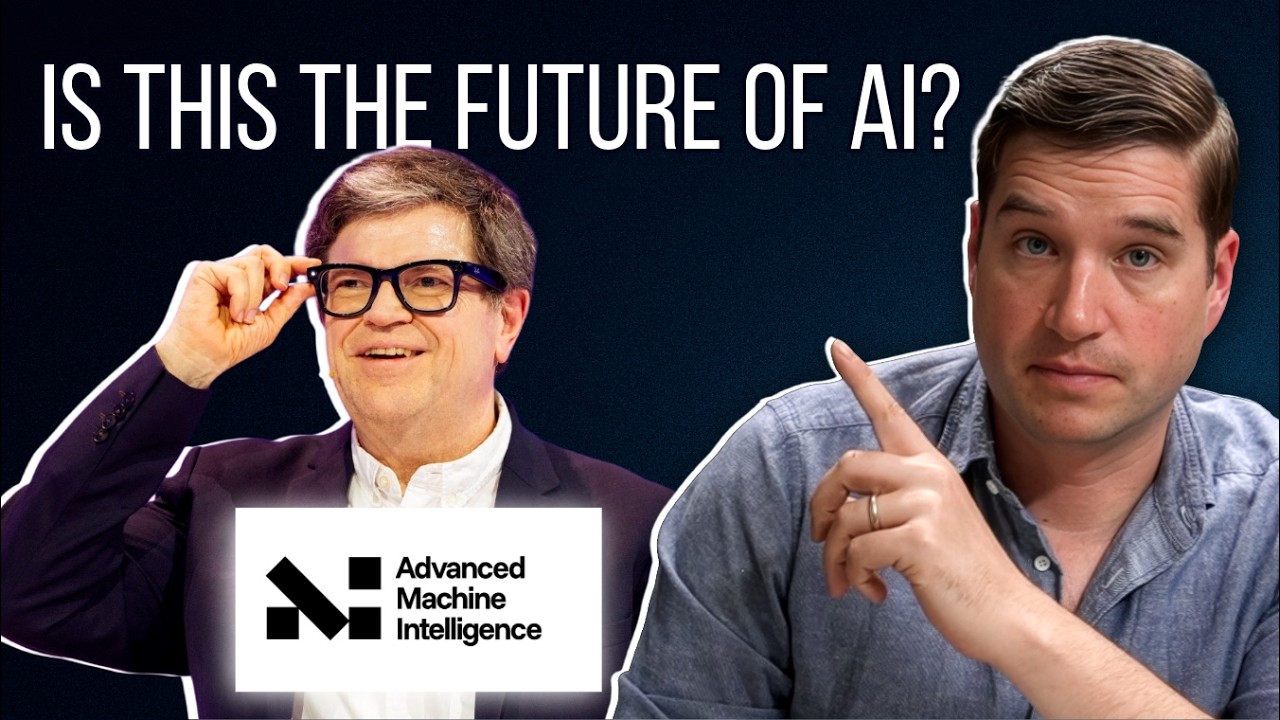
Are LLMs a Dead-End? (Investors Just Bet $1 Billion on “Yes”) | AI Reality Check | Cal Newport
 68 min
Why Is AI Making My Job *Worse*? | Cal Newport
 24 min
Did AI Just Become Sentient? (Not Quite...) | AI Reality Check
Found this useful? Build your knowledge library
Get AI-powered summaries of any YouTube video, podcast, or article in seconds. Save them to your personal pods and access them anytime.
Get Started Free