Key Moments
Ep. 195: The Social Media “Algorithm”, Deep Walks, and Cal’s Simplest Productivity Tool
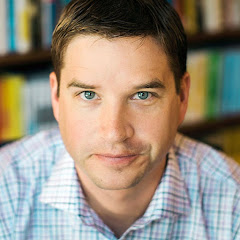 Deep Questions with Cal Newport
Key Moments
Cal Newport discusses social media algorithms, the critique of Twitter, and productivity tools like 'workingmemory.txt'.
Key Insights
Social media 'algorithms' are complex systems of neural networks, not simple algorithms, designed to maximize engagement.
Twitter is criticized as a 'coliseum' for extreme voices, not a true 'digital town square', and attention should be withdrawn from it.
Deep Walks offer a way to process thoughts and unlock creativity, with the mode chosen (podcast, music, silence) depending on intention.
Time-blocking is recommended for work but not for leisure, which requires flexibility; instead, use heuristics and rules for leisure activities.
'Workingmemory.txt' is a powerful productivity tool using a simple text file to offload cognitive load, enabling better organization and focus.
Managers can incorporate deep work by preventing context switching, avoiding overload, and automating processes, rather than aiming for long uninterrupted blocks.
THE MYTH OF THE SOCIAL MEDIA ALGORITHM
Cal Newport clarifies that the systems driving social media feeds are far more complex than traditional algorithms. These are vast networks of 'black boxes,' primarily neural networks trained through backpropagation. Their goal is to assign weights to content to maximize user engagement, thereby increasing time spent on the platform. This intricate, often opaque, system evolved from earlier chronological feeds (pre-2009) to prioritize engagement, leading to unintended consequences like intense virality and addictive feedback loops.
CRITIQUING TWITTER AS A 'DIGITAL COLOSSEUM'
Newport argues, drawing from his New Yorker article, that the prevalent view of Twitter as the 'digital town square' is fundamentally flawed. He posits it's more akin to a 'coliseum,' dominated by a rarefied group of activists and ideologues from political extremes. This gladiatorial environment fosters high-stakes combat and virality, making it unrepresentative of broader society. The central critique is not Elon Musk's potential actions, but the persistent, misguided attention paid to Twitter by public figures and institutions, whose decisions should be grounded in real-world contexts, not this unrepresentative spectacle.
RETHINKING PRODUCTIVITY THROUGH DEEP WALKS AND LEISURE
Deep Walks are presented as a valuable tool for cognitive processing. Newport distinguishes between walking for distraction (podcasts, music) and walking for introspection. While not advocating for rigid time-blocking of leisure, he emphasizes intentionality. If a walk is for problem-solving, it can be planned; otherwise, the choice of whether to engage with audio or simply be with one's thoughts can be decided spontaneously. Leisure itself shouldn't be time-blocked with the same intensity as work, but structured through heuristics and rules to ensure restorative activities, like visiting an exhibition or regular exercise, are consistently pursued.
THE POWER OF 'WORKINGMEMORY.TXT' FOR COGNITIVE EFFICIENCY
A cornerstone of Newport's productivity strategy is the 'workingmemory.txt' file—a simple, constantly open plain text file on one's computer. This acts as an external brain, offloading cognitive load and preventing costly context switching. By transferring thoughts, tasks, and complex problems into this accessible file, individuals can organize information, see connections, and focus on processing one item at a time. This simple yet powerful tool, rooted in early 'life hacking' culture, significantly enhances organizational capacity and reduces mental fatigue.
NAVIGATING MANAGERIAL CHALLENGES WITH DEEP WORK PRINCIPLES
For managers, the focus shifts from achieving long, uninterrupted deep work sessions to preventing context switching and managing overload. Newport advises managers to concentrate on one task at a time, as multitasking and constant interruptions reduce effectiveness and lead to 'small productivity' instead of impactful leadership. Avoiding overload is crucial; this involves saying 'no' to new obligations and automating recurring tasks and processes, thereby reducing the cognitive weight and freeing up attention for critical decisions and employee support.
STRUCTURING THOUGHTS AND LIFE WITH A SYSTEM OF PLANS
Newport outlines a system for managing extended thoughts and life objectives. Non-actionable but important ideas reside in a physical Moleskine notebook, which is periodically transferred to a new one. Ideas being acted upon, regardless of their timescale, are housed in a 'semester plan,' which also incorporates annual objectives, projects, and habits. This overarching organizational framework is further supported by weekly and daily plans, creating a structured yet flexible system for tracking progress, managing commitments, and maintaining clarity on both immediate tasks and long-term aspirations.
Mentioned in This Episode
●Software & Apps
●Companies
●Organizations
●Books
●People Referenced
Cal Newport's Productivity & Focus Strategies
Practical takeaways from this episode
Do This
Avoid This
Common Questions
A true algorithm is a finite sequence of unambiguous steps. Social media 'algorithms' are more like black boxes, often collections of neural networks that are complex and difficult to understand, assigning weights to content to increase user engagement.
Topics
Mentioned in this video
Subject of a New Yorker article; his acquisition of Twitter and unique personality are discussed.
Founder of My Body Tutor.
General who reorganized the U.S. War Department during WWII, used as an example of managing work and avoiding overload.
Mentioned as collaborating on a song in The Simpsons episode.
Author working on a biography of Elon Musk, quoted on Musk's focus on rocket engines over Twitter.
Host of the Deep Questions podcast, discussing productivity, deep work, and digital minimalism.
Popularized the concept of 'life hacking' through '43 Folders'.
Author of an Atlantic article referenced for insights on social media virality and user demographics.
Former CEO of Twitter, his relationship with Elon Musk is speculated upon.
His idea for a subscription model for social media is mentioned.
Technology journalist who coined the term 'lifehack'.
Mentioned as a tool for organizing notes on specific projects.
The name of Cal Newport's YouTube channel.
Mentioned for a media studies professor's quote on Twitter's demanding nature.
Mentioned for changing its social media policy regarding reporters using Twitter.
Mentioned for its acquisition of Fox, providing context for the scale of buyouts.
Mentioned in relation to potentially having a heating system.
The platform's role as a 'digital town square,' its user base, and Elon Musk's acquisition are critically examined.
A personalized online coaching program for health and fitness, emphasizing consistency and daily accountability.
Recommended for small businesses to save money and time on shipping with USPS and UPS discounts.
Recommended as a VPN service for privacy and accessing geo-restricted content.
Mentioned as a fintech company acquired by Jack Dorsey.
Cal Newport's book, principles of which are discussed for productivity and focus.
Cal Newport's book, principles of which are discussed for productivity and managing communication.
Cal Newport's book, principles of which are discussed for productivity and focus.
Recommended as a writing tool for grammar, clarity, and tone adjustments.
A text editor commonly used by developers, mentioned in the context of life hacking and plain text productivity.
A text editor commonly used by developers, mentioned in the context of life hacking and plain text productivity.
Mentioned as a tool for organizing notes on specific projects.
More from Cal Newport
View all 287 summaries 21 min
Can AI “Scheme”? (Nope.) | AI Reality Check
 31 min
Are LLMs a Dead-End? (Investors Just Bet $1 Billion on “Yes”) | AI Reality Check | Cal Newport
 68 min
Why Is AI Making My Job *Worse*? | Cal Newport
 24 min
Did AI Just Become Sentient? (Not Quite...) | AI Reality Check
Found this useful? Build your knowledge library
Get AI-powered summaries of any YouTube video, podcast, or article in seconds. Save them to your personal pods and access them anytime.
Get Started Free