Key Moments
Edward Gibson: Human Language, Psycholinguistics, Syntax, Grammar & LLMs | Lex Fridman Podcast #426
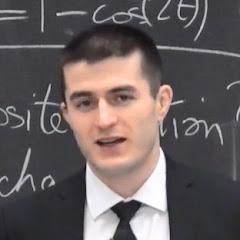 Lex Fridman
Key Moments
MIT psycholinguist Edward Gibson discusses human language, its evolution, and how LLMs interact with it.
Key Insights
Human languages universally prioritize short dependency links between words, making communication and comprehension easier.
Noam Chomsky's 'movement theory' for generating question forms is challenged by the 'lexical copying' theory, which is more learnable and aligns better with usage variations.
Brain imaging studies suggest language processing and thought are distinct systems, with the language network activating only for linguistic tasks.
Legal language (legalese) is exceptionally difficult to understand due to pervasive 'center embedding,' a phenomenon that makes sentences cognitively costly.
Cultures influence language concepts, as seen in color and number words; for instance, the Pirahã language lacks exact number words beyond 'few,' 'some,' and 'many.'
Large Language Models (LLMs) excel at processing the 'form' of language but struggle with 'meaning' in ways humans don't, indicating a fundamental difference in their approach.
THE FASCINATION WITH LANGUAGE AS A PUZZLE
Edward Gibson, a psycholinguistics professor at MIT and head of the MIT Language Lab, developed an early fascination with human language stemming from his background in mathematics and computer science. He approaches language as a puzzle, much like a mathematical or engineering problem, seeking to understand its underlying structure. Initially unimpressed by early AI attempts at natural language processing, Gibson recognized the complexity of meaning and opted to first tackle syntax (form), believing it to be a more tractable problem, which later influenced his views on Large Language Models.
UNIVERSAL HARMONY IN WORD ORDER AND DEPENDENCIES
Gibson highlights the remarkable generalizations across human languages, particularly in word order. Approximately 40% of languages, like English, are Subject-Verb-Object (SVO) with prepositions, while about 50% are Subject-Object-Verb (SOV) with postpositions (e.g., Japanese, Hindi). A fascinating observation is the 'harmonic' alignment within languages: SVO languages typically use prepositions, and SOV languages use postpositions. This pattern holds for about 95% of the thousand languages for which word order data is available. This harmony is explained by the principle of minimizing dependency links, making communication and comprehension more efficient for speakers and listeners.
LANGUAGE STRUCTURE: TREES, MORPHEMES, AND DISAGREEMENT WITH CHOMSKY
Grammar, for Gibson, involves the compositional meaning derived from word combinations, forming a 'tree structure' where every word connects to one other. The root of a sentence is typically the verb, representing the event. He contrasts his preference for 'dependency grammar' as a transparent representation of these connections with Noam Chomsky's 'phrase structure grammar.' While syntactically equivalent in generating sentences, dependency grammar explicitly highlights the distance between dependent words. A key point of disagreement lies in Chomsky's 'movement theory' for sentence transformations (e.g., forming questions), which Gibson argues creates learning problems. Instead, he proposes 'lexical copying,' where auxiliary verbs have distinct forms for declarative and interrogative uses, simplifying language acquisition for children and aligning with observed usage variability.
COGNITIVE COST AND CENTER EMBEDDING
A central tenet of Gibson's research is that longer dependency distances between words incur a higher 'cognitive cost,' making sentences harder to produce and comprehend. This is evident in 'center-embedded' (or nested) structures, such as "The boy who the cat which the dog chased scratched ran away." Such sentences are universally difficult across all languages, including in legal contexts, despite following grammatical rules. Experiments using reading times, comprehension accuracy, and even brain activation (fMRI showing increased activity with longer dependencies) consistently demonstrate this cost. Gibson posits an exponential relationship between dependency length and cognitive cost, suggesting a link to working memory limitations.
LEGALESE: A CASE STUDY IN COGNITIVE BURDEN
Legal language, or 'legalese,' serves as a striking example of language designed with high cognitive cost, primarily due to excessive center embedding. Analyses of contracts and laws reveal that 70-80% of sentences contain center-embedded clauses, significantly higher than in academic texts (20-30%). This structural complexity, along with higher-than-average low-frequency words, severely hinders comprehension and recall, even for experienced lawyers. Surprisingly, the passive voice, often criticized, has no significant impact on understanding. Gibson suggests legalese's complexity might stem from a 'magic spell hypothesis,' where its intricate form signifies certainty and authority, rather than intentional obfuscation by lawyers who themselves find it difficult to process.
LANGUAGE, THOUGHT, AND THE BRAIN
Gibson presents compelling evidence from brain imaging (fMRI) that human language processing occurs in a dedicated, left-lateralized 'language network,' distinct from areas involved in other cognitive tasks like math, programming, or music perception. This network activates for any understood language, spoken or written, and is remarkably stable over an individual's lifetime. Crucially, tasks requiring complex thought that do not involve words, such as chess or spatial reasoning, do not activate this network. Further, 'global aphasia' patients with severe damage to their language networks can still perform complex cognitive tasks. This suggests that language is a system for communicating thought, but not thought itself, challenging Chomsky's view of language as foundational to thought.
LARGE LANGUAGE MODELS: MASTERING FORM, LACKING MEANING
While Large Language Models (LLMs) are "arguably the best current theories of human language" in their ability to predict grammatically correct English, Gibson contends they excel primarily at processing 'form' rather than 'meaning.' LLMs demonstrate human-like struggles with center-embedded sentences, indicating they model human processing constraints. However, they can be easily tricked in scenarios requiring genuine understanding or commonsense reasoning, such as the Monty Hall problem, where they prioritize learned linguistic patterns over logical truth. This dichotomy suggests LLMs are highly sophisticated pattern-matchers, reflecting the statistical regularities of human language data, but do not possess a true 'world model' or genuine comprehension akin to human thought.
EVOLUTION OF LANGUAGE AND CULTURAL INFLUENCES
Language evolution is presented as a complex optimization problem for efficient communication. The 'noisy channel' theory, first proposed by Claude Shannon, suggests language structures adapt to ensure message robustness despite communication noise (e.g., background sound, speaker error). Gibson also emphasizes the profound influence of culture on language, particularly in less industrialized societies. Examples include the chimane and pirahã tribes in the Amazon. The pirahã, for instance, lack exact number words, using only terms for 'few,' 'some,' and 'many.' This linguistic limitation directly impacts their ability to perform exact counting tasks, even simpler ones like recounting items when a visual aid is removed. This illustrates how language can shape cognitive abilities and cultural needs, leading to diverse linguistic inventories for concepts like color and number.
LANGUAGE DIVERSITY AND THE FUTURE OF COMMUNICATION
While all human languages are equally complex and learnable by infants, their functions within communities determine their survival. Languages like Spanish, English, and Mandarin thrive due to economic and social utility, acting as tools for earning money and connecting with larger communities. Conversely, languages like moseten, in contact with Spanish, are dying because their intrinsic value to local speakers diminishes. This highlights a tension between the convenience of global communication and the identity-preserving role of local languages. Gibson is optimistic about machine translation's potential but acknowledges inherent limits when concepts in one language have no direct equivalent in another, or when the 'music' and subtle nuances of literary form are lost in translation.
Mentioned in This Episode
●Software & Apps
●Companies
●Organizations
●Books
●Concepts
●People Referenced
Common Questions
Formal language study is concerned with mathematical definitions and theoretical constructs to describe languages, whether natural or artificial. Informal or human language study, particularly psycholinguistics, often involves data collection from people and quantitative methods to evaluate hypotheses, which can differ significantly from purely theoretical approaches.
Topics
Mentioned in this video
A French linguist who was an early inventor of dependency grammar, with his work published posthumously in 1959.
A researcher at University College London who has studied global aphasics, showing that language is not necessary for thinking.
A researcher in Edward Gibson's department at MIT, who uses fMRI to study the connection between language and thought, finding them to be separate.
Formerly from MIT, known for her work on communicating with plants and her intellectual humility.
A computational linguist at the University of Texas, Austin, and a former student of Edward Gibson, who was the first author on a paper arguing that LLMs lack reasoning capability.
A former student of Edward Gibson at the University of California Irvine, who conducted studies on dependency lengths across many languages.
A linguist and anthropologist who initially worked as a missionary, later becoming fluent in Pirahã, and is very adept at learning foreign languages.
A famous typologist from Stanford who observed many generalizations about word order, especially harmonic generalizations.
Co-founder of Earth Species Project, who is working on interspecies communication and believes animals communicate complex ideas.
A linguist who was a proponent of the lexical copying theory, an alternative to Chomsky's movement theory.
A former lawyer and Harvard law student who took Gibson's psycholinguistics class and collaborated on research about legal language.
A researcher at Stanford in natural language who, with his colleagues, has shown that some large language models implement something akin to dependency grammar.
More from Lex Fridman
View all 547 summaries 146 min
Jensen Huang: NVIDIA - The $4 Trillion Company & the AI Revolution | Lex Fridman Podcast #494
 311 min
Jeff Kaplan: World of Warcraft, Overwatch, Blizzard, and Future of Gaming | Lex Fridman Podcast #493
 154 min
Rick Beato: Greatest Guitarists of All Time, History & Future of Music | Lex Fridman Podcast #492
 23 min
Khabib vs Lex: Training with Khabib | FULL EXCLUSIVE FOOTAGE
Found this useful? Build your knowledge library
Get AI-powered summaries of any YouTube video, podcast, or article in seconds. Save them to your personal pods and access them anytime.
Get Started Free