Key Moments
Ed Cooke Interview: Part 1 (Full Episode) | The Tim Ferriss Show (Podcast)
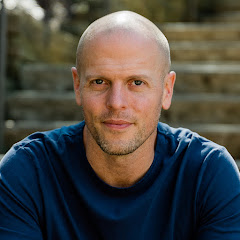 Tim Ferriss
Key Moments
Ed Cooke, Grandmaster of Memory, discusses memory techniques, the evolution of memory sports, and the power of imagination.
Key Insights
The title "Grandmaster of Memory" is a qualification from the World Memory Sports Foundation, requiring specific memorization feats.
The rapid advancement in memory sports is driven by a competitive culture, open sharing of techniques, and the inherent fascination with pushing cognitive limits.
Memory techniques, like the card-to-person association and the memory palace, transform unmemorable information into vivid, engaging images.
The human brain possesses powerful, often underestimated, cognitive capacities for image formation and narrative integration, which can be leveraged for memory.
Effective memory relies on igniting imagination and personal interest; information that is stimulating and emotionally engaging is more easily retained.
Spatial separation is crucial for distinguishing memories; assigning unique locations or contexts to experiences prevents them from blurring together.
THE GRANDMASTER OF MEMORY TITLE
Ed Cooke explains that the "Grandmaster of Memory" title is awarded by the World Memory Sports Foundation based on rigorous performance metrics. These include memorizing a 1,000-digit number in an hour, a deck of cards in under two minutes, and ten decks of cards in an hour. While a compelling title, Cooke humorously downplays its inherent significance, likening it to a useful conversation starter or a way to de-escalate awkward situations.
THE EVOLUTION OF MEMORY SPORTS
The dramatic increase in performance in memory sports, such as memorizing a deck of cards from 149 seconds down to 21 seconds, is attributed to a competitive culture rather than biological changes. This evolution stems from athletes openly sharing their techniques and hacks, fostering a continuous, linear improvement in memorization speed and capacity across various disciplines. The drive appears to be prestige and the sheer fascination of exploring human potential.
CORE MEMORY TECHNIQUES
Fundamental memory techniques involve transforming mundane information into vivid, memorable images. For cards, this means associating each card with a person, creating a personal connection. These card-person associations are then woven into an amusing story or placed within a spatial journey (like a memory palace). The principle is that the mind naturally remembers things that are interesting, vivid, and emotionally engaging.
UNLEASHING COGNITIVE POTENTIAL
The average person possesses significant, often untapped, cognitive capacities for memory. A demonstration involving a narrative description highlights how quickly and effectively the brain can form and retain images from spoken words. This is not an 'elusive geek skill' but a skillful application of the brain's natural inclination to process meaning, imagine vivid scenarios, and integrate narratives.
MAXIMIZING PERSONAL INTEREST AND SPATIAL SEPARATION
Two key generalizable tips for memory and cognitive enhancement are: 1. Embrace and ignite your imagination by focusing on what stimulates you, as personal interest and emotional engagement are crucial for retention. 2. Employ spatial separation to distinguish memories; by assigning discrete mental or physical spaces to experiences, they remain distinct and don't blur, leading to richer autobiographical recall.
CLARIFYING RELATIONSHIPS AND THE MERIT OF EFFORT
Confusing emotions in relationships often stem from conflating immediate issues with a larger complex of feelings. Ed Cooke uses the example of poet Goethe, who embodied a life of broad engagement and distinctive effort, to discuss the concept of merit. He questions the societal overemphasis on merit derived solely from effort, suggesting that underlying capacities and opportunities also play significant roles. True value, he implies, might lie in richness of experience or environmental impact, not just commercial success.
INTUITION VS. RATIONALITY
Cooke highlights the power of intuition, especially when faced with numerous possibilities. He contrasts the slow, often paralyzing nature of excessive rational analysis with the energetic momentum gained from trusting one's gut feeling. He shares an anecdote about a business decision where intuition for a more engaging, albeit less immediately metrics-driven, approach was ultimately thwarted by overly cautious rationality, potentially leading to a less interesting outcome.
Mentioned in This Episode
●Software & Apps
●Companies
●Organizations
●Books
●People Referenced
Memory Enhancement and Cognitive Principles
Practical takeaways from this episode
Do This
Avoid This
Common Questions
A Grandmaster of Memory is a title awarded by the World Memory Sports Foundation, requiring competitors to memorize a 1000-digit number in an hour, a deck of cards in under two minutes, and 10 decks of cards in an hour.
Topics
Mentioned in this video
Platform mentioned for subscribing to the podcast.
Sponsor of the show, a platform for graphic design services.
Mentioned as the platform used for initial communication or interviews.
Website for finding links and resources from podcast episodes.
The company co-founded by Ed Cooke, related to memory techniques and training.
Writer coached by Ed Cooke to become the US National Memory Champion.
Host of the podcast, discussing memory techniques, his book '4-Hour Chef', and personal philosophy with Ed Cooke.
Mentioned as an example of a guest whose episodes were in-depth and wide-ranging, similar to this one.
Guest on the podcast, a Grandmaster of memory, co-founder of Memorize.com, discussing memory techniques, cognitive principles, and philosophy.
Mentioned as an example of a guest whose episodes were in-depth and wide-ranging, similar to this one.
Mentioned humorously in the context of guessing what historical figures ate for breakfast.
Mentioned as an example of an athlete preparing in seclusion, used to frame a story about training.
A programmer from Ukraine who won the Memorize.com competition by memorizing a deck of cards in four days.
Used in a memory walk example for memorizing US Presidents, adapted humorously for an English audience.
A book by Tim Ferriss that used 99designs for cover concepts and became a bestseller.
A book by Tim Ferriss about accelerated learning disguised as a cookbook, where Ed Cooke was helpful with memory techniques.
A novel by Goethe that became critically acclaimed and influential.
A book by Joshua Foer about memory championships.
More from Tim Ferriss
View all 690 summaries 184 min
Daredevil Michelle Khare — How to Become a YouTube Superstar
 81 min
Q&A with Tim — The Upcoming AI Tsunami and Building Offline Advantage
 91 min
The Random Show, Couch Edition! — Supplements, Breathing and Balance Training, and Much More!
 76 min
How to Quiet the Ruminative Mind and Avoid The Traps of Self-Help — Tim Ferriss
Found this useful? Build your knowledge library
Get AI-powered summaries of any YouTube video, podcast, or article in seconds. Save them to your personal pods and access them anytime.
Get Started Free