Key Moments
E62: Elizabeth Holmes verdict, fraud origins & takeaways, navigating "The Great Markdown" & more
 All-In Podcast
Key Moments
Elizabeth Holmes convicted of fraud; market faces deflation amid Fed policy shifts; founders urged to focus on efficiency.
Key Insights
Elizabeth Holmes was found guilty on four counts of fraud related to deceiving investors about Theranos's technology and business, highlighting the importance of accurate representation of a company's current state.
The "Great Markdown" in public markets, driven by the Federal Reserve's hawkish policy shifts, is causing a significant re-rating of tech and growth stocks, with potential for further correction.
Founders are advised to focus on being "default alive" by prioritizing efficiency, managing burn rates, and ensuring positive contribution margins, especially during market downturns.
The venture capital landscape is consolidating, with a few large firms likely to dominate, and a growing trend of VCs potentially going public to capture firm value.
The Theranos case and market downturns underscore the dangers of unchecked hype and the lack of independent due diligence, where media narratives and social proof can overshadow fundamental analysis.
Navigating a market downturn requires founders to maintain focus on core business fundamentals, manage resources prudently, and understand that fundraising becomes significantly harder.
ELIZABETH HOLMES VERDICT AND THERANOS FRAUD
The conviction of Elizabeth Holmes on four fraud counts marks a significant moment for Silicon Valley, emphasizing the critical line founders must not cross: misrepresenting the current state of their business. While visions for the future are encouraged, lying about existing deals, product capabilities, or customer traction, as Holmes did with fictitious partnerships and military usage claims, leads to severe consequences. The jury's verdict focused on deceit towards investors, differentiating it from patient care duties, underscoring that honesty about current business realities is paramount for maintaining investor trust and avoiding legal repercussions.
LESSONS FOR FOUNDERS AND INVESTORS FROM THERANOS
The Theranos debacle offers crucial lessons for both entrepreneurs and investors, particularly concerning due diligence and the influence of narrative. Holmes's conviction stemmed from misrepresentations to investors, including fake customer logos and a fabricated deal with Walgreens. This highlights how a compelling story, amplified by media coverage, can create a reinforcing cycle that obscures a lack of substance. Founders are cautioned against playing with fire by courts the media, as a build-up can be followed by a significant tear-down. Investors are reminded that without independent, rigorous due diligence, even significant capital can be lost to hype.
THE GREAT MARKDOWN AND MARKET UNCERTAINTY
The market is undergoing a significant "Great Markdown," particularly in tech and high-growth stocks, driven by the Federal Reserve's perceived policy missteps. Initial announcements about tapering and rate hikes were contradicted by subsequent meeting minutes, creating confusion and market convulsions. This uncertainty, stemming from the Fed's changing stance on inflation control and asset shedding, has led to a sharp re-rating of valuations. While some believe the bulk of the correction has occurred, the potential for further downside exists as the market digests the new reality of rising rates and tighter monetary policy.
ADVICE FOR FOUNDERS NAVIGATING A DOWNTURN
In the current volatile market, founders are strongly advised to focus on being "default alive" – a state where revenues consistently exceed costs. This means prioritizing efficiency, managing burn rates meticulously, and ensuring positive contribution margins. While unprofitable growth was once a viable strategy, the current climate demands fiscal discipline. Founders should concentrate on building a strong, fundamentally sound business, even if it means slower growth. Key tactical elements include ensuring product-market fit, efficient customer acquisition (LTV > CAC), and scalable operations that improve returns with growth.
THE SHIFTING VENTURE CAPITAL LANDSCAPE
The venture capital ecosystem is experiencing consolidation, with a few dominant firms like Andreessen Horowitz amassing significant capital. This concentration may lead to eight percent of capital being controlled by just a few players. A notable trend is the potential for these large VC firms to go public, mirroring private equity, to capture firm value beyond individual fund returns. This shift could alter partner dynamics, moving from traditional ownership stakes to more structured, public company compensation models, potentially impacting the entrepreneurial culture of venture capital.
THE CHALLENGE OF PRIVATE MARKET VALUATIONS
The disconnect between soaring private company valuations and current public market realities presents a significant challenge. Hundreds of "unicorns" (companies valued at $1 billion or more) may struggle to achieve their last private valuations if they were to go public today, as market conditions have fundamentally shifted. This creates an "unhealthy tension" as investors face the prospect of massive write-downs. Many may opt for "pushes" – selling companies for their initial investment amount rather than taking a loss, which can delay liquidity events and impact portfolio returns for VCs.
FINANCIAL DISCIPLINE AND DUE DILIGENCE IN STARTUPS
The current economic climate necessitates a heightened focus on financial discipline and robust due diligence for startups and investors. Founders are urged to be frugal, avoid unnecessary spending, and meticulously track metrics like the "burn multiple" – the dollars burned per dollar of net new annual recurring revenue (ARR). A burn multiple of one or less is considered excellent, while multiples of three or higher raise significant concerns about efficiency and product-market fit. Investors, conversely, must be vigilant, questioning opaque financials and avoiding the trap of social proof or following established firms without independent verification, as demonstrated by the Theranos case.
THE IMPORTANCE OF ORIGINAL THINKING AND ORIGINAL DELIGENCE
A recurring theme in discussions about major financial meltdowns, from Theranos to Bernie Madoff, is the failure of independent thinking and due diligence. Investors and stakeholders often fall into a trap of relying on social proof – assuming that because others are involved or because something has been written positively in the press, it must be sound. Section 220 of Delaware corporate law is highlighted as a tool for shareholders to demand detailed financials, reinforcing the need for transparency and accountability even in private companies. The lack of original analysis allows hype to overshadow fundamental assessment, leading to significant risks.
Mentioned in This Episode
●Software & Apps
●Companies
●Organizations
●Concepts
●People Referenced
Common Questions
Elizabeth Holmes was found guilty on four counts of fraud: two counts of wire fraud and two counts of conspiracy to commit fraud. She originally faced 11 counts and was acquitted on some, with the jury unable to reach a unanimous verdict on others.
Topics
Mentioned in this video
Founder of Theranos, found guilty on four counts of fraud. The discussion centers on her verdict, the origins of the fraud, and the media's role in her rise and fall.
Mentioned as someone who was incentivized to investigate Theranos due to the high-profile story, highlighting how media coverage can drive investigative efforts.
Founder of Y Combinator, whose essay on 'default alive' vs. 'default dead' companies is discussed as crucial advice for founders during economic uncertainty.
Mentioned in relation to Spotify including video for the podcast, and suggested as a potential guest for a media trio discussion.
Host of a show where one of the speakers gave an interview warning about the impending market correction and re-rating.
Founder of Facebook, mentioned as an example of a 'default alive' founder and company.
One of the wealthy individuals whose family office invested in Theranos, highlighting the role of non-traditional Silicon Valley investors who were reportedly duped.
One of the hosts of the All-In Podcast, involved in discussions on Theranos, market analysis, venture capital, and startup strategy. Referred to as 'Sacks'.
His Ponzi scheme is referenced as a parallel to the Theranos case, highlighting how a lack of independent diligence and reliance on social proof can enable large-scale fraud.
One of the hosts of the All-In Podcast, often referred to as 'Jason'. He participates in discussions on various topics including venture capital and market trends.
Co-founder of Andreessen Horowitz, mentioned for the firm's large $9 billion fundraise and the discussion around VC firms potentially going public.
Mentioned as investors in Theranos, indicating that wealthy families outside the traditional VC ecosystem were drawn in by Holmes's narrative.
Former leader at CAA who sold his position to prevent conflicts when moving to Disney, illustrating how ownership stakes in firms can be handled.
One of the hosts of the All-In Podcast, contributing expertise on life sciences and business strategy. Referred to as 'Freeberg'.
Chairman of the Federal Reserve, whose past actions in 2018 raising rates are recalled as having caused a market collapse, and whose current policy decisions are under scrutiny.
Cited as someone who, while running Google Ventures, investigated Theranos and found significant 'hand waving,' ultimately determining that the technology was not feasible.
Mentioned in the context of getting people to prepay for cars as a bootstrapping strategy, similar to how Google initially funded itself.
Former US Secretary of State, mentioned as having introduced Elizabeth Holmes to a general, contributing to the chain of trust that bypassed due diligence.
Mentioned as a figure associated with calling a company 'Theradose 2.0,' indicating skepticism about its viability.
Mentioned as a figure whose public persona Elizabeth Holmes emulated, contributing to the media's favorable coverage and the creation of a compelling, albeit false, narrative.
A general (unnamed) who joined Theranos's board after being introduced by George Shultz, adding credibility that may have bypassed traditional due diligence by other investors.
One of the hosts of the All-In Podcast, involved in discussions about COVID-19, Theranos, market analysis, and startup advice. He is also referred to as 'Chamath' and 'Champ'.
Mentioned as selling Amazon stock, contributing to one of the hosts' decision to de-risk their own portfolio during late 2021.
Mentioned as someone whose positive test result is being treated with concern by some, in contrast to general experiences with Omicron.
Mentioned implicitly in the discussion about founders' self-reliance and the potential for extreme individualism, possibly a veiled reference. The phrase 'teachers around' might be a mishearing or indirect reference.
Mentioned in the context of Theranos's fraudulent claims, specifically that Theranos presented Pfizer as having validated its technology, which was untrue.
Included in discussions about the regression to the mean in SaaS company valuations and the market pullback experienced in tech stocks.
Used as an example to illustrate the potential terminal valuation of large asset management firms (GPs) indexed to Assets Under Management (AUM), which could translate to billions in market cap.
Another retail partner that was part of Theranos's fraudulent deals to place devices in stores, misleading investors about the company's capabilities.
Another large clinical laboratory services company, used as a benchmark for the scale and capabilities that Theranos falsely claimed to possess.
Highlighted as an example of a company that was profitable from day one and 'default alive,' effectively bootstrapping its growth through early deals.
Cited as an example of a profitable 'big tech' company that trades at high forward multiples, illustrating successful 'default alive' status.
Their charts are referenced to illustrate the major regression to the mean in tech and SaaS stock valuations.
A major clinical laboratory services provider, contrasted with Theranos's unachievable claims of comprehensive testing from a single drop of blood.
Mentioned as a company whose ads Facebook sold, contributing to Facebook's early profitability and 'default alive' status.
Mentioned as the organization founded by Paul Graham, known for its startup advice, including the concept of being 'default alive'.
Mentioned as a firm that historically claimed to be a partnership but later IPO'd, drawing parallels to potential future IPOs of VC firms.
Not explicitly mentioned, but the discussion about founders burning cash could indirectly relate to companies like Uber that historically prioritized growth over profit.
A retail partner that signed a deal with Theranos to include its devices in stores, which investors saw as an endorsement. The deal was based on fraudulent claims.
Partnered with Google on a major search syndication deal that provided significant funding for Google's early operations.
Mentioned as a highly profitable 'big tech' company trading at high forward multiples, serving as an example of successful 'default alive' status.
Described as an incredible business that is still growing significantly, but whose market multiple has been significantly re-rated.
A health technology company founded by Elizabeth Holmes, which was exposed for widespread fraud regarding its blood-testing technology. The verdict against Holmes and the company's demise are key topics.
A SaaS company included in charts discussing the major correction and regression to the mean in public company valuations.
Agency that underwent an IPO, mentioned in the discussion about the potential public offering of VC firms.
Mentioned for now including video for The All-In Podcast, allowing users to watch episodes directly on the platform.
Mentioned as a company that was profitable from day one, serving as an example of a business that was 'default alive' and not reliant on unprofitable growth.
Built after the 2008 financial crisis, cited as an example of a successful company founded during an economic downturn.
A tech company whose stock performance is discussed in the context of 'The Great Markdown' and the correction in public company valuations.
Discussed as one of the firms likely to control a significant portion of capital deployed into private markets, with speculation about going public.
Founded after the dot-com crash, serving as an example of a startup built during a downturn.
Mentioned as a SaaS company whose valuation has experienced a significant correction, as shown in market analysis charts.
Not explicitly mentioned, but similar to Uber, the discussion on unprofitable growth could apply to companies prioritizing scale over immediate profitability.
The platform where the video version of The All-In Podcast can also be watched.
A prominent venture capital firm discussed in the context of not investing in Theranos and its significant capital raising efforts for its own funds.
Discussed extensively regarding its monetary policy, interest rate hikes, and quantitative easing/tightening, and how its actions impact inflation and market valuations.
Agency whose partners historically did not IPO their firm share, contrasted with potential future IPOs of VC firms.
A SaaS company mentioned in the context of market corrections and the re-rating of public company valuations.
Mentioned as a conference where Yammer was launched; the speaker claims to have influenced its win.
Mentioned as an example of a company that raised money at a high valuation ($500 million two years prior) and sold for its previous valuation, resulting in a 'push' for investors.
Mentioned for publishing an 'ivermectin hoax,' used as an example of a media outlet not fact-checking stories that fit their priors.
Mentioned as a top venture capital firm that, along with others, did not invest in Theranos, partly because Holmes wouldn't allow sufficient due diligence.
Investigated Theranos but was unable to verify its technology due to 'hand waving,' ultimately deciding against investment.
Acquired The Athletic, which had raised significant capital at a high valuation, resulting in investors getting their money back ('a push').
Possibly a mishearing or typo related to political groups or media outlets. The transcript mentions 'maga people,' but 'New Party' is not directly present.
Possibly misheard; 'rolling stone' was mentioned in the transcript, but this could be a typo or mishearing of 'Roll Call' in some contexts.
Mentioned as a cryptocurrency that is supposed to be uncorrelated with traditional markets but is observed to be a 'sponge for liquidity,' correlating with market movements when liquidity tightens.
Not explicitly mentioned, but serves as a broad market index against which the performance of tech and SaaS stocks is compared during market downturns.
More from All-In Podcast
View all 400 summaries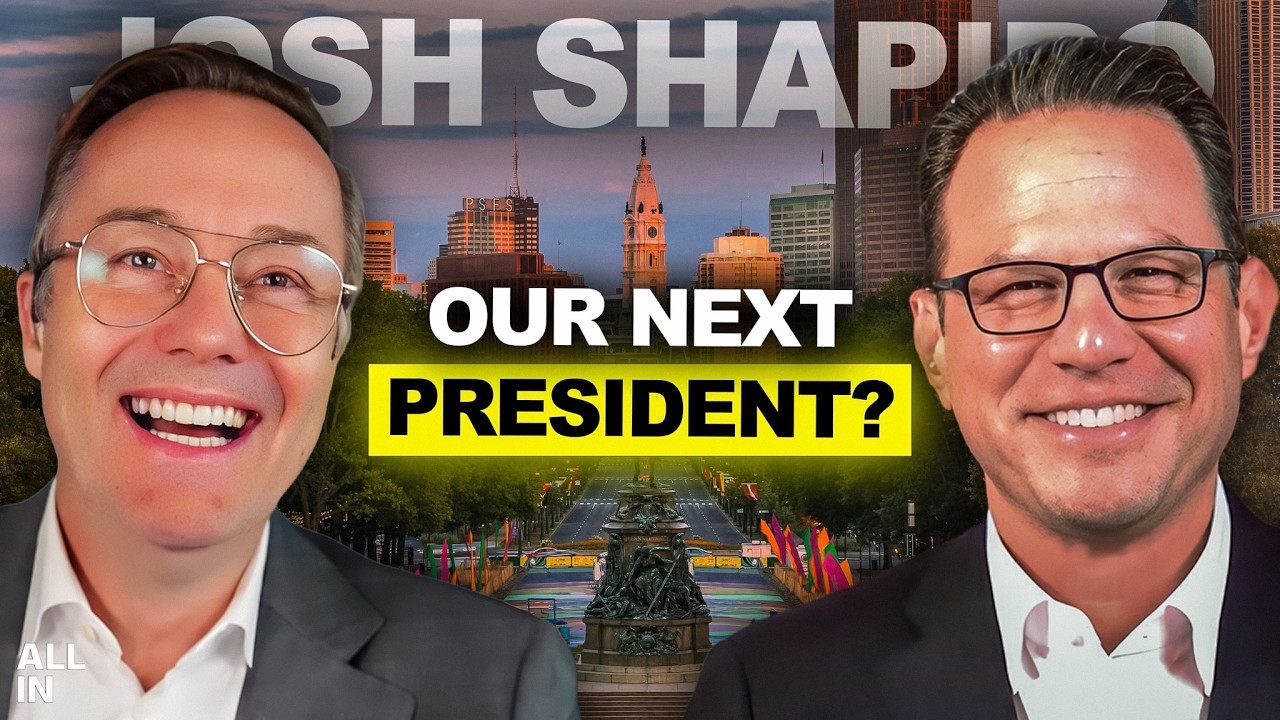 62 min
Josh Shapiro on Trump, Iran War Chaos, Israel's Failure, the Economy, and 2028 Race
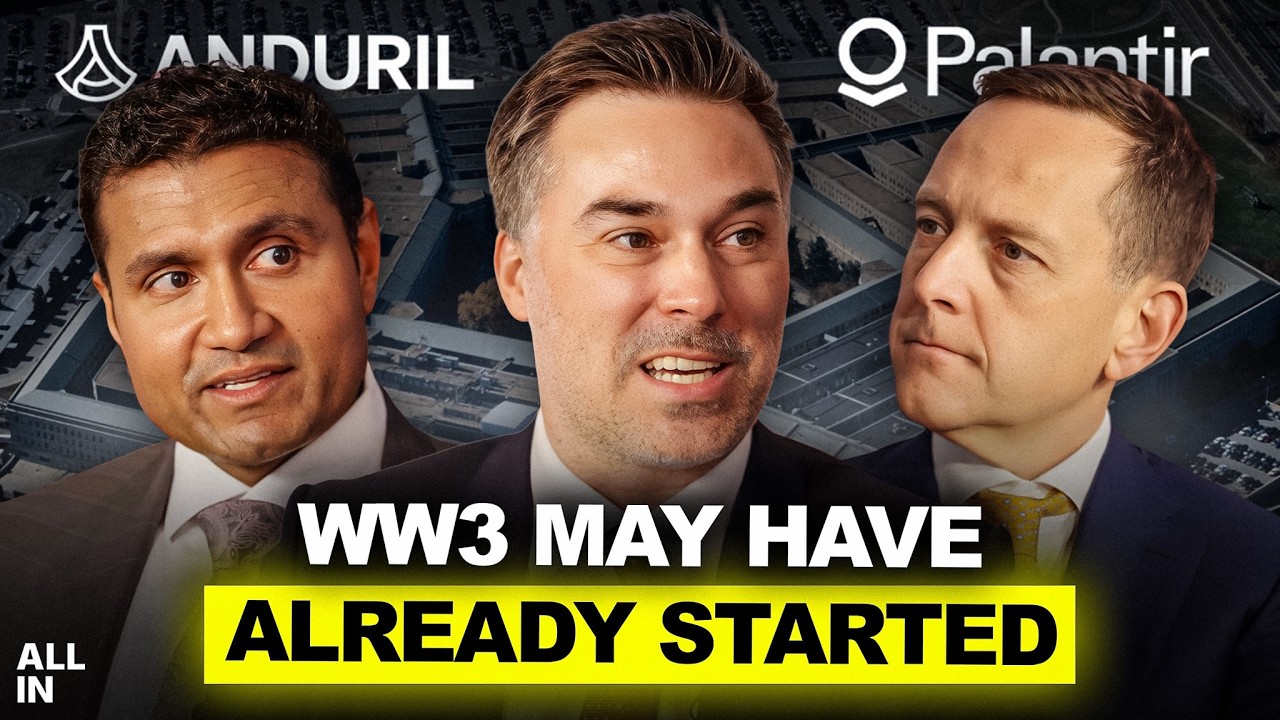 70 min
The State of Modern War: Palantir & Anduril Execs on Drones, AI, and the End of Traditional Warfare
 81 min
SpaceX IPO, Iran War Fallout, Quantum Bitcoin Hack, The Space Opportunity
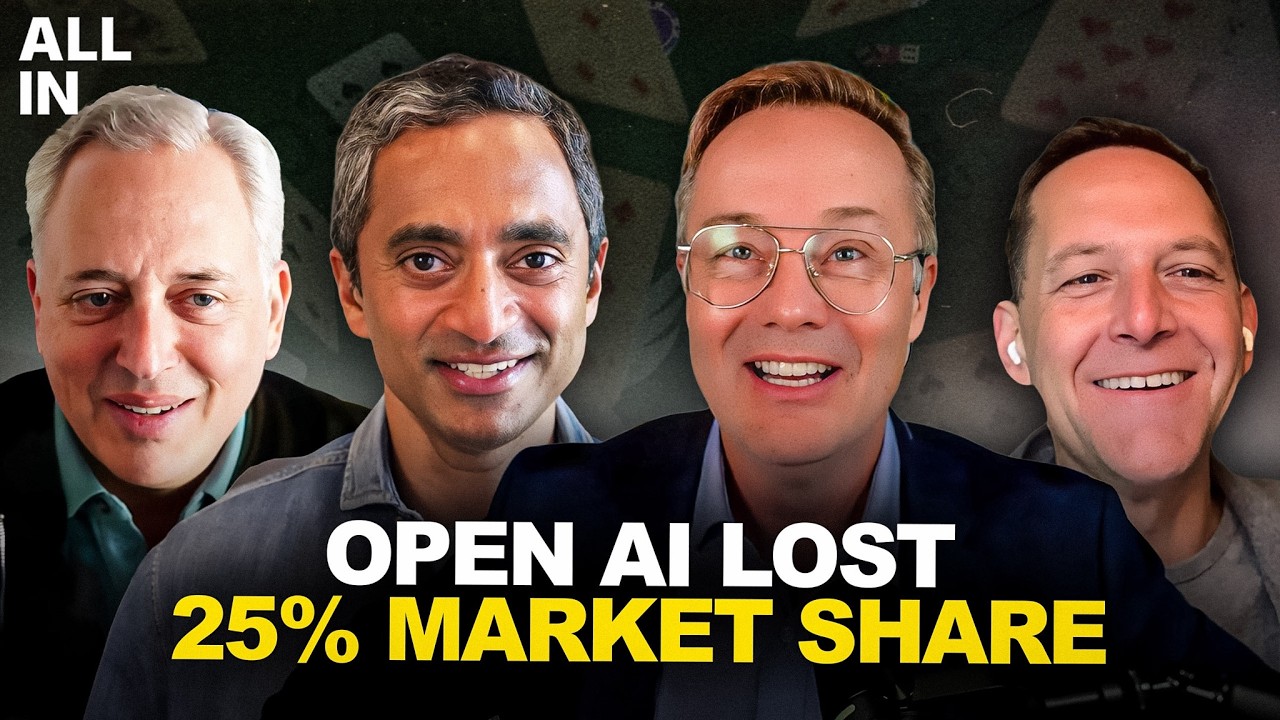 81 min
Anthropic's Generational Run, OpenAI Panics, AI Moats, Meta Loses Major Lawsuits
Found this useful? Build your knowledge library
Get AI-powered summaries of any YouTube video, podcast, or article in seconds. Save them to your personal pods and access them anytime.
Get Started Free