Key Moments
Douglas Murray: Racism, Marxism, and the War on the West | Lex Fridman Podcast #296
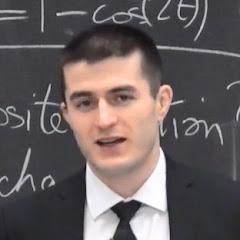 Lex Fridman
Key Moments
Douglas Murray discusses the "War on the West," examining threats to Western civilization, historical context, and the role of Marxism and identity politics.
Key Insights
Western civilization is defined by a specific tradition stemming from Athens and Jerusalem, characterized by the rule of law, property-owning democracies, and a unique interest in the rest of the world.
Slavery, while a historical sin, is not unique to the West; the West also led the abolition of the practice and the founding ideals of equality laid the groundwork for its demise.
Reparations are problematic as they involve wealth transfer based on resemblance rather than direct lineage, and societal issues are multi-dimensional, not solely attributable to racism.
Resentment is a powerful driver of destructive behavior, both individually and societally, and gratitude is presented as its antidote.
Critical Race Theory is an activist philosophy originating in law that has polluted academia by focusing on deconstruction and identity politics, often neglecting history's complexities and creating unnecessary division.
The West has largely learned the lessons of fascism but struggles to learn the lessons of communism, which continues to tempt societies with its promises of fairness and expropriation, despite historical failures.
Independent thought and resilience against crowd mentality are crucial, especially in the digital age, by focusing on real-world connections and self-worth rather than online validation.
Love, particularly sexual love, is presented as the closest human experience to the divine an intimation of meaning in life, often found in the pursuit of happiness and freedom from past constraints.
Historical figures and Western traditions should be viewed with nuance, acknowledging both their flaws and their contributions, to avoid politicized interpretations and maintain historical understanding.
DEFINING WESTERN CIVILIZATION AND ITS THREATS
Douglas Murray begins by defining Western civilization not by precise borders but by its cultural and intellectual lineage, originating from Athens and Rome, and exemplified by concepts like the rule of law and property-owning democracies. He notes this civilization possesses a unique, ravenous interest in the wider world, a characteristic that, while leading to exploration and discovery, also has a history of self-interest and imperial expansion. Murray identifies a current "war on the West" aiming to dismantle its cultural landscape and historical foundations, making way for potentially worse ideas.
SLAVERY, SELF-CRITICISM, AND WESTERN PECULIARITIES
Murray argues that slavery, while a grave historical injustice, is not a uniquely Western sin, as it has been a feature of many civilizations throughout history. He highlights a Western peculiarity: the capacity for rigorous self-criticism and introspection. While acknowledging the negative consequences of Western expansion, he posits that the West historically abolished slavery and included within its founding ideals, like equality, the seeds for its eventual dismantling. This self-critical capacity, he suggests, is a crucial, though not always comfortable, attribute.
THE COMPLEXITY OF REPARATIONS AND MULTI-DIMENSIONAL ISSUES
Discussing the idea of reparations, Murray finds it impractical and morally fraught, arguing that modern calls for reparations are based on resemblance rather than direct historical lineage. He contends that societal underachievement, such as the 'black underachievement' in America, is a multi-dimensional issue influenced by various factors beyond just racism, pointing to Asian American success as a counterexample. He questions the notion of endless claims based on past injustices, suggesting a need for a time limit on historical grievances.
RESENTMENT AS A DRIVER OF EVIL AND THE ANTIDOTE OF GRATITUDE
Murray identifies resentment as a significant driver of evil and societal destruction, citing examples from political figures to historical revolutions. He explains that resentment stems from a belief that others possess what one deserves, and it can be a potent force in politics. He contrasts this with gratitude, which he proposes as the antidote. Drawing on Dostoevsky, he suggests that the inability to feel gratitude is fundamental to a malevolent nature, and cultivating gratitude is essential for individual and societal well-being.
THE RISE AND CRITIQUE OF CRITICAL RACE THEORY
Murray analyzes Critical Race Theory (CRT) as an activist philosophy that originated in law and has infiltrated academia. He criticizes CRT for its deconstructive approach, its focus on identity politics, and its tendency to view all issues through the lens of race, often with a "bulling tone." He argues that this approach can be destructive, unable to rebuild once things are taken apart, and that it fosters a distorted view of history, perpetually priming society for conflict and distrust, akin to constantly feeling like it's 1938.
LEARNING FROM HISTORY: THE LESSONS OF THE 20TH CENTURY
Murray reflects on the lessons of the 20th century, particularly fascism and communism. While acknowledging the West has learned some lessons from fascism regarding racial supremacy, he believes the lessons of communism remain largely unlearned. He critiques Marxist ideology for its historical failures in practice, leading to immense suffering and economic ruin, yet notes its persistent appeal through promises of fairness. He emphasizes the importance of constructive critiques of capitalism rather than embracing failed Marxist ideals, and highlights the danger of historical figures being judged solely by modern standards without context.
NAVIGATING CROWDS AND INDEPENDENT THOUGHT IN THE DIGITAL AGE
Addressing the challenge of independent thought in an era of social media and crowd mentality, Murray advises against overrating the significance of the "unreal world" of online interactions. He stresses the importance of grounding self-worth in tangible relationships and real-world connections, rather than seeking validation from strangers online. He also touches upon the complexities of fame, genius, and public perception, suggesting that engaging with historical figures requires acknowledging both their positive and negative aspects to foster a mature understanding.
THE ROLE OF LOVE AND MEANING IN THE HUMAN CONDITION
Murray posits that love, particularly romantic and sexual love, is the closest human beings can get to experiencing the divine on Earth. He reflects on his own experience as a gay man, noting that early romantic pursuits are often unrequited, leading to a later coming-of-age. He shares a poem by Philip Larkin to illustrate how liberated sexual expression can be seen as a form of happiness and freedom from past taboos. Ultimately, he suggests that finding meaning and experiencing profound love are central to the human condition.
Mentioned in This Episode
●Software & Apps
●Organizations
●Books
●Concepts
●People Referenced
Common Questions
Douglas Murray defines Western civilization as a specific tradition rooted in a combination of Athens and Jerusalem, creating European civilization that spawned America, Canada, Australia, and New Zealand. Key characteristics include the rule of law, property-owning democracies, a ravenous interest in the rest of the world (with its downsides), and a robust capacity for self-criticism and peaceful resolution of problems.
Topics
Mentioned in this video
Mentioned as creating European civilization that spawned other Western civilizations.
Cited as a primary Western civilization that developed key attributes like the rule of law and property-owning democracies.
Listed as one of the Western civilizations spawned by European civilization.
Mentioned as one of the foundational cultural influences for Western civilization, alongside Jerusalem.
Cited as the source of a publication claiming negative views on obesity are rooted in racism and slavery, which Murray critiques.
Mentioned in the context of potentially violent clashes in Washington D.C. on election night 2020, contributing to Murray's fear of the city burning if Trump won.
Used as an example of an 'extraordinary' place distinctly not part of 'the West'.
Mentioned as an institution where someone can lecture on 'white rage' without consequence.
Used as an extreme example of historical racism that critical race theory critics believe society is constantly on the cusp of returning to, which Murray disputes.
Program mentioned by specialists who approached Murray, noting its recovery practice of listing things one is grateful for, validating his idea of gratitude as a solution.
Mentioned as a civilization that also 'wanted it an awful lot' (referring to conquest and expansion), performing well for centuries, counteracting the idea that only Western civilization was driven by imperial imperative.
Referenced regarding 2020 presidential nomination contenders who were willing to discuss reparations for slavery.
Mentioned as the newspaper where Douglas Murray writes a column.
Referenced with the draft leak of its decision, seen as a 'bomb placed on America' and a further example of political division.
Listed as one of the Western civilizations spawned by European civilization.
Listed as one of the Western civilizations spawned by European civilization.
Used as an example city in Russia to consider if one would perceive it as 'Western'.
Used hypothetically to illustrate that other civilizations historically didn't send explorers to discover European origins, unlike Western expeditions.
Used as an example of a place distinctly not part of 'the West' to highlight the specific nature of Western civilization.
Mentioned as one of the foundational cultural influences for Western civilization, alongside Athens, representing the biblical world.
Used as an example of a place distinctly not part of 'the West'.
A Nazi extermination camp, mentioned as the subject of Vasily Grossman's devastating first-hand journalism.
Location in Washington D.C. where tensions escalated on election night 2020.
Discussed as a 'borderline question' regarding its inclusion in 'the West', with its historical desire to both reach towards and stay away from Europe.
Used as an example city where 'violent men' would be useful for defense if invaded, countering the idea that all violence should be eliminated from society.
Previously a guest on the Lex Fridman Podcast, discussed in contrast to Douglas Murray for his economic, rather than cultural, view of Marxism.
One of the Founding Fathers who desired the abolition of the slave trade, though he owned slaves.
Historian who posited that the Nazis ultimately lost WWII because they were Nazis, due to their irrational anti-Semitism that diverted crucial resources.
Praised for their capability and willingness to fight for their country when violence was unleashed upon them, in contrast to a society identifying as non-binary.
European intellectual who advocated for instituting Western Marxism in post-colonial countries.
Author of 'Crowds and Power,' mentioned for his insights on herd-like behavior.
Discussed in relation to 'genius opt-out' from public scrutiny, with Murray stating he was 'almost certainly a pedophile' despite his fame and talent.
US Senator, mentioned hypothetically as someone who would have faced similar accusations of racism and misogyny as Trump if he were a presidential candidate.
Attributed with the observation that some people demand endless understanding of their 'lived experience' while simultaneously claiming one can never truly understand them, a concept Murray adopted.
His documentary 'Putin's Palace' is referenced for details about Vladimir Putin's early life and potential resentment.
Russian author whose novel 'The Brothers Karamazov' and insights on the devil's incapacity for gratitude are discussed as brilliant.
A deceased friend of Murray's, a philosopher who would be invited to teach basic philosophy courses because universities lacked in-house expertise, due to the shift towards 'theory' in academia.
Philosopher whose work Roger Scruton taught.
A Harvard academic who claims men are the originators of physical violence in society and that the world would hypothetically be better off without men.
Political philosopher who has seen a resurgence in popularity, but Murray highlights his 'horrible abhorrent views on race' and constant use of a racial slur in his private letters, challenging his uncritical acceptance.
Chinese communist leader responsible for killing more people than anyone else (65 million), whose lack of recognition among American students is lamented.
Used as a counter-example to Michael Jackson in the 'genius opt-out' discussion, suggesting he may not have been regarded as talented enough to escape judgment.
Documentarian who attended Douglas Murray's college and was almost a teammate on 'University Challenge,' which was Murray's only motivation to participate.
Former US President, discussed for his unconventional communication, ability to 'clear out' political opponents, but lack of governing skill and problematic actions surrounding the 2020 election and January 6th.
Convicted sex offender, used as an example of how 'politeness' in certain social circles can lead to significant trouble if one doesn't challenge problematic behavior.
Author whose quote 'We read to know we're not alone' is mentioned, contrasting with reading to 'become other people'.
Playwright whose favorite quote, from Bakunin, about the writer's pause, is brought up to discuss the mystery of consciousness in writing.
A late philosopher who observed that boats of explorers and scholars seemed to always depart from Europe, showing a 'ravenous interest in the rest of the world' as a Western attribute.
Referred to as the origin of a 'Russoian mistake' in modern Western ignorance, where people imagine other cultures were innocent while the West alone possessed evil.
Discussed as someone who played on resentment, a key driver of evil, in his propaganda.
A Ukrainian Jewish journalist and author of 'Life and Fate,' praised for his extraordinary ability to describe anti-Semitism as doing 'everything at the same time.'
Author of 'The Rise and Fall of the Third Reich,' a journalist who was present during World War II, but did not delve into anti-Semitism as deeply as Grossman.
Author famously quoted for his exchange with a Stalinist about 'making an omelet without breaking eggs,' highlighting the destructive outcomes of Marxism.
Host Lex Fridman's interlocutor's friend, whose positive opinion of Douglas Murray is mentioned as a source of pleasure and validation.
Deceased US Senator and former presidential candidate, mentioned alongside others who faced accusations from political opponents.
Historical figure whose legacy is debated, with some believing it would have been better if he 'never found America' and went home.
Artist about whom Murray wrote a long piece, experiencing the 'happiest thing in writing' when he finished it, wondering 'how did I do that?'
Poet whose poem 'High Windows' is read, illustrating his surprising conservative but positive view on the sexual revolution.
One of the Founding Fathers who desired the abolition of the slave trade, whose ideas like 'all men are created equal' were like a 'time bomb' against slavery.
Credited with helping to clarify the moral question of slavery by disproving the polygenesis argument, showing all human beings are related.
Mentioned in the context of discussions on Clubhouse where African Americans debated his use of a racial slur.
Used as a modern example of someone exhibiting resentment, referencing the Navalny documentary about 'Putin's Palace' and details of his early KGB career.
Mentioned in the context of the French Revolution, where resentment against her and Versailles fueled the revolutionaries.
Author of 'The Confessions of an Anti-Semite,' mentioned for his brilliant novels describing pre-World War I anti-Semitism.
Author of 'The Leopard,' mentioned as one of the two greatest novelists of the 20th century.
Nazi official who ensured trains were used to transport Jews to concentration camps until the very end of WWII, even when Germany needed them for troops and supplies.
Karl Marx's collaborator, mentioned as the recipient of Marx's letters containing abhorrent racial views.
A 20th-century communist despot and dictator of the Soviet Union, whose atrocities (famines, purges) and cult of personality are contrasted with the academic focus on fascism.
Author of the poem 'If,' specifically the line 'If you can meet triumph and disaster and treat those two imposters just the same,' which Murray finds sensible.
US Senator and former presidential candidate, mentioned as someone who did face accusations despite being agreeable.
Mentioned in the context of different 'facts' held by opposing political sides, with some believing she won the 2016 election due to Russian interference.
Author of 'The Doors of Perception,' which Murray read at a young age and found 'dangerous' and thrilling, introducing him to the power of books.
Philosopher whose work, particularly 'On the Genealogy of Morality,' is referenced for its insights on resentment as a driver of evil and the phrase 'tear at wounds long since closed'.
Musician whose song 'I like my town with a little drop of poison' is referenced regarding the idea of a 'slippery slope' with deconstruction.
Historian who observed that in American academia, established scholars in humanities are replaced by those doing 'theory' or 'critical race theory'.
An evolutionary biologist mentioned for a chaotic Clubhouse discussion where he was wrongly accused of being a eugenicist, illustrating the dangers of misinterpretation.
A post-colonial figure who, along with European intellectuals like Sartre, advocated for instituting Western Marxism in newly decolonized countries instead of returning to indigenous cultures.
A self-taught writer of 'The True Believer,' praised for his insights on crowd behavior and mass movements.
US Senator, mentioned hypothetically alongside Ted Cruz.
Russian anarchist, whose quote about 'the moment where the right to other writers pen' when they pause, is Tom Stoppard's favorite, relating to the mystery of creative flow.
Podcast host who described the current political landscape as a 'roof' with very steep sides, where falling off either side is dangerous, illustrating the difficulty of nuanced views.
Mentioned for a quote about 'insanity and the weekends' being potentially fun, contrasting with the need to avoid going insane in the current era.
Author of 'Lord of the Flies,' whose book profoundly impacted Murray as his first 'adult book' that didn't guarantee a happy ending, revealing a darker truth about the world.
Poet whose poem 'September 1st, 1939' and its line about living at the end of 'a low dishonest decade' resonated with Murray.
Author of 'The World of Yesterday,' discussed for its descriptions of the awful realities of sex in pre-World War I Vienna, highlighting how some aspects of life have improved.
Douglas Murray's book that explores modern identity politics and the 'madness' of contemporary cultural movements.
Douglas Murray's most recent book, which argues that the values, ideas, and history of Western civilization are under attack.
Nietzsche's work cited for his phrase about people who 'tear at wounds long since closed and then cry about the pain they feel now,' related to resentment.
An extraordinary 900-page novel by Vasily Grossman, considered one of the two greatest novels of the 20th century by a friend of Murray's, particularly for its chapter on anti-Semitism.
Rudyard Kipling's poem, specifically the line about treating triumph and disaster as 'imposters' and meeting them the same way, which Murray regards as sensible advice.
Aldous Huxley's book that Murray read as a young boy, initiating his realization of the 'dangerous' and thrilling nature of books.
Giuseppe Tomasi di Lampedusa's novel, considered the other of the two greatest novels of the 20th century by Murray's friend.
A poem by W.H. Auden whose lines (e.g., 'at the end of a low dishonest decade') resonated with Douglas Murray.
Dostoevsky's novel, praised for its insights, especially the devil's inability to feel gratitude, which Murray considers a brilliant insight.
A set of novels by Gregor von Rezzori that brilliantly describes pre-World War I anti-Semitism in Eastern and Central Europe.
Douglas Murray's previous book, found to be 'very depressing to read,' but which he was proud to write despite the dark subject matter (end of civilization, loss of meaning).
Stefan Zweig's book, mentioned as one of Murray's favorites, for its description of the 'goddamn awful' sexual experiences in pre-World War I Vienna.
A poem by Philip Larkin, read by Murray, which offers a counterintuitive and positive view on the sexual revolution, where sexual freedom is seen as a 'paradise' dreamed of by older generations.
The podcast series hosting this conversation.
A documentary by Alexei Navalny mentioned for details about Vladimir Putin's potential resentment stemming from his early KGB career.
Michael Jackson's iconic song, mentioned in the context of fans' reluctance to give up enjoying him despite allegations.
A British academic quiz show that Douglas Murray considered appearing on but declined due to his perceived lack of general knowledge and humility.
William Shirer's definitive work on Hitler and Nazi Germany, noted for its objective but less deep exploration of anti-Semitism compared to Grossman.
Cited for its opening line, 'all men are created equal,' which inherently undermined the concept of slavery, acting as a 'time bomb' that detonated in the following century.
An academic and cultural era starting in the 1960s, criticized for 'taking everything apart' without the ability to rebuild, stemming from resentment.
More from Lex Fridman
View all 547 summaries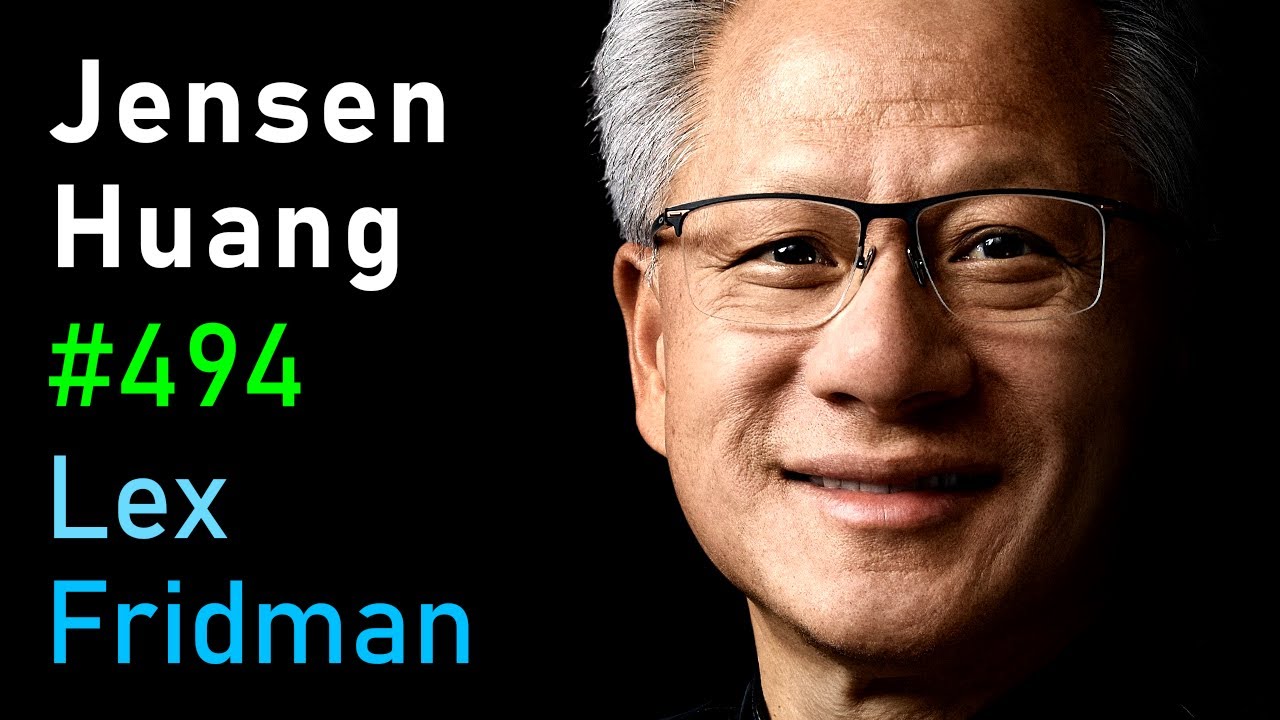 146 min
Jensen Huang: NVIDIA - The $4 Trillion Company & the AI Revolution | Lex Fridman Podcast #494
 311 min
Jeff Kaplan: World of Warcraft, Overwatch, Blizzard, and Future of Gaming | Lex Fridman Podcast #493
 154 min
Rick Beato: Greatest Guitarists of All Time, History & Future of Music | Lex Fridman Podcast #492
 23 min
Khabib vs Lex: Training with Khabib | FULL EXCLUSIVE FOOTAGE
Found this useful? Build your knowledge library
Get AI-powered summaries of any YouTube video, podcast, or article in seconds. Save them to your personal pods and access them anytime.
Get Started Free