Key Moments
Demis Hassabis: DeepMind - AI, Superintelligence & the Future of Humanity | Lex Fridman Podcast #299
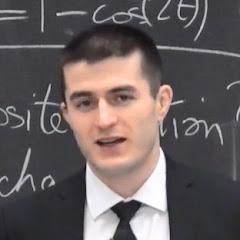 Lex Fridman
Key Moments
Demis Hassabis discusses AI, AGI, DeepMind's breakthroughs like AlphaFold, and the future of humanity.
Key Insights
The Turing Test has limitations; broad, generalizable AI capabilities across many tasks are a better benchmark for intelligence.
Games have been crucial for AI development, serving as efficient testing grounds and benchmarks for algorithms.
AlphaFold's success in solving protein folding highlights AI's potential in scientific discovery and medicine.
AI development is a blend of scientific ideas, engineering, significant compute power, and multidisciplinary collaboration.
The universe can be understood computationally, with information potentially being the most fundamental unit of reality.
Consciousness and intelligence are distinct; AI can be intelligent without being conscious, and current AI lacks sentience.
THE EVOLUTION OF INTELLIGENCE BENCHMARKS
Demis Hassabis discusses the limitations of the Turing Test as a formal benchmark for AI. He proposes that a more comprehensive evaluation would involve testing AI capabilities across thousands or millions of diverse tasks to assess generalizability. While language is a key human communication and generalization tool, artificial intelligence may also demonstrate capabilities through other modalities like visual, robotics, and action. The notion of prediction being fundamental to intelligence is explored, with systems like 'Gato' demonstrating broad capabilities by predicting sequences of actions or tokens.
FROM GAMES TO GRAND CHALLENGES
Hassabis shares his personal journey from playing chess to game design and eventually to AI research. He highlights how games have been instrumental – first as training grounds, then as platforms for AI development within the industry, and finally as a core testing methodology at DeepMind. Games provide clear metrics, defined goals, and efficient simulation environments, making them ideal for training and evaluating AI algorithms. This approach, exemplified by AlphaGo and AlphaZero, allowed for rapid progress in cracking complex challenges like Go, which was once deemed impossible for AI.
ALPHA FOLD AND THE REVOLUTION IN BIOLOGY
One of DeepMind's most significant achievements, AlphaFold, is highlighted for solving the 50-year-old grand challenge of protein folding. By accurately predicting the 3D structure of proteins from their amino acid sequences, AlphaFold has revolutionized structural biology. This capability, achieved through a sophisticated end-to-end learning system trained on experimental data and incorporating physics and evolutionary biology constraints, significantly accelerates drug discovery and fundamental biological research. The open-sourcing of AlphaFold has empowered hundreds of thousands of researchers globally.
AI AS A SCIENTIFIC ACCELERANT
Hassabis outlines his vision for AI as a tool to accelerate scientific discovery across various fields. He sees physics and biology as key areas where AI can make transformative contributions. DeepMind has already applied AI to challenging problems like plasma control for nuclear fusion and simulating quantum mechanical systems for material science. The long-term goal includes building a 'virtual cell' to revolutionize biological research and disease modeling, effectively transforming the discovery process from years to potentially months or weeks.
UNDERSTANDING REALITY AND CONSCIOUSNESS
The conversation delves into deeper philosophical questions, including the nature of reality, consciousness, and the possibility of living in a simulation. Hassabis suggests that the universe might best be understood from a computational perspective, with information as its most fundamental unit. He posits that intelligence and consciousness are dissociable, with current AI systems exhibiting intelligence without consciousness. While acknowledging the profound mystery of consciousness, he advocates for building AI as tools first, emphasizing the need for careful ethical considerations and a multidisciplinary approach to future development.
THE FUTURE OF AI AND HUMANITY
Hassabis expresses optimism about AI's potential to benefit humanity, leading to radical abundance, disease cures, and advancements in space exploration. He stresses the importance of ethical considerations, safety, and broad societal input in guiding AI development. The potential for AI to surpass human intelligence raises questions about power, corruption, and the need for responsible stewardship. He advises young people to explore their passions, understand themselves, find unique connections, and hone their skills to make a significant impact on the world.
Mentioned in This Episode
●Products
●Software & Apps
●Companies
●Organizations
●Books
●Concepts
●People Referenced
Common Questions
Demis Hassabis believes the Turing Test is flawed as a rigorous formal test due to its imprecision. He advocates for a more general test that evaluates AI capabilities on a vast range of tasks, potentially thousands or millions, covering the entire cognitive space to see if it reaches or exceeds human-level performance and generalizability.
Topics
Mentioned in this video
A prestigious scientific journal that featured a special issue and a front cover on the nuclear pore complex, highlighting AlphaFold's impact.
A database of biomedical literature, mentioned as a source of information AI could use for discoveries.
An academic institution where AI research in the 90s focused on logic systems, contrasting with DeepMind's learning systems approach.
A biomedical research center, located across the road from DeepMind, where Paul Nurse is the director.
Where Demis Hassabis studied as an undergraduate and made his best friends, who help keep him grounded.
An online encyclopedia, used as a thought experiment to illustrate the vastness of knowledge AI could assimilate.
Swiss technical institute that collaborated with DeepMind on the nuclear fusion project, providing access to a test reactor.
A scientific journal where DeepMind published its paper on magnetic control of tokamak plasmas.
Search for Extraterrestrial Intelligence program, mentioned in the context of human efforts to detect alien signals.
Elegant physical laws contrasted with the complexity of biology, suggesting AI is better suited to describe the latter.
A famous mathematical theorem, used as an analogy for the difficulty and significance of the protein folding problem in biology.
An approximation to Schrödinger's equation used to describe electron properties, which AI is trying to improve.
A theory that an AI system might one day invent on its own, going beyond just averaging existing knowledge.
Mentioned in a thought experiment about how a different timing of their extinction could have altered human evolution.
Fruit fly, used analogously by Kasparov to describe chess as the 'drosophila of intelligence' for AI research.
Algorithmic advances recently invented in academia around 2010, which DeepMind saw as a key founding tenet.
A type of magnetic containment device used in fusion research, where DeepMind's AI controls plasma.
A hypothetical barrier that prevents alien civilizations from reaching interstellar travel, which humans might have already passed if we are alone.
Graphics processing units, initially invented for computer graphics but found to be amazingly useful for AI due to their efficiency in matrix multiplication.
A fundamental equation in quantum mechanics, which AI aims to approximate with functionals to simulate electron properties.
DeepMind's internal term for a method of developing successful AI systems, starting with handcrafted solutions and evolving towards end-to-end learning.
One of the biggest proteins in the body, governing nutrient flow in and out of cell nuclei, whose structure was finally elucidated with AlphaFold.
A hypothetical megastructure that completely encompasses a star and captures most of its power output, discussed as a visible sign of advanced alien life.
A test of a machine's ability to exhibit intelligent behavior equivalent to, or indistinguishable from, that of a human.
A simpler game than chess, also known as Reversi, for which Demis Hassabis wrote his first AI program using principles from chess programs.
The brain mechanism that implements a form of TD learning in primates, providing neuroscientific evidence for reinforcement learning.
A dream project for DeepMind, where AI is being applied to control high-temperature plasmas in tokamak reactors.
Early human species that Homo sapiens likely outcompeted due to tribal cooperation and language.
A philosopher whose books Demis Hassabis enjoys reading during his quiet creative hours.
A figure associated with 'good old-fashioned AI' and logic systems, whose views differed from Demis Hassabis's belief in learning systems.
A computer scientist whose quote about computer science and astronomy is used to conclude the podcast.
An amazing chess player and world women's champion, identified by Demis Hassabis as someone he was rated second highest to in junior chess.
Nobel Prize winner who first articulated the protein folding problem in 1972.
CEO and co-founder of DeepMind, widely considered one of the most brilliant and impactful humans in AI and science.
Mathematician and physicist who believes consciousness requires something quantum beyond classical computation.
Physicist who conceived of Dyson spheres, massive constructions around stars to collect energy, mentioned as potentially visible evidence of advanced alien civilizations.
Author of 'The 10 Great Inventions of Evolution', who speculates on evolutionary 'great filters'.
A philosopher who has thought deeply about consciousness, mentioned as an expert to consult on the topic.
Shane Legg's supervisor, with whom he worked on AIXI, a theoretical model for universal intelligence.
Mathematician and computer scientist who famously calculated the time it would take for self-replicating probes to spread across the galaxy.
Author of 'The Chess Computer Handbook', which was very formative for Demis Hassabis in understanding chess programming.
Chess grandmaster who was beaten by Deep Blue, but whose mind Demis Hassabis found more impressive than the machine due to its generality.
Philosopher famously associated with proposing simulation theory.
Academician who was part of inventing Deep Learning.
Nobel Prize-winning biologist who runs the Crick Institute, collaborating with DeepMind on the virtual cell project.
Researcher who theorizes about the origin of intelligence, suggesting cooperation among 'beta males' to overthrow 'alpha males'.
A physicist, whose working definition of consciousness (how information 'feels' when processed) Demis Hassabis likes.
Influential figure in computer graphics, associated with games like Quake, mentioned in the context of cutting-edge game technology.
Co-founder of DeepMind, who worked on theoretical definitions of intelligence like AIXI.
Scientist who used a telescope as a tool, an analogy for AI systems being tools for scientific discovery rather than entities deserving credit.
A philosopher who has thought deeply about consciousness, with whom Demis Hassabis has debated the nature of sentience.
A pioneering computer scientist and mathematician, considered a hero by Demis Hassabis, who proposed the Turing Test.
Forefather of AI who tried his hand at writing a chess program, mentioned alongside Turing.
Game designer known for games like SimEarth, which attempted to simulate the entire planet.
Another figure associated with logic-based AI systems, mentioned in contrast to learning systems.
A physicist and one of Demis Hassabis's heroes, known for the quote that the best sign of understanding a complex topic is explaining it simply.
An 8-bit personal home computer released in the UK, which Demis Hassabis used to learn programming at a young age.
A personal computer platform that Demis Hassabis later used for programming in assembler and AMOS BASIC.
A game designed by Demis Hassabis that featured AI as a core gameplay component, reacting to player actions.
A game in which Demis Hassabis was involved in the early stages, considered a most impressive example of reinforcement learning in a computer game.
One of the first sandbox games, mentioned as being similar to Theme Park.
A strategy board game often called the 'drosophila of intelligence' due to its long association with AI research.
A complex strategy game that takes thousands of hours for human testers to balance, an area where AI could be super powerful.
A film that features a monolith influencing human evolution, referenced as a wild hypothesis for the origin of intelligence.
A science fiction franchise with a 'universal rule not to interfere' with primitive species, used as an analogy for the 'safari view' of why we haven't encountered aliens.
A game by Will Wright that simulated the whole of Earth, including evolution, from a high level.
Models that represent huge leaps in AI evolution since 2010, contributing to the success of large language models.
One of the original template chatbots from the 1960s that fooled some people into believing it was intelligent.
DeepMind's AI system that achieved world champion performance in Go, initially trained using human games.
The latest version of DeepMind's general game-playing AI that learns the rules of a game for itself.
A high-level programming language that Demis Hassabis first used on the ZX Spectrum.
A large language model whose results have demonstrated the importance of scale in AI solutions.
IBM's chess-playing computer that famously beat Garry Kasparov, but was described as lacking generality and learning capabilities compared to human intelligence.
Google's language model, mentioned in the context of an engineer's belief in its sentience and the premature nature of such claims.
An AI system by DeepMind that solved the protein folding problem, predicting 3D structures from amino acid sequences.
DeepMind's most general agent, capable of predicting a wide range of actions or tokens and generalizing across tasks.
DeepMind's AI system that learned to play any two-player game from scratch without human knowledge.
A physics simulation engine often used for robotics research, which DeepMind purchased and open-sourced for the benefit of the community.
A video game known for its cutting-edge graphics, mentioned in the context of technological advancements in the games industry.
Hypothetical self-replicating space probes, calculated to spread throughout the galaxy within a million years.
An AI company that has developed groundbreaking AI systems like AlphaGo Zero and AlphaFold 2.
A historic research and development institution, which Demis Hassabis aims to emulate with DeepMind's multidisciplinary organization.
A neurotechnology company developing brain-computer interfaces, mentioned as a potential way to enhance human capabilities with computing devices.
A book by Nick Lane that speculates on potential 'great filters' in evolution.
A game concept by Demis Hassabis that involved designing and playing in entire cities.
A classical book by Roger Penrose that was influential for Demis Hassabis in the 90s, discussing consciousness and physics.
More from Lex Fridman
View all 547 summaries 146 min
Jensen Huang: NVIDIA - The $4 Trillion Company & the AI Revolution | Lex Fridman Podcast #494
 311 min
Jeff Kaplan: World of Warcraft, Overwatch, Blizzard, and Future of Gaming | Lex Fridman Podcast #493
 154 min
Rick Beato: Greatest Guitarists of All Time, History & Future of Music | Lex Fridman Podcast #492
 23 min
Khabib vs Lex: Training with Khabib | FULL EXCLUSIVE FOOTAGE
Found this useful? Build your knowledge library
Get AI-powered summaries of any YouTube video, podcast, or article in seconds. Save them to your personal pods and access them anytime.
Get Started Free