Key Moments
David Whyte, Poet — The Conversational Nature of Reality
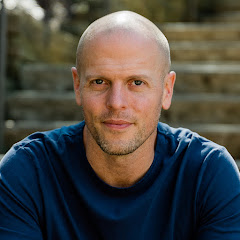 Tim Ferriss
Key Moments
Poet David Whyte explores the conversational nature of reality, the inner journey, and finding presence.
Key Insights
Reality is inherently conversational and invitational, constantly inviting us to deeper self-understanding.
True maturation involves "catching up with yourself," aligning with the evolving self that lies below the horizon of current understanding.
Writing and expression emerge from a 'place below the horizon' of conscious thought, tapping into the unknown.
Embracing vulnerability and "conversational" invitations are key to growth, even when it involves the potential for heartbreak.
Poetry serves as a 'secret code' to life, a "consolation," and a way to articulate the ineffable, helping us navigate grief and meaning.
Time is not a linear enemy but a reciprocal partner; true presence allows us to step out of the 'fingers of time' into timelessness.
THE INVITATIONAL NATURE OF REALITY AND SELF-DISCOVERY
David Whyte posits that reality itself is fundamentally conversational, a continuous mutual invitation. This invitation encourages us to move beyond our current selves into larger territories of self-understanding and generosity. The process involves recognizing that our identities are not fixed but are continually precipitating from the unknown, suggesting that true growth often requires letting go of old ambitions and embracing vulnerability. This Invitational nature forms the bedrock of meaningful conversation and personal maturation.
THE INNER HORIZON AND CATCHING UP WITH THE SELF
Whyte introduces the concept of an 'inner horizon,' representing the boundary between what we know about ourselves and what is emerging from our deeper being. He suggests that many people live 'four or five years behind the curve of their own transformation,' hesitant to fully embrace this emerging self due to fear of their current life falling apart. The courage to look below this inner horizon, he explains, is essential for genuine growth and for aligning with our maturing essence.
WRITING FROM THE UNDISCOVERED REALM
The act of writing, particularly poetry, is described as stemming from a "place below the Horizon of your understanding." This is a deep, intuitive space, often felt physically in the belly or heart, which is willing to engage with life's fiercest conversations. This generative force, akin to the 'primary imagination' or 'Buddha nature,' allows for fresh, surprising, and invitational language that arises from below language itself, bridging the known with the unknown.
THE ROLE OF GRIEF, HEARTBREAK, AND ZEN
Zen practice, Whyte suggests, is a "deep path of heartbreak." Initially alluring with its aesthetic and philosophical promise, it ultimately leads practitioners through emotional and physical breakdown to a profound engagement with reality. Heartbreak, whether from loss or the challenges of intimacy, is presented not as something to avoid, but as a necessary catalyst for growth, a path that ultimately leads to a deeper, more radiant understanding of life and oneself.
THE POWER OF POETRY AS CONSOLATION AND TRANSMISSION
Poetry is characterized as a "secret code to life" and a powerful form of consolation. It offers comfort by validating our experiences, especially deep heartbreak, and serves as an invitation to find our way with good company. Whyte emphasizes that poetry’s true success lies in its ability to speak to another's heart, offering articulation for those who struggle to express themselves. It fosters a vital connection, allowing us to carry and share profound human experiences across time.
RE-EVALUATING TIME AND EMBRACING PRESENCE
Whyte challenges the conventional view of time as an enemy or something that slips away. Instead, he proposes that "time is on our side" and that "it is we who are slipping through the fingers of time." By shifting our perception from linear measurement to a deeper, more present engagement – an "invitational presence" – we can experience timelessness. This expanded awareness allows us to slow down time, embrace its multi-faceted nature, and live with greater freedom and connection.
FINDING COURAGE IN VULNERABILITY AND LOVE
The etymology of courage, rooted in 'heart,' reveals its connection to what we deeply feel and care about. True courage is not the absence of fear but the willingness to be 'heartfelt,' which inherently involves vulnerability and the acceptance of potential heartbreak. Whyte contends that the only way to effectively navigate life is to allow our hearts to break over things that truly matter, rather than seeking an abstract protection that leads to a muted, isolated existence.
THE MYTH OF ADULT INSANITY AND CHILDLIKE INNOCENCE
As a child, Whyte perceived adults as living in an "agreed insanity," having lost touch with a primary, radiant experience of life. He saw poetry as a means to retain a form of "innocence" throughout life – not naive innocence, but a mature ability to see the world anew. This childlike wonder, maintained through attentiveness and openness, allows for continuous discovery and a deeper engagement with existence, finding the extraordinary within the ordinary.
THE PRACTICE OF ASKING BEAUTIFUL QUESTIONS
Whyt advocates for the power of "beautiful questions" as a tool for self-discovery and transformation. These questions, often unearthed spontaneously, shape our lives as much in the asking as in the answering. A key example is the "beautiful question you've cradled through years of doubt," which encourages profound introspection. Such questions act as a form of deep attention, deepening our understanding over time and leading to surprising revelations.
THE TRANSFORMATIVE NATURE OF LIVED EXPERIENCE
Whyt's personal anecdotes, like his near-death experience in a Himalayan yak manger or the profound realization in a Parisian restaurant, illustrate how intense lived experiences can catalyze radical shifts in perspective. These moments, often involving physical or emotional breakdown, force a confrontation with the self and reality, leading to breakthroughs that redefine one's relationship with writing, self-identity, and the world.
Mentioned in This Episode
●Software & Apps
●Companies
●Organizations
●Books
●Concepts
●People Referenced
Common Questions
David Whyte and Henry Shukman met at the William Wordsworth Foundation in the English Lake District where Henry was poet in residence and David came to give a reading. They bonded over poetry and Zen and later reconnected through Sam Harris's app.
Topics
Mentioned in this video
A Spanish poet whose work David Whyte memorized.
A poet who moved to the San Francisco Bay Area, whose joint volume with Ted Hughes influenced David Whyte.
A poet recommended for those new to poetry, known for her accessible, invitational, clear, and engaging style.
A poet recommended for those seeking clear voices in poetry.
An Irish poet whose work David Whyte memorized.
A Zen tradition that Henry Shukman and David Whyte have both experienced.
A poet David Whyte read during his youth.
Historical explorer whose experiences David Whyte compares to his own early trekking adventures in the Himalayas.
A Yorkshire poet whose joint volume with Tom Gunn deeply impacted David Whyte's understanding of poetry and maturity.
A poet whose translations of Antonio Machado are recommended.
The academic field David Whyte studied at University before his experiences in the Galapagos.
A core concept in David Whyte's work, which also implies an 'invitational nature of reality,' suggesting constant invitation into understanding and generosity.
David Whyte's collection of essays, the first of which, 'Regret', was written in a Parisian restaurant.
A poem by Mary Oliver, quoted by David Whyte as an example of accessible and profound poetry.
David Whyte's latest compilation of essays, written in a short, intense period, including the essay 'Time,' which further explores the conversational nature of reality.
A collection of Zen koans with commentary by various masters.
A poem by David Whyte that deeply resonated with the host, putting words to previously unarticulated sentiments.
A poem written by David Whyte as a memorial for his friend Michael, incorporating Welsh place names and themes of love for the land.
A literary publication where Henry Shukman was published early in his career.
The first essay in David Whyte's Consolation series, written under tight parameters for The Observer magazine, which had a revolutionary impact on his writing process.
A powerful essay by David Whyte reflecting on the nature of time, describing it as a friend, not an enemy, and exploring concepts like 'presence slows time down.'
A poem by David Whyte born from a direct experience of a Zen koan, illustrating the unity of depth and the world.
The mountain range where David Whyte had a transformative, near-death experience in a yak manger.
A continent where David Whyte also had his life saved by strangers.
A Welsh farm where David Whyte lived for several years, which became a base for him and the setting for a significant poem and friendship.
The hilly part of England where David Whyte grew up, influenced by an Irish mother and Yorkshire father.
A trekking route in the Himalayas which David Whyte was among the first to explore in the mid-70s.
Where David Whyte worked as a naturalist guide for almost two years, experiencing an 'astonishing, overwhelmingly itself' environment that led to a period of retreat.
More from Tim Ferriss
View all 689 summaries 81 min
Q&A with Tim — The Upcoming AI Tsunami and Building Offline Advantage
 91 min
The Random Show, Couch Edition! — Supplements, Breathing and Balance Training, and Much More!
 76 min
How to Quiet the Ruminative Mind and Avoid The Traps of Self-Help — Tim Ferriss
 86 min
NYT Bestselling Author on Writing 200+ Children's Books — Tish Rabe
Found this useful? Build your knowledge library
Get AI-powered summaries of any YouTube video, podcast, or article in seconds. Save them to your personal pods and access them anytime.
Get Started Free