Key Moments
David Brooks on Audacity, AI, and the American Psyche (Live at @92ndStreetY)
 Conversations with Tyler
Want to know something specific about what's covered?
We've already dissected every moment. Ask and we will deliver (with timestamps).
Key Moments
David Brooks on cultural decline, AI's impact, and the search for meaning in America.
Key Insights
Young Americans are experiencing unprecedented levels of sadness and loneliness, despite increased academic competition.
The pervasive use of smartphones contributes to anxiety in relationships and a decline in face-to-face social interactions.
AI presents a double-edged sword, posing risks of educational shortcuts while also offering potential as a cognitive tool.
American culture has experienced a loss of audacity, with a decline in the impact of novels and a shift towards professionalism and commercialism.
David Brooks reflects on his intellectual journey, finding himself on the 'rightward edge of the leftward tendency' and rooted in a sense of moral order.
The erosion of a 'secure base'—family, community, and moral order—is a primary driver of societal malaise and individual unhappiness.
THE PARADOX OF YOUNG AMERICA: SADNESS AND STRIVING
David Brooks highlights a stark contrast in the lives of young Americans today: while facing record levels of sadness, hopelessness, and loneliness, they are also subjected to an intensely competitive academic and professional landscape. This intense pressure to succeed, exemplified by astronomical rejection rates for elite schools and internships, contributes to widespread anxiety and a "rejection factory" mentality. Conversely, students at less exclusive, mid-tier institutions often exhibit greater happiness, suggesting that hyper-competitiveness at the top strains mental well-being and social connections.
TECHNOLOGY'S TOLL ON RELATIONSHIPS AND ATTENTION
The conversation probes the impact of technology, particularly smartphones, on social interaction and relationship formation. Brooks posits that the constant availability of digital communication leads to a decline in essential relationship skills, such as initiating contact or handling breakups gracefully. This digital mediation creates anxiety and distrust, making young people hesitant to engage in romantic pursuits. He likens smartphone addiction to an 'irreguarly timed reward' system, diminishing attention spans and potentially eroding crucial cognitive faculties.
AI: A TOOL OR A THREAT TO HUMAN INTELLECT AND EDUCATION
Brooks views Artificial Intelligence not as a definitive kryptonite but as a potent tool with significant implications. While acknowledging AI's capacity to solve complex problems in fields like astrophysics and economics, he expresses concern about its application in education, where students might bypass the learning process entirely. He distinguishes between using AI as a tool to enhance thinking, like his own use of an iPhone for reading, and allowing it to think for us. Brooks emphasizes that AI lacks genuine understanding, judgment, and emotion, qualities that define human intelligence.
THE EROSION OF AUDACITY AND THE NOVEL'S DECLINING ROLE
A significant theme is the perceived loss of 'audacity' in contemporary American culture. Brooks laments the diminished role of the novel as a cultural mirror, contrasting it with historically influential works that shaped public imagination and moral understanding. He suggests that the current media landscape, dominated by shorter-form content, alongside a rise in professionalism and commercialism, has stifled the bold, perspective-shifting creativity exemplified by writers like Charles Dickens or George Eliot. This, he argues, leaves a void in addressing the present era's complex interior and public traumas.
MENTORSHIP AND INTELLECTUAL EVOLUTION: BROOKS'S JOURNEY
Brooks reflects on his formative mentors, William F. Buckley Jr. and Milton Friedman, emphasizing their profound influence and their shared, relentless drive. He details Buckley's mentorship in fostering journalistic skills and offering crucial early career opportunities, while highlighting Friedman's intellectual rigor. Brooks situates himself ideologically at the "rightward edge of the leftward tendency," a position distinguishing him from the more traditional conservatism of his early mentors, particularly in his embrace of some New Deal policies and his less purely rationalist approach to human behavior.
THE DESTRUCTION OF THE 'SECURE BASE' AND THE PATH TO RECOVERY
The core of Brooks's diagnosis lies in the destruction of a 'secure base'—a stable foundation of family, community, and moral order—that once provided existential security. He argues that societal problems are primarily sociological and moral, not economic. The decline of two-parent families and the privatization of morality have left many, particularly those without higher education, vulnerable to social suffering. Brooks believes national renewal comes through 'rupture and repair,' similar to historical periods of civic and cultural renaissance, emphasizing the bottom-up rebuilding of social trust through local 'trust merchants.'
RETHINKING INTELLIGENCE, MOTIVATION, AND COMMUNITY
Brooks's upcoming book focuses on 'conation'—the drive and desires that shape human behavior, suggesting it is more fundamental than intelligence. He critiques the overemphasis on cognitive skills while neglecting 'non-cognitive' aspects like motivation and resilience, essential for navigating challenges. He admires lifelong learners like Warren Buffett who continuously incorporate new perspectives. The conversation also touches on the evolving nature of cultural centers, with a debatable shift away from traditional hubs like New York City, and the potential for AI to influence, though not solely dictate, societal and political realignments driven by lived experience.
Mentioned in This Episode
●Software & Apps
●Companies
●People Referenced
Common Questions
Young people face immense academic and internship rejection rates, fostering a sense of being the 'most rejected generation.' This, coupled with the anxieties introduced by digital communication and a perceived decline in values regarding relationships, contributes to widespread sadness and hopelessness.
Topics
Mentioned in this video
A young man from Williams College who observed that current generations feel like the most rejected due to massive rejection rates in college and internship applications.
A former boss at The Wall Street Journal, described as a Midwestern farm boy comfortable with long silences, teaching Brooks about working with people from different cultural backgrounds.
Author of 'The Public Philosophy' (1955), which is cited for its warning that if right and wrong are determined solely by individual feelings, civilization is on shaky ground.
An art critic whose work identified high points in Western art by their audacity, suggesting a current lack of this quality in culture, particularly in the humanities.
An author whose novel's release was a significant cultural event during the speaker's college years, highlighting the past cultural impact of novels.
Described as a 'Puerto Rican hip hop star from Washington Heights' and one of Brooks' heroes, representing the belief in using government energetically to create opportunities for social mobility.
A historian and wife of Irving Kristol, whose work on the evolution of morality across civilizations is considered profoundly true and essential for understanding societal changes.
A book critic mentioned as someone hired by William F. Buckley Jr. based on writing ability, illustrating Buckley's mentorship style.
A conductor who was a guest on the host's podcast, discussed for his use of short musical snippets to gauge immediate listener preference, illustrating the power of quick aesthetic judgments.
A 93-year-old woman in Moscow during the 1991 coup who shared her life story of enduring immense hardship throughout Soviet history, serving as an example of living history and the power of interviews.
Mentioned as part of the cohort that influenced David Brooks' understanding of neoconservatism, emphasizing the importance of analyzing the moral fabric of society.
Author of 'The Moral Sense,' a book highly recommended by David Brooks for its insights into the moral fabric of society, a key tenet of neoconservatism.
Founder of National Review, discussed as a mentor to David Brooks and others, known for his rapid writing pace and influence on the modern conservative movement.
Owner of The Washington Post, she mentored Warren Buffett in his 50s by introducing him to social circles alien to him, demonstrating Buffett's adaptability.
A historian whose insights on Martin Luther King Jr.'s rhetoric are cited, emphasizing the power derived from a belief in an inherent moral order and natural law.
Researcher who studied the high rate of questioning in three-year-olds and observed how early education systems can repress curiosity, contrasting with the host's sustained curiosity.
A 19th-century art critic quoted for stating that the ability to 'see' reality is rarer than the ability to think or talk, highlighting the importance of deep perception, often found in art and literature.
Part of the intellectual cohort that shaped David Brooks' views on neoconservatism, focusing on societal moral fabric and skepticism of certain 1960s liberal programs.
An author whose novel 'Bonfire of the Vanities' was a major cultural event and captured the essence of New York City in the 80s. The speaker suggests a lack of modern novelists with his social realist audacity.
His quote 'We're not primarily thinking creatures. We're primarily desiring creatures' is used to emphasize the importance of desires in shaping human beings and their beliefs.
A comedian interviewed by David Brooks, whose interview was characterized by two hours of jokes and humor, highlighting a memorable and funny interview experience.
A key figure in the neocon movement, who, like many in his cohort, grew up in a specific intellectual milieu and became suspicious of 1960s counter-culture.
Author of 'Two Cheers for Capitalism,' cited as representing a perspective that was skeptical and sophisticated about capitalism, influencing Brooks' views.
Author of 'The Age of Reform,' whose work highlights the historical convergence of populist and progressive movements, suggesting a similar potential for contemporary political unity.
Mentioned as someone William F. Buckley Jr. hired based on writing ability alone, showcasing Buckley's hiring approach.
His memoir's opening line, 'All my life I've had a certain idea about France,' is used as a parallel to David Brooks' lifelong 'idea about America.'
More from Conversations with Tyler
View all 58 summaries 59 min
Liaquat Ahamed on Financial Crises, Gold, and the Lessons of 1873
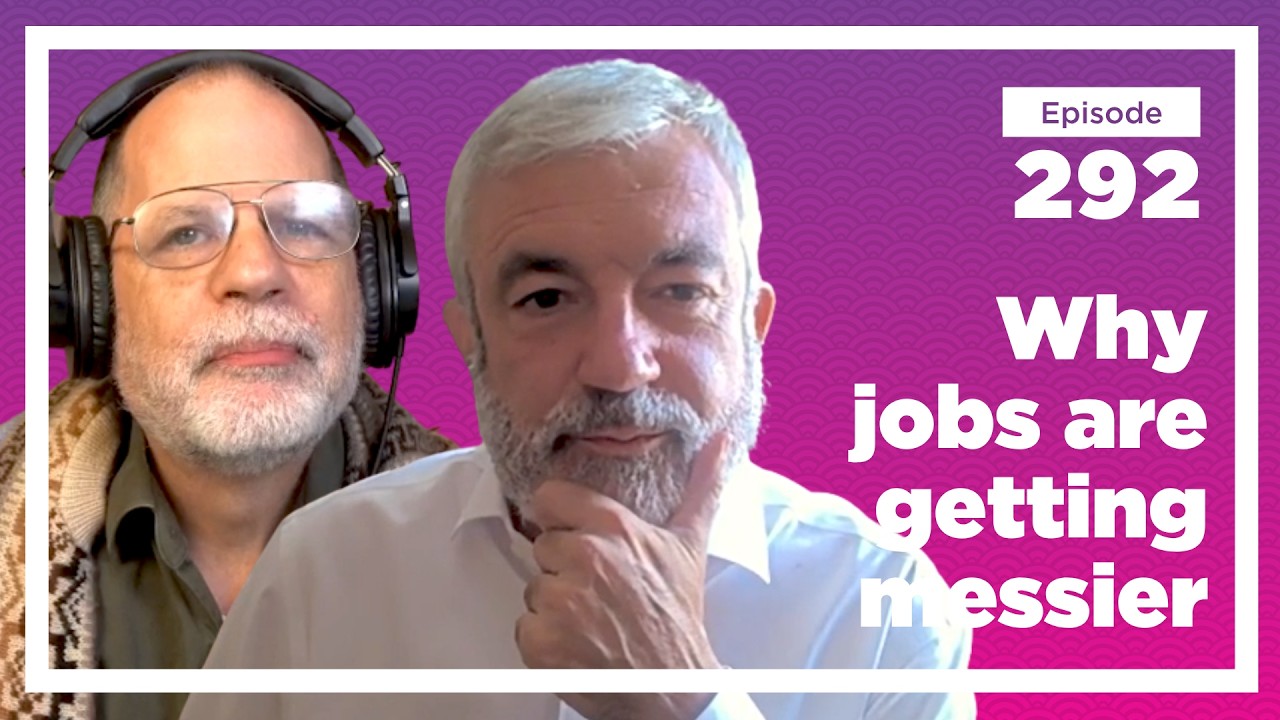 60 min
Luis Garicano on Spain, Europe, and the Future of Work
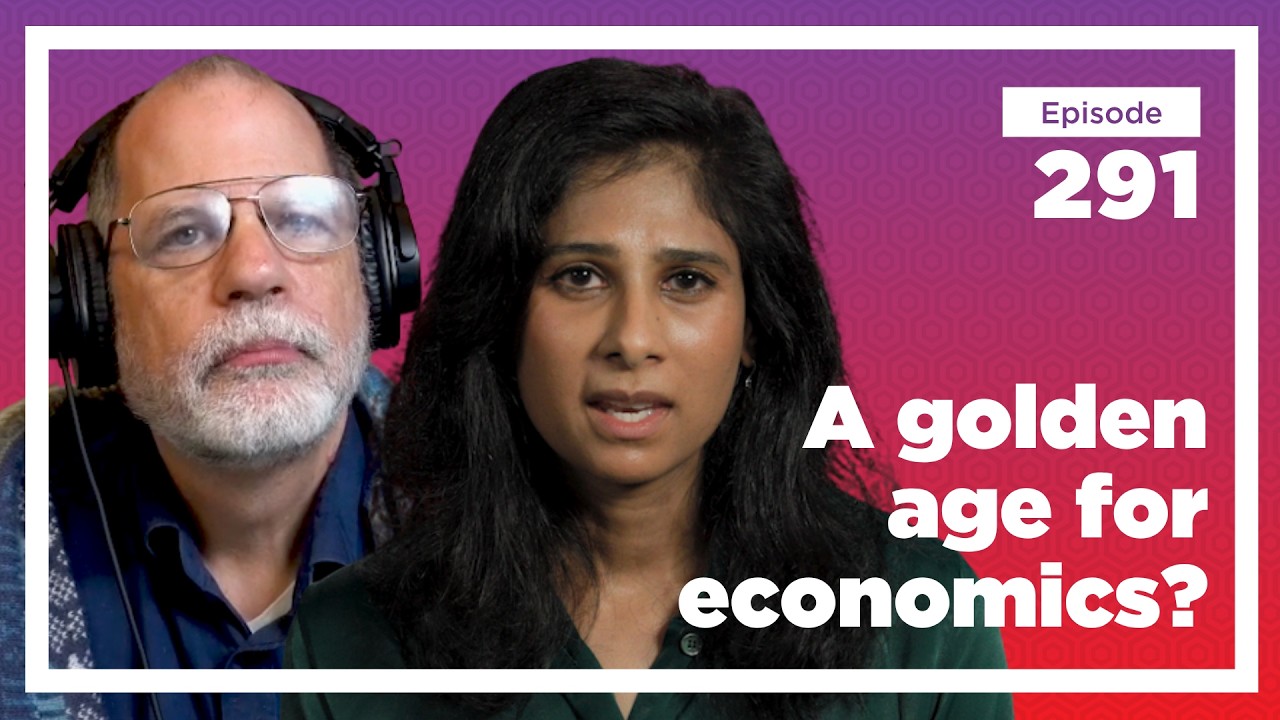 65 min
Gita Gopinath on Trade, Currencies, and Economic Transformation
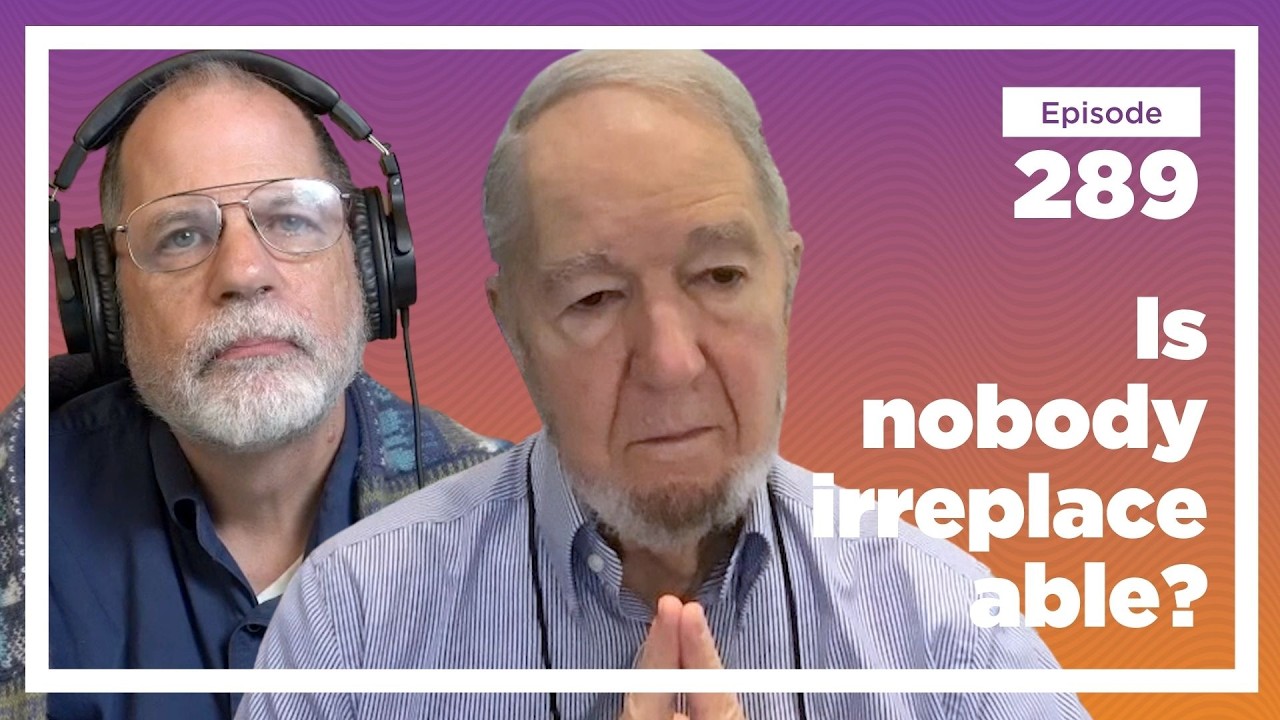 64 min
Jared Diamond on Leaders, Luck, and Irreplaceability
Ask anything from this episode.
Save it, chat with it, and connect it to Claude or ChatGPT. Get cited answers from the actual content — and build your own knowledge base of every podcast and video you care about.
Get Started Free