Key Moments
Daniel Negreanu: Poker | Lex Fridman Podcast #324
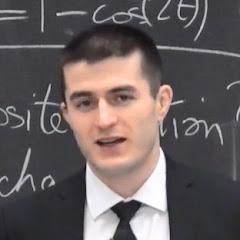 Lex Fridman
Key Moments
Daniel Negreanu discusses poker strategy, mental resilience, and life lessons from a legendary player's perspective.
Key Insights
Information conveyance at the poker table includes conscious verbal tells and subconscious physical cues (posture, eyes, pulse).
Effective poker play involves identifying and exploiting opponent tendencies, moving beyond purely Game Theory Optimal (GTO) strategies.
Mastering poker requires self-awareness, resilience, and the ability to distinguish between bad luck and flawed decision-making.
The game has evolved significantly; modern players often use AI solvers, but human intuition and adaptability remain crucial in live play.
Maintaining mental and physical balance, prioritizing sleep during intense tournaments, and accepting personal differences are key to sustained success and well-being.
True love and healthy relationships involve acceptance without judgment, acknowledging different life journeys and individual needs.
THE ART OF INFORMATION GATHERING AT THE POKER TABLE
At the poker table, every action, conscious or subconscious, conveys information. Daniel Negreanu emphasizes the importance of both conscious verbal tells, such as what someone says, and subtle subconscious cues like body posture, eye movements, and pulse. While some players like Phil Ivey thrive on intimidation to elicit tells, Negreanu prefers to make opponents comfortable, encouraging them to reveal more. He also extensively uses player profiling, understanding an opponent's profession or general outlook on life to predict their tendencies, such as a lawyer being more comfortable bluffing or a cynical person being easier to manipulate.
UNDERSTANDING HAND RANGES AND REPRESENTATION
Modern poker has shifted from putting opponents on a single hand to understanding their potential hand range. Negreanu explains that a hand range is the entire spectrum of hands a player could hold, which narrows with each action on the flop, turn, and river. Players also "represent" a range, meaning their actions project a certain set of hands to their opponents. Bluffing, in this context, is not just misrepresenting a specific hand but misrepresenting the optimal balance of value hands and bluffs within one's range, aiming for Game Theory Optimal (GTO) play where actions are balanced and unexploitable.
BALANCE BETWEEN GTO AND EXPLOITATIVE PLAY
The core debate in poker strategy revolves around GTO (Game Theory Optimal) and exploitative play. GTO aims for perfectly balanced strategies that cannot be exploited, akin to randomly choosing rock, paper, or scissors 33% of the time. However, Negreanu primarily favors exploitative play, where a player adjusts their strategy based on observed tendencies of opponents (e.g., bluffing more if an opponent folds too often). While GTO is theoretical and often too complex for humans to perfectly implement, exploitative play leverages human imperfections and historical data, making it a powerful approach in live poker where no one plays perfectly.
THE CHALLENGE OF RESILIENCE AND PSYCHOLOGICAL TOLL
Poker, especially tournament play, demands immense mental resilience. Negreanu recounts losing over $1.1 million in 48 days at the World Series of Poker, highlighting the mental anguish and hopelessness that can arise from sustained bad luck despite making optimal decisions. He emphasizes the importance of self-awareness to distinguish between bad luck and actual strategic errors. His personal strategy involves allowing himself to fully experience despair, followed by a good night's sleep and renewed confidence. This psychological fortitude is crucial in a game where success is often elusive, and losses are common, echoing parallels to life's unpredictable nature.
THE EVOLUTION OF POKER: FROM TALENT TO WORK ETHIC
Poker has undergone a dramatic transformation. In Negreanu's early days, learning involved in-person play, note-taking, and discussions with peers. Success relied on innate card sense and talent. Today, the advent of AI-driven solvers has democratized learning, allowing players to study optimal strategies analytically. This shift has attracted a new generation of players who excel through rigorous study habits and work ethic, even if they lack traditional 'card sense.' Negreanu emphasizes the continuous need for adaptation, humility, and willingness to learn from younger players, avoiding complacency that can lead to being surpassed.
THE GOAT DEBATE: PHIL IVEY AND OTHER LEGENDS
When discussing the 'Greatest of All Time' (GOAT), Daniel Negreanu unequivocally names Phil Ivey. Ivey's dominance across multiple poker variants (Hold'em, Omaha, Stud, mixed games), his unparalleled tenacity, focus, and ability to read subtle cues at the table set him apart. He also acknowledges other legends: Doyle Brunson for his longevity, pioneering spirit, and manual calculation of odds in poker's early days; and Phil Hellmuth for his unmatched World Series of Poker resume and unique, often belligerent, playing style that can intimidate opponents. Negreanu's own strengths include adaptability, humility, well-roundedness across games, and a scholarly approach to continuous learning.
TOURNAMENT DYNAMICS AND FINAL TABLE STRATEGIES
Tournament play, particularly the World Series of Poker Main Event, presents unique challenges due to its immense size (thousands of players) and grueling multi-day structure. Early stages involve playing against many unknowns, demanding exploitative strategies over balanced GTO play. The final table introduces complex ICM (Independent Chip Model) considerations, where players often prioritize financial pay jumps by playing passively, rather than aggressively pursuing first place. Negreanu highlights the conflict between maximizing prize money and maximizing the chance to win, noting that true winners often embrace risk to secure the top spot, a mindset exemplified by aggressive players like Michael Adamo.
THE PHILOSOPHY OF A GAMBLER: LIFE LESSONS FROM THE TABLE
Negreanu draws profound life lessons from poker, particularly from Kenny Rogers' 'The Gambler,' emphasizing knowing 'when to hold 'em, know when to fold 'em, know when to walk away, and know when to run.' This translates to recognizing when to persist, when to cut losses, and when to change course in various life situations. He views challenges as opportunities for growth and believes in taking responsibility for one's reactions to events. The highs and lows of life, much like poker, are essential for true understanding and resilience, fostering a non-judgmental approach to others' choices and a balanced perspective on success and failure.
HEALTH AND WELL-BEING: THE VEGAN POKER PLAYER'S ROUTINE
During intense tournament periods like the World Series of Poker, Negreanu's primary focus shifts to sleep, recognizing its critical role in maintaining peak mental performance. While off-season, he adheres to a highly regimented vegan diet, meticulously tracking macros and calories through a self-designed meal plan. However, during the World Series, this strict regimen is relaxed to prioritize restful sleep, often indulging in cravings for comfort food. This conscious trade-off underscores his understanding that sustained high-level play requires holistic management of physical and mental well-being, even if it means temporary deviations from an ideal lifestyle.
THE ALLURE AND ETHICS OF POKER
The allure of poker lies in its competitive nature, mental warfare, and the unique personalities that inhabit the game. Negreanu, driven by a competitive spirit and a desire to prove doubters wrong, continually finds renewed passion for the game. He acknowledges the ethical considerations of playing against weaker opponents, choosing to play high stakes against those who can afford it, rather than 'hustling' individuals. The discussion delves into infamous incidents like Phil Ivey's 'edge sorting' case, where the exploitation of casino-provided faulty cards raises questions about the definition of cheating versus leveraging inherent flaws. This highlights the intricate ethical landscape within the world of high-stakes gambling.
LOVE, RELATIONSHIPS, AND THE POWER OF ACCEPTANCE
Love, for Negreanu, has been a journey of personal growth, marked by past relationships and ultimately finding true acceptance with his current wife, Amanda. He reflects on how his poker-honed judgmental mindset, useful for player analysis, proved detrimental in relationships. He came to understand that true love involves accepting a partner exactly as they are, without imposing one's own 'better or worse' framework. His relationship with Amanda, who is bipolar, deepened this understanding, teaching him compassion and the importance of not taking things personally, embracing her unique journey and need for unwavering support.
ADVICE FOR ASPIRING PROFESSIONALS AND A FULFILLING LIFE
Negreanu advises young people to use their twenties as a crucial period for taking calculated risks and working hard to establish a foundation for their future. He cautions against pursuing careers solely for wealth, instead advocating for following one's passions, as genuine enjoyment increases the likelihood of both success and fulfillment. Emphasizing that wealth alone doesn't guarantee happiness, he highlights the dangers of inflated ego, distrust, and viewing others as 'less than' when success is achieved. Ultimately, maintaining humility, treating money as a tool rather than a sole objective, and continuously learning and adapting are keys to a proud and meaningful life.
Mentioned in This Episode
●Software & Apps
●Organizations
●Books
●People Referenced
Common Questions
Professional poker players, like Daniel Negreanu, look for subtle subconscious tells such as changes in body posture, eye movement, throat constriction, or pulse. These involuntary reactions can reveal an opponent's true hand strength or nervousness, especially when they are made comfortable and relaxed at the table, encouraging them to reveal more information.
Topics
Mentioned in this video
Actor who played the main character in 'Rounders', who eventually exposes Teddy KGB's 'Oreo tell'.
A poker player who took the poker world by storm with his unorthodox and highly aggressive playing style, which exploits passive opponents. He's Daniel Negreanu's favorite player to watch.
An amateur player who was heads-up against Scotty Nguyen at the 1998 WSOP Main Event and was psychologically influenced by Nguyen's table talk to make a losing call.
A character from Jersey Shore: Family Vacation, described by Daniel as a fun guy.
Actor whose character in the film 'Casino' (Nicky Santoro) was contrasted with Daniel's character, or the 'Lester' type, representing a greasy, destructive influence.
Actress whose character in the film 'Casino' reminded Daniel Negreanu of his wife, Amanda, due to her captivating personality and spirited nature.
Actor whose character in the film 'Casino' Daniel Negreanu identified with, representing a desire for a stable life.
Chess Grandmaster often compared to top poker players, known for his ability to play sub-optimally in openings to gain an edge and his preference for deeper calculations over memorized lines.
A young poker player who became a 'slave to the sim,' making plays that were theoretically good against a robot but impractical against human opponents.
Legendary golfer, used as a comparison for Phil Ivey's intense focus and unrelenting pursuit of perfection in his sport.
A legendary poker player affectionately known as 'Huckseed', famous for his 'A-game' being unparalleled and his 'F-game' being terrible. He would go off if he made even one mistake.
A Russian poker player who is well-respected for playing all poker game variants.
Professional wrestler, impersonated by Dan Cates during his Poker Players Championship wins, known for his flamboyant personality.
A card mechanic who cheated Daniel Negreanu in a private game in Texas when Daniel was a teenager, serving as an early lesson in being wary of trust.
Actor whose character in the film 'Casino' (Lester Diamond) was identified by Daniel's friends as a 'greasy guy' that they called 'Lester'.
Singer of 'The Gambler,' a song whose lyrics hold deep life lessons for Daniel Negreanu about knowing when to persist and when to quit.
A high-stakes poker player known for playing in private games against weaker opponents, which allows him to earn significant money despite not being a top-tier professional player.
A poker player known for his intimidating aura and focus at the table, preferring to make opponents uncomfortable. He is considered the 'King of Poker' and the 'GOAT' by Daniel Negreanu due to his dominance across various poker variants and his strategic mind.
Co-writer and producer of the film 'Rounders', admired by Daniel Negreanu.
An aggressive poker player who went all-in against Daniel Negreanu in a World Series of Poker tournament, ultimately winning the hand with a flush.
A poker player who criticized Daniel Negreanu's act of breaking a selfie stick during WSOP, likening it to violence against women.
An older poker pro from the late 90s who scoffed at aggressive young players, representing the old guard's resistance to evolving poker strategies.
An older poker pro from the late 90s who scoffed at aggressive young players, representing the old guard's resistance to evolving poker strategies.
A contemporary of Daniel Negreanu who used to collaborate on poker strategy, part of a "masterminding" group.
A contemporary of Daniel Negreanu who used to collaborate on poker strategy, part of a "masterminding" group.
Known as 'The Prince of Poker,' he is famous for his psychological table talk, especially his iconic 'You call, gonna be all over baby' line at the 1998 WSOP Main Event final table.
Legendary basketball player, used as a comparison for Phil Ivey's intense focus and unrelenting pursuit of perfection in his sport.
Referred to as 'The Godfather' of poker, celebrated for his longevity in the game (playing into his late 80s) and his pioneering efforts in manually calculating poker odds before computer simulations.
A highly decorated poker player, known for having the best World Series of Poker resume but also for his boastful attitude and unique, often sub-optimal, playing style that can intimidate opponents.
A highly respected young online cash game player, regarded as playing close to Game Theory Optimal and tough to compete against.
Known as 'Jungleman,' a unique personality in poker who won the Poker Players Championship back-to-back years dressed as Randy 'Macho Man' Savage and stayed in character.
A poker player who beat Daniel Negreanu in the Million Dollar One Drop event, winning $15 million, but then moved on from poker due to burnout.
Author of 'Modern Poker Theory,' a recommended book for more advanced poker players to understand game theory.
UFC President, a huge blackjack gambler who was once kicked out of a casino for winning too much, despite not counting cards.
Famous Argentinian soccer player, known for his 'Hand of God' goal in the World Cup, used as an example of exploiting flaws in the game.
Daniel Negreanu's own book, written 10 years prior, which still offers good principles for average players at average buy-ins, particularly its 'small ball approach' for tournaments.
A book by Michael Acevedo, recommended for advanced poker players seeking to understand game theory in poker; it is suggested for those past the beginner stage.
A movie suggested by Lex as a great Vegas film.
A lake mentioned as recently losing water, leading to the discovery of bodies from the 1970s mob era, adding to the mystique of Las Vegas history.
A legendary high-stakes poker room in Las Vegas, often a testing ground for top players to prove their skills beyond tournaments.
A song by Kenny Rogers whose lyrics ('You gotta know when to hold 'em, know when to fold 'em, know when to walk away, know when to run') embody a stoic philosophy that Daniel Negreanu applies to both poker and life.
A poker movie featuring the character Teddy KGB who has a recognizable 'Oreo tell' that, while simplistic for the screen, illustrates how subtle tells can convey information.
A movie suggested by Lex as a great Vegas film.
A character from the 'Rocky' film series, referenced to describe the hunger and drive of young poker players.
The protagonist of the 'Rocky' film series, contrasted with Clubber Lang to represent seasoned players who might lack the initial hunger but have experience.
A reality TV show Daniel Negreanu enjoys, appreciating its 'trash TV' aspect and the unique (uncancelled) personalities.
A movie Daniel Negreanu frequently watches, noting Sharon Stone's character reminded him of his wife and Robert De Niro's character of himself. He appreciates its portrayal of 70s Vegas.
Artificial intelligence software that provides optimal, Game Theory Optimal (GTO) plays for poker situations, revolutionizing how the game is studied and played by newer generations.
Google DeepMind's AI program that plays the game of Go, known for its non-intuitive, yet optimal, moves that changed how even top human players viewed the game. Compared to poker solvers.
More from Lex Fridman
View all 547 summaries 146 min
Jensen Huang: NVIDIA - The $4 Trillion Company & the AI Revolution | Lex Fridman Podcast #494
 311 min
Jeff Kaplan: World of Warcraft, Overwatch, Blizzard, and Future of Gaming | Lex Fridman Podcast #493
 154 min
Rick Beato: Greatest Guitarists of All Time, History & Future of Music | Lex Fridman Podcast #492
 23 min
Khabib vs Lex: Training with Khabib | FULL EXCLUSIVE FOOTAGE
Found this useful? Build your knowledge library
Get AI-powered summaries of any YouTube video, podcast, or article in seconds. Save them to your personal pods and access them anytime.
Get Started Free